Avengers: Infinity War had a numerical problem before it had a storytelling one. By the time production was underway in 2017, the film stood at the intersection of 18 preceding MCU movies and brought together the Avengers, Wakandan forces, Doctor Strange and Wong, Spider-Man, and the Guardians of the Galaxy. Chris Pratt estimated that 22 superheroes were involved. A project at that scale can easily become a roll call: a procession of entrances, catchphrases and disconnected mini-adventures wearing one very expensive trench coat.
The filmmakers’ answer was unusually direct. Rather than treating the heroes as the sole organizing principle, writers Christopher Markus and Stephen McFeely built the movie around its antagonist, Thanos. That decision helps explain the film’s size, its momentum and its tonal severity. The heroes are not merely attending the same crossover; they are reacting to one character’s campaign for the Infinity Stones.
That approach also makes Infinity War useful to revisit as a case study in franchise filmmaking. Its ambition was not simply to put more characters in a frame. It was to give a vast cast a shared dramatic problem, then divide that cast into combinations whose personalities and histories could create friction as well as spectacle.
Thanos was the story’s center of gravity
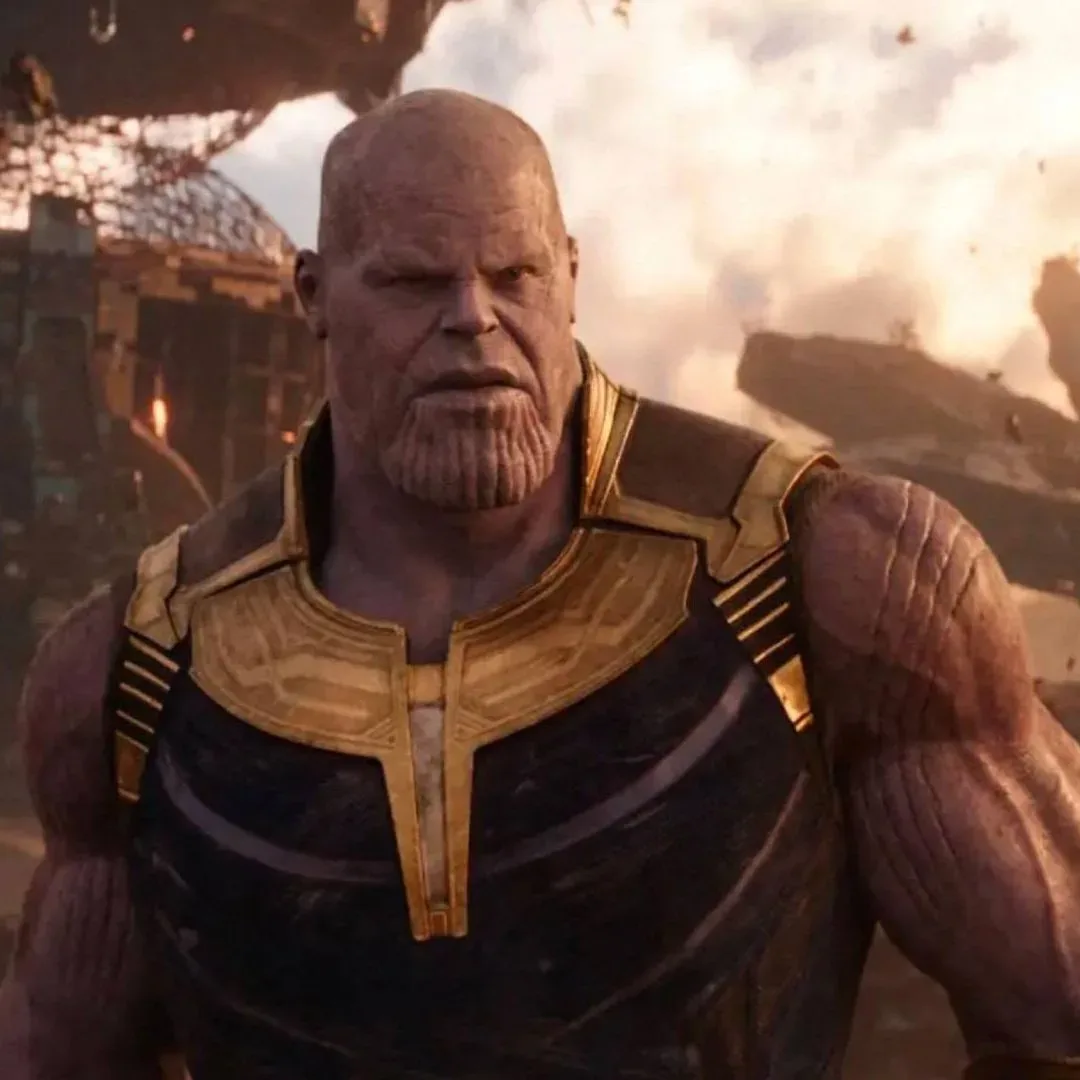
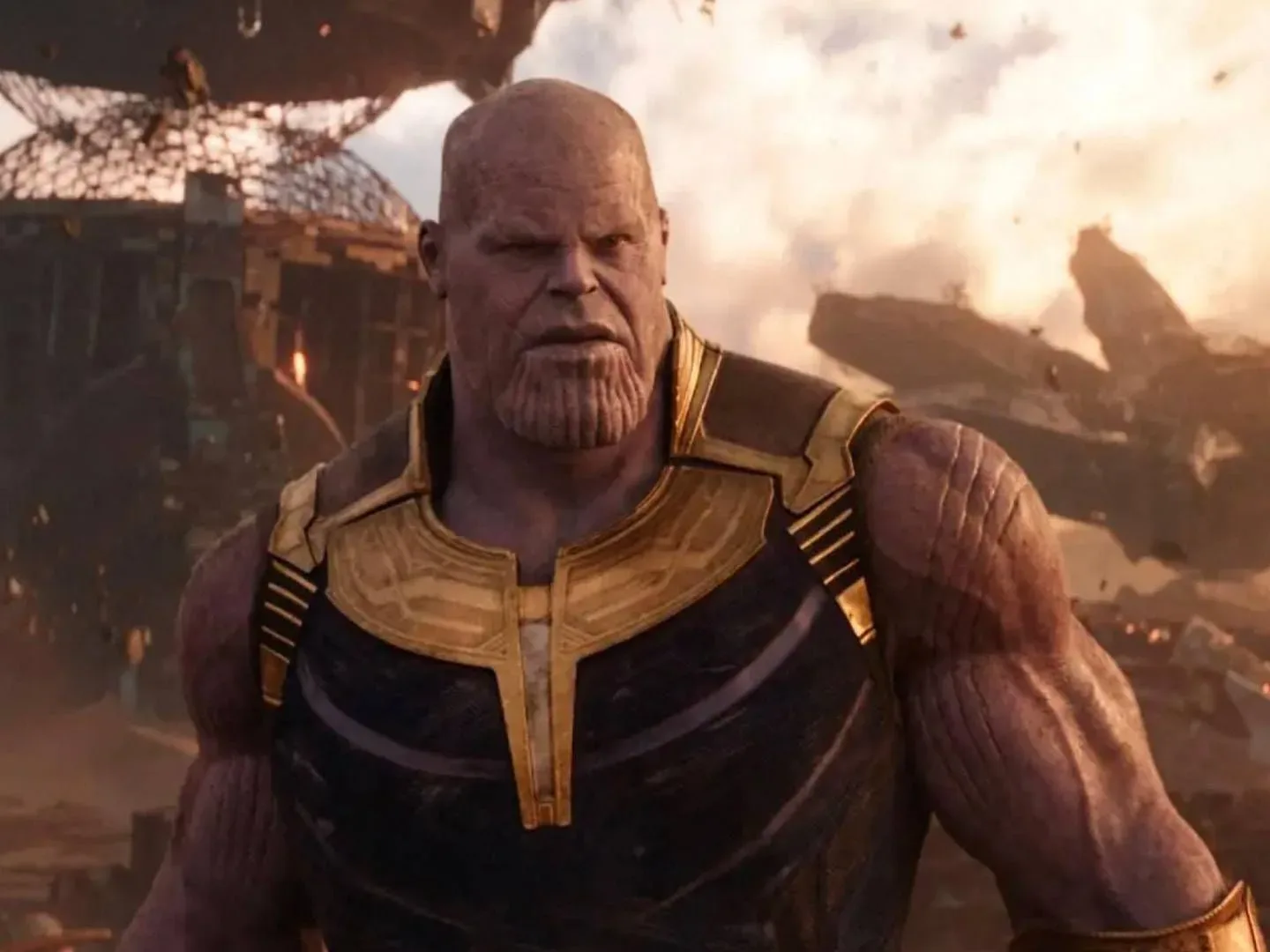
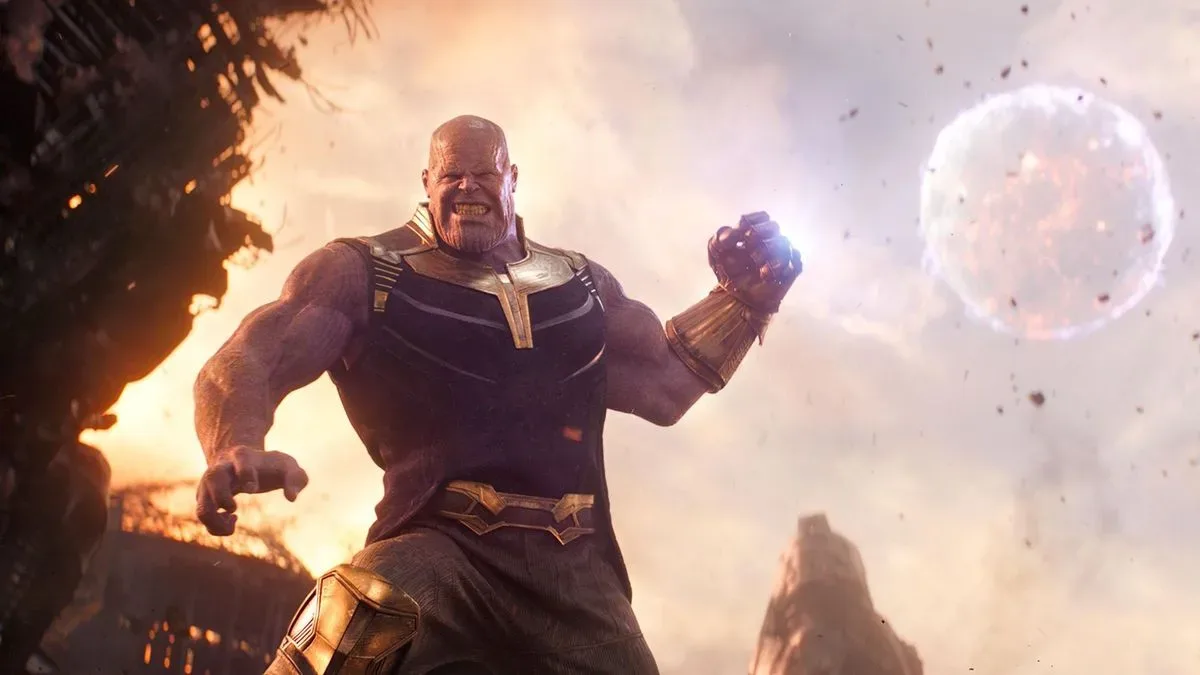
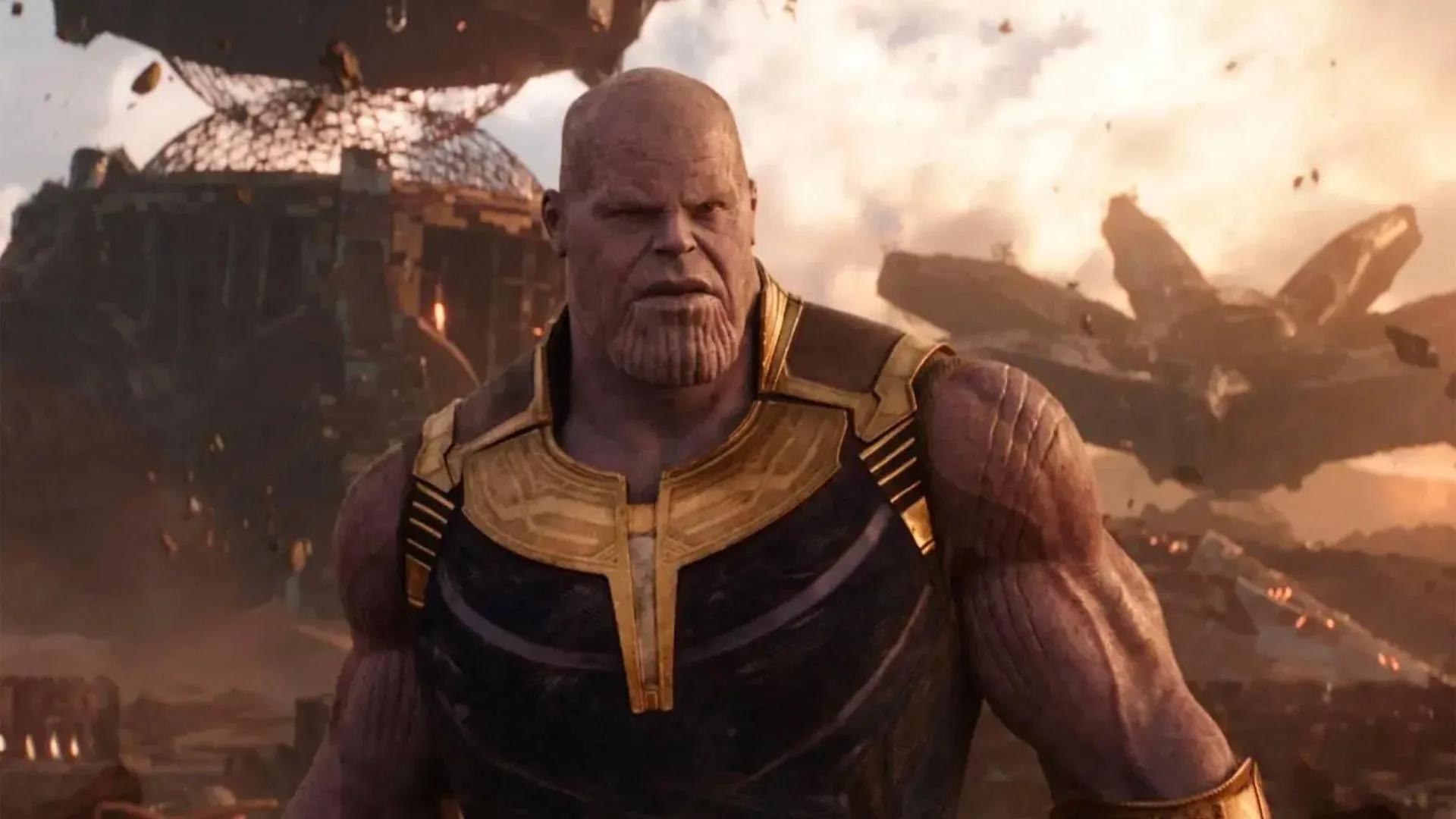
Markus and McFeely described Thanos as the film’s main character. That does not mean the movie asks viewers to approve of him. His plan involves eliminating roughly half the universe’s inhabitants, and the six Infinity Stones are the means by which he intends to obtain near-limitless power. It means the story follows the villain’s progress with enough clarity that every hero encounter becomes part of one advancing objective.
In screenwriting terms, a MacGuffin is an object or goal that drives characters into action. The Infinity Stones serve that function, but with an advantage specific to this franchise: they had already been seeded in earlier entries. Thanos does not need to spend the film looking for a brand-new magic item with rules pasted on halfway through. His pursuit turns existing MCU continuity into immediate stakes.
That is why “the universe” is an appropriate scale for the film’s conflict without being its entire dramatic explanation. Big stakes alone do not make a story feel urgent. Urgency comes from a comprehensible chain of cause and effect: Thanos needs six Stones; some are associated with characters and places viewers already know; the heroes are scattered and divided; stopping him requires alliances that are difficult before they are heroic.
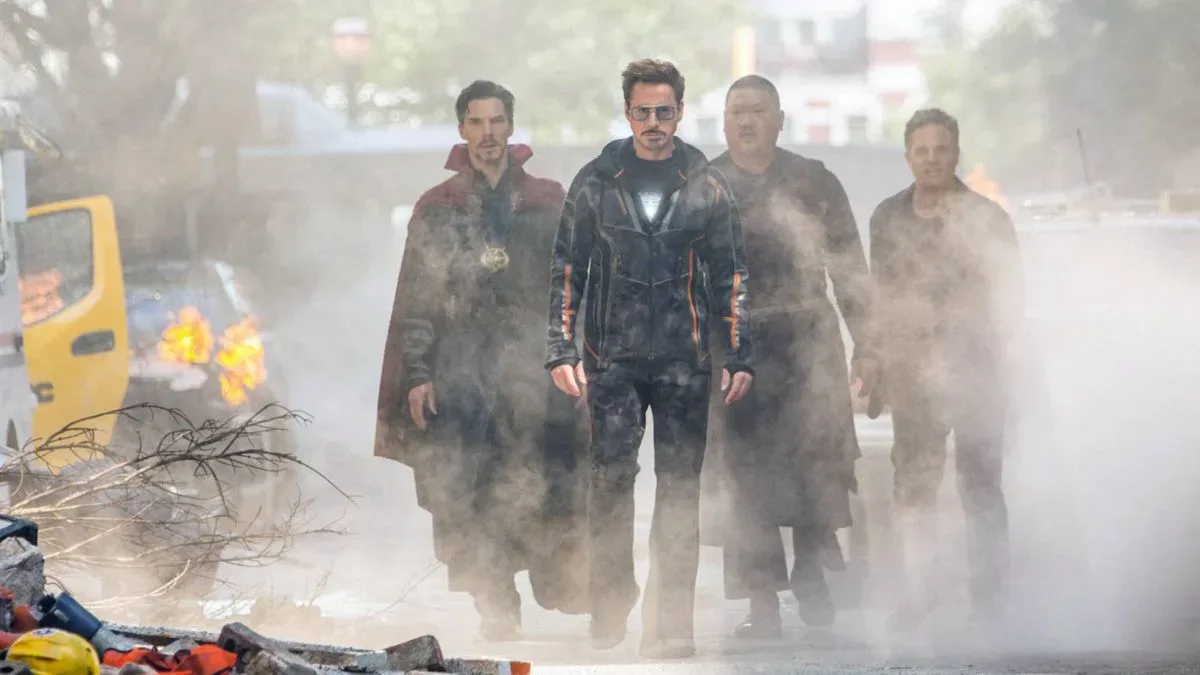
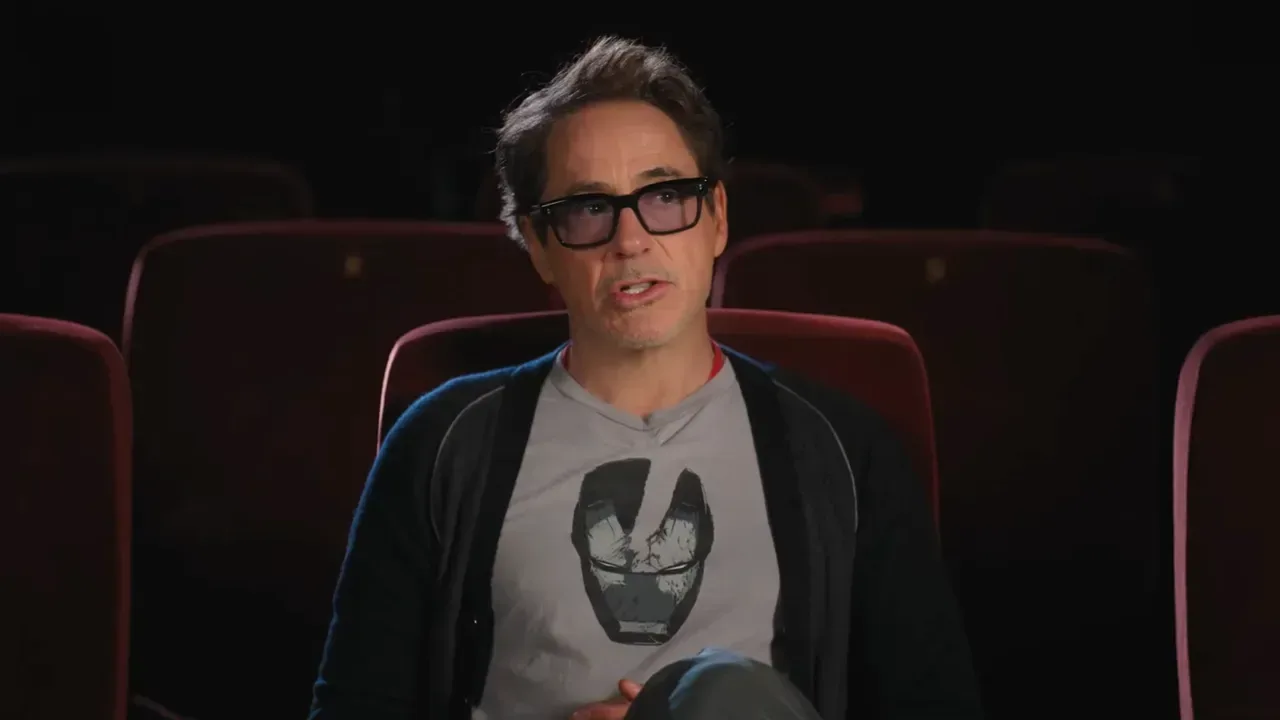
Joe Russo said that the fracture created by Captain America: Civil War was integral to the next film. That is a crucial piece of connective tissue. Tony Stark and Steve Rogers do not enter the crisis as a polished, fully operational unit. Their conflict means the assembled roster has a practical and emotional weakness before the cosmic threat arrives. Robert Downey Jr. framed the situation bluntly: whether they want to reunite or not, survival demands it.
“The thing that separates it from other Avengers movies for me is that the antagonist is the main character.” — Stephen McFeely
Related coverage includes Why Avengers: Infinity War Became the MCU’s Defining Ensemble Test.
An ensemble needs contrast, not just numbers
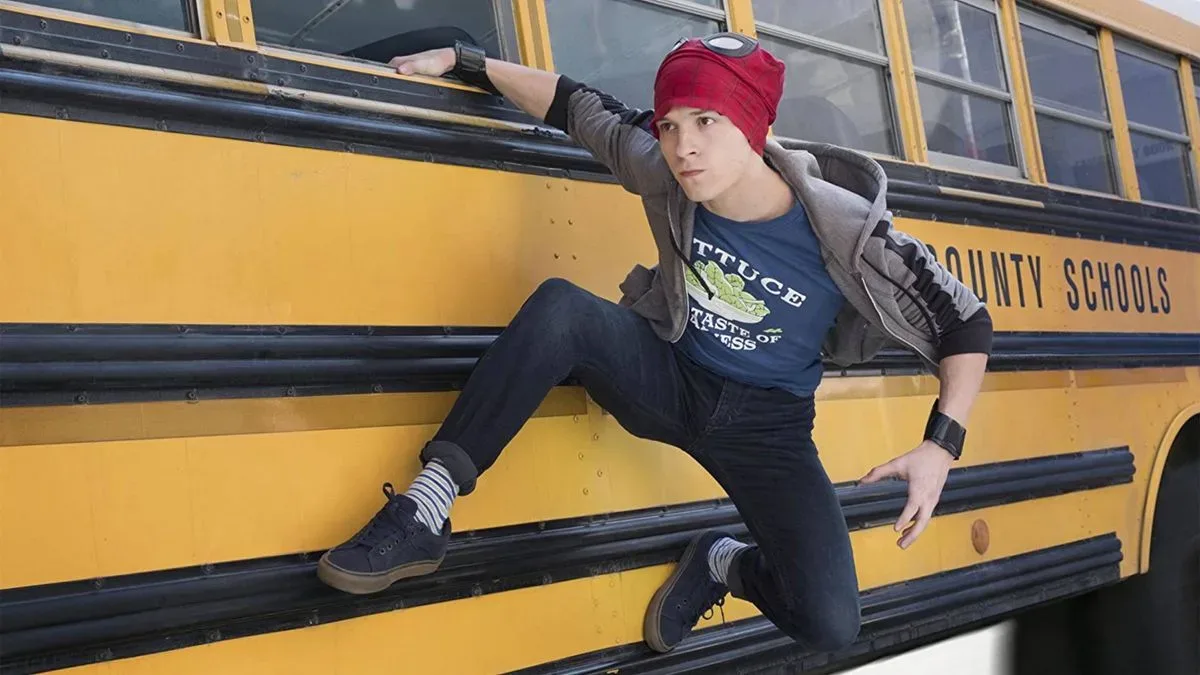
The production’s cast list was huge, but it was not homogeneous. The Avengers’ familiar dynamics were joined by Wakanda’s forces, the mystic world of Doctor Strange, Peter Parker’s youthful perspective, and the Guardians’ looser, more irreverent energy. The point was not that all of them had to become interchangeable Avengers. Chadwick Boseman characterized Wakanda as opening a new space for the Avengers, rather than T’Challa simply joining a club.
That distinction matters. Crossovers become flatter when every character is reduced to the same mission brief and emotional register. Infinity War instead had several tonal toolkits available. The Guardians could bring irreverence; Thor and Hulk carried the aftereffects of their more comic recent adventure; Vision and Wanda offered a relationship with direct consequences because of the Stone in Vision’s forehead. Don Cheadle also highlighted the value of fresh character pairings: the fun is in heroes asking, in effect, why these strangers are even here.
Chris Evans compared the fusion of successful solo franchises to Voltron. It is a useful image, provided it is taken beyond the obvious “many parts make one big part” reading. Each component needs to retain a reason for existing. A crossover gains energy from collision: a spacefaring outlaw and an Asgardian god should not sound or behave as though they emerged from the same small-town police procedural.
The Guardians were particularly important in this respect. Their connection to Thanos through Gamora and Nebula made them more than comic relief parachuting in from another corner of the universe. Karen Gillan indicated that Nebula’s relationships with Thanos and Gamora would receive further attention. In narrative terms, that gives the ensemble an emotional route into the antagonist that is separate from the Avengers’ strategic need to stop him.
Wakanda gave the scale a physical home
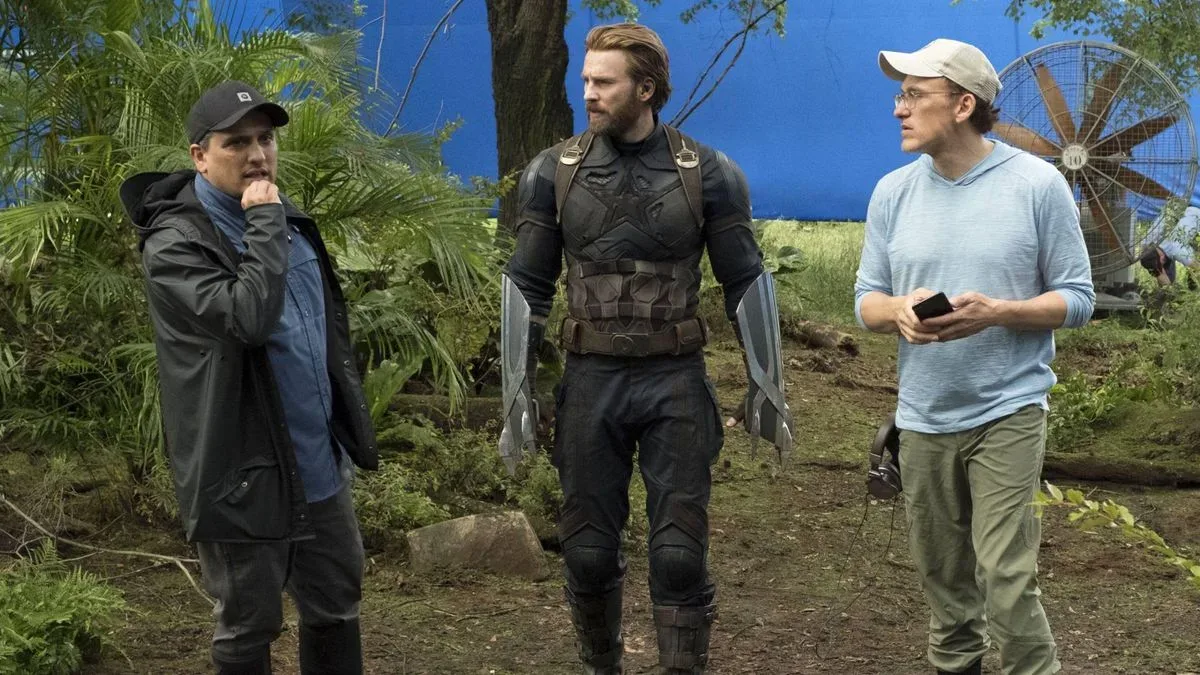
On the Atlanta set, the production built a battlefield of fire, twisted metal, fallen trees, dirt and gravel. Dozens of performers prepared to surge from a trench while crew managed practical flames. The scene was designed for slow motion, but the set detail points to a broader production need: even a highly digital blockbuster benefits from physical reference points for performers, cameras and visual-effects artists.
Wakanda’s importance was more than geographic. With Black Panther and Wakandan warriors present, the third-act battle had a defined setting and a force with its own cultural and political identity. Joe Russo described bringing Wakanda’s energy, themes and dimensionality into the larger film as a gift. That is more precise than saying the setting merely made the battle bigger. It gave the crossover a place that was already meaningful within the MCU.
The set report also illustrates the logistical reality behind an “all-star” event. Evans joked that organizing such a large group was like herding cats, a remark directed at the first assistant director’s task of keeping everyone focused. A first assistant director, or first AD, is responsible for helping coordinate the shoot: managing the schedule, organizing cast and crew, and keeping production moving safely and efficiently. In an action sequence crowded with principals, stunt performers, practical effects and multiple departments, that job is central to transforming a huge plan into usable footage.
Downey Jr. called the undertaking the MCU’s Ben-Hur, invoking an old-fashioned image of massive spectacle. Yet the more revealing detail is that the filmmakers had to preserve personal stakes amid that scale. Wanda and Vision’s developing relationship, Banner’s changing arc, and the unresolved tension between Tony and Steve all gave individual characters something to lose beyond a generic planet-shaped item on a danger chart.
Motion capture made an eight-foot villain present on set
Josh Brolin’s Thanos was created through performance capture, commonly called motion capture or mo-cap. The process records an actor’s movement and performance so animators can translate it into a digital character. On this production, Brolin performed on set, wearing the motion-capture gear necessary to build the computer-generated Thanos around him later.
The source accounts offer a valuable practical explanation of why that matters. Boseman said he could hear Brolin’s voice even when he could not meet the eyes of an eight-foot digital character: the actor was there. Karen Gillan said Brolin’s presence brought humanity to a villain who could otherwise risk becoming one-dimensional. Joe Russo emphasized how much sensitivity from a performance can carry into a CG creation.
That is the difference between visual effects as decoration and visual effects as performance support. The final character may be impossibly large and digitally rendered, but scene partners still need timing, voice, posture and reaction in the moment. Mark Ruffalo’s on-set setup for Hulk similarly included a mast to establish the digital character’s eyeline and scale. Such tools sound awkward because they are awkward. They are also part of how performers can play a scene rather than merely imagine one around blank air.
The technical work had a storytelling benefit: it allowed the film to regard Thanos as a character capable of intensity, violence, charm and apparent sensitivity instead of a floating visual-effects obstacle. Anthony Russo said the team considered showing more of Thanos’s backstory but ultimately felt it was not necessary, preferring to place the audience within his perspective as his plan unfolds. The villain’s rationale is therefore communicated through action and present-tense choices rather than a detour into explanatory biography.
That choice is not a universal solution for every antagonist. It fit here because Thanos’s objective was unusually concrete and his relationship to the Stones could be tracked across the story. It also helped the movie avoid an ensemble-management trap: adding a lengthy origin story would have further crowded a film already responsible for many heroes.
Secrecy shaped the process as well as the marketing
The scale of the production was matched by strict information control. Most actors did not have a complete script and received only a loose description of what they were shooting on a given day. Evans was among the exceptions, and his frank request for a full script underlines the actor’s basic challenge: performance is easier when a person understands where their character has been and where a scene is heading.
There is an obvious commercial reason for secrecy in an event movie packed with reversals and major character decisions. But the trade-off is creative. Actors build continuity through knowledge of motivation, progression and consequence. The directors and writers therefore had to manage not only complicated action and effects, but also partial knowledge across a sprawling cast.
The Russo brothers later clarified that Infinity War and Avengers: Endgame, though filmed back-to-back, were intended as distinct movies with different narratives, styles and tones. That is an important clarification for audiences revisiting the pair. Back-to-back production can suggest one oversized story cut in half; the stated aim was for each release to retain its own identity while still participating in a broader arc.
For viewers interested in how major shared universes keep their history coherent while adding new corners, there is a useful parallel in this look at a showrunner using a canon guide for Blade Runner 2099. The franchises are different, but the production issue is recognizably similar: continuity is not simply trivia for fans to catalog; it is a creative constraint that determines what new stories can credibly build upon.
Why the production design points still matter
Looking back at the film’s making, the most durable insight is not that the MCU had a lot of characters. Everyone already knew that. It is that Infinity War found mechanisms to make that abundance legible: one antagonist with a forward-moving goal, a hero team already weakened by internal disagreement, distinct groups with different tones, emotionally consequential relationships, and physical as well as digital methods for staging enormous action.
There was room for humor—Ruffalo said he tried to preserve some spontaneous energy even in a less comic story—but the production understood that Thanos could not feel like a routine enemy. Hemsworth called him the strongest force the heroes had faced. Pratt argued that the villain needed to touch every major character’s storyline. Those are two sides of the same strategy: scale is not merely a matter of power levels. The threat must reach into the structure of the shared world.
That is the real ensemble test that Infinity War set for itself. The challenge was not to make audiences notice 22 heroes in one movie. It was to make the presence of all those heroes feel necessary when one villain begins closing his hand around the story.