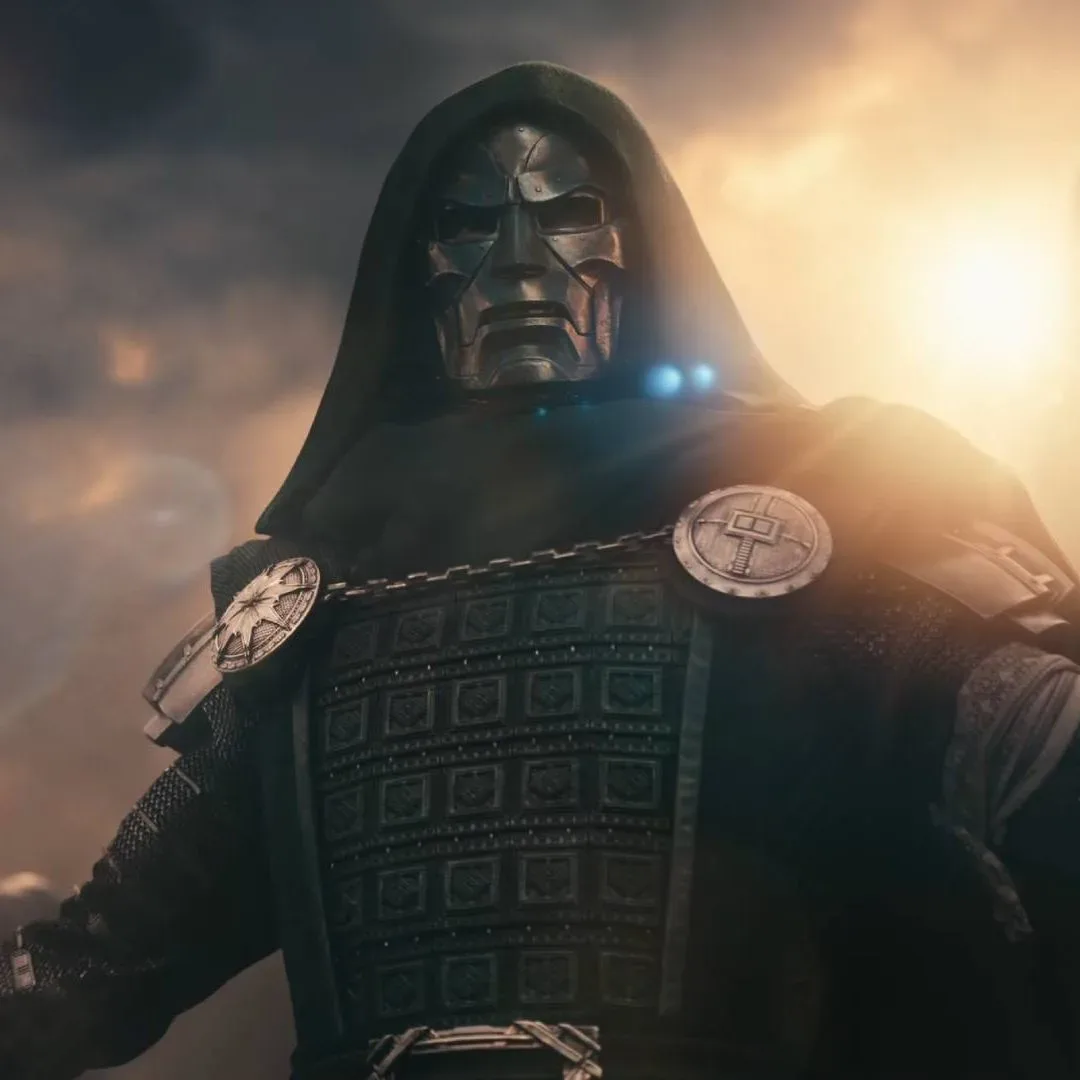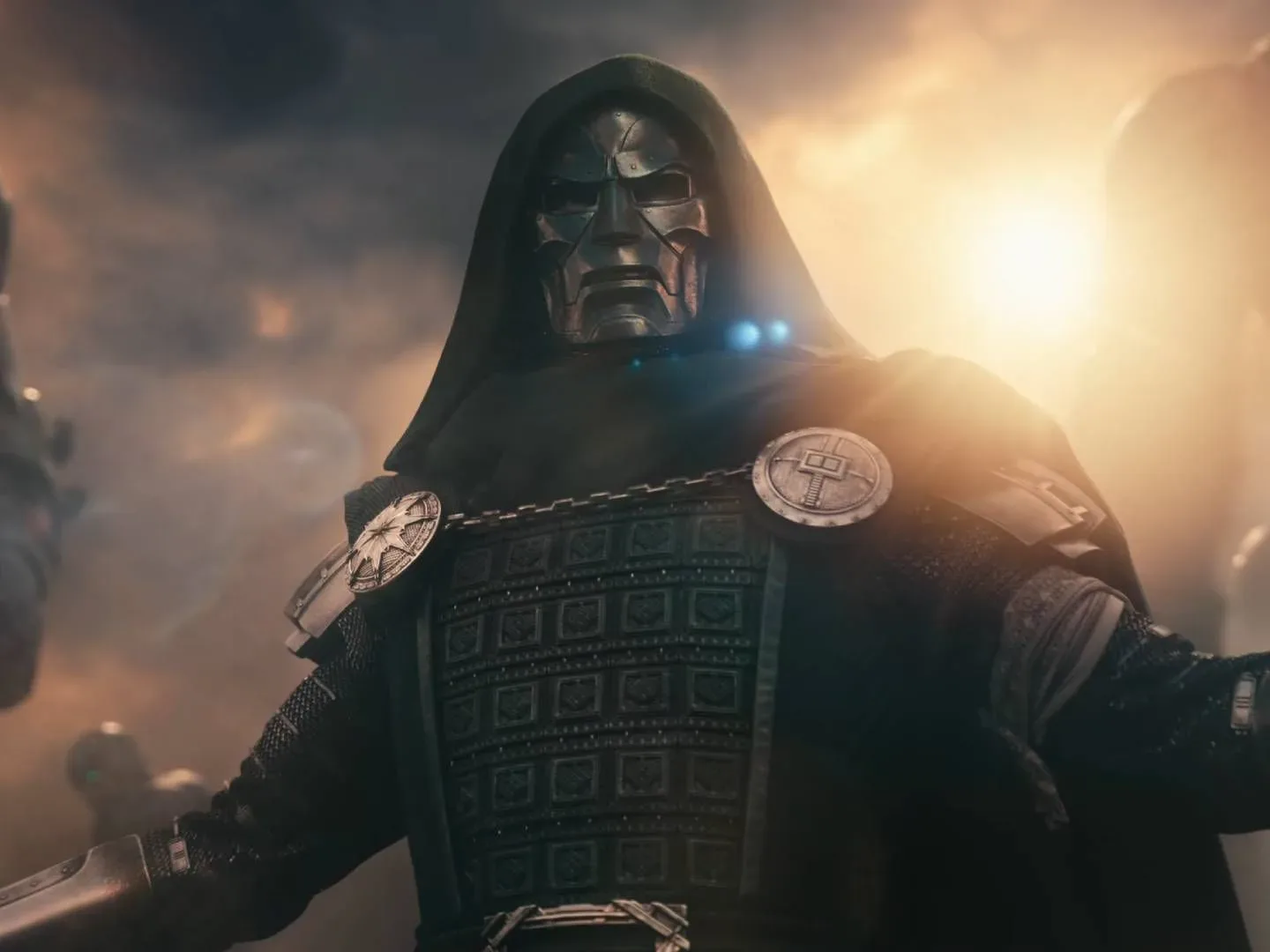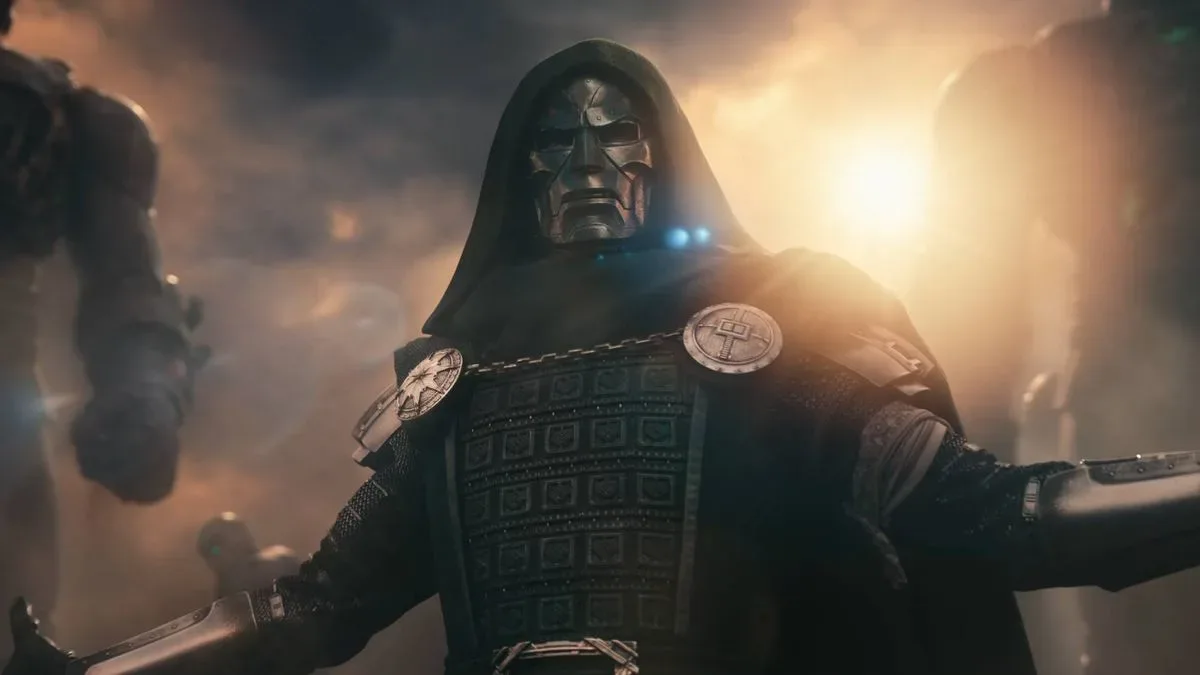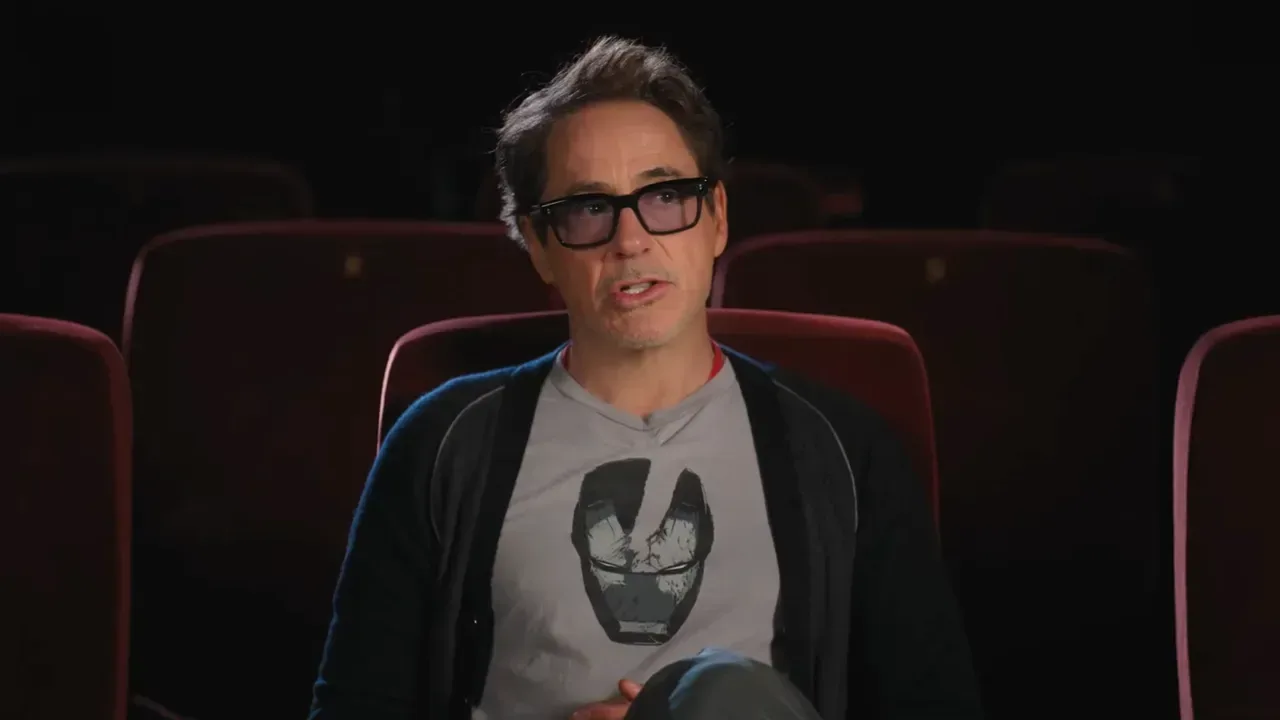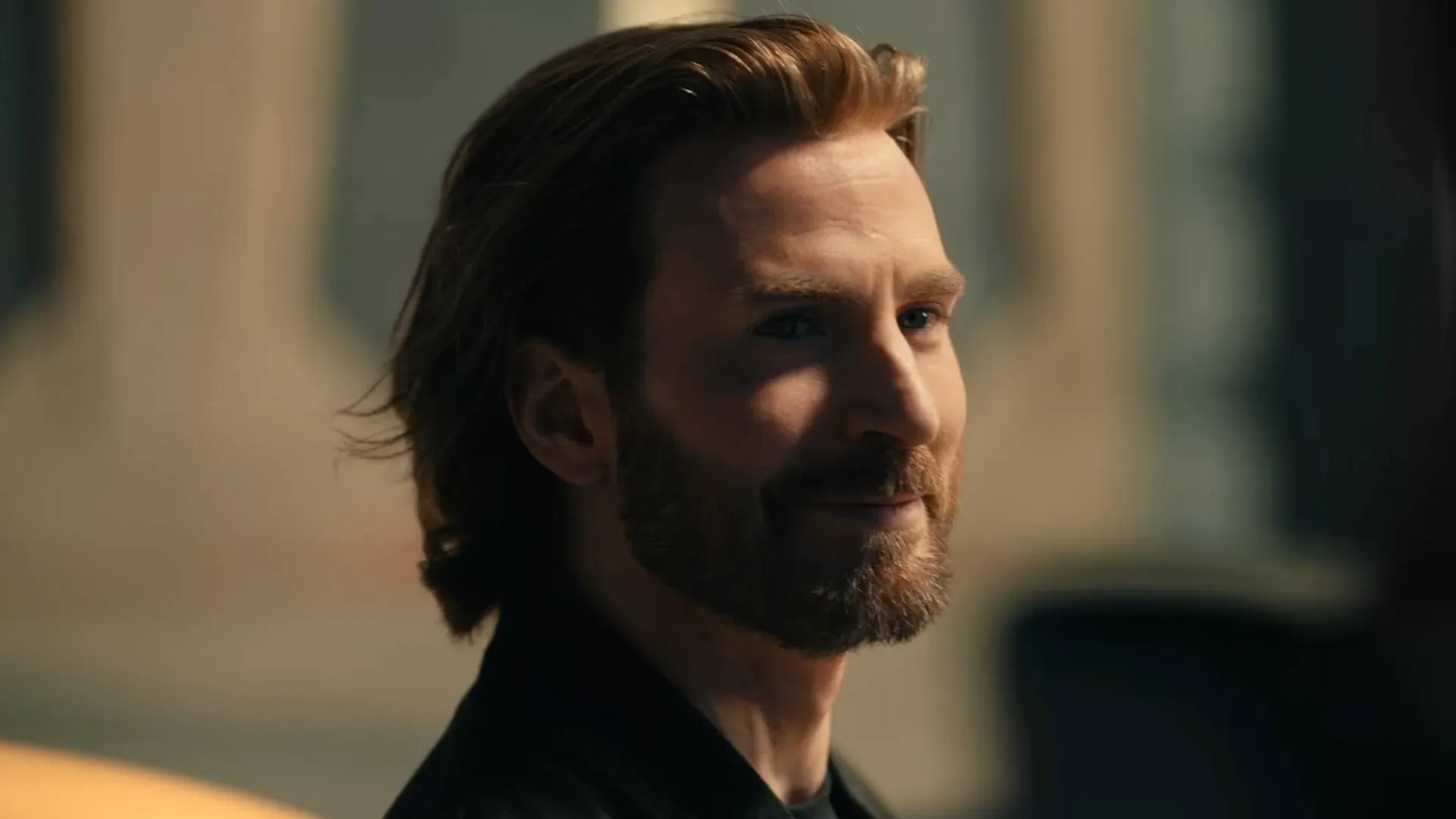
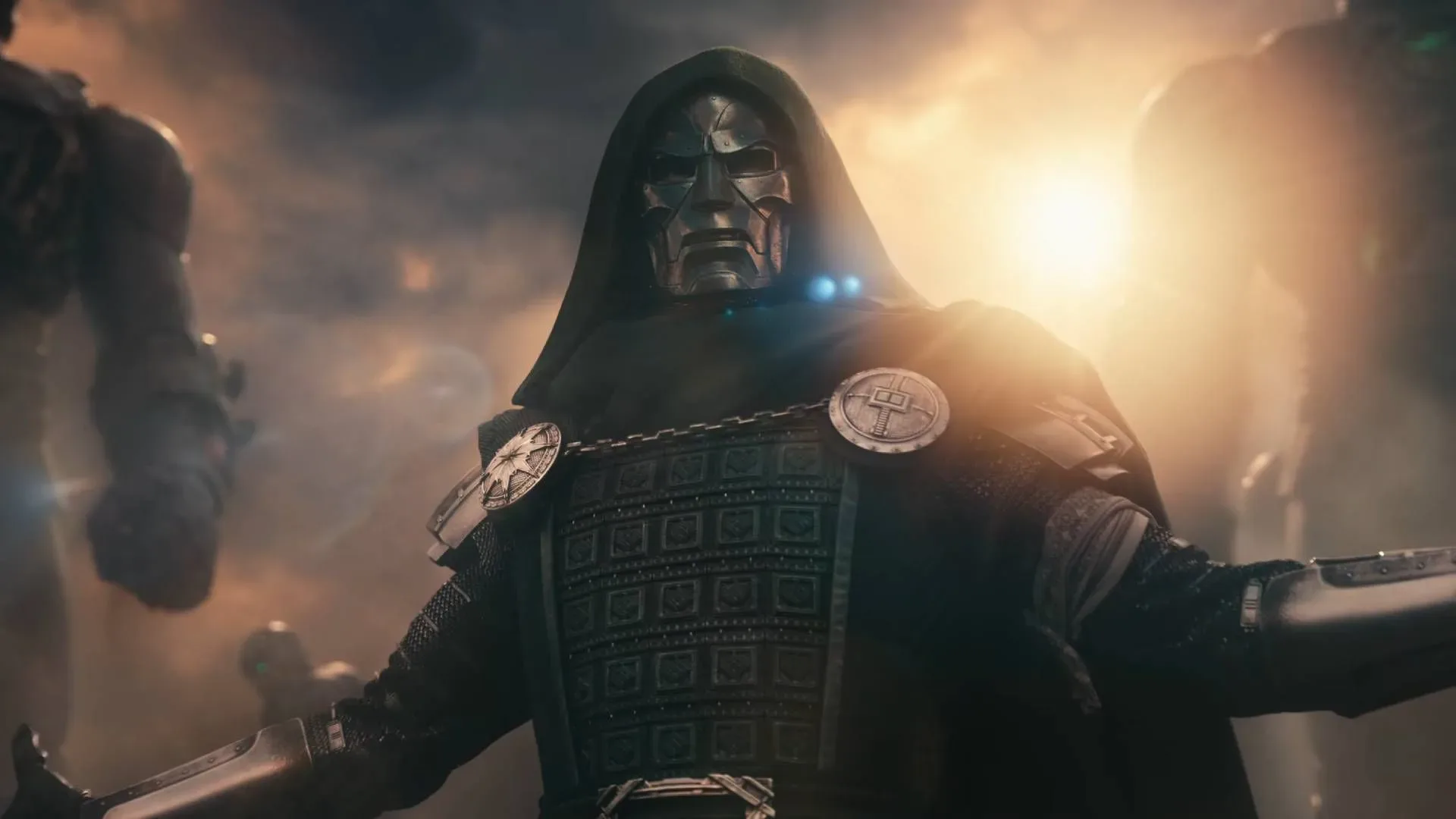
Robert Downey Jr.’s return to the Marvel Cinematic Universe in Avengers: Doomsday comes with a very different kind of armor. Rather than playing Tony Stark, Downey is taking on Doctor Doom, and Chris Evans says the character’s mask remains in place throughout the film. For Evans, that restriction only makes Downey’s work more impressive.
Evans has reunited with Downey on the upcoming Avengers film and praised the actor’s ability to make Doom emotionally legible even when much of his face is concealed. He described being eager to see Downey tackle a character with outward flair, including “the presence and the accent,” while still finding the human being underneath.
“He’s wearing a mask the whole time. That’s not an easy challenge, to try and get your message across and be emotionally available to connect with,” Evans said. “It just reinforces what I’ve always felt: Downey can do anything.”
That is a pointed observation for a character whose visual identity is inseparable from his mask. Doctor Doom has appeared on screen before, but Avengers: Doomsday appears to be treating the mask not as an occasional costume piece but as a central element of the performance. Marvel Studios president Kevin Feige has characterized keeping Doom masked as key to the character.
Downey has also addressed the practical problem the design creates. He said much of the work came down to “just the eyes,” adding that the production was still working out its approach and did not want to default to techniques audiences had seen previously.
A villain performance built around limited expression
For screen acting, the eyes, mouth, eyebrows, and subtle shifts across the face usually do a great deal of storytelling. A mask can remove or obscure most of those tools. That does not make a strong performance impossible, but it changes where the actor and filmmakers must put emphasis.
Eye acting is the straightforward term for communicating feeling and intention through gaze, focus, blinking, tension around the eyes, and the direction of a look. It can show calculation, suspicion, fear, contempt, connection, or a character withholding all of those things. With Doom’s face covered, the audience may be asked to read those smaller choices more closely than it would during an unmasked close-up.
Voice becomes equally important. Evans specifically mentioned Doom’s presence and accent, suggesting that Downey’s vocal choices are a major part of the role’s identity. An actor can create character through pace, pauses, volume, rhythm, diction, and changes in emotional control. A composed line delivery can make a villain seem commanding; a fracture in that control can reveal vulnerability or rage. Those are familiar performance tools, but they carry more weight when a full facial expression cannot do the supporting work.
Physicality matters too. The supplied details do not establish how Doom moves, fights, or is filmed, so it would be premature to predict a specific style. Still, a fixed face naturally makes posture, stillness, head movement, hand gestures, and the space an actor keeps from other characters more meaningful. In a mask, even the decision to remain absolutely motionless can become part of a character’s presence.
Why this is not simply another armored-hero performance
The obvious point of comparison is Downey’s time as Tony Stark, but the available information suggests viewers should not assume the same relationship between the actor and the costume. Downey himself said the team did not want to use processes they had seen before, and the material indicates that viewers should not expect the kind of in-mask presentation associated with Iron Man.
That distinction is important. A masked character can be staged in many ways. A production may reveal a performer’s face inside a helmet, remove the mask for emotional scenes, or rely on a visibly expressive faceplate. Here, the stated creative priority is Doom’s mask itself. If it stays on as Evans says, the film is committing to the dramatic limitation instead of repeatedly sidestepping it.
That could help establish a sharper separation between Doom and Stark. Downey’s casting already invites viewers to recognize the actor’s history in the MCU. A performance that is vocally, physically, and visually structured around concealment gives the new role its own rules. The mask becomes more than a callback to comic-book iconography: it becomes a barrier between the audience and a character the film wants to make compelling.
Evans’ comments also underline the challenge from the scene partner’s side. Emotional availability is not just an actor communicating outward; it is also the ability to receive another performer’s choices and create a believable connection. If Evans and Downey share scenes separated by Doom’s mask, their exchanges need to convey stakes without the familiar shorthand of a fully visible face reacting in close-up.
Humanity under the armor
Evans framed his praise around the humanity he sees beneath Doom’s intimidating surface. That does not reveal the character’s motivations, plot role, or allegiances, and those details should remain separate from what has actually been disclosed. But it does indicate that the performance is not being described as a purely remote or mechanical villain turn.
In dramatic terms, “human” does not necessarily mean sympathetic, heroic, or redeemable. It can mean that the character’s emotions are recognizable: pride, anger, humor, longing, control, resentment, or grief. A villain can be frightening precisely because the audience understands the feelings driving him, even if it rejects his actions. Evans’ language points toward that kind of layered approach rather than one built only around visual menace.
The mention of Doom being “fun” also deserves care. It should not be read as confirmation of a comedic interpretation or a tonal promise for the movie. It does, however, suggest that Downey is bringing some energy and personality to the role alongside the severity associated with a masked antagonist. The eventual balance between charm, menace, and emotional depth is one of the most interesting unanswered questions surrounding the film.
What has been shown, and what remains unknown
Doctor Doom has so far been seen masked in the film’s trailers. A new poster has also offered the clearest look yet at several Marvel characters set to debut in Avengers: Doomsday. Neither point settles how much viewers will learn about Doom before the film arrives, or how the movie will introduce Downey’s version of the character beyond the imagery already released.
It is also worth separating confirmed creative comments from inference. Evans says Doom wears the mask the whole time; Feige has said the mask is key; Downey says the eyes were a primary focus and that the team sought a fresh process. Those statements provide a strong indication of the production’s intent. They do not, by themselves, explain the character’s full story, whether the mask has a particular narrative purpose, or what every scene will look like.
That restraint is especially useful with an Avengers film, where promotional material can foreground a single image or character while leaving the broader structure undisclosed. The news here is less a plot reveal than an insight into performance design: the filmmakers appear to be placing a demanding comic-book costume at the center of Downey’s portrayal rather than treating it as an obstacle to remove.
Evans and Downey’s reunion adds another layer
Evans’ involvement gives his response additional resonance. His MCU history with Downey is long established, and the new film brings them back into the same project under altered circumstances: Downey is no longer playing Tony Stark, and the actor Evans knew as a fellow Avenger is now inhabiting Doctor Doom.
That change does not tell audiences what their characters’ relationship will be in the film. It does mean Evans has a useful vantage point on the craft of the transformation. His praise centers not on spectacle or plot secrets, but on the difficulty of making a masked figure emotionally accessible. That is a specific challenge, and it is one that goes directly to whether this Doctor Doom can hold attention in dialogue-heavy scenes as well as in the franchise’s large-scale confrontations.
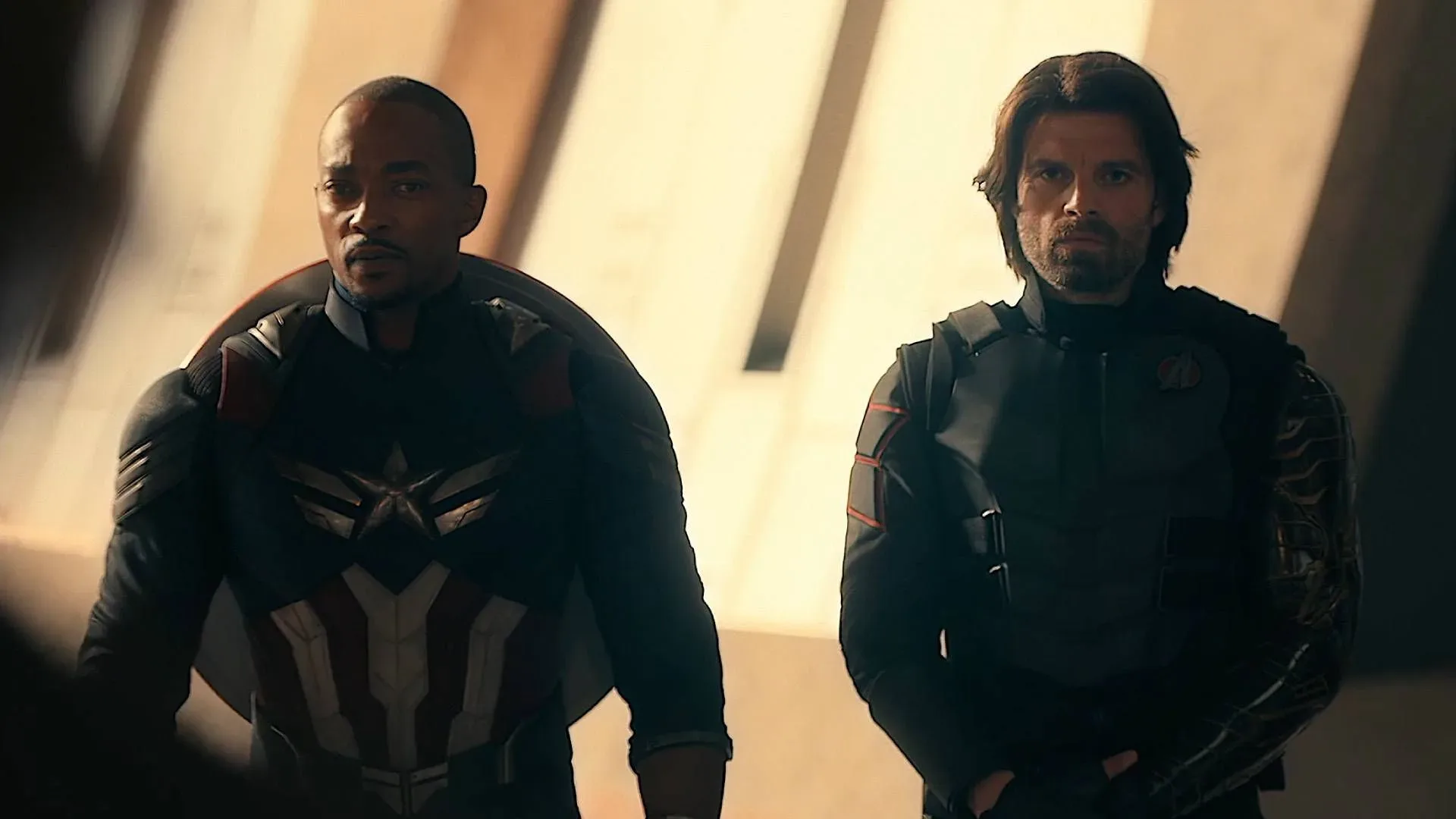
There is already another small clue about the film’s ensemble dynamics: Sebastian Stan has said the movie separates Bucky, Sam, and Steve while preserving heart in their scenes. Alongside Evans’ comments on Doom, that points to a production interested in character connections even within a story built around major Marvel figures.
When Avengers: Doomsday arrives
Avengers: Doomsday is scheduled for a December 16 theatrical release in the UK and December 18 in the US. Until then, the clearest takeaway from Evans and Downey’s remarks is a creative one: Doctor Doom’s mask is not merely a recognizable silhouette. It is a constraint Downey and the film’s makers are using to shape the character’s voice, gaze, emotional distance, and eventual connection with the people facing him.
For a performer associated so strongly with an MCU hero whose face was often visible to the audience, that is a substantial reversal. Whether Doom’s mask makes him feel more unknowable, more theatrical, or unexpectedly more human will be for audiences to judge when the film reaches theaters.