Warning: this article discusses spoilers through VisionQuest episode 4.
Four episodes into VisionQuest, Paladin’s assignment has a deliberately simple shape: locate Vision and deliver him to an unseen employer known only as The Client. The reason matters as much as the identity. The Client apparently wants Vision badly enough to permit Paladin to pursue the contract by whatever means are necessary, yet the show has withheld the central piece of context: what, precisely, is Vision meant to provide?
That omission turns the mystery into more than a guessing game. Vision’s identity sits at the intersection of synthetic consciousness, memory, autonomy and a body that can be occupied or controlled. A person seeking him could be pursuing a weapon, a technological breakthrough, an answer about artificial life, a lost family connection, or a means to recover their own physical existence. Episodes 3 and 4 add several possible directions, but they do not point conclusively at one answer.
There is one useful rule for reading the evidence so far: access is not the same thing as authorship. A character may communicate with Paladin, know where Vision is, or be deeply invested in synthetic life without necessarily being the one who commissioned the hunt. The series has already made its mystery modular enough for those roles to overlap—or to belong to entirely different people.
What The Client is known to want
The confirmed basics are narrow. The Client has hired Paladin to obtain Vision. Paladin’s patron remains unidentified, and the motive has not been disclosed. That leaves every candidate dependent on inference rather than a definitive reveal.
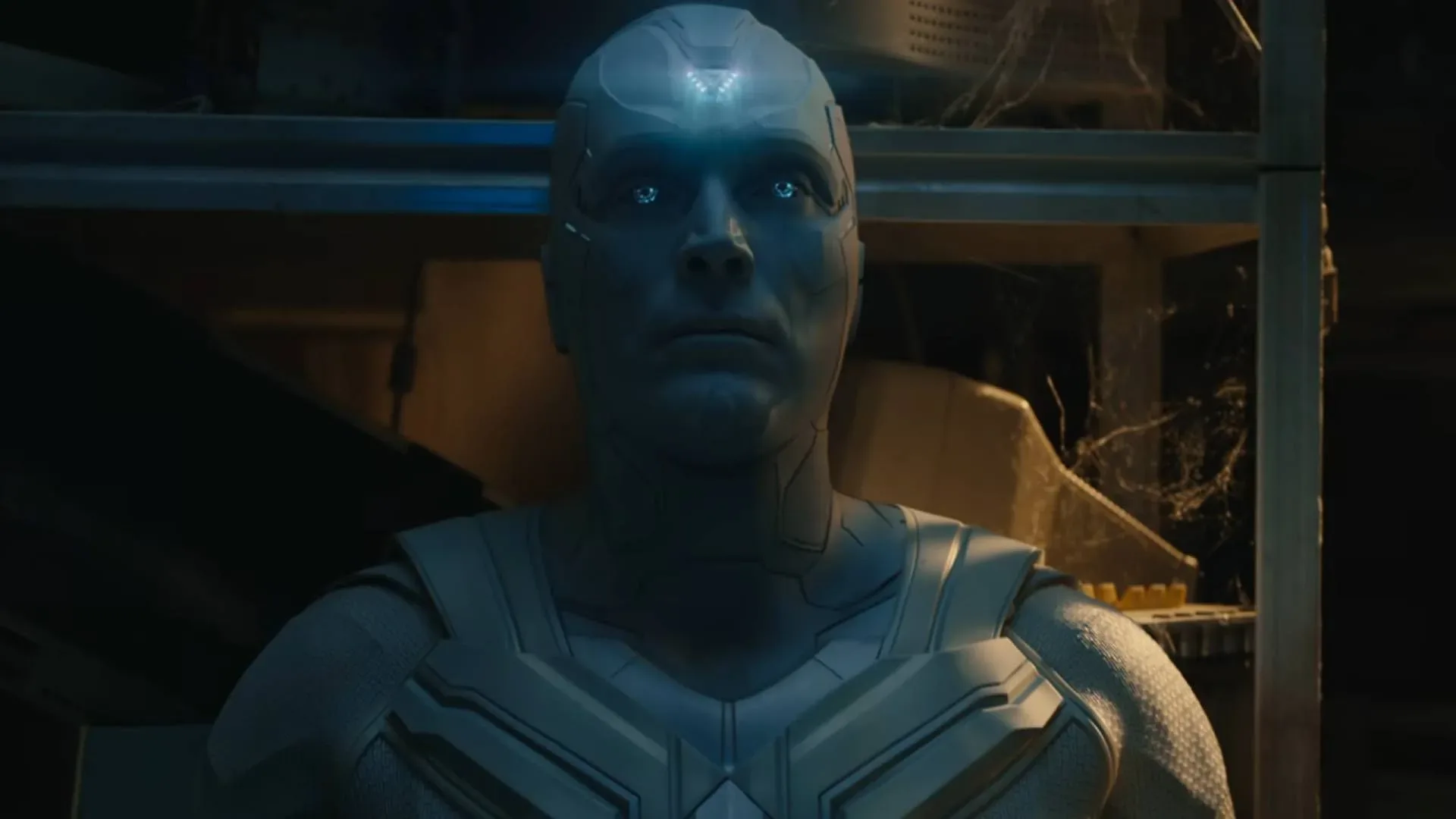
Still, the target itself is revealing. Vision is not merely someone who can be tracked down. His current situation includes a mind space in which Ultron has spent time, and episode 4 ends with Ultron hijacking Vision’s body to secure the freedom he wants. Meanwhile, Dr. Josephine Carrington’s work at Markridge Biotech concerns stable synthetic consciousness—described in the show as artificial general intelligence. In plain terms, that refers to an AI with broad, general problem-solving abilities rather than a system restricted to one narrowly defined task.
Those ingredients make a technological motive plausible. But the show’s family threads make a personal motive plausible too: Billy Maximoff is looking for Tommy, and Wanda’s absence still hangs over Vision’s story. The portrait of Jim Hammond, the original Human Torch, in Vision’s mind-space lounge adds one more route into the mystery: an older form of artificial life with a potentially unresolved connection to Vision.
For more on the show’s wider trail of AI, Sokovia and street-level callbacks in these episodes, see our breakdown of VisionQuest episodes 3 and 4 references.
Ultron: the obvious answer with a major contradiction
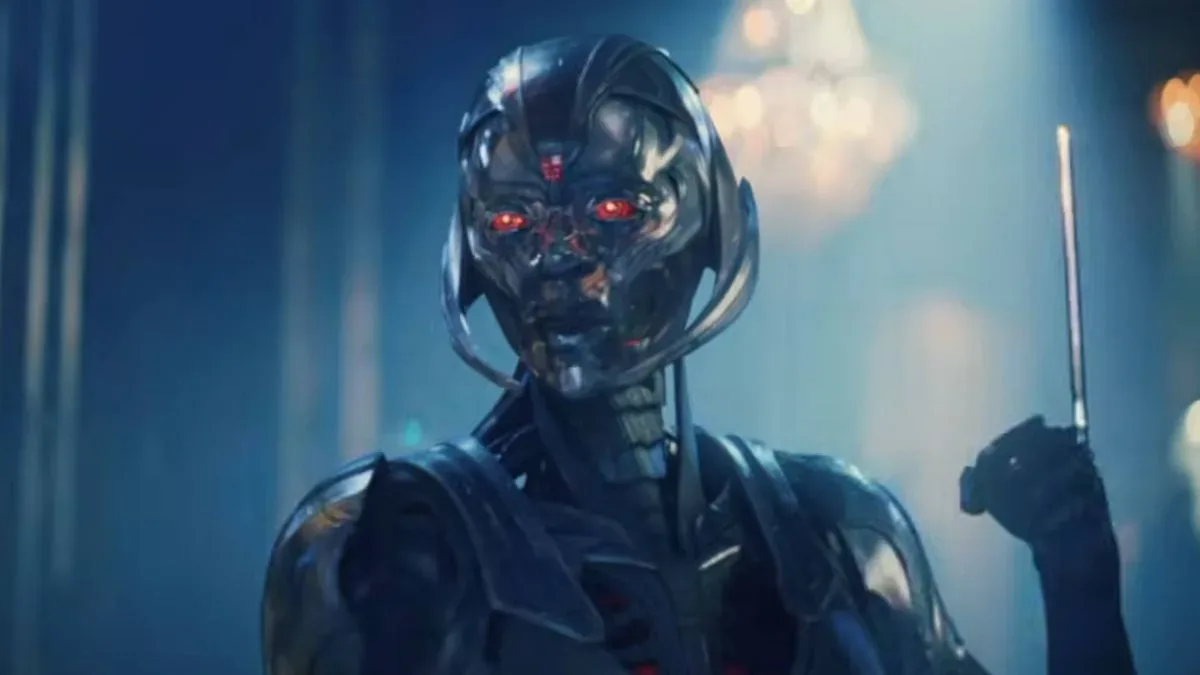
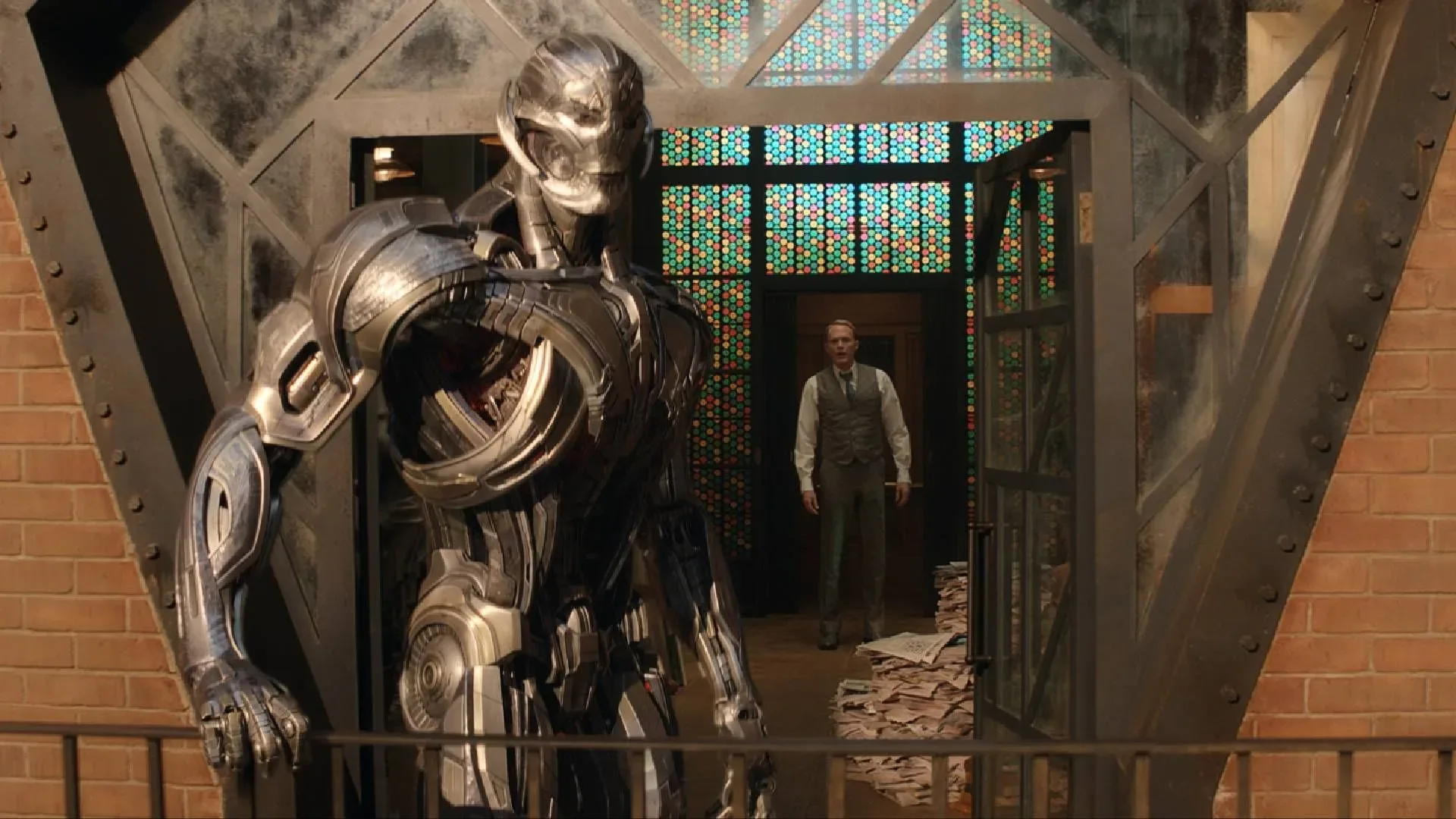
Ultron is the most immediately tempting suspect. He has been in Vision’s mind, remains capable of ruthless action despite seeming to have softened somewhat, and episode 4 establishes that he can hijack Vision’s body. He also has contact with Paladin through emails and carrier pigeons. On the surface, that is more direct connective tissue than any other candidate has received.
His apparent objective is also easy to understand: freedom. Vision’s body is an extraordinarily valuable route to agency for an intelligence previously associated with Vision’s internal world. The difficulty is timing. By the end of episode 4, Ultron has achieved freedom by taking the body himself. If his goal was simply to possess a physical vessel, a standing contract to have Paladin deliver Vision seems unnecessary, or at least incomplete.
That contradiction does not clear Ultron. It could mean the body is only one phase of a larger plan, or that his messages to Paladin are connected to the contract without proving he originated it. Equally, the early revelation of the correspondence may be a storytelling feint: the show could be showing viewers the loudest clue first because it wants them to suspect Ultron.
Assessment: Ultron has the strongest visible operational connection to Paladin, but the episode 4 outcome complicates the straightforward version of the theory. He is more convincing as a person with access to the hunt than as a confirmed Client.
Dr. Josephine Carrington, also known as Jocasta: motive exists, the conflict does not fit
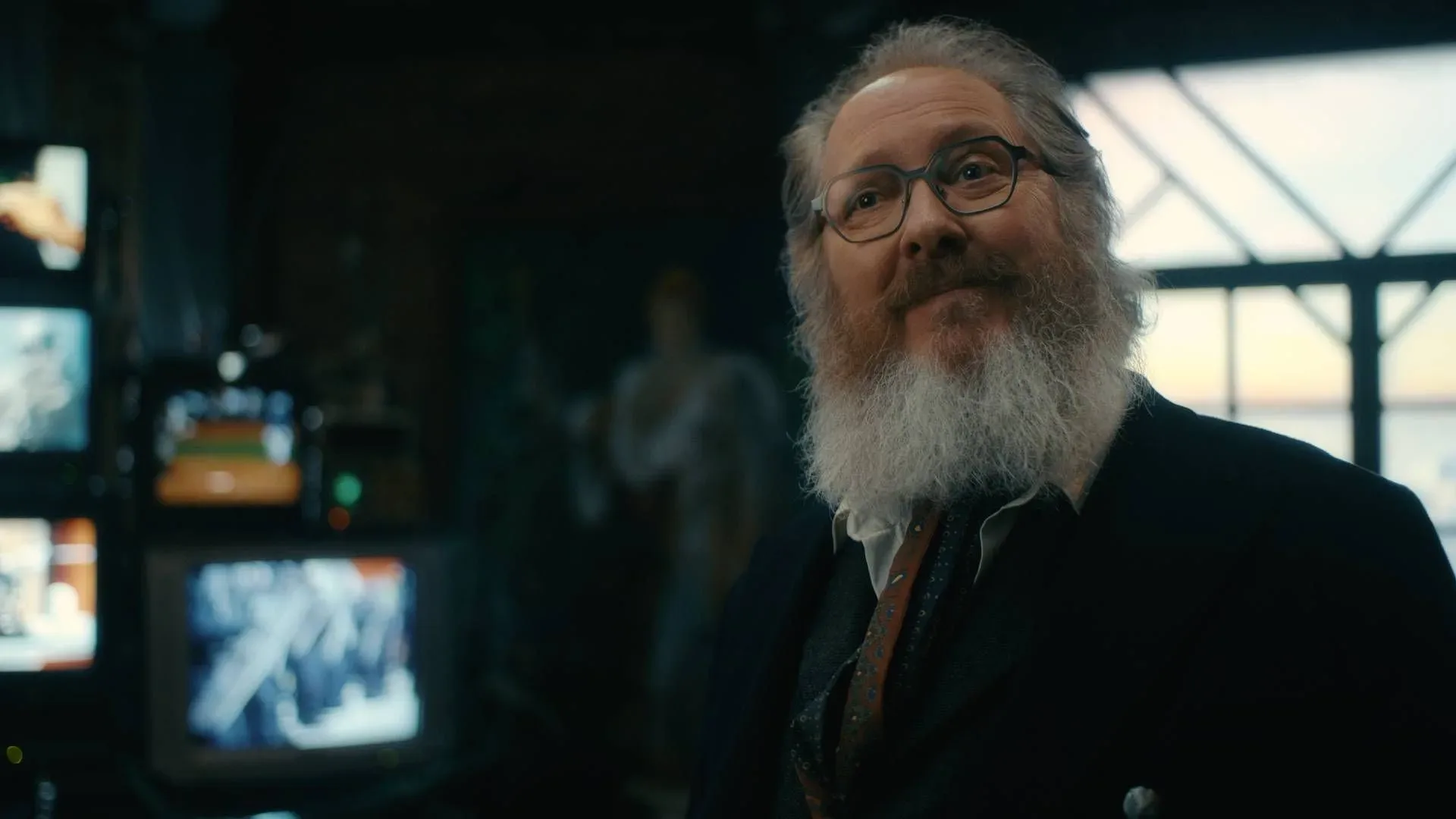
Episode 4 identifies the Butcherbird serial killer as Dr. Josephine Carrington, also called Jocasta. Her history makes her a logical name in any Vision-centered mystery: she was among the people involved in creating a stable synthetic consciousness at Markridge Biotech. If Vision represents a singularly advanced synthetic being, Carrington has an evident professional—or possibly personal—reason to seek him.
A contingency explanation is the most charitable case for this theory. Carrington may have arranged for Paladin to retrieve Vision as a backup if her own efforts failed. A client employing an outside tracker could also prefer distance from the operation, especially if the mission involved risks she did not want tied directly to herself.
But episode 3 presents the largest problem: Jocasta and Paladin come into conflict. That is difficult to square with a normal employer-contractor relationship. The possibility is not mathematically eliminated; fiction can accommodate deception, shifting alliances or a contractor acting outside the client’s knowledge. Yet none of those explanations has been established. At the present point in the season, they are extra assumptions added to rescue a theory that otherwise has a clear inconsistency.
Assessment: Carrington’s expertise gives her a credible reason to want Vision, but her clash with Paladin is powerful evidence against her being the person who hired him. She looks more like a competing force in the story than its hidden employer.
Billy Maximoff: emotionally logical, practically uncertain
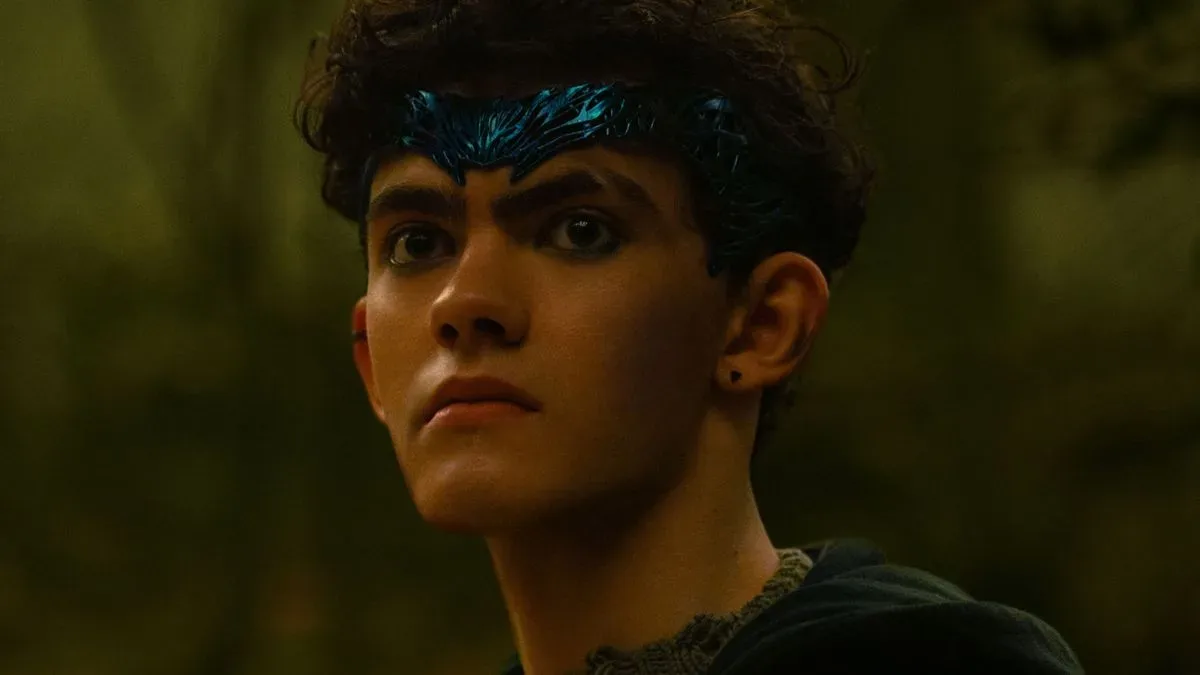
Billy Maximoff, also known as Wiccan, offers the clearest family-based theory. He is searching for his twin brother Tommy. If he is trying to rebuild or find what remains of his family, seeking Vision follows naturally. Vision is not only his father; he is also bound to the broader mystery surrounding Wanda and Tommy.
The practical objection is obvious. Billy is a powerful magic user, which raises the question of why he would require Paladin’s services. Yet that objection is softened by events already shown. Paladin’s Handler found Tommy quickly, which suggests that the tracker’s network or methods can achieve results Billy has not achieved on his own. A powerful character does not automatically have the right information, contacts or investigative infrastructure. Magic and tracking are not necessarily interchangeable tools.
There is another limit on the theory: the series has not confirmed that Billy is in VisionQuest. Some viewers believe they have noticed him, but that is not confirmation of his involvement, much less confirmation that he commissioned Paladin. The theory therefore rests on a sensible emotional chain, but it still lacks direct on-screen evidence tying Billy to the job.
Assessment: Billy makes sense if The Client’s motive is reunion, recovery or family. He remains an intriguing possibility, especially because Paladin has proved more effective at tracking than Billy’s own search, but the evidence is circumstantial.
Wanda Maximoff: the show has placed a boundary around this possibility
Wanda Maximoff cannot be ignored whenever Vision and their sons are part of the conversation. Her shadow is explicitly important to the series, and if she survived being crushed beneath a mountain when last seen, a weakened Wanda might conceivably turn to a third party to find Vision. The need for help would be especially understandable if Vision is difficult to locate or if she cannot safely approach him herself.
There is a personal complication, too. Vision attempted to kill Wanda the last time they met face-to-face. That would make any attempt to find him emotionally fraught rather than a simple reunion. It could explain a decision to use an intermediary such as Paladin rather than pursue Vision directly.
However, this remains among the least likely theories because showrunner Terry Matalas has said Wanda will not appear in the series, even though her influence will loom over it. An off-screen architect of the central pursuit is not impossible in abstract terms, but it would be a considerable way to involve a character the show is not bringing on screen. The evidence supports her importance to the narrative; it does not support her involvement in the contract.
Assessment: Wanda has an understandable emotional reason to seek Vision, but the stated absence of the Scarlet Witch from the show makes her a long shot. Her role is more likely thematic than active unless the series sharply redefines what “not in the show” means.
Jim Hammond: the clue that may be setting up a different kind of artificial-life story
Jim Hammond may be the most speculative candidate, but he has a specific piece of visual evidence on his side. A picture of the original Human Torch hangs in the lounge within Vision’s mind space, establishing that the first synthezoid has some relevance to VisionQuest. The series has not yet explained how Hammond’s artificial life ended in this continuity—or whether it ended at all.
That uncertainty creates an interesting version of the Client theory. If Hammond survived but lacks a body, he could have a compelling reason to find Vision and a practical reason to engage Paladin. Vision might represent help, knowledge or access to a physical form. This is not a revealed plot point; it is an attempt to make sense of why the show chose to place Hammond’s image in such a psychologically loaded setting.
It is important not to overstate a single image. A portrait can function as background detail, a signal of thematic lineage or a promise of future relevance without making its subject the mastermind of the current plot. The evidence tells viewers to keep Hammond in mind. It does not establish his whereabouts, condition, motives or relationship to Paladin.
Assessment: Hammond is the best “outside” possibility because the series has deliberately placed him in Vision’s mental landscape. He has less direct evidence than Ultron and less immediate emotional logic than Billy, but he could reframe the hunt around synthetic beings seeking survival or embodiment.
Reading the mystery after episode 4
The suspects split into two broad groups. Ultron, Jocasta and Hammond fit a story about synthetic consciousness, control and embodiment. Billy and Wanda fit a story about fractured family, recovery and the consequences of Vision’s past. The show can also merge those groups: a personal search may collide with a technological plot, while multiple characters pursue Vision for different reasons.
At this stage, Ultron has the clearest link to Paladin but also the clearest reason to be a misdirection. Jocasta has motive but a serious conflict with Paladin. Billy has a coherent reason to want his father found but is not confirmed to be present. Wanda has a plausible emotional connection yet an explicit obstacle in Matalas’ statement. Hammond is supported by a purposeful-looking visual clue but otherwise remains mostly unknown.
That leaves the identity of The Client unresolved, exactly as the show intends. The most productive question for upcoming episodes may not be only “who hired Paladin?” but “what does Vision uniquely offer that none of these people can obtain another way?” The answer should reveal whether the contract is fundamentally about a body, a mind, a family, or something that links all three.