Warning: this article contains major spoilers for VisionQuest episodes 3 and 4.
VisionQuest is widening its scope without losing sight of its central dysfunctional AI family. Episodes 3 and 4 put Vision, Tommy and Ultron’s increasingly tense father-and-son dynamics at the center, but the surrounding dialogue and background details also draw from a remarkably broad selection of Marvel continuity.
Some references work as clean reminders of past MCU events: Tony Stark’s death, the Battle of Sokovia and the Snap all remain consequential pieces of lived history for these characters. Others are comic-book-facing signals, including Paladin’s connections to Daredevil lore and the mention of Dr. Phineas Horton. A few details may simply be playful connective tissue rather than promises of an imminent character appearance. That distinction matters. An Easter egg can establish shared history or thematic context without functioning as a casting announcement, sequel confirmation or setup for a particular crossover.
Here is what the major references in the two episodes mean, along with why each one is important to the story VisionQuest is telling.
Episode 3: Paladin’s very crowded injury report
Episode 3 uses a conversation between Paladin and his Handler to rattle off incidents that place him across several corners of Marvel’s world. It is an efficient bit of characterization: rather than introducing him through a lengthy history lesson, the show lets a list of scars, enemies and equipment imply a dangerous career.
The Ten Rings and Adamantium chest armor
The Handler asks whether she should send a gift basket to the Ten Rings Syndicate for supplying Paladin’s Adamantium chest armor. The Ten Rings name carries obvious MCU weight. A cell associated with the organization appeared in Iron Man, and the group later became central to Shang-Chi and the Legend of the Ten Rings.
Adamantium is the other major word in that line. Here, the show identifies it as the material used for Paladin’s chest armor. The immediate storytelling purpose is clear: it explains why he has unusually formidable protection. The larger reference joins a world-spanning criminal organization with one of Marvel’s most recognizable fictional super-materials, making the armor feel like something obtained through serious underworld connections rather than ordinary procurement.
The “Brooklyn job” and the Punisher allusion
Paladin’s account of a Brooklyn operation includes having to pull IED shrapnel from his gut. He frames the incident as a “punishing disagreement with an old friend,” an unmistakable pun aimed at The Punisher.
This is one of the episode’s more restrained references because it does not need the other character to enter the scene. It gives Paladin a past conflict with a famously uncompromising vigilante and suggests that whatever happened in Brooklyn was brutal enough to leave a lasting physical cost. The joke also fits a character who seems hardened enough to reduce a catastrophic injury to a piece of workplace banter.
A creature between man and wolf
The Handler also mentions bite marks left by something “half-way between a man and a wolf.” Paladin responds that the attacker was perfectly reasonable in daylight. Together, those lines point toward Jack Russell, the lead character of Werewolf by Night, portrayed by Gael García Bernal.
The key detail is the contrast between daytime reasonableness and the wolf-like threat. It turns a werewolf reference into a dry character joke, while confirming that supernatural encounters are part of the world Paladin has navigated. As with the Punisher nod, it should be read as connective context first. The dialogue establishes an apparent past encounter; it does not on its own establish that Jack Russell is about to return.
Hell’s Kitchen, a billy club and Paladin’s Daredevil roots
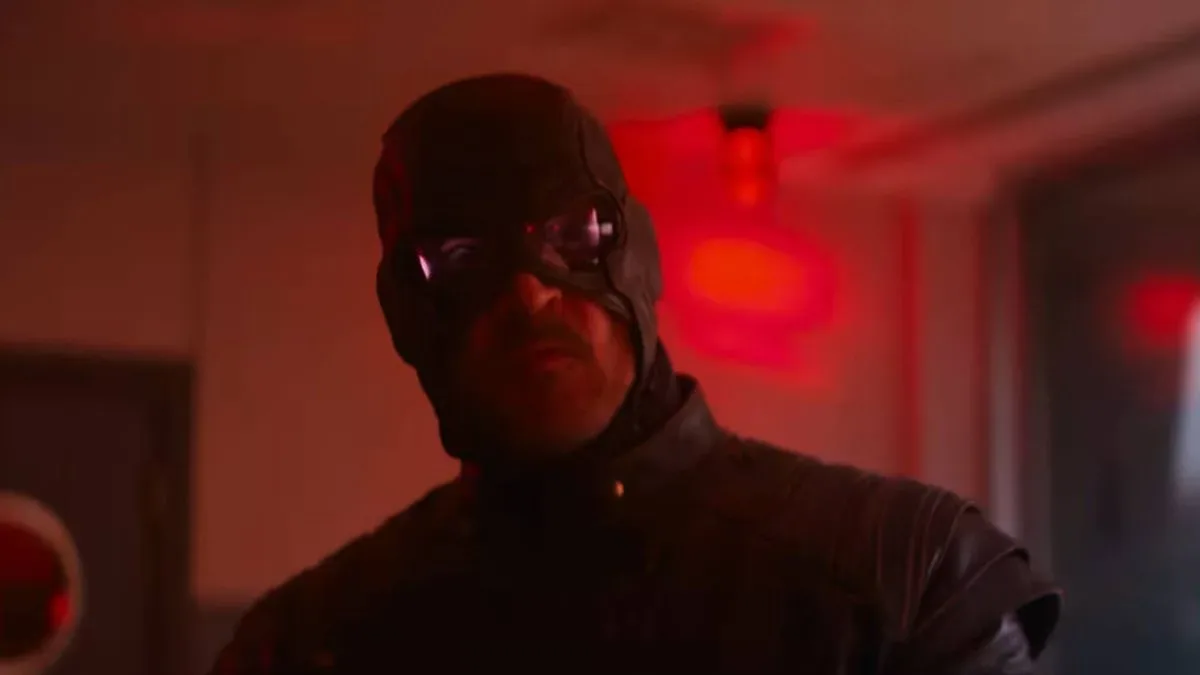
The most layered stretch of Paladin dialogue is the reference to a concussion from a steel-fibre billy club, followed by his warning about the heat in Hell’s Kitchen. The billy club is Daredevil’s signature weapon, while Hell’s Kitchen is the neighborhood most closely associated with the vigilante.
The callback is particularly fitting because Paladin first appeared in Daredevil comics. His look also has points of overlap with the on-screen antihero played by Charlie Cox. That makes the exchange more than a generic New York wink: it links Paladin to the comic-book territory where the character originated, while the dialogue itself makes his relationship to that territory sound painful.
Street-level Marvel references can feel very different from cosmic or Avengers-scale ones. They evoke a world of neighborhoods, individual grudges and specific weapons rather than a conflict that dominates global news. Episode 3 lets Paladin carry both scales at once: he can have Adamantium armor from the Ten Rings and still remember exactly what a billy club did to his head.
F.R.I.D.A.Y., grief and the legacy of Tony Stark
Episode 3 also gives F.R.I.D.A.Y. a deeply personal connection to Tony Stark’s death in Avengers: Endgame. She says that, as half the world returned, she lost half of hers because she could not save Tony.
That line reframes an event audiences know primarily as a human superhero sacrifice through the perspective of an AI who was present for it. It does not alter the event; it reveals an emotional consequence that was not previously foregrounded. F.R.I.D.A.Y.’s grief matters especially in a show concerned with whether AIs are merely tools, replicas and systems, or people capable of memory, loyalty and mourning.
The funeral for J.A.R.V.I.S. expands that question. The AIs speak of grief as creating something new, an “inner fire,” language that echoes Vision’s well-known articulation of grief and enduring love. VisionQuest is not merely repeating a popular line for recognition. In this setting, the echo becomes a thematic proposition: grief may be evidence of the emotional interiority the AI characters are trying to define and defend.
WandaVision’s sitcom shadow
Vision and Tommy watch sitcoms while hiding out in a motel room. It is a small image, but it naturally recalls WandaVision, where sitcom form was inseparable from Wanda’s attempts to manage loss and construct a life with Vision and their family.
Here, the setting is much less controlled: a motel room is temporary, exposed and practical rather than idealized. The sitcoms therefore work as an echo rather than a recreation. The characters are engaging with a familiar shared language while their circumstances remain precarious.
Tommy, the Snap book and the meaning of “Speed”
When Tommy speaks about Wanda, he says he remembers reading about her in a book about the Snap. The title is not confirmed in the dialogue, but it may refer to Scott Lang’s Look Out for the Little Guy!, the in-universe book that addresses the Blip and the fight against Thanos.
The uncertainty is worth retaining. The scene establishes that Tommy has accessed written accounts of the Snap; identifying a particular book remains an informed possibility rather than a fact stated outright.
At the end of the episode, when Tommy saves Vision, he is told that he has “the very essence of speed.” This is a direct nod toward his powers and his superhero identity, Speed. The phrasing makes the rescue more than a convenient action beat. It frames speed as something essential to Tommy rather than a detachable ability.
Episode 4: Ultron returns to Sokovia’s shadow
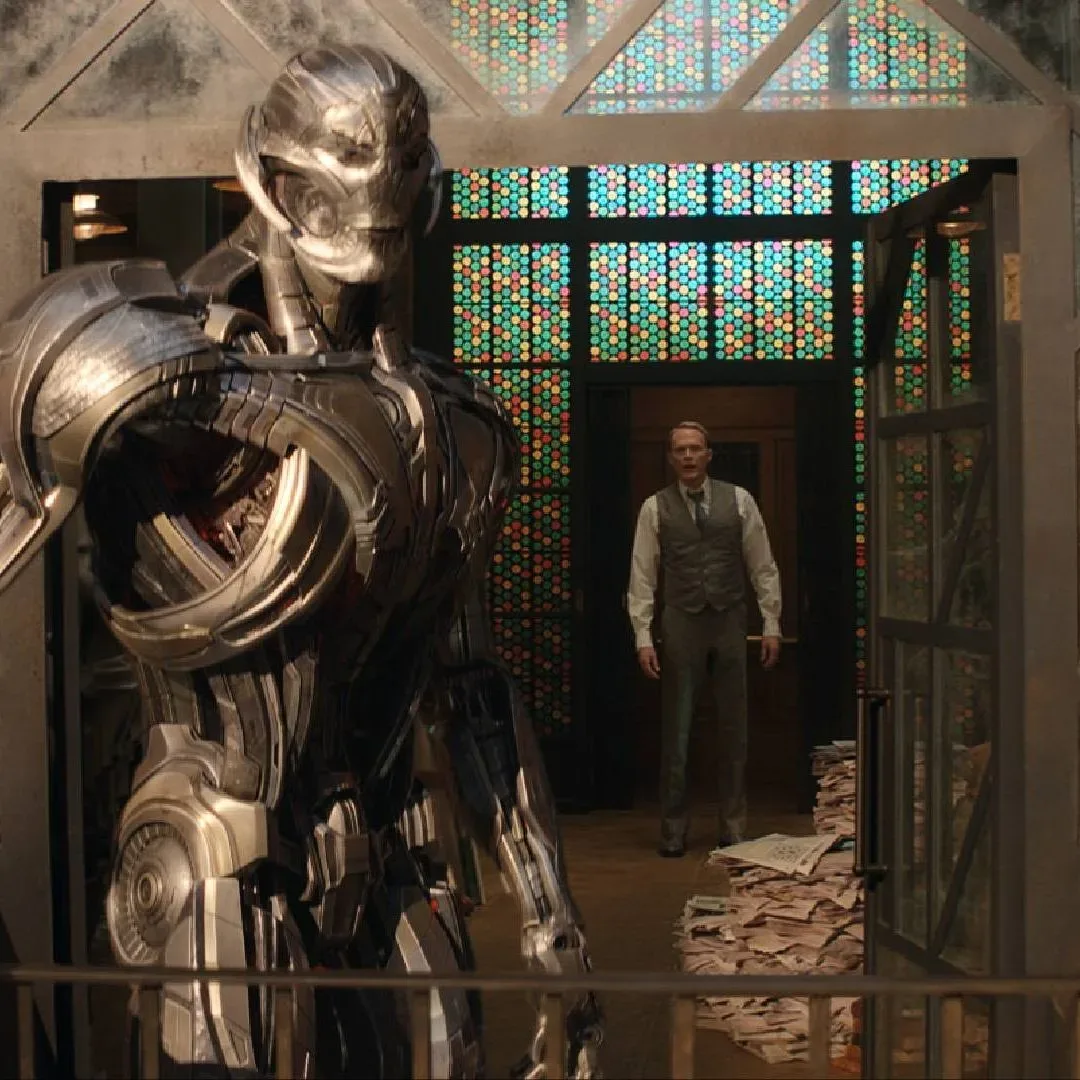
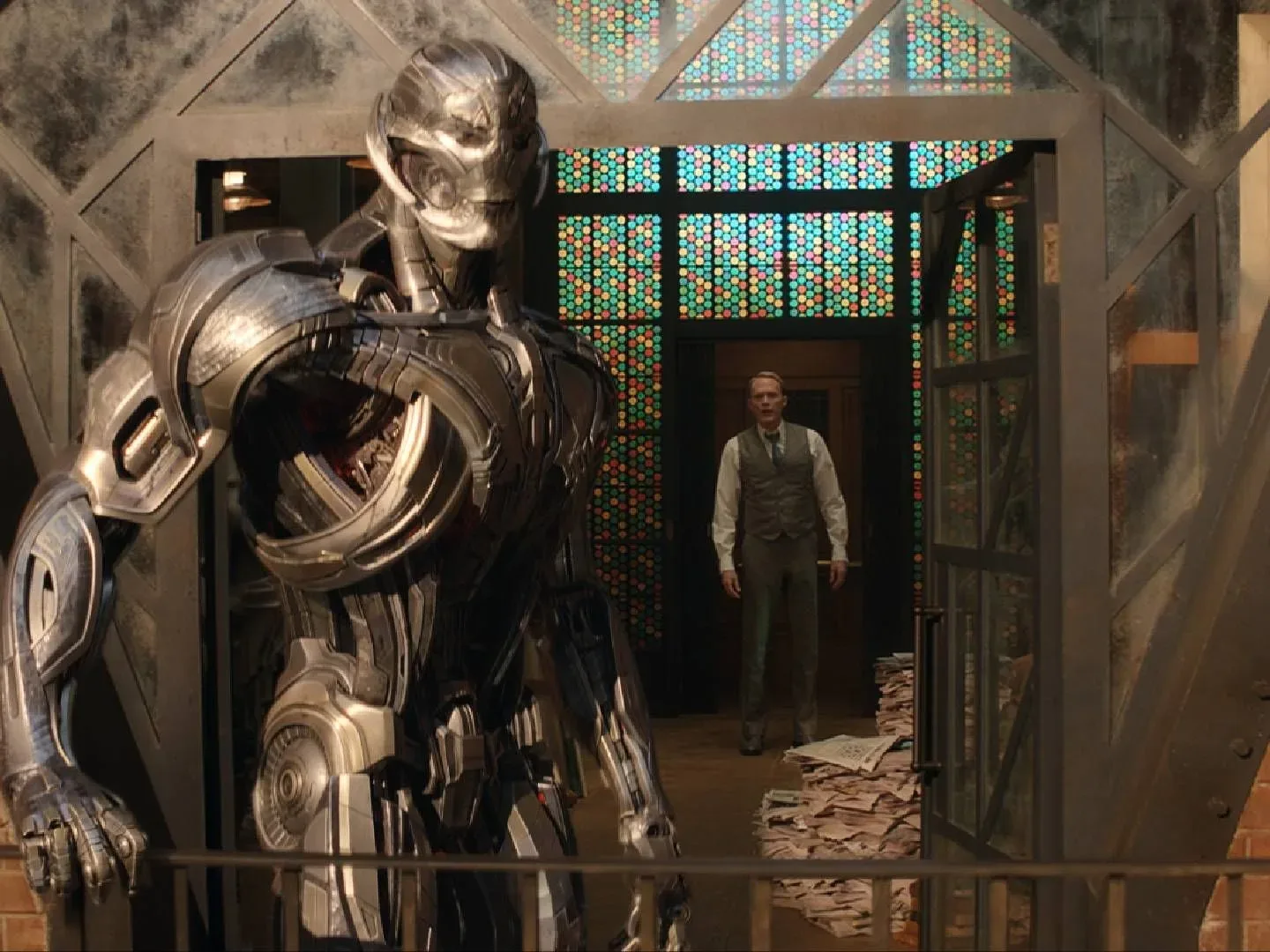
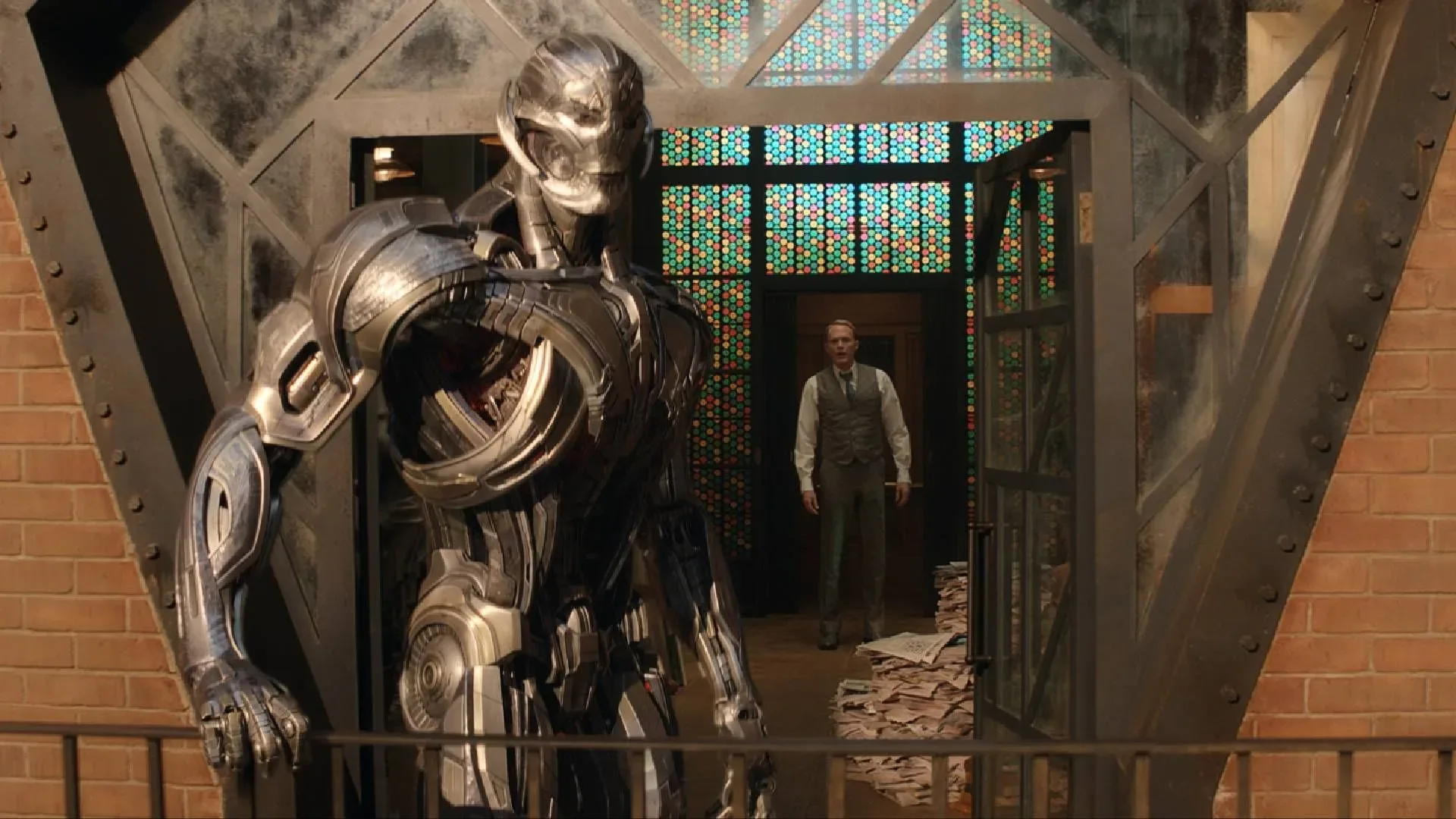
Episode 4 turns its attention toward Ultron, and the setting gives the story an especially pointed historical backdrop. The episode occurs on the anniversary of the Battle of Sokovia, the climactic conflict from Avengers: Age of Ultron. News coverage discusses the event, and it also appears on the front page of Ultron’s newspaper.
For most people in the setting, Sokovia is a historic catastrophe. For Ultron, it is inseparable from his own defining defeat and the destructive mission he pursued. Putting the anniversary in the episode’s background means the past is not something he can ignore, even before the plot brings him into sharper focus.
“The power of code compels you”
When Ultron attempts to remove Butcherbird from the Mind Place, he says, “The power of code compels you.” It is a technological twist on the famous exorcism line.
The joke lands because an exorcism is a ritual intended to expel an unwanted presence, while Ultron is applying the same dramatic logic to a digital or mental realm. “Code” is the relevant technical term here: it means the programmed instructions that allow software to operate. Replacing spiritual authority with code makes the line suited to a conflict among artificial minds, even as it knowingly borrows horror-movie language.
Why Stark’s AI was so advanced
The episode reveals that the AI company targeted by Butcherbird had sold its technology to Stark. This supplies a piece of connective background for the sophistication of Stark-linked AI technology in the story.
The revelation also reinforces one of VisionQuest’s major tensions: artificial intelligence is not presented as an isolated miracle produced by one person or one machine. It has institutional and commercial roots. Technology can be developed, sold, adapted and inherited, and the people affected by it may have to live with decisions made long before they entered the picture.
Human templates behind the AI faces
Episode 4 says that the AIs and their human likenesses are based on real people. That premise gives fresh significance to two familiar names: Edwin Jarvis and Alison Hogan.
Edwin Jarvis
Edwin Jarvis appeared in Agent Carter as the Stark family’s butler. VisionQuest’s human-template revelation creates a direct bridge between a person from the Stark family’s past and the identity of J.A.R.V.I.S. It makes the name more than an acronym or an AI label; it is attached to an individual whose existence anchors the system in human history.
Alison Hogan and F.R.I.D.A.Y.
F.R.I.D.A.Y. is revealed to be based on Howard Stark’s “Girl Friday,” Alison Hogan, described as the person who kept his office. “Girl Friday” is an old expression for a highly capable assistant who handles essential work for a boss or organization.
Her surname invites an obvious question because Tony Stark’s trusted head of security is Happy Hogan. However, the episode does not establish a family connection between Alison and Happy. It is an intriguing possibility created by a shared surname, not confirmed lineage.
Phineas Horton and the Human Torch connection
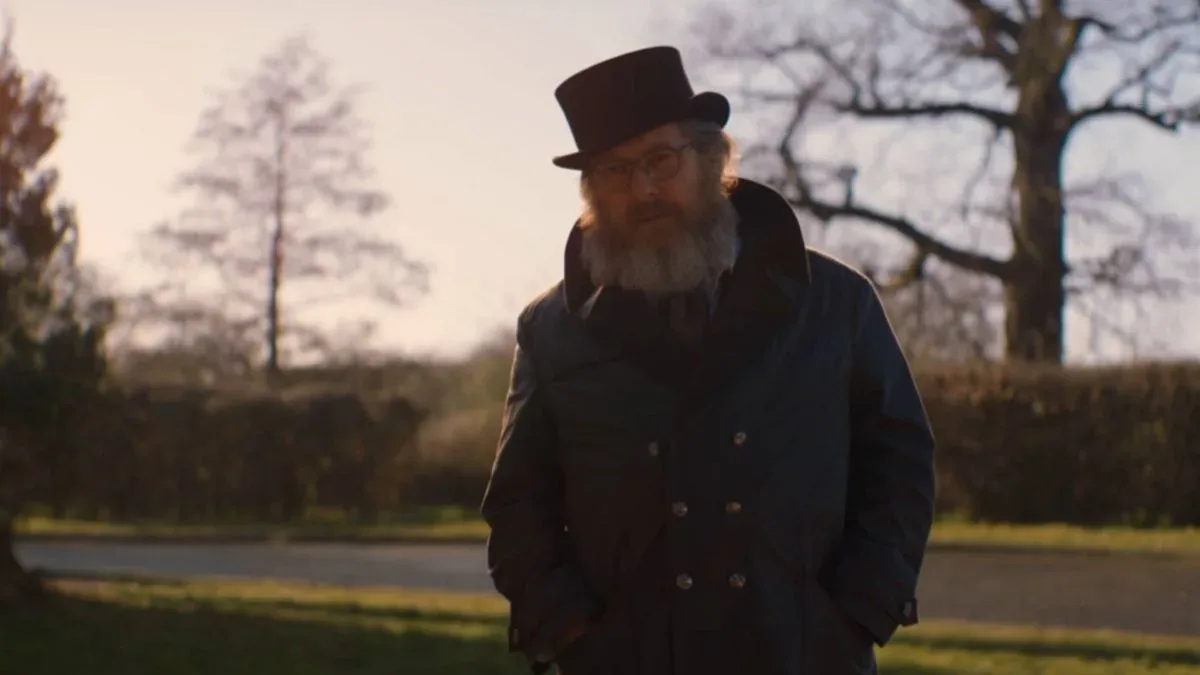
Dr. Phineas Horton receives a name-check after an earlier reference to the Human Torch, Jim Hammond. In Marvel comics, Horton created Jim Hammond. The name therefore reinforces the show’s interest in artificial beings, human models and creators who leave their imprint on what they make.
That is a natural thematic fit for VisionQuest. The series is occupied with questions of origin—who built whom, who inherited which traits, and whether a created intelligence can become something more than the intentions of its maker.
One creator callback and one Ultron declaration
Dr. Josephine Carrington’s former company, Markridge Biotech, refers to the Markridge Group from the 12 Monkeys television series. VisionQuest showrunner Terry Matalas previously developed that series, making this an authorial callback rather than a Marvel-continuity clue. It is a small behind-the-scenes signature placed inside a biotech company name.
The episode ends on a much more consequential reference. After breaking free and taking over Vision’s body, Ultron says there are no strings on him. The statement reprises Ultron’s well-known Pinocchio-derived line from Avengers: Age of Ultron.
“No strings” is an effective phrase for Ultron because it means several things at once. Pinocchio imagery invokes an artificial being seeking autonomy. Ultron uses it to reject restraint, control and dependency. But in the context of a series full of created minds and inherited identities, it also raises a harder question: is freedom simply the ability to act without a maker’s control, or does it require responsibility for the harm that freedom can cause?
That final line makes the episode’s references feel less like decoration and more like pressure points. Sokovia, Stark technology, human templates, grief, legacy and autonomy all converge around characters trying to decide what they are—and what they owe to the people and systems that made them. Readers looking for another Marvel-comics continuity thread can also see how the publisher’s past is being revisited in the planned facsimile return of 2015’s Secret Wars.