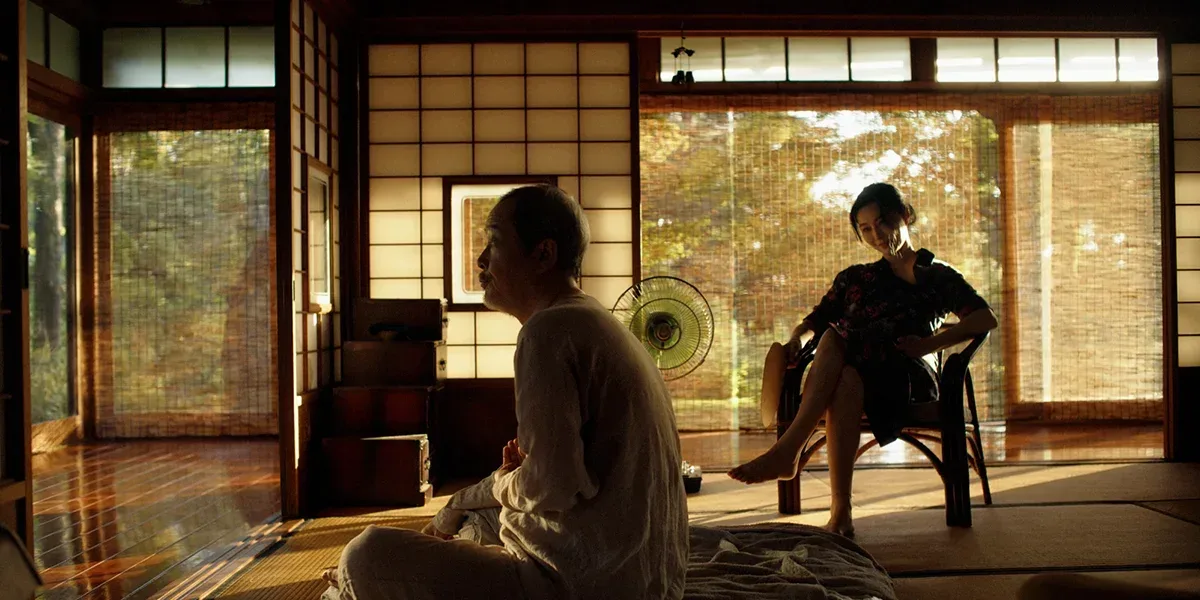
Wayne Wang’s Diary of a Mad Old Man arrives with material that ought to be impossible to make inert. Jun’ichirō Tanizaki’s 1961 novel centers on Utsugi, an aging intellectual whose post-stroke life is governed by an obsessive, humiliating desire for his daughter-in-law, Satsuko. It is a premise built from private ugliness, family leverage, money, illness and sexual fixation. The new Japanese-U.S. production does not evade that discomfort. In fact, its opening immediately establishes Utsugi’s frustrated libido in unusually direct fashion. Yet the adaptation’s central paradox is that a film full of fraught ingredients gradually settles into a restrained and oddly weightless meditation.
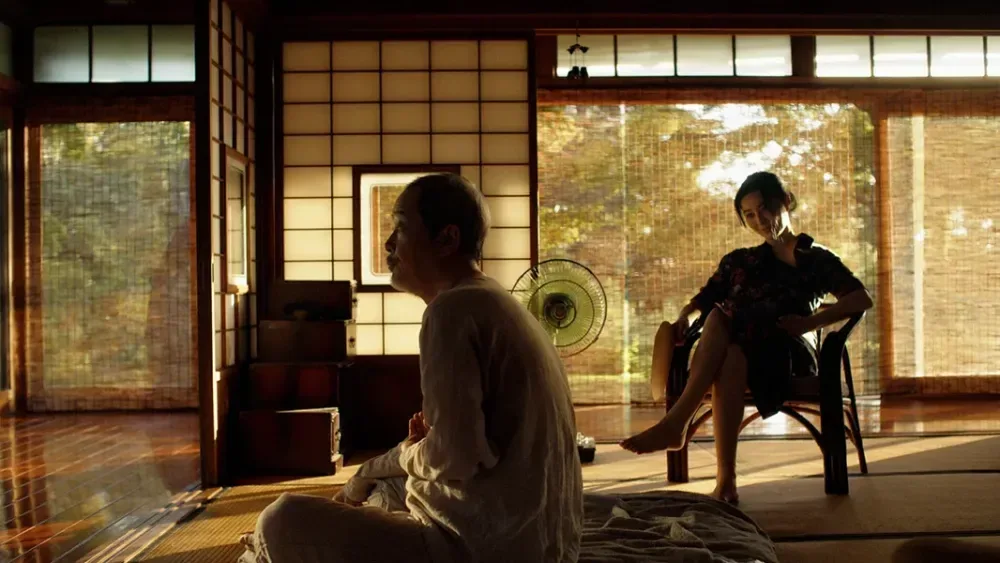
Screenwriter Kelvin Wyles, making his feature-screenwriting debut, keeps the novel’s broad setup while substantially redirecting its emotional framework. Utsugi, played by Lily Franky, has survived a stroke and is visibly impaired on his left side. He is infatuated with Satsuko, played by Fan Bingbing, but does not expect a conventional sexual relationship with her. His desires instead take forms that are invasive, transactional and uncomfortable: requests involving her feet, attempts to catch private glimpses, and expensive gifts funded at the expense of the rest of his family.
Those details are not presented as a route to easy shock. The issue is that the film appears less interested in Tanizaki’s merciless portrait of an elderly man who understands his own cruelty than in making him vulnerable, wistful and potentially confused by cognitive decline. That is a legitimate adaptation choice. It also changes the engine of the story. Where the book’s power lies in a narrator whose self-awareness never absolves him, the film asks viewers to contemplate frailty, memory and mortality alongside Utsugi’s appalling conduct.
A modern setting revealed in stages
Wang initially plays with time. Utsugi appears in traditional Japanese clothing, and the film waits roughly eight minutes before modern dress makes the contemporary setting unmistakable. Once that ambiguity drops away, newer details surface quickly. Utsugi and Satsuko share a vape. Tokyo’s Ginza district is glimpsed through exterior views and windows. The update is not merely cosmetic; it signals that this is not intended as a museum-piece rendition of Tanizaki.
But modernization brings a more fundamental softening. A new thread involving a crow Utsugi has cared for adds scraps of paper the bird carries to him. He treats these scraps as tender tokens. It is an image designed to expose loneliness and an old man’s need for affection, yet it pulls the character away from the novel’s sharper, more egotistical conception. The Utsugi at the heart of Tanizaki’s story may be physically diminished, but he is not an innocent drifting through a sad late chapter. His warped appetites and cold calculations are part of the point.
Franky, 62 while playing a much older man, reportedly gives the physical limitations of the role credible attention without turning paralysis into broad display. That is an important grounding element for a character who could easily tip into caricature. The performance’s control also suits Wang’s unhurried visual approach. The trouble is less the commitment of the actor than the script’s reluctance to decide how much moral clarity it wants Utsugi to retain.
From malicious comedy to somber care drama
The adaptation’s largest intervention is its growing suggestion that Utsugi may have late-stage dementia. A late confrontation involving his son foregrounds the possibility that his behavior is not simply the final, unfiltered expression of a lifelong personality. It may also be behavior shaped by profound cognitive deterioration. That distinction matters enormously. It relocates the film from a cruel comedy about desire and manipulation into a story that sits beside contemporary dramas of aging, elder care and sexually inappropriate impulses connected to dementia.
That broader context has clear relevance. Aging populations and the pressures placed on families and care systems are global concerns, and cinema has increasingly examined memory loss without reducing older people to symbols. Wang’s film is therefore working with a timely lens. Yet timeliness alone does not guarantee dramatic force. By adding dementia as an interpretive possibility, Diary of a Mad Old Man risks blurring the character’s responsibility without producing an equally compelling study of illness.
The result is a version of Utsugi whose disturbing behavior can feel suspended between deliberate exploitation and incapacity. Ambiguity can be powerful when it deepens a character. Here, it seems to dilute the bitter precision of the source material without replacing it with a comparably rigorous account of dementia, family care or consent. The adaptation seems most alive when its updates expose new questions; it becomes less persuasive when those questions lead only to extended sadness.
Fan Bingbing’s Satsuko gains history, not necessarily agency
Fan Bingbing’s casting gives the project considerable presence. Satsuko is reconceived from the fashionable, openly exploitative figure associated with the novel into someone offered a traumatic past and more overt emotional interiority. She delivers pensive monologues that are meant to broaden the character beyond the object of Utsugi’s obsession.
There is value in refusing to leave Satsuko as a pure provocation or a mirror for a man’s fantasies. Still, additional backstory is not the same as deeper characterization. The film’s reworking appears to make her more sympathetic without making her more dramatically decisive. Her connections with both Utsugi and his son also introduce potentially significant Japanese-Chinese subtext. Fan’s presence could invite questions about class, nationality and the way an impoverished woman becomes entangled with a wealthier family. Those are rich possibilities, but the film does not appear to develop them into a sustained argument.
Instead, Satsuko remains caught inside relationships structured by other people’s needs. The father’s longing and the son’s involvement both carry exploitative dimensions. The film recognizes this imbalance, but recognition is not transformation. Its new elements accumulate—trauma, class background, cross-cultural tension, dementia—without fully changing the story’s trajectory. A lean, nasty narrative becomes more crowded, though not necessarily more expansive.
Careful craft, enclosed spaces
Visually, Wang makes the production feel larger than its limited range of locations might suggest. Most of the film unfolds inside a home, its garden and an upscale bar with little or no daylight. Those spaces are carefully formed rather than anonymous, and the interior emphasis creates an environment of confinement suited to the family’s emotional stalemate. Kôichi Furuya handled cinematography, while Masahide Kôra and Ashley Pagán edited; Arthur Sharpe composed the music.
The polished environment does not eliminate the sense of stasis, however. Long takes and lingering scenes of grief can support a drama of decline, but they need a sharpened emotional progression. Here, contemplation often seems to become an end in itself. The style edges toward an Ozu-inspired register of domestic quiet and death-facing reflection, but without the accumulating detail that makes silence revelatory. Stillness becomes merely still.
That makes this an intriguing case of an adaptation with visible intelligence and insufficient dramatic bite. Its alterations are thoughtful on paper: present-day signals, a more rounded Satsuko, an attention to aging and dementia, and a cross-cultural cast that opens political and social readings. But the film’s gentler treatment of Utsugi removes much of the source novel’s poisonous humor. In its place is a melancholy work that treats sex and death as solemn subjects, then too often leaves them dramatically inert.
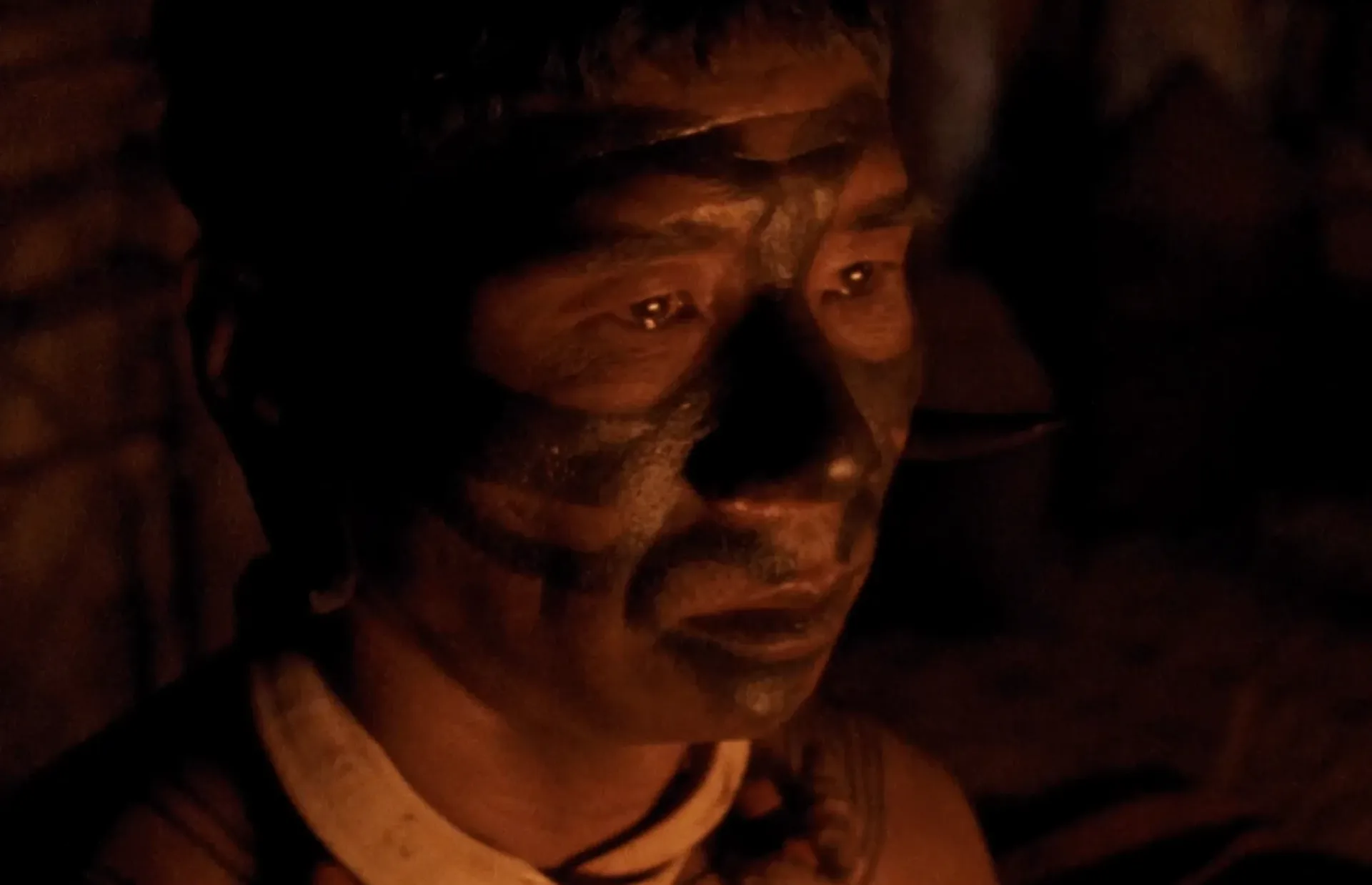
For readers interested in how different films use cultural specificity and controlled visual textures to approach difficult subjects, see our look at ‘Angh’ and its use of 16mm film and practical firelight. Wang’s film operates in a very different register, but both projects underline how form and setting can shape the meaning of intimate stories.
Festival details and credits
Diary of a Mad Old Man was presented in the Gala Presentations program at the Toronto Film Festival and runs 119 minutes. It is a Japan-U.S. production from Fourier Films, made in association with Cinetrain, Friendly Giant Pictures, Melograno Films and Nobu Pictures. Rediance handles world sales from Beijing.
- Director: Wayne Wang
- Screenplay: Kelvin Wyles, based on the novel by Jun’ichirō Tanizaki
- Producers: Andrey Epifanov, Francey Grace, Eltonora Granata-Jenkinson and Shôzô Ichiyama
- Executive producers: Kim Aubry, Hiroaki Kanenobu and Gu Xiodon
- Co-producer: Soichiro Koga
- Cast: Lily Franky, Fan Bingbing, Yûki Kudô, Takumi Saitō and Asana Mamoru
- Languages: Japanese and Mandarin
The film’s ingredients suggest a provocative reinvention of a literary classic. Its finished shape, however, appears to trade Tanizaki’s bracingly unsentimental gaze for a muted elegy that cannot fully make its added themes cohere.