Angh is built around a visual contradiction that sounds simple until a crew has to make it work: its story unfolds in a remote, rough environment, yet its images need enough clarity to hold faces, texture and a community’s history in the dark. Cinematographer Adam Pietkiewicz approached that problem with 16mm film, a stripped-back shooting philosophy and practical solutions tailored to Nagaland’s limited infrastructure.
Directed by Theja Rio, Angh centers on a small Konyak Naga family in 1960s Nagaland, in India’s mountainous northeast near the Myanmar border. They are the final residents of a village that has otherwise been left behind. Their connection to Konyak Naga tradition meets a profound challenge with the arrival of an American Christian missionary. The premise is intimate, but the setting and cultural stakes demand a careful sense of scale.
Pietkiewicz will receive a TIFF artisan honor for his work on the film. Although he has directed photography on multiple short films, Angh is only his second feature. He has emphasized that recognition of the film should extend beyond an individual craft credit and toward Nagaland, a region he believes merits wider attention and understanding.
A feature-length return to a film-school collaboration
Rio and Pietkiewicz have known each other since film school. When Rio decided to turn his short film Angh into a feature, Pietkiewicz joined the project. That shared history appears to have been useful not merely as a matter of familiarity, but as the foundation for a clear working method.
The pair favor economical staging: relatively few camera positions in a scene and an emphasis on simplicity rather than constant coverage. Minimalism in this context does not mean improvisation or an absence of preparation. Behind the camera, Rio and Pietkiewicz developed a comprehensive planning document they called the “Book of Angh,” mapping every scene before production.
That division is worth noting. A film can look direct and unforced while relying on enormous advance work. Fewer setups place more weight on the setups that remain. They require filmmakers to know where the camera belongs, what information each image must carry and when not to interrupt a moment with another angle simply because it is available.
It is also a reminder that a restrained production style can be highly technical. In a mountainous location with unreliable electrical access, planning is not a luxury. It is a way of protecting the schedule, the performers, the safety of practical effects and the eventual image on film.
Why 16mm mattered for Angh
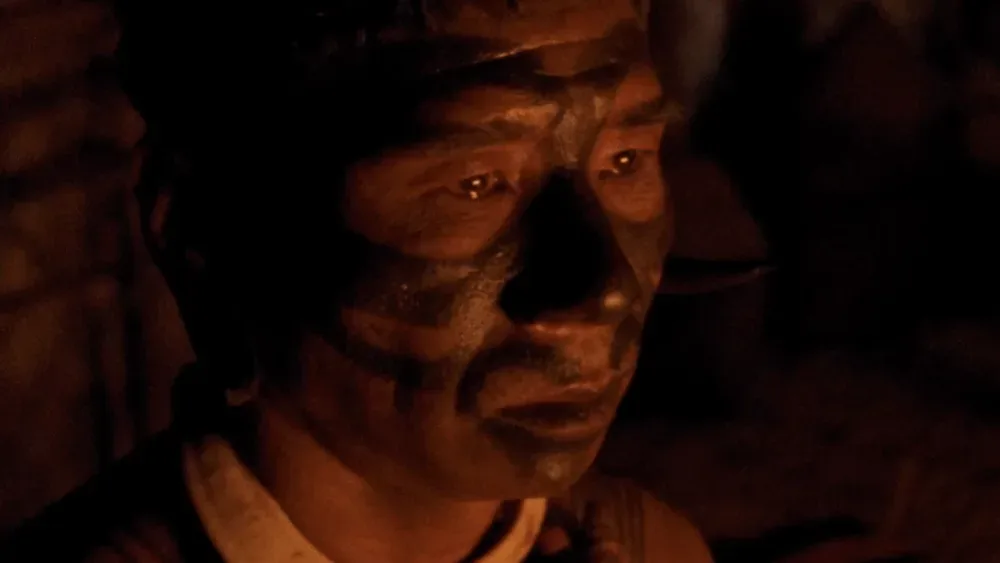
Rio specifically wanted Angh photographed on 16mm, aiming for an image that could meet the story’s raw physical surroundings rather than smooth them over. Pietkiewicz was already familiar with the format and agreed that it suited the material. The production used Arri cameras with Ultra Prime lenses and worked with Kodak VISION3 250D and VISION3 500T stocks.
Related coverage includes ‘Angh’ Cinematographer Adam Pietkiewicz Breaks Down 16mm Night Shoots.
The combination matters because the two emulsions are designed for different lighting conditions: 250D is daylight-balanced, while 500T is tungsten-balanced and more sensitive for lower-light conditions. Using both gave the filmmakers tools for changing environments while maintaining the grain and color behavior that made 16mm an intentional part of the film’s identity.
Film stock is not just a retro checkbox, nor is grain automatically shorthand for authenticity. Here, the stated goal was to create a texture responsive to place and period. The format’s color reproduction and visible grain became part of the visual language. Rather than treating the environment as a pristine historical display, the approach seeks an image with material presence.
For a movie about a family holding onto tradition amid pressure from outside forces, the medium also creates a useful tension. The camera technology is a contemporary production choice, but it produces an image with a tactile imperfection that can make wood, fabric, smoke, fire and landscape feel less polished and less detached. That is a creative rationale, not a substitute for cultural specificity, but it helps explain why 16mm was selected from the outset.
Physical media and older audiovisual formats can bring their own operational demands, a subject familiar to readers interested in unusual hardware and preservation-minded tech. The same instinct to understand a format’s constraints, rather than simply route around them, appears in our look at the Sony PSX, Japan’s ambitious PS2 DVR hybrid. In Angh, though, the format decision serves storytelling first.
Night shoots where firelight did not expose enough
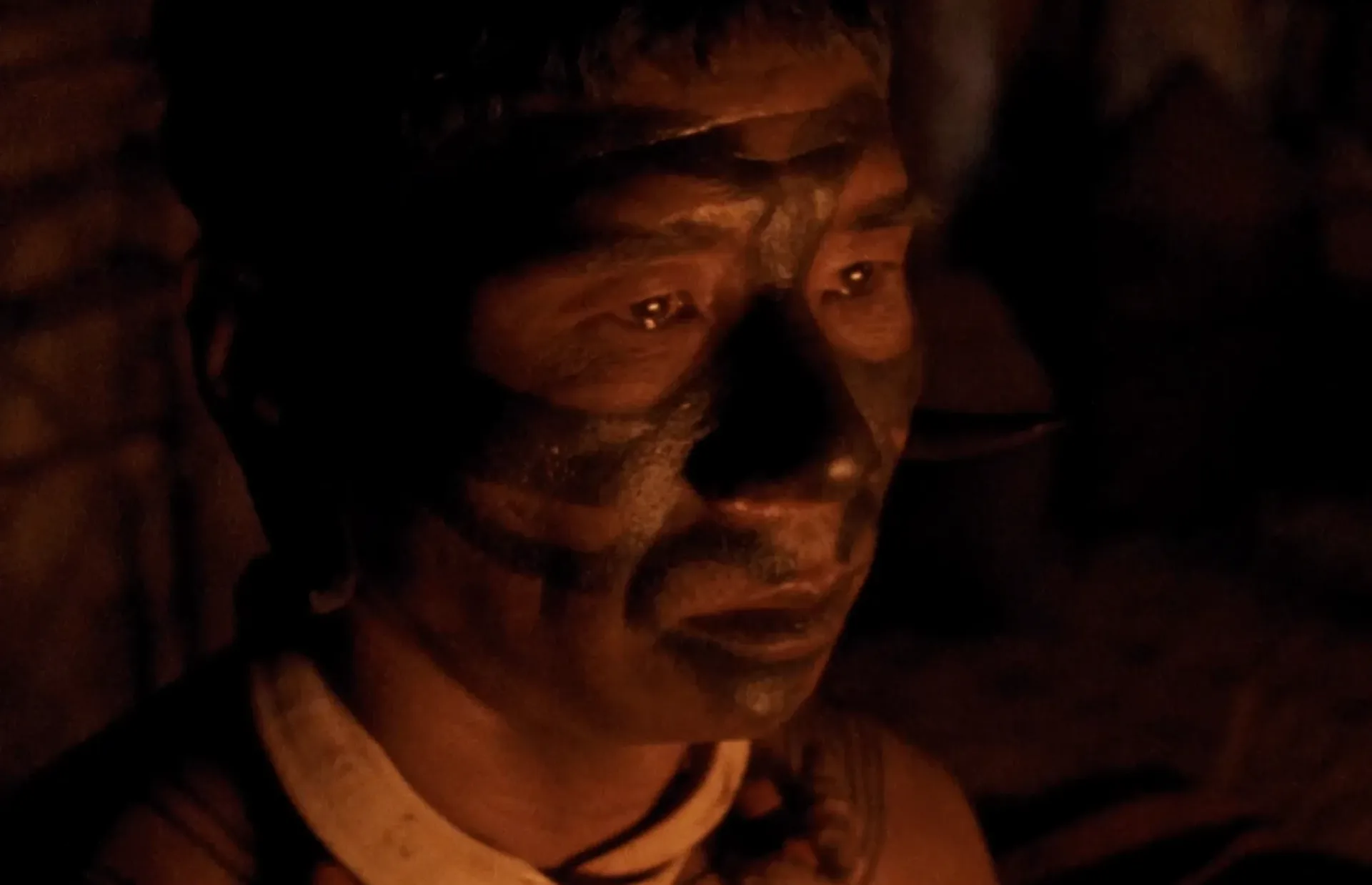
The most difficult technical issue was darkness. Nagaland did not offer dependable electricity for nighttime work, immediately narrowing the conventional options a production might use to shape and expose an exterior night scene. Pietkiewicz found that ordinary firelight alone was insufficient during testing: it did not register enough exposure on his light meter.
That distinction is crucial. A flame may look bright to the human eye while still failing to provide a camera with enough usable illumination, particularly when shooting on film and trying to retain readable facial detail. It can be tempting to assume that a campfire or torch solves a night sequence because it is naturally motivated within the scene. In practice, the cinematographer must balance intensity, distance, flame behavior, color, actor movement and what the chosen stock can record.
To meet the need, Pietkiewicz experimented with Anghlong Konyak, who portrays the village chief. They made separate fire torches and applied a special flammable liquid at the top, creating a brighter source that could provide enough exposure on performers’ faces. The adjustment was not presented as a broad technical workaround for every night shoot; it was a production-specific answer to the conditions confronting Angh.
The result underscores how lighting can stay connected to a scene’s internal world. The solution did not turn night into artificially day-like visibility, nor did it depend on a stated digital enhancement. Instead, the filmmakers pursued a practical source that could plausibly exist in the setting while doing the hard photographic job required by the camera.
There is an important human element in that work. Lighting faces is never only about obtaining a measurement. It determines where an audience looks and how it reads emotion, authority, fear or intimacy. In a story focused on the surviving chief and his family, protecting that facial information during nighttime scenes was fundamental.
A village burn created in front of the camera
Angh also includes a sequence in which the village burns down. Pietkiewicz says it was accomplished entirely in camera, without visual effects or CGI. That does not mean the scene was casual, simple or somehow free of cinematic construction. It means the event was captured as a practical image on the production itself rather than being built through computer-generated imagery or added visual effects.
Given the filmmakers’ preparation process, the “Book of Angh” takes on added significance. Practical fire work is an area where exact planning matters especially: the sequence has to be conceived in relation to what the crew can physically photograph, how many angles are necessary, the chosen lenses and camera positions, and the limited opportunity to repeat a burning event.
The project’s broader method comes into focus through that scene. Angh is not described as a production chasing visual excess. Rio and Pietkiewicz sought a small number of deliberate setups, embraced a format chosen for its roughness and grain, and found a practical response when the location’s electrical limits made conventional night photography difficult. Yet its apparent simplicity rested on detailed preparation.
What the craft choices reveal
There is no announced release information in the available details, so the most concrete picture of Angh currently comes from its production approach and its TIFF recognition. What is clear is that the filmmaking decisions are tightly linked: 16mm stock, Arri cameras, Ultra Prime lenses, Kodak VISION3 250D and 500T, fire-based practical lighting and an in-camera destruction sequence all support a single attempt to make the film’s world feel immediate.
Pietkiewicz’s work is also a case for resisting an easy opposition between minimalism and ambition. A limited camera strategy can demand more confidence, not less. Photographing a night with practical flame can require more experimentation than simply flooding a space with light. Shooting a burn in camera asks for disciplined preparation. And choosing a physical format means accepting its particular demands because its qualities are central to the image.
For Angh, the camera department’s challenges were inseparable from the location and the story. The film’s visual identity emerged not by ignoring those constraints, but by building directly through them.