‘Angh’ is a film about change arriving with a smile—and about why that can make it no less disruptive. The feature debut from writer-director Theja Rio, expanding on his 2021 short film, is set in 1960s Nagaland, the Indian state bordering Burma. Rather than attempting to narrate a broad history of post-independence India, it confines itself to an intensely local story: the dwindling world of a Konyak chief, his son, and a nearby community reshaped by Baptist conversion and Western customs.
That restraint is one of the film’s defining strengths. Rio does not turn his central conflict into an easy contest between heroes and villains, tradition and novelty, or faith and faithlessness. He instead studies the unequal pressure placed on one family as a way of life begins to recede around them. ‘Angh’ can be quiet and visually inviting, but its calm surface contains grief, stubbornness and mounting dread.
The film won the top prize in the Platform competition at the Toronto Film Festival, qualifying it for Best International Feature Oscar consideration. That recognition fits a work whose ambitions are artistic as much as narrative: ‘Angh’ asks viewers to question the supposedly neutral perspective through which cinema so often presents Indigenous communities, religious conversion and the idea of progress.
A father and son at the edge of a changing world
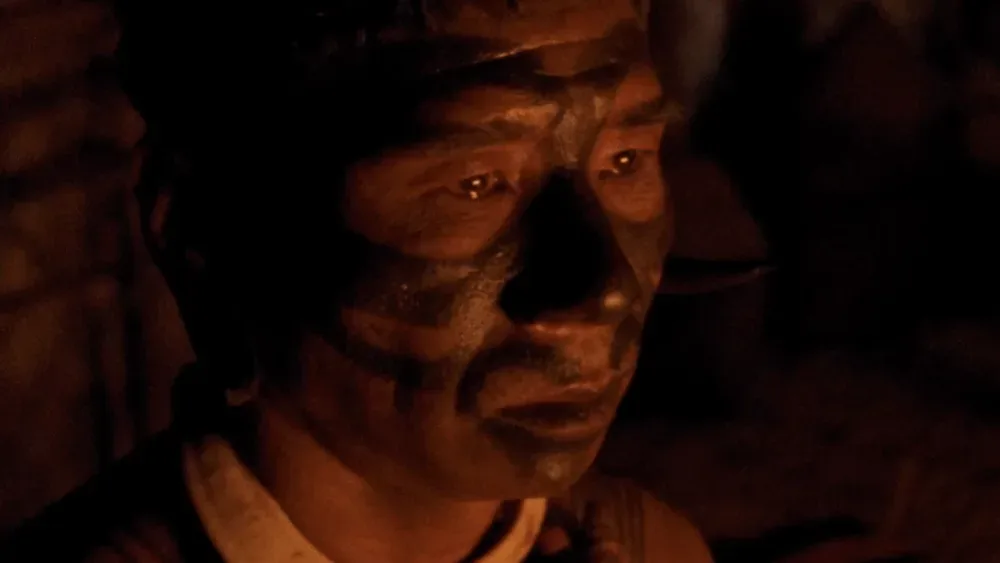
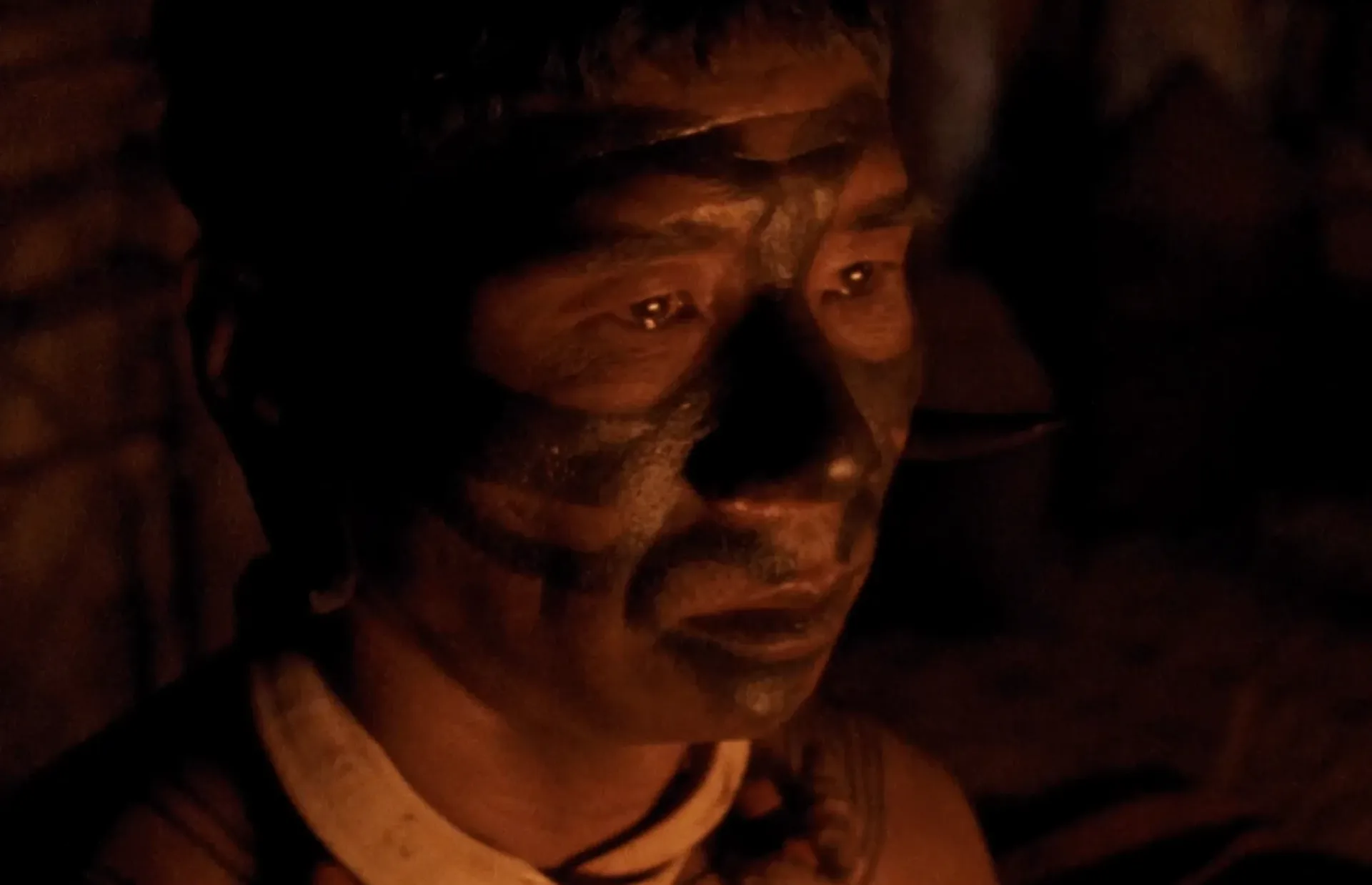
Anghlong Konyak plays Anghba, reverently known as the old chief. His life has already been reduced by loss. After disease takes his wife, only his son Amao, played by Sobino Rengma, remains with him as the surviving member of their Konyak tribe. The emotional stakes are therefore present before any missionary arrives. Anghba is not guarding abstract customs from a distance; he is living amid the disappearance of the people, rituals and memories that once gave those customs continuity.
Amao is a silent boy searching for his voice, and his curiosity becomes an especially painful counterweight to his father’s protectiveness. He is drawn to modern Western clothes and to the active nearby community of Baptist converts. For Anghba, those attractions signal the possible erosion of language, dress, ritual and remembrance. For Amao, they also suggest a world beyond isolation. The film’s drama emerges from that gap in perception, not merely from an argument over whether old or new is inherently better.
Rio places this small family story inside lush, dense forest landscapes. Nature is not presented as a generic scenic backdrop. The forest feels like an environment with its own rhythms and presence, bound to Anghba’s habits and understanding of the world. That closeness makes the encroaching social transformation feel spatial as well as emotional: a different set of values has come near enough to be seen, heard and desired.
The missionary arrival, viewed from Anghba’s shore
The opening gives the film’s perspective unusual clarity. Anghba is hunting a wild boar with bow and arrow near a river when a raft drifts downstream. Former members of his community surround an upbeat American preacher, played by Douglas Henshall. The scene frames the arrival not as a familiar story of benevolent visitors bringing enlightenment, but as something strange and disruptive witnessed by the person expected to absorb its consequences.
That distinction matters. The missionary’s interventions are portrayed as gradual and apparently well-intentioned, including the offer of medicine. Yet the care is inseparable from evangelism: crucifixes, Christian forgiveness and a foreign lord and savior come embedded in the same encounter. ‘Angh’ does not need to make its preacher a cartoonish antagonist to show the imbalance in this exchange. The disruption comes from the fact that aid, belief and cultural authority arrive together, asking a community to measure its practices against an outside standard.
In this context, the film’s handling of Konyak rituals becomes central. One image that cinema has commonly framed as proof of barbarism—beheading the dead as memorialization—is approached with striking gentleness. The choice does not sanitize or explain away a practice for an imagined outsider’s comfort. Instead, it asks the audience to begin from within the community’s emotional reality rather than treating its members as curiosities.
This is what it means for ‘Angh’ to resist a colonial cinematic gaze. A cinematic gaze is the set of assumptions a film’s images encourage viewers to bring to the people onscreen: who gets to appear normal, who gets translated, who is observed, and who is allowed interiority. Rio’s film shifts that balance. It makes the customs and grief of Anghba’s family the emotional center, while the missionary presence becomes the unfamiliar force entering an already complete world.
Anghlong Konyak gives the film its immovable center
The cast is largely composed of tribal non-actors, with Anghlong Konyak carrying the film at its core. His performance gives Anghba a gravity that avoids making him a symbol alone. He can be obstinate, grieving and fiercely protective at once. That complexity is essential because the film understands how a Westernized viewer might judge him. His refusal to yield can look inflexible when considered only through the language of personal choice or modernization.
But ‘Angh’ asks what that judgment leaves out. When a person’s language, clothing, ceremonies and collective memory are all vulnerable, resistance is not simply a failure to embrace the future. It can be an effort to preserve the conditions that allow a community to recognize itself. Anghba’s fury grows as the film moves toward dreams and visions, using phantasmagoric imagery to give form to losses that are not always easily verbalized.
Phantasmagoria here describes imagery that becomes dreamlike, uncanny or hallucinatory rather than strictly realistic. Its value in ‘Angh’ is not spectacle for its own sake. These departures from straightforward realism broaden the film’s emotional vocabulary, allowing fear, mourning and memory to appear as felt experiences. The result is a drama that does not reduce cultural destruction to a tidy debate held in dialogue.
Why 16mm matters to the film’s texture
Rio and cinematographer Adam Pietkiewicz shoot ‘Angh’ on 16mm film. This is more than a retro visual flourish. Sixteen-millimeter celluloid can retain visible grain and physical imperfections—scratches, dirt and tiny marks—that digital imagery is often designed to remove. In ‘Angh,’ those material traces contribute to an image that feels tactile and unstable, as if the screen itself is part of the forest’s living surface.
The effect is especially suited to a story concerned with memory and disappearance. Marks in the frame can resemble insects passing through the air or signs of wear carried by the image over time. The film stock does not make the past feel cleanly preserved. It makes it feel vulnerable, exposed and physically present. That visual approach also reinforces the sense that the story belongs to its specific landscape rather than to a polished, interchangeable historical setting.
Celluloid’s texture cannot by itself establish cultural perspective, of course. The more important work lies in whose experience the film takes seriously and how it organizes the audience’s sympathies. Still, Pietkiewicz’s photography and Rio’s direction work in tandem: the image has a lived-in roughness that suits a film determined not to make its world easily consumable.
A local story with a larger challenge for viewers
‘Angh’ is not presented as a survey of all Nagaland or an account of India’s national transformation. Its focus is narrower and, because of that, more piercing. The film observes a particular father and son facing pressures that are spiritual, material and cultural. It refuses the comfortable notion that progress is automatically neutral simply because it arrives through modern clothes, institutional religion or medicine.
That is not an argument that change is impossible to desire, nor does Amao’s curiosity vanish beneath his father’s sorrow. Rather, the film makes the price of change visible. Who is asked to adjust? Which practices are judged backward? What disappears when a community’s own modes of memory are displaced by a more powerful culture’s definitions of salvation and advancement?
The film’s 103-minute running time appears to be devoted to sitting with those questions rather than rushing to resolve them. Its eventual movement toward fiery and devastating outcomes gives its earlier restraint added force. The tragedy is not framed as a distant historical lesson. It is a lament for things that can be lost gradually, even under the reassuring vocabulary of help and improvement.
For viewers interested in movies that use an intimate setting to interrogate a wider political and cultural order, ‘Angh’ is a demanding, soulful work. It belongs beside other recent international dramas willing to let a place’s own textures and contradictions shape the story; for another example of a film rooted in history while pursuing a different thriller mode, see our look at ‘The Assassin(s)’.
Cast and creative team
- Director: Theja Rio
- Screenplay: Theja Rio and James Davis
- Cinematography: Adam Pietkiewicz
- Editor: Tanya Chhabria
- Music: Sagar Desai
- Cast: Anghlong Konyak, Douglas Henshall, Sobino Rengma, Genpai Konyak, Amah Konyak and Wangton Konyak
- Languages: Konyak and English
- Running time: 103 minutes
At its best, ‘Angh’ refuses the viewer the ease of looking at a threatened culture as an artifact or an obstacle. It makes Anghba’s resistance legible as love, mourning and a demand to recognize what “progress” can take away. Rio’s debut is therefore both a deeply specific family tragedy and a forceful reconsideration of who cinema has taught audiences to regard as modern, strange or worthy of being understood on their own terms.