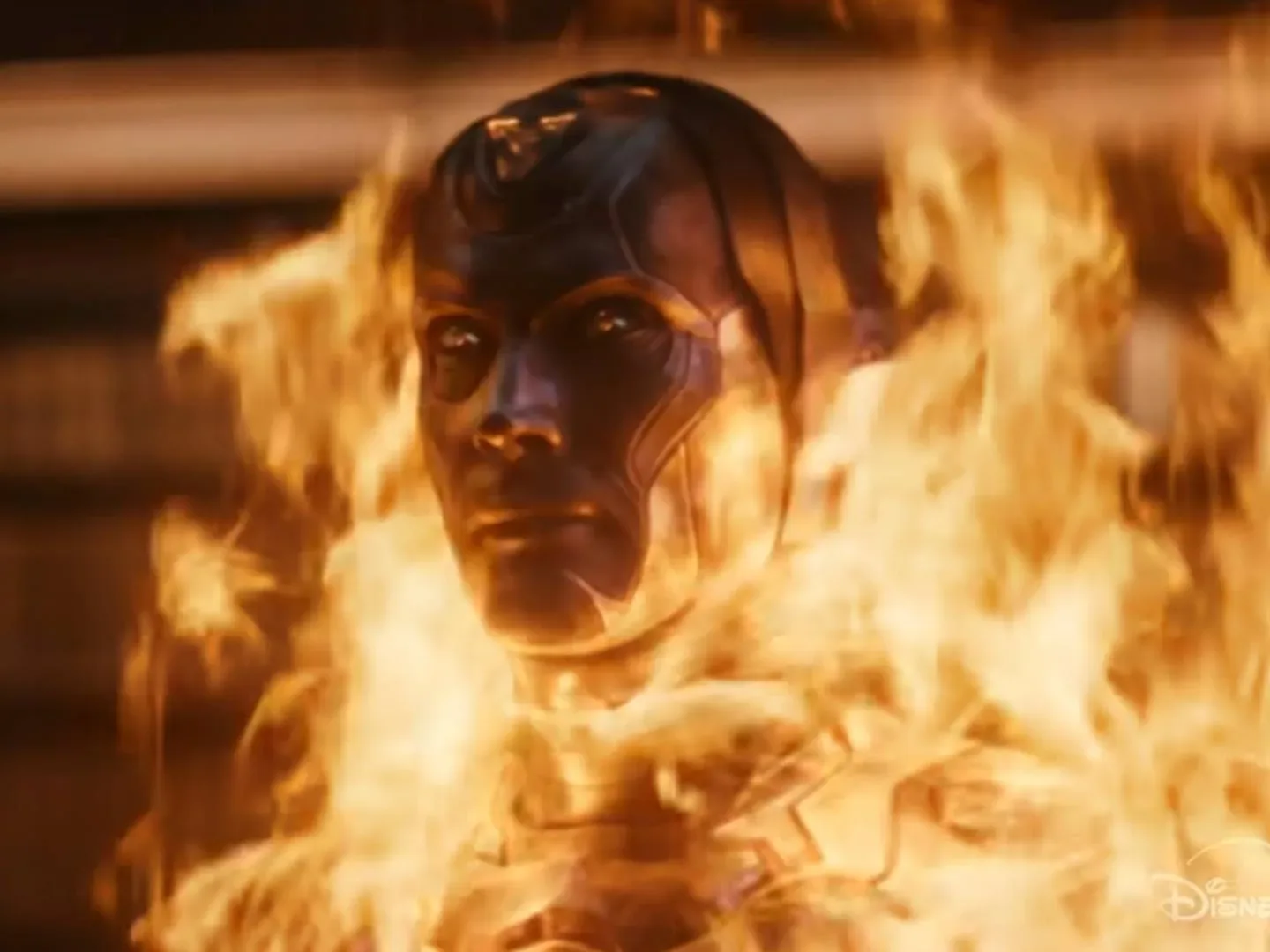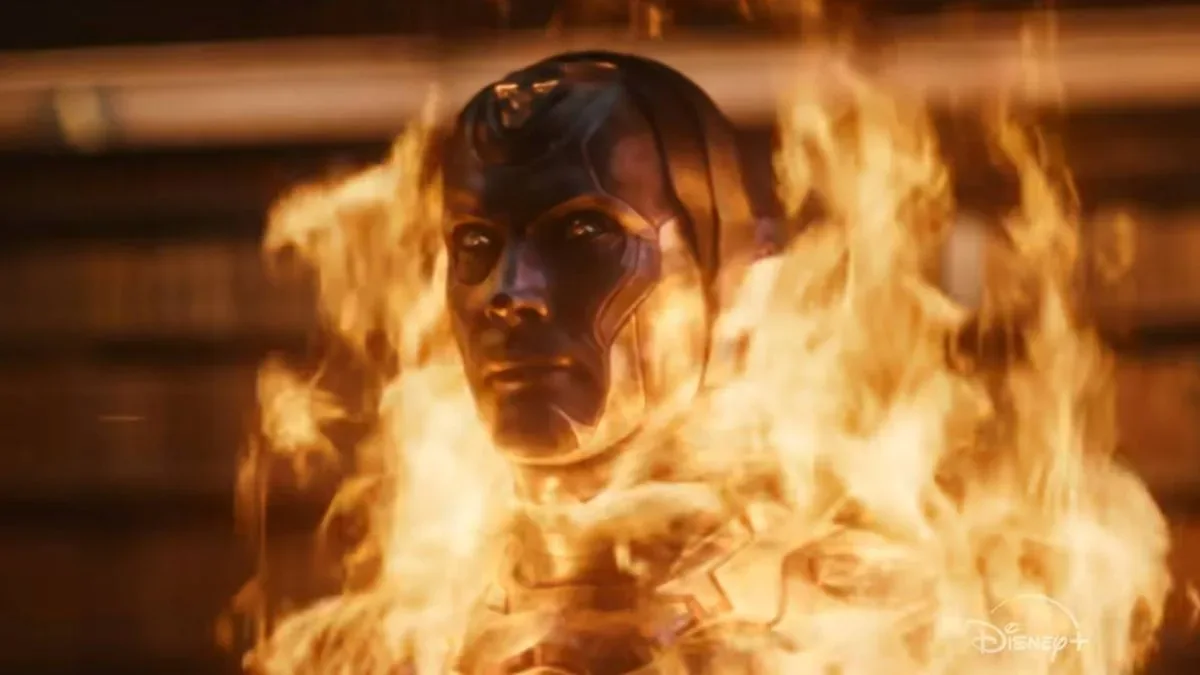
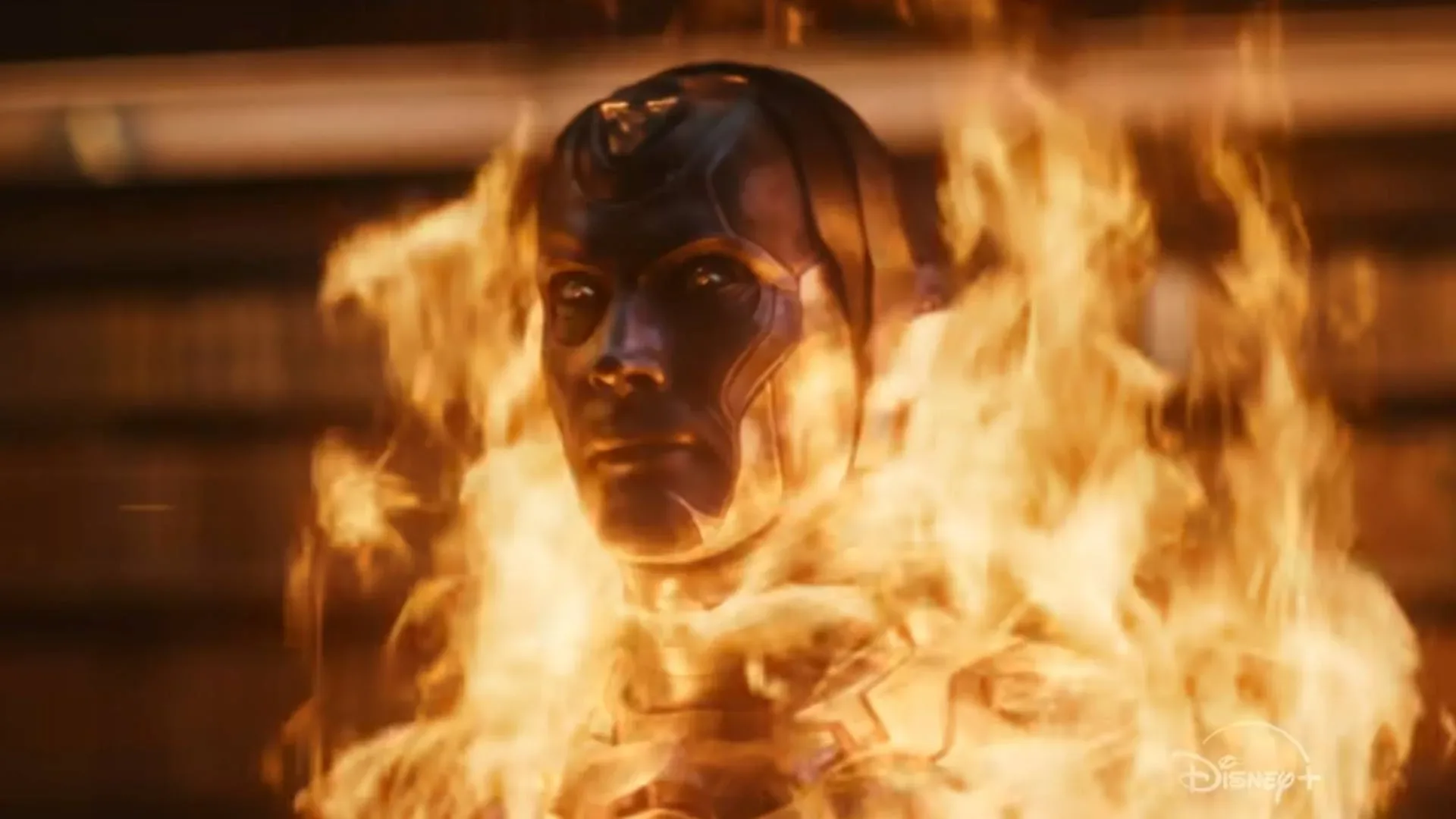
VisionQuest may have done more than introduce Jim Hammond to the MCU: its showrunner, Terry Matalas, has outlined how he believes the character fits within Steve Rogers’ World War II history. Matalas said he sees Hammond as having fought in the conflict alongside Captain America and as part of the Invaders, a superhero group with deep roots in Marvel comics.
That is an important distinction in a continuity-heavy franchise. Matalas is describing the intended background he has in mind for Hammond, not recounting a previously shown Captain America sequence. The MCU’s World War II era has largely followed Steve Rogers, Bucky Barnes and the Howling Commandos. The new comments instead invite viewers to picture another team operating in the same war, beyond the missions audiences have already watched.
Hammond makes his MCU debut in VisionQuest, now streaming on Disney Plus. Yet there was an earlier visual breadcrumb: his costume had been glimpsed in 2011’s Captain America: The First Avenger. That connection gives the newer appearance an unusually long runway. What once appeared to be a costume detail can now be read as a sign that the character had a place in the period setting all along.
Matalas sees Hammond as an Invader
Asked whether Hammond might have fought Nazis or helped save people in London, Matalas said that was exactly how he viewed the character’s wartime activity. He added that he believed Hammond was part of the Invaders, then described the premise as an entire unseen story involving “that father and son, and the gang” during World War II.
When pressed on the possibility that Steve Rogers could have had an off-screen assignment during the events around The First Avenger, Matalas gave a direct answer: viewers would see Jim Hammond. In other words, the showrunner’s interpretation places Rogers and Hammond in overlapping WWII operations, even if the movies never staged their meeting on-screen.
The wording matters. It does not establish that an Invaders project has been announced, nor does it add a new scene to The First Avenger. It is a piece of creator-led connective tissue: a way to understand what Hammond may have been doing in the margins of the MCU’s existing wartime story. For fans, it expands the possible scope of that era without requiring a retcon of the film’s central plot.
Who the Invaders are in Marvel comics
In Marvel comics, the Invaders are a World War II superhero team. The lineup named in this context includes Steve Rogers, Bucky Barnes, Namor the Sub-Mariner, Jim Hammond and Hammond’s sidekick Toro. Their basic role is straightforward: heroes confronting wartime threats as a team.
That team format differs from the MCU’s better-known wartime unit, the Howling Commandos. On film, Steve and Bucky are aligned with the Commandos, who form the main group around Captain America’s campaign. The Invaders, by contrast, have not been presented as a defined MCU team in the movies discussed here.
Related coverage includes VisionQuest Links Jim Hammond to Captain America’s World War II Story.
It is also worth separating the comics reference from MCU canon. Matalas noted that, in comics, Hammond kills Hitler. That detail describes a comics story point; it is not confirmation that the MCU version did the same. The reliable MCU-facing takeaway from his remarks is narrower: he imagines Hammond participating in World War II and connected to Steve Rogers through an off-screen Invaders-style adventure.
An “unseen history” is not the same as a new release
Shared universes often leave deliberate space between the events that viewers see. An unseen history is the implied material that can exist between, before or alongside the scenes already established. It can be useful because it gives a character a past without forcing every relevant encounter into a prior film.
Here, the idea is especially neat because The First Avenger already had a WWII setting and a visual nod to Hammond’s costume. VisionQuest can therefore bring Hammond forward while Matalas supplies an explanation for why he belongs in the same historical frame as Captain America. The implication is not that Steve’s known story is replaced. It is that the story may have had room for another ally and another team operating just out of view.
That approach offers several potential storytelling benefits if Marvel ever returns to it. Hammond can arrive with meaningful history rather than being treated as a wholly new present-day figure. Steve Rogers can remain central to the period while the broader superhero war feels larger than one squad. And the Invaders concept provides a ready-made framework for explaining why characters with very different origins might have been active at once.
Still, those are possibilities, not confirmed plans. Matalas spoke about the appeal of a whole series centered on the wartime group, but no such series is established by these comments. Until a project is formally detailed, the safest reading is that the showrunner has sketched a compelling corner of the MCU timeline rather than revealed a production slate.
Why Hammond’s appearance changes the conversation
Jim Hammond’s arrival is notable because his costume connection reaches back to an early MCU film. In a franchise with years of interlocking details, that kind of callback can be either decoration or groundwork. Matalas’ comments make it feel more like groundwork, at least creatively: the character is now tied to the same war that created Captain America’s legend.
The reference to Phineas Horton also anchors Hammond’s creation within the material supplied by VisionQuest. It establishes that Hammond has an origin point and a relationship to a creator, while leaving many specifics outside the scope of the current discussion. That restraint is useful. The new comments are about WWII placement and team affiliation, not a full explanation of every part of Hammond’s history, power set or future role.
For viewers catching up on Marvel’s expanding television side, the practical point is simple. Watching VisionQuest now includes a character who may be understood as a previously unspoken participant in Captain America’s wartime world. Revisiting The First Avenger may also take on a different flavor, since the costume glimpse can be viewed with the later debut in mind.
How this fits the MCU’s next questions
VisionQuest does not only look backward. Its post-credits scene resurrects Wanda Maximoff and directly sets up Avengers: Doomsday. That puts the show at an intersection of old MCU history and looming Avengers-scale developments: Hammond opens up a possible WWII thread, while Wanda’s return points ahead to the next major chapter.
There is no stated connection between Hammond’s Invaders history and Wanda’s post-credits return. Treating them as a single confirmed plot would go beyond the information available. But their coexistence in the show demonstrates how Marvel can use one series for multiple forms of continuity work—introducing a character with roots in a past setting while positioning another for a future event.
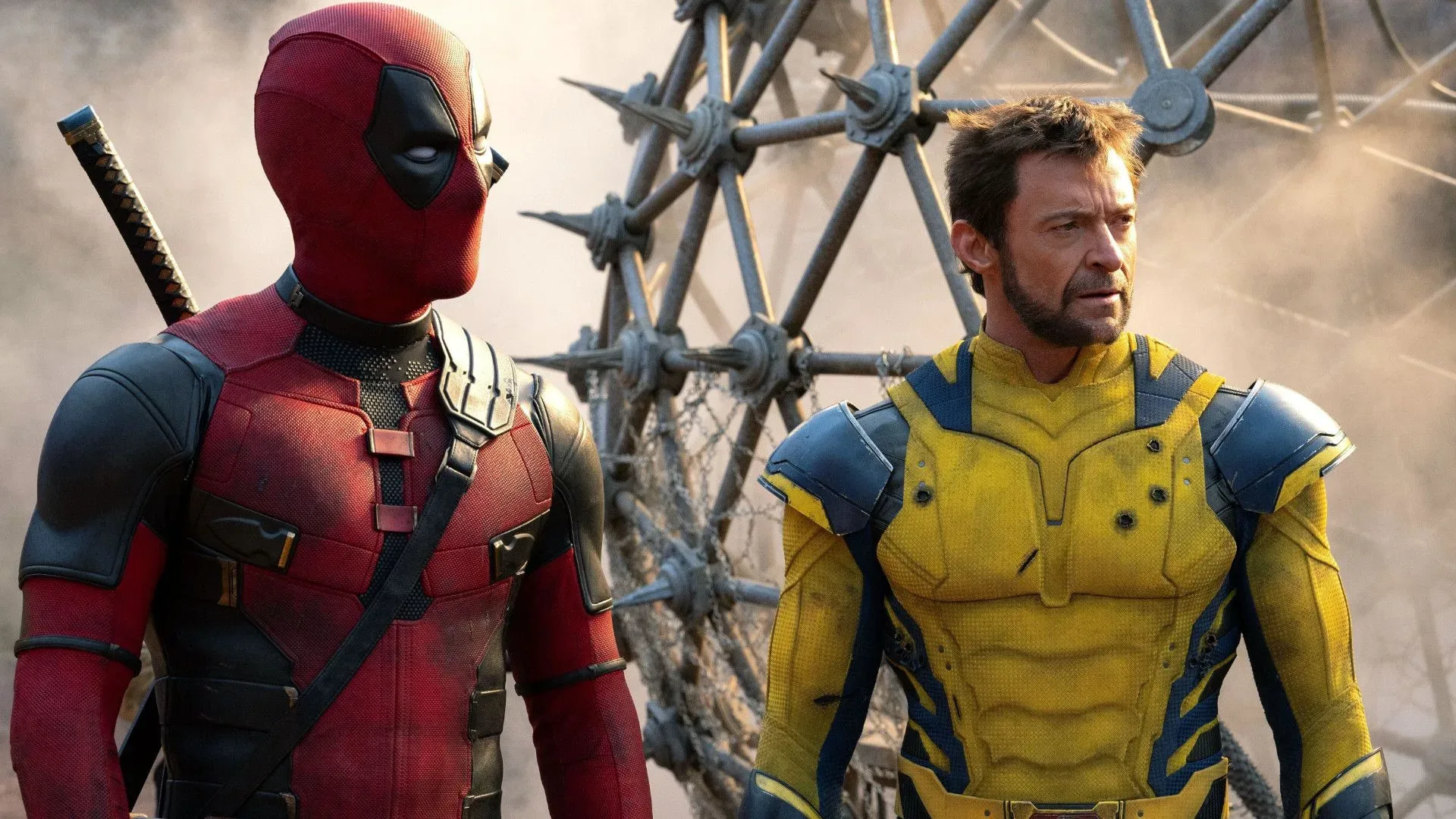
That future event has already prompted debate about tone and scope, including the argument that Avengers: Doomsday’s multiverse stakes need Deadpool & Wolverine’s sense of fun. The Hammond material is a reminder that the MCU can also find scale through history. A World War II story involving Captain America, Hammond and a wider Invaders roster would not need multiverse mechanics to feel expansive; it would simply expose a portion of the universe that has been left off-screen.
What is confirmed, and what remains interpretation
- Confirmed in the supplied information: Jim Hammond debuts in VisionQuest; his costume was previously glimpsed in Captain America: The First Avenger; Phineas Horton created him; and all VisionQuest episodes are streaming on Disney Plus.
- Matalas’ stated view: Hammond fought in World War II, was part of the Invaders, and would have been seen on a side mission involving Steve Rogers during the era of The First Avenger.
- Comics background: the Invaders include Steve Rogers, Bucky Barnes, Namor, Hammond and Toro, and fight in World War II.
- Not established here: an announced Invaders series, a filmed MCU meeting between Hammond and Rogers, a complete MCU Invaders lineup, or a direct story connection between Hammond and Wanda’s return.
That division is what makes the reveal interesting rather than confusing. Fans have a strong new lens through which to view Hammond and a rationale for imagining him alongside Captain America. At the same time, the actual on-screen adventures of that version of the Invaders remain unwritten—or at least unseen.
For now, Matalas’ comments make Jim Hammond feel less like a character who has simply appeared late and more like one who had been present in MCU history for a long time. The invitation is to look at Captain America’s World War II story and recognize that, somewhere outside the frame, another hero may have been fighting beside him.