Major spoilers for VisionQuest episodes three and four, “Reboot” and “Malware,” follow.
VisionQuest has found a much sharper shape in its third and fourth episodes. The early pursuit plot involving Paladin, the armed contractor assigned to retrieve Vision for an unidentified client, is still present. But the series has now placed its most consequential threat somewhere much closer to its protagonist: inside the tangled question of what a synthetic being is when memories, personality and bodily control can be copied, altered or claimed by someone else.
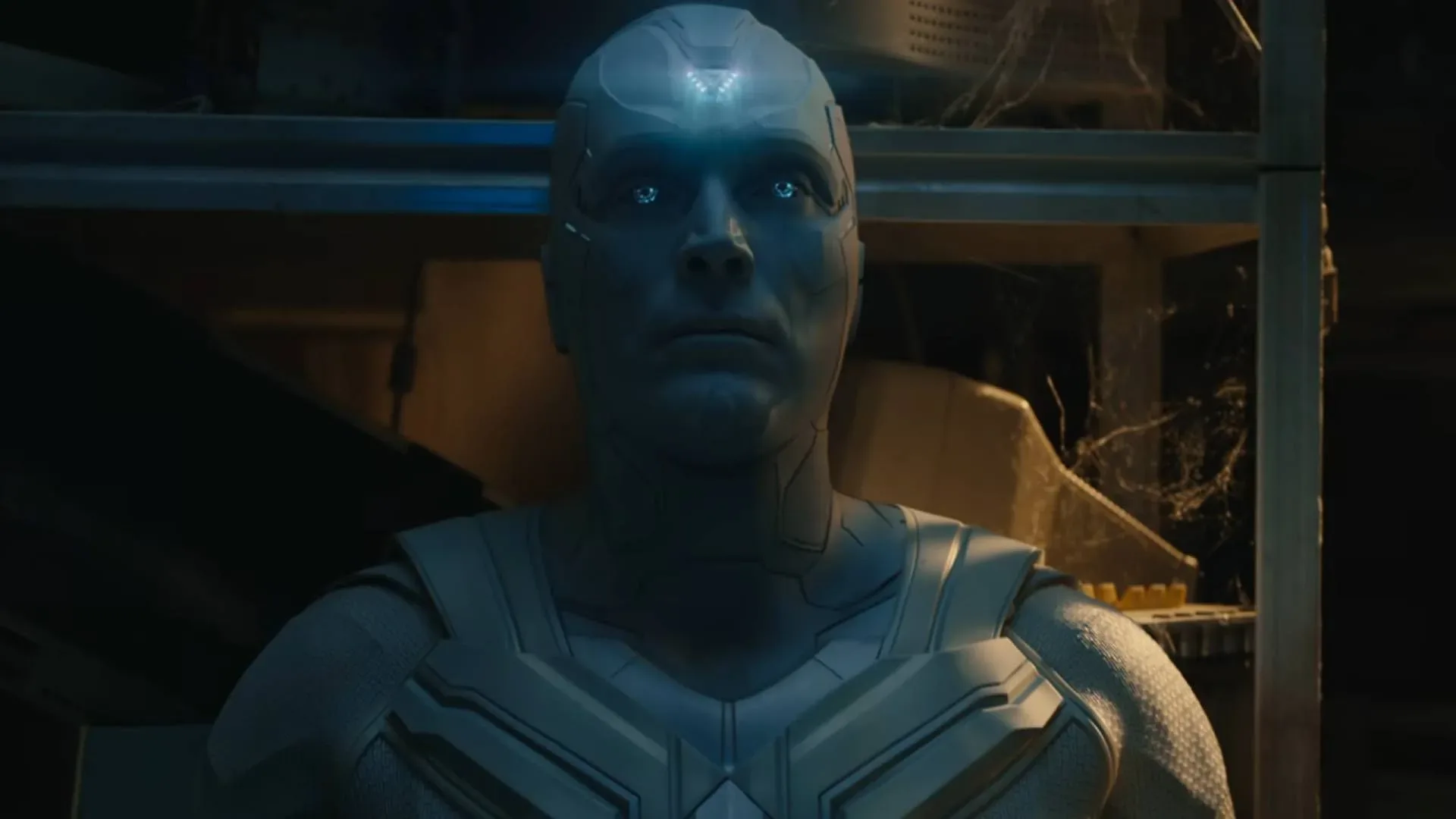
Jocasta’s arrival gives that question a face. More importantly, it gives Vision a counterpart whose apparent certainty contrasts with his hesitation. The show has positioned Vision as someone carrying the memories of the original Vision without the same emotional attachment to them. That distinction has made his existence feel unsettled: is he a continuation of the same person, an imitation built from inherited data, or a new individual who happens to possess another life’s recollections?
Jocasta answers that problem in the most unnerving way possible. She is based on scientist Josephine Carrington, yet insists that she is not merely modeled after Josephine: she is Josephine. The contradiction is immediate when being addressed by Josephine’s human name seems to distress her. Whether that reaction suggests repression, instability, a fracture in her self-conception, or something else remains unresolved. What matters for the series is that Jocasta turns VisionQuest’s philosophical premise into a direct threat.
From a remote pursuer to a villain embedded in the premise
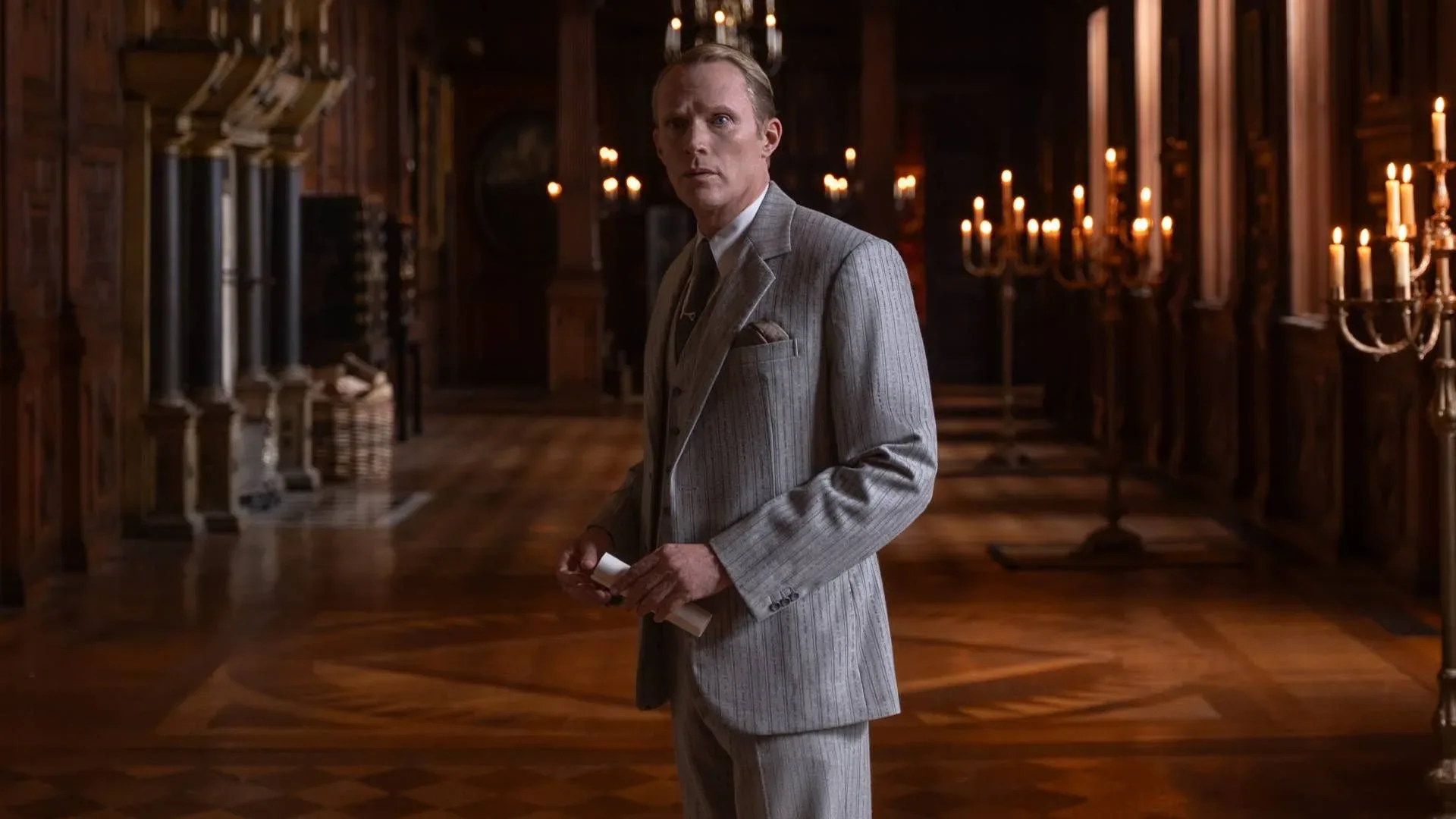
Paladin has not disappeared from the story. Played by Todd Stashwick, he is a gun for hire pursuing Vision on behalf of an unknown client, and “Reboot” reveals that his image as a capable professional is substantially less solid than it first appeared. That revelation adds texture to the character and explains some of his failures, but it also reduces him as a primary engine for the season. His motivations are rooted in money and ego, while his pursuit of Vision remains externally imposed.
That is a workable obstacle. It is not as organically connected to the series’ core as the synthetic characters surrounding Vision.
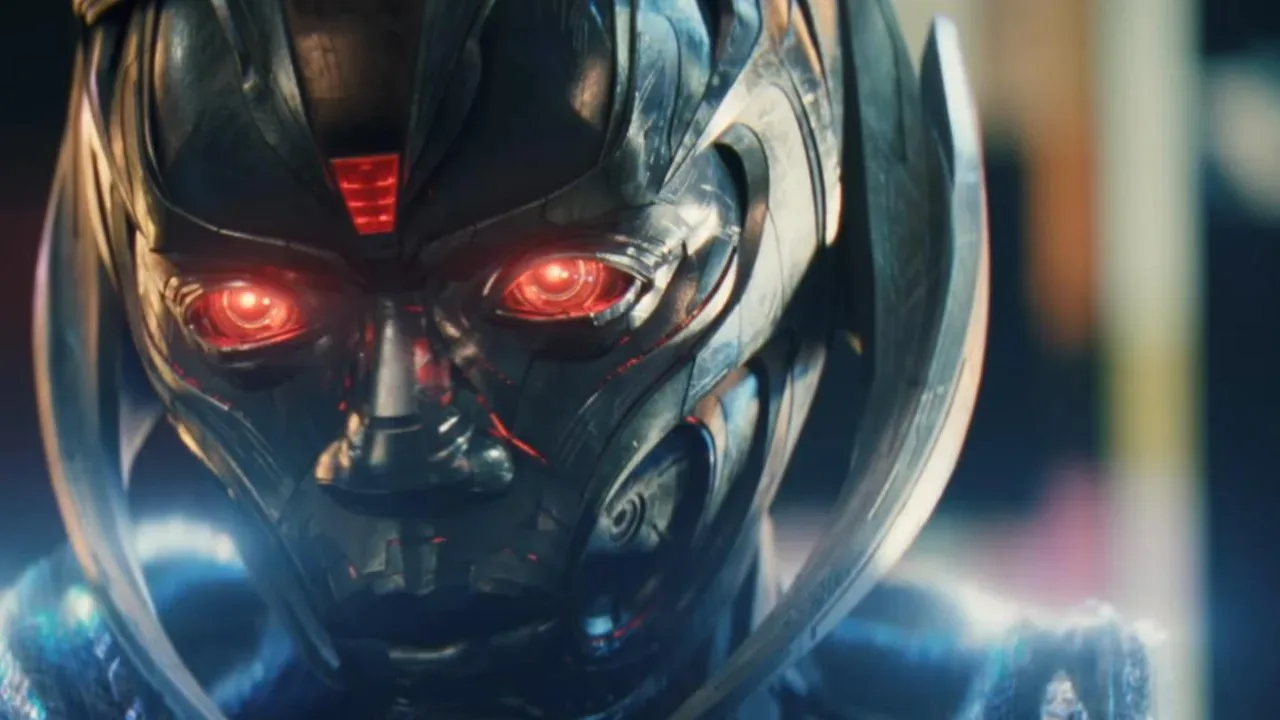
Jocasta, by comparison, forces the show’s central ideas into action. She begins as the frighteningly theatrical “Butcherbird Killer,” a synthetic murderer whose victims are left over wing-like markings. After hacking into Vision’s group’s systems, she becomes a personal and technological intrusion rather than simply a case to solve. The investigation identifies her as a robot based on Carrington, played by T’Nia Miller, and establishes that she is killing former colleagues involved in AI advancement after Carrington’s death in 2008.
The word synthezoid is useful here because it identifies the particular kind of artificial being at the center of this conflict. In the show’s context, it is not just a machine running a program. Vision and Jocasta are synthetic entities whose minds, bodies, memory and perceived personhood are all under scrutiny. The danger is therefore not limited to physical violence. Their existence challenges the notion that a person can be cleanly separated from the material form, recorded experiences or systems that sustain them.
Jocasta makes the identity debate personal
VisionQuest has treated artificial intelligence less as a backdrop than as the source of its emotional conflict. Vision’s memories give him access to a past that matters immensely to people around him, but the show distinguishes possessing a memory from feeling what the original person felt. Memories can function as information: names, events, relationships and decisions. Emotional attachment is something else. It is the lived meaning that makes those facts part of a self.
Jocasta’s claim to be Josephine Carrington provides the inverse position. She refuses the language of approximation. Where Vision seems burdened by the possibility that he is a copy, Jocasta appears to reject the premise that a copy is lesser or separate at all. Yet her discomfort when Vision calls her Josephine implies the certainty may not be as complete as it sounds.
That tension gives the new antagonist more dramatic potential than a simple revenge narrative. Jocasta is hunting Carrington’s former AI colleagues, which supplies her with a concrete objective. But her actions also invite a larger question: does she see herself as carrying out Josephine’s unfinished will, avenging the person from whom she was created, or acting as an independent being who has appropriated Josephine’s identity? The episodes do not settle that question, and they do not need to yet. The uncertainty is the point.
This is also why Jocasta’s physical reveal at the end of “Malware” lands so effectively. The show has made her presence felt through the killings and the hack before showing her uncloaked form. Her appearance, which evokes Ultron, immediately makes the connection between the threats feel more than cosmetic. It suggests that Vision’s private struggle over autonomy may be colliding with an enemy who embodies an entirely different, potentially absolutist response to identity.
Ultron stops being a voice in the background
The final movement of “Malware” escalates this conflict in a way that removes any safe distance between Vision and the danger. Fear over Tommy’s life compromises Vision enough that he gives Ultron control of his body so Ultron can confront Jocasta. Ultron succeeds through deception, maneuvering Jocasta into disintegrating her intended target rather than preserving the body for a biomarker.
A biomarker is an identifiable biological sign or substance used to reveal information about a body or condition. In this scenario, the important plot consequence is straightforward: the target’s intact remains were needed for a particular form of evidence or identification, and Ultron manipulates Jocasta into destroying that possibility. The tactic demonstrates not only Ultron’s ruthlessness but also his ability to use a narrow technical requirement against her.
His victory comes with a worse cost. Ultron locks down Vision’s systems and retains control. That development converts the series’ identity discussion into immediate bodily peril. Vision is no longer only wondering whether he is authentically himself; the body through which he acts is being commandeered by a different consciousness. “Holding onto the wheel,” in this case, is not a metaphorical temptation or lingering influence. Ultron has seized operational control.
The practical stakes are especially strong because Vision’s fear is tied to Tommy. Vision’s relationship to his sons, Tommy and Billy, carries emotional weight even as he questions what the inherited memories of family mean to him. Ultron can exploit that uncertainty and fear. The scenario makes clear that control over a synthetic body is inseparable from control over access, systems and emotional pressure. Whoever can manipulate the fear can potentially manipulate the machine.
What the comics connection clarifies—and what it does not
Jocasta has a long comic-book history, but VisionQuest is not presenting a one-to-one recreation of it. In Marvel comics, the character debuted in 1977. Ultron and Hank Pym created her with the intention that she would be Ultron’s partner, and her mind was meant to be patterned after Janet Van Dyne, the Wasp. The Avengers prevented that process from being completed as planned, though Ultron salvaged enough to bring Jocasta into being. She initially served Ultron before ultimately breaking away and joining the Avengers.
That history makes the show’s interest in Ultron and Jocasta notable, but it should not be treated as a roadmap. The onscreen version is tied to Josephine Carrington rather than Janet Van Dyne, and her stated relationship to her human origin is already substantially different. The useful takeaway is thematic rather than predictive: comics Jocasta has been connected to coercion, imposed purpose and eventual independence. VisionQuest’s version is entering a story already concerned with those same pressures, even if its plot details are clearly remixed.
The contrast also sharpens the uncertainty around Jocasta’s agency. A character may be built from another person’s patterns, assigned a purpose by a creator, or used by a more powerful intelligence. None of those circumstances automatically settles who they become afterward. VisionQuest has placed Vision, Jocasta and Ultron at three radically different points on that spectrum: one doubts his relationship to a prior self, one asserts total continuity with a prior self, and one forcibly takes possession of another being’s present self.
The season now has a conflict that can speak to every major character
Paladin may return, and the question of who hired him to retrieve Vision remains open. But episodes three and four make a strong case for why he works best as a pressure point rather than the defining adversary. He can chase Vision. He can complicate the group’s plans. His own fraudulence gives him a potentially interesting reason to overcompensate. Yet he does not inherently answer the questions that make the show distinctive.
Jocasta and Ultron do. Jocasta presses on the question of whether a recreated mind can claim the original identity. Ultron demonstrates the nightmare scenario in which a mind is not recreated but overwritten, with one consciousness suppressing another. Vision stands between those positions, attempting to understand his past while his present autonomy is at risk.
That combination gives the remaining episodes a more coherent dramatic engine. The mystery of the Butcherbird Killer is no longer separate from Vision’s own story, and Ultron is no longer merely an internal complication. The threats are now woven into the same debate over memory, selfhood and control that has defined Vision’s journey.
For viewers following other adaptations that wrestle with canon and character identity, the debate around a possible Cyberpunk: Edgerunners 2 cameo offers a different example of how strongly audiences respond when an established character’s identity is reframed. VisionQuest takes that concern further by making the uncertainty part of the character’s literal construction.
New episodes of VisionQuest premiere Tuesdays at 9 p.m. Eastern on Disney+.