Warning: This article discusses spoilers for VisionQuest episode 3.
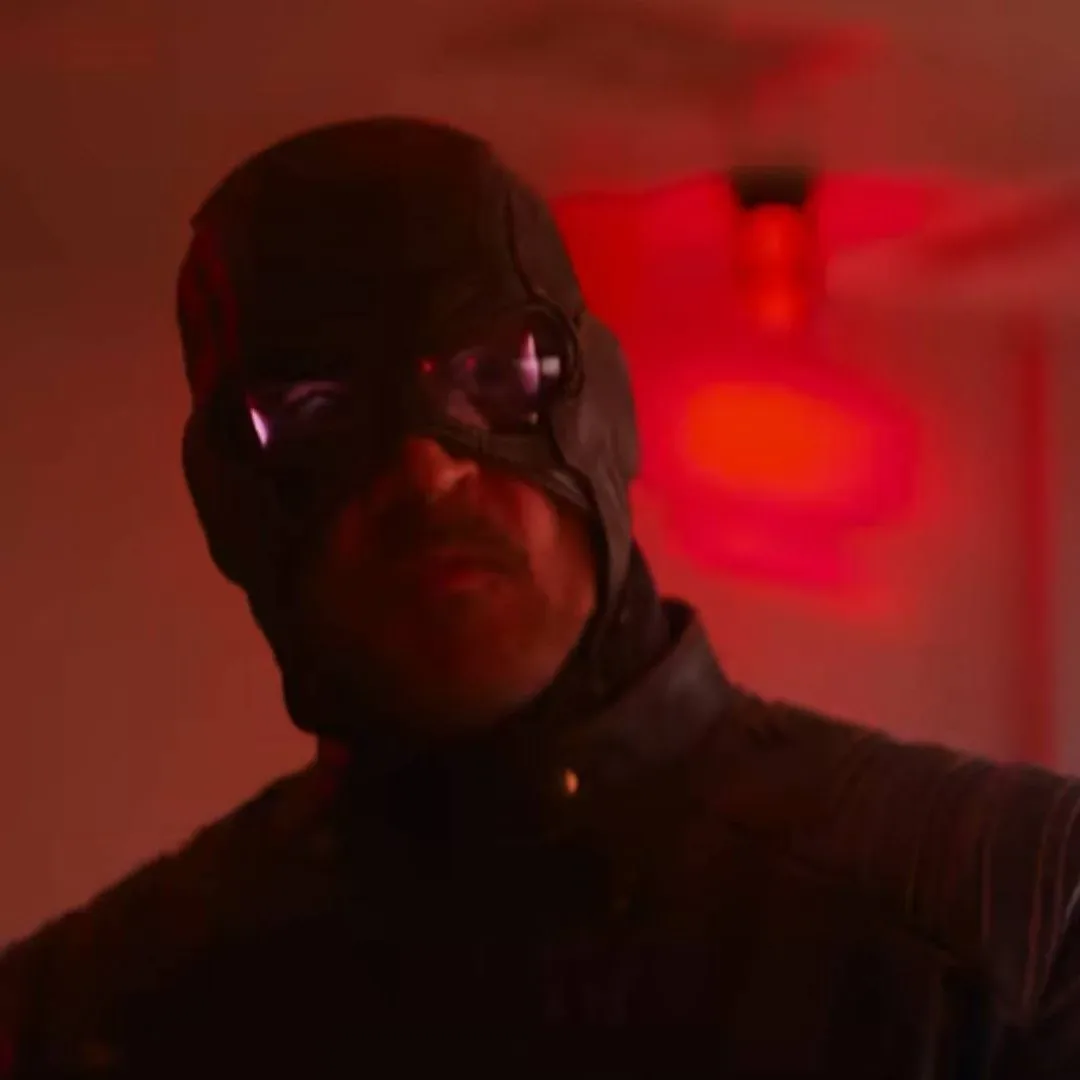
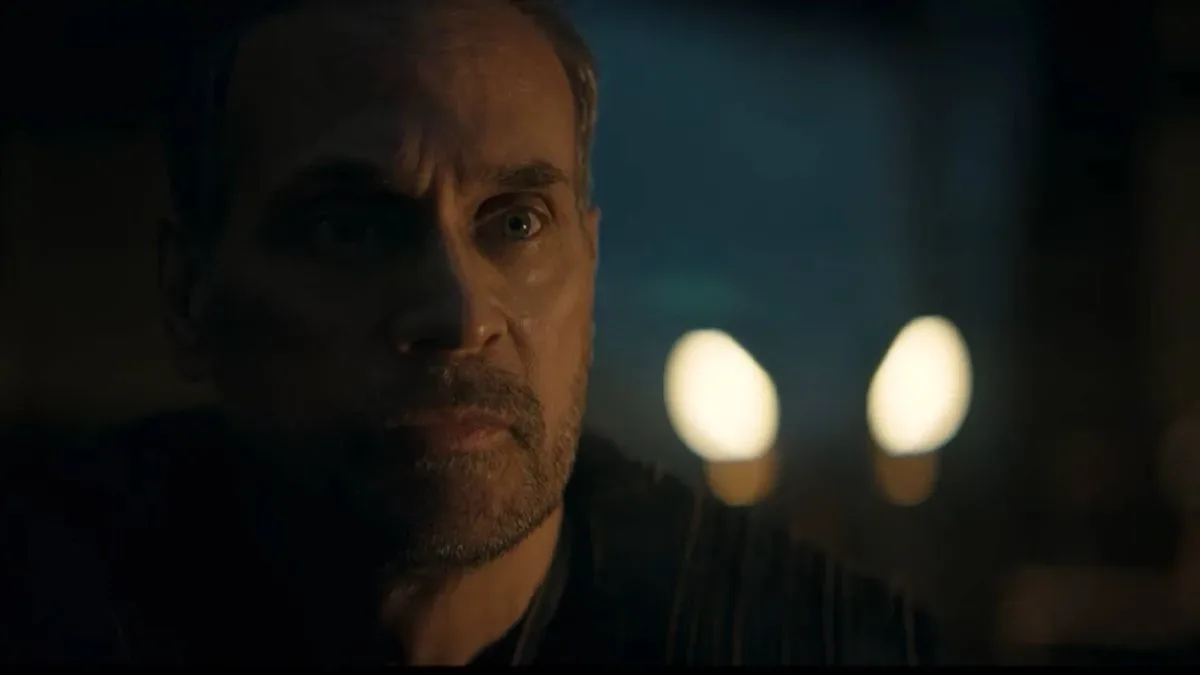
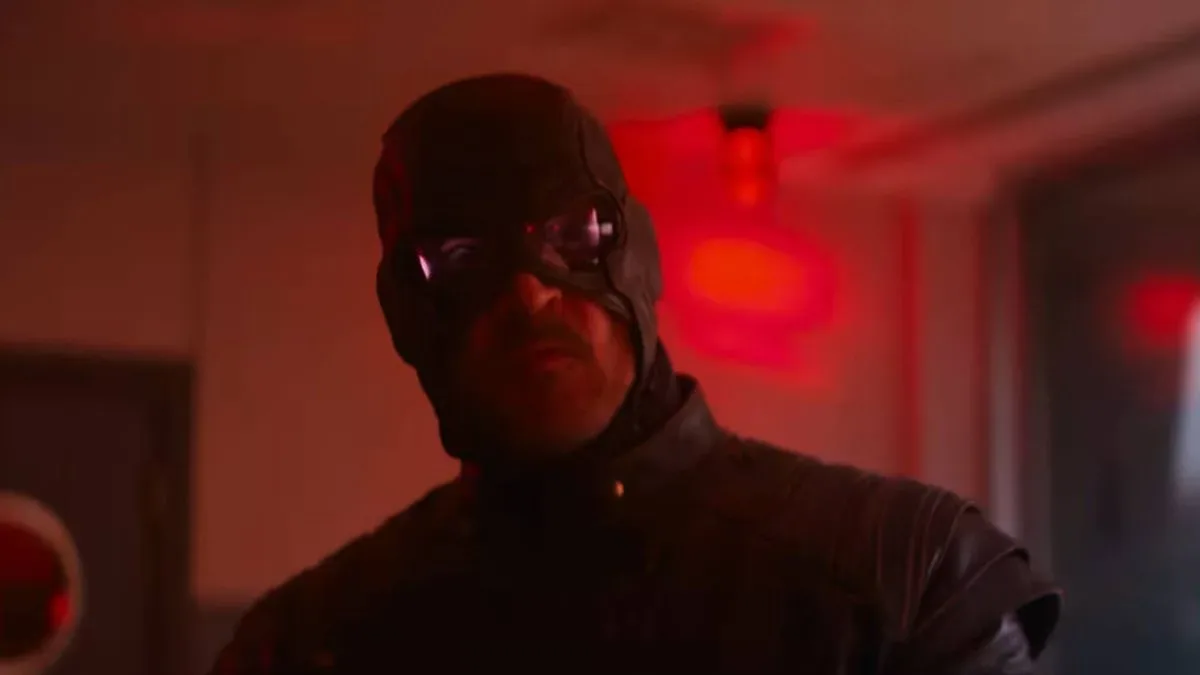
VisionQuest episode 3 adds sharp new detail to the shadowy bounty hunter pursuing Vision. Paladin’s past is not laid out through a flashback or a roll call of famous enemies. Instead, the episode lets a conversation with his Handler do the work: a series of injuries, places and weapons becomes a compact code for three established Marvel figures.
The references point to Frank Castle, better known as the Punisher; Jack Russell, also known as Werewolf by Night; and Daredevil. The result is an efficient bit of character-building. Before the episode provides a complete account of Paladin’s background, it makes clear that he has endured confrontations with opponents from very different corners of this world—and walked away from all of them.
That matters because Paladin is not simply an anonymous threat placed on Vision’s trail. Episode 3 frames him as somebody with a record, scars and enough experience to speak about severe injuries with grim understatement. For Vision, the implication is straightforward: the bounty hunter is an adversary with a proven ability to survive encounters that would be catastrophic for most people.
The Brooklyn wound points to Frank Castle
The first clue comes when the Handler recalls having removed shrapnel from Paladin after an IED injury in Brooklyn. Paladin calls it a “punishing disagreement with an old friend.” The episode does not need to say Frank Castle’s name aloud for the intended connection to land. The combination of an explosive device, Brooklyn and Paladin’s terse description directs viewers to the Punisher.
An IED, or improvised explosive device, is a bomb assembled outside conventional military manufacture. Within the exchange, the important detail is not a full reconstruction of the incident. It is the nature of the damage: Paladin did not merely lose a fight; he took shrapnel in the gut and survived long enough for the Handler to extract it.
The wording “old friend” should not be mistaken for evidence of an easy relationship. In context, it is Paladin’s dry label for a conflict destructive enough to leave him badly wounded. Episode 3 uses that contrast to establish his demeanor. He minimizes pain and danger, which makes the threat he presents more credible rather than less.
There is also a practical storytelling benefit to this kind of allusion. A named appearance can demand considerable plot space; a precisely chosen injury can evoke another character while keeping the scene centered on Paladin and the Handler. Viewers familiar with Frank Castle can decode the reference, while viewers who are not still understand the essential point: Paladin has a history of surviving brutal work.
The bite marks identify Werewolf by Night
The Handler next brings up bite marks delivered by something “halfway between a man and a wolf.” Paladin’s response—describing the opponent as a reasonable fellow by day—identifies Jack Russell, Werewolf by Night.
This clue is more direct in form than the Brooklyn reference. Bite marks establish the physical aftermath; the man-and-wolf description provides the defining image; and Paladin’s note about daytime behavior supplies the final piece of the riddle. Taken together, they do not point merely to an animal attack. They point to a person whose identity is tied to a wolf-like form.
The exchange is important for Paladin’s profile because it broadens the kind of danger he has faced. His reported clash with the Punisher evokes explosives and human violence. The wounds associated with Jack Russell place him against a different, more unusual kind of opponent. Episode 3 does not explain the exact circumstances, nor does it say who initiated the fight. It does establish that Paladin can speak from experience about meeting Werewolf by Night and living through the result.
That distinction is worth keeping in mind as the series develops. References are not the same thing as a complete account of continuity. The dialogue confirms prior conflict and its physical cost, but it does not establish the motives, date, outcome beyond Paladin’s survival, or whether either character considers the matter finished. Treating the scene as a character clue rather than an exhaustive case file leaves room for later episodes to fill in the missing context.
A billy club and Hell’s Kitchen lead to Daredevil
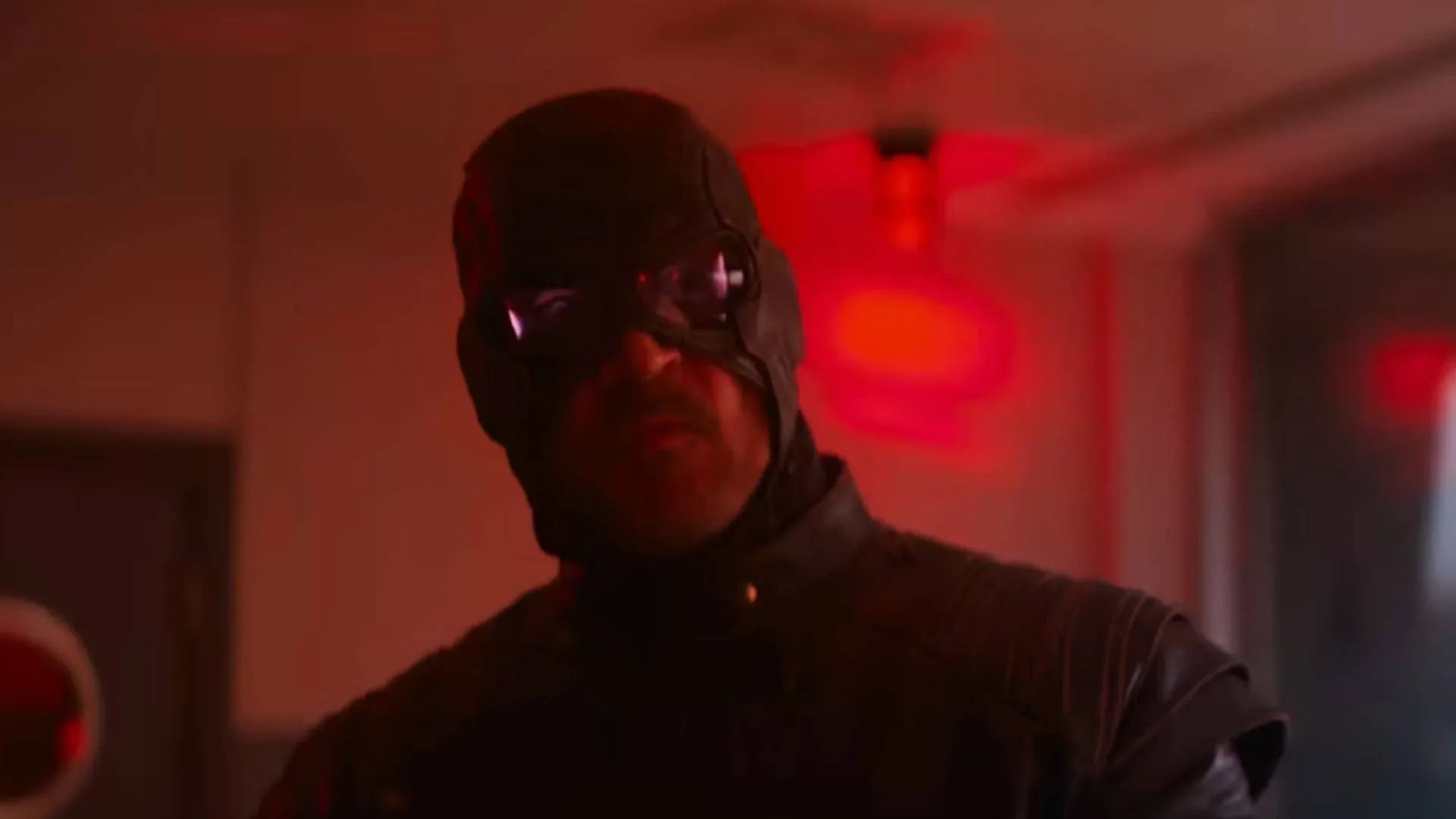
The third reference is arguably the cleanest. The Handler asks Paladin about a concussion caused by a steel-fiber billy club. Paladin answers with a line about getting out of Hell’s Kitchen if one cannot handle the heat. The weapon and neighborhood together identify Daredevil.
A billy club is a baton-like striking weapon. Here, the material description—steel fiber—matters because it turns what could have been a generic head injury into a specific marker. Hell’s Kitchen, meanwhile, is the New York City neighborhood closely associated with Daredevil. Paladin’s reply links the concussion directly to that setting without needing to pronounce the hero’s name.
This reference accomplishes several things in a handful of lines. It confirms that Paladin has crossed paths with a street-level figure whose territory is strongly associated with Hell’s Kitchen. It adds a concussion to his collection of injuries, reinforcing that his resilience is not theoretical. And it gives the dialogue a sense of a lived-in Marvel landscape, where a bounty hunter can have unfinished business with radically different kinds of people.
It also makes Paladin’s current role more interesting. A bounty hunter is defined here by his pursuit of Vision, but episode 3 declines to make him feel like a one-job specialist. The links to the Punisher, Werewolf by Night and Daredevil suggest a history of operating in dangerous circumstances, including conflicts involving explosives, transformed adversaries and close-quarters combat.
What the three allusions establish—and what they do not
The scene offers clear answers to one question: which Marvel characters are being invoked? The three references resolve as follows:
- Frank Castle / the Punisher: the Brooklyn IED incident and the shrapnel wound.
- Jack Russell / Werewolf by Night: the bite marks and the description of a man-wolf figure.
- Daredevil: the steel-fiber billy club, concussion and Hell’s Kitchen reference.
What the dialogue does not do is establish a hierarchy among those clashes. It does not tell viewers that Paladin defeated any of these characters, or that he was defeated in a final sense. His injuries actually argue against reading the exchange as a victory lap. The episode’s firmest point is endurance: he has been hurt badly, treated by the Handler, and remained active enough to be a serious pursuer now.
That restraint is a strength. Paladin is enriched without being overexplained. Rather than pausing the ongoing Vision story for extended backstory, episode 3 provides just enough information for the audience to reassess him. A fighter who has been caught in an explosion, bitten by Werewolf by Night and concussed by Daredevil is unlikely to be intimidated by a difficult assignment.
It is especially meaningful that the Handler knows each injury well enough to recite it. Her role in the exchange suggests familiarity with the aftermath of Paladin’s work, including personally dealing with the shrapnel wound. Their conversation therefore conveys two kinds of history at once: Paladin’s history with other Marvel characters, and a working relationship in which the Handler has repeatedly seen the consequences of his choices.
Why this raises the stakes for Vision
Episode 3 positions Paladin as a fearsome bounty hunter on Vision’s trail. The allusions are not merely Easter eggs designed to reward recognition; they function as evidence of the danger embedded in that pursuit. Each one says the same thing in a different way: Paladin has encountered serious resistance before, sustained serious damage, and continued operating.
That is not proof that he can overcome Vision. The episode does not settle that matchup, and the references do not provide a measuring stick for comparing every character’s abilities. But they do change the texture of the threat. Paladin is presented as someone who understands escalation and survives it. Vision is not being hunted by a disposable obstacle.
The clues also connect this storyline to a wider range of Marvel identities without forcing those characters into the foreground. Frank Castle represents the explosive Brooklyn memory; Jack Russell accounts for the bite marks; Daredevil is encoded through his weapon and Hell’s Kitchen. Paladin becomes a bridge between those references because all three are part of his own physical record.
For more episode 3 context, including the show’s other references involving AI, Sokovia and street-level Marvel connections, see our breakdown of the references packed into VisionQuest episodes 3 and 4.
Paladin’s scars are the episode’s real reveal
The key reveal in episode 3 is not that Paladin knows of Daredevil, the Punisher or Werewolf by Night. It is that his body carries the aftermath of clashes with all three. Shrapnel, bite marks and a concussion become a compact record of the risks he has already accepted.
That approach keeps the character mysterious while making him more concrete. Paladin has a Handler, an assignment involving Vision and a past marked by confrontations with formidable figures. The precise details of those encounters remain untold, but the show has supplied enough to establish the essential tension: if he survived those scars, Vision has reason to take the hunter seriously.
VisionQuest continues weekly on Disney Plus.