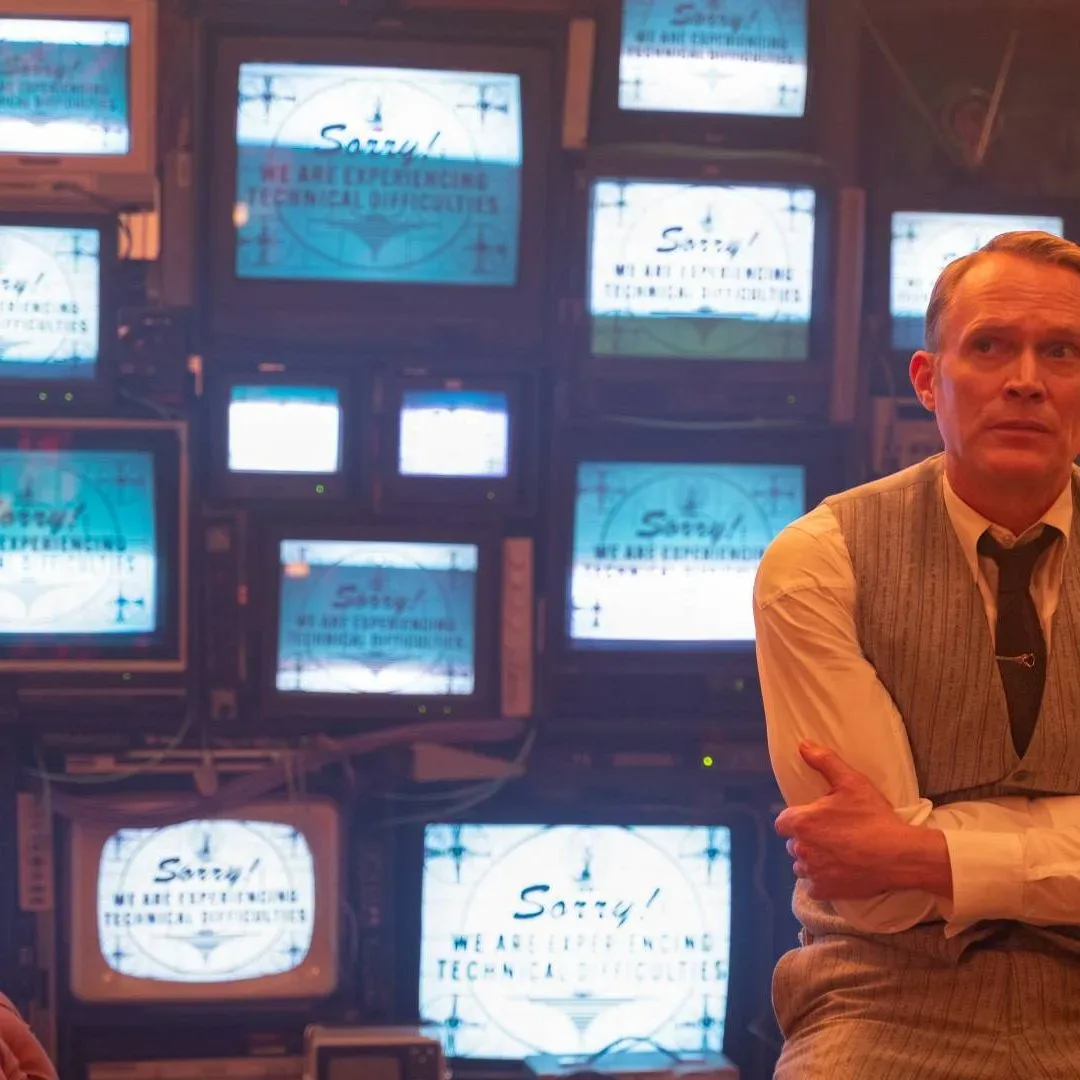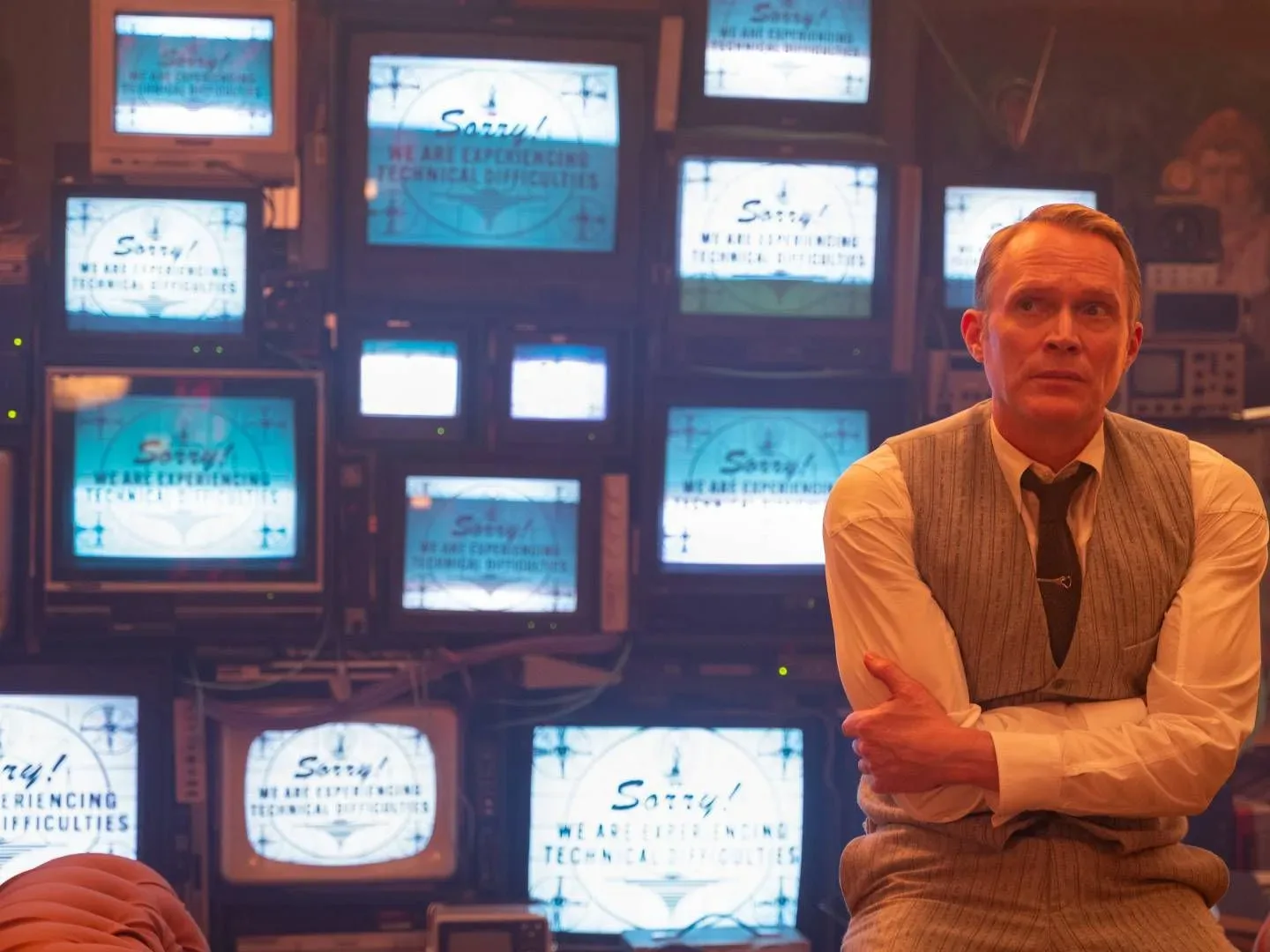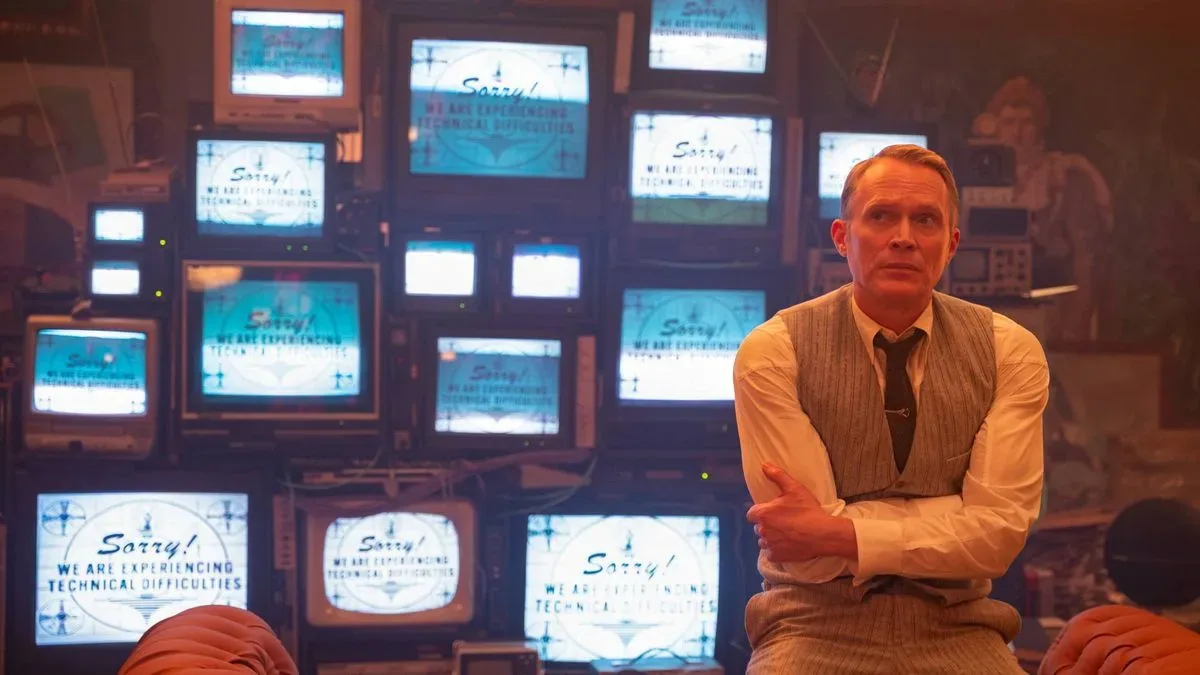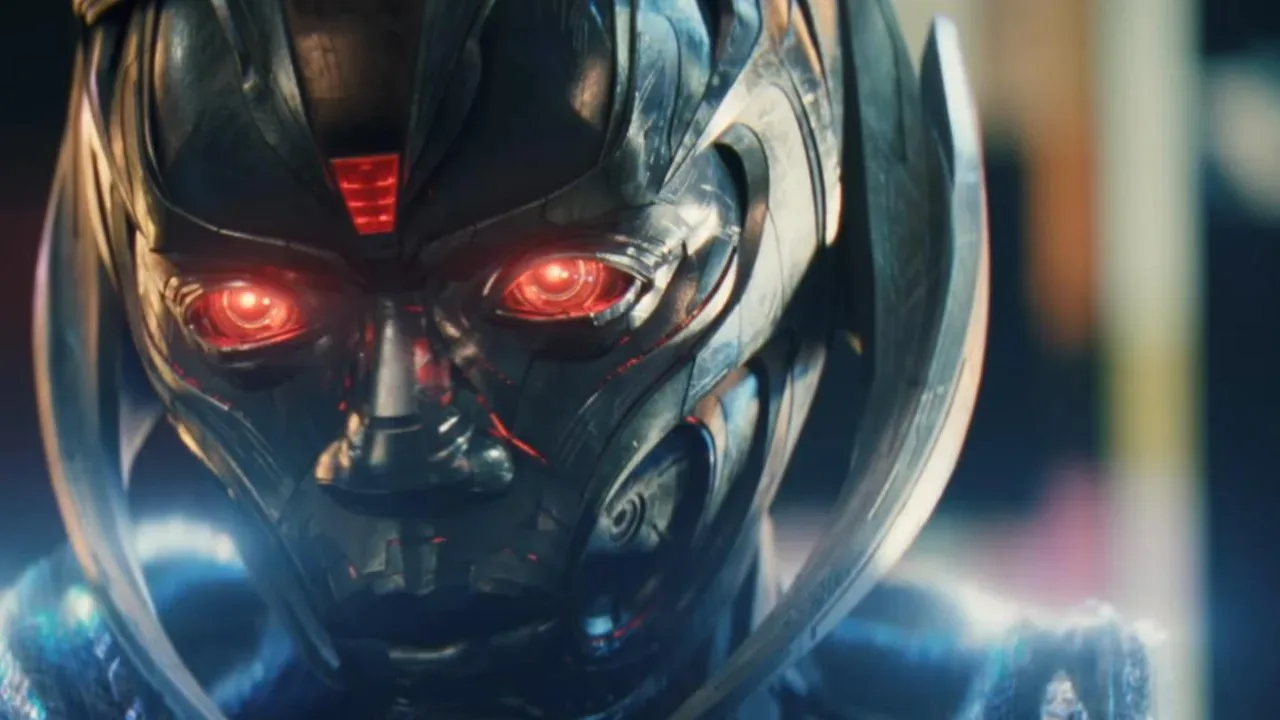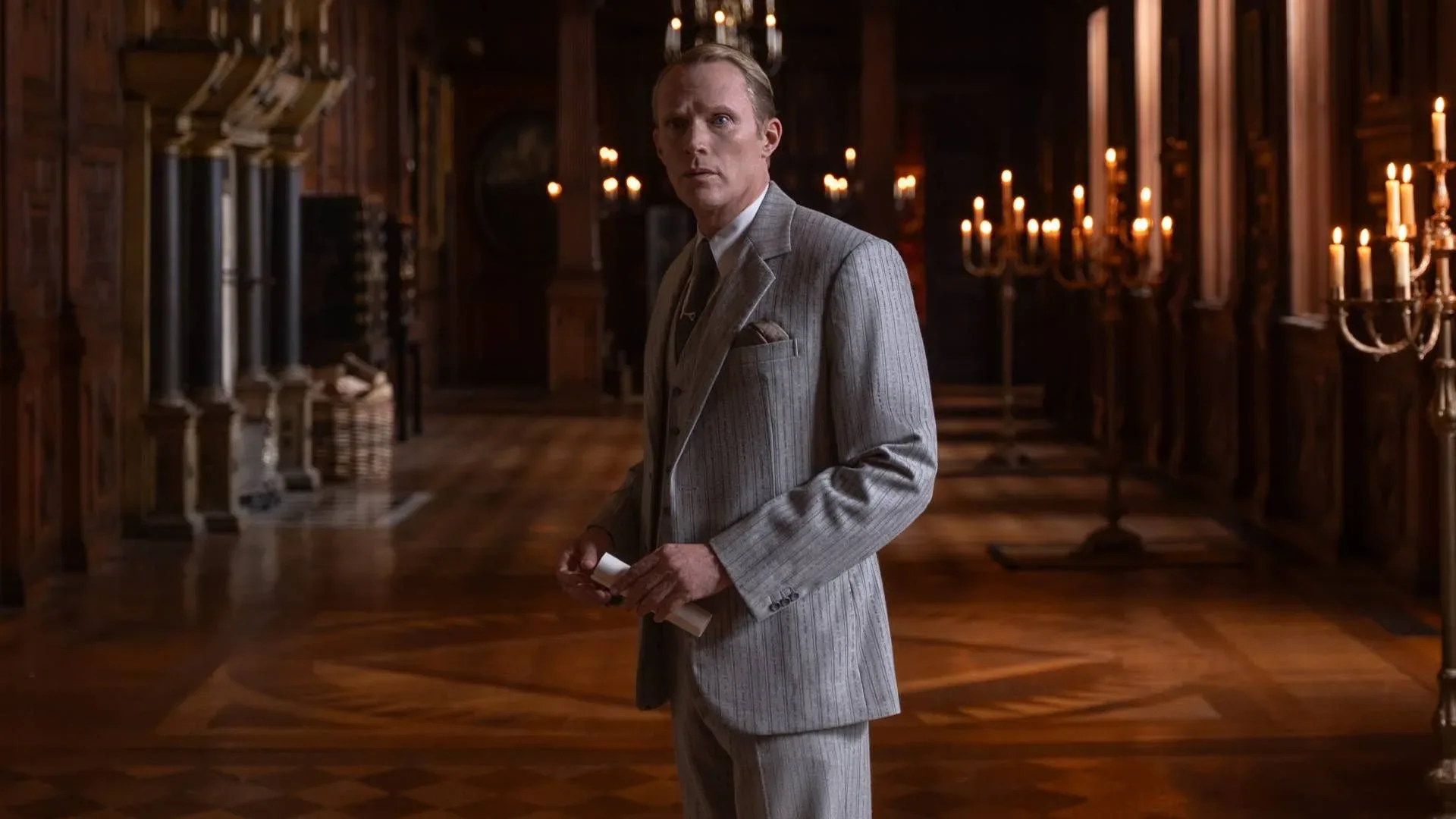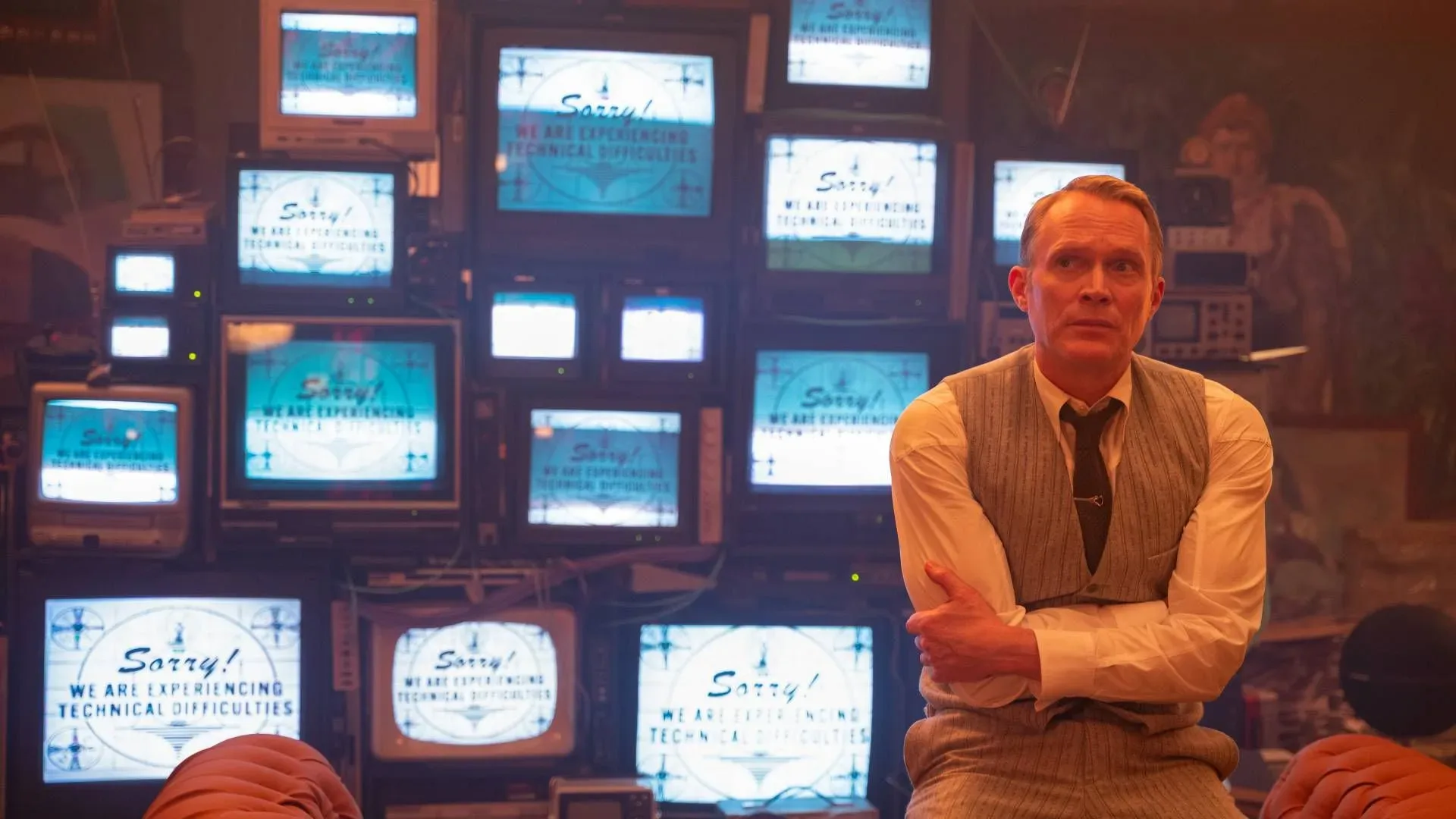
VisionQuest episode 6 has tucked an enormous Marvel signal into a scene designed to pass in a flash. During the power fluctuation in Madripoor, the camera moves across a bank of television screens. Look to the doorway and there are two distinctive glowing eyes: the Watcher is present. This is not merely an interpretation of a dark frame or an unusually ominous lighting choice. VisionQuest showrunner Terry Matalas confirmed the cameo with a brief, playful response: “Good eye. Or… eyes.”
That confirmation turns a background detail into a meaningful story beat. The Watcher is an omniscient observer in Marvel’s larger mythology: a figure associated with watching consequential events rather than directly fixing them. His presence does not reveal exactly what will happen next, and it should not be treated as proof of any specific crossover or outcome. But it is an intentional cue that the events involving Vision, Ultron, Jocasta, and Madripoor may carry consequences beyond the immediate plot.
For a series already digging into the hidden implications of Vision’s history, the cameo makes the story’s stakes feel less private. Something in this corner of the Marvel universe has become important enough to be observed.
Where to spot the Watcher in VisionQuest episode 6
The cameo arrives during the Madripoor sequence in which the power begins to fluctuate. As the shot focuses on a collection of TV screens, the Watcher’s glowing eyes can be seen in the doorway. The moment is easy to overlook because the framing points viewers toward the screens and the disruption itself, not toward the edge of the image.
That kind of placement is worth noting. A straightforward character entrance tells the audience to focus on a person. A peripheral appearance asks them to reconsider the scene after the fact. The Watcher is not presented as a participant in the Madripoor events; he is watching them. The visual language matches his role.
It also makes the appearance rewarding without making it inaccessible. Viewers who missed it are not necessarily missing a line of dialogue or a plot instruction. Instead, they are being given a thematic warning: the story may be approaching a turning point significant enough to draw the attention of someone who oversees major events.
Why the Watcher’s appearance matters
The Watcher’s involvement carries baggage because of the sorts of moments he has been connected to across Marvel stories. He has been present around enormous disruptions, including Infinity Ultron’s emergence in What If…?, Vanessa’s death in Daredevil: Born Again, and events immediately preceding a mutant massacre in X-Men ’97.
Those examples establish a useful pattern, though not a rigid rule. The Watcher does not function like a countdown clock that guarantees one particular disaster. He is better understood as a narrative barometer. When he is on screen, the story is often dealing with change on a scale that demands witnessing: a death, a catastrophe, a world-altering threat, or a fracture in what seemed stable.
That context makes the VisionQuest sighting unsettling. The series is not simply revisiting old Avengers history for nostalgia. It has introduced an important complication: Ultron’s code was kept within Vision. That revelation reframes Vision’s past by raising the possibility that Ultron could have taken control of the synthezoid’s body before Vision’s death in Avengers: Infinity War.
Synthezoid is Marvel’s term for Vision’s artificial body, a being whose identity and physical form are entwined with advanced technology. The possibility of Ultron’s code inside that body is therefore much more than a dormant program sitting in storage. It is a threat tied directly to Vision’s identity, autonomy, and history.
If the Watcher is observing the Madripoor incident because that threat is escalating, then VisionQuest may be asking a broader question than whether Ultron returns. It may be asking what happens when the legacy of an artificial intelligence survives inside one of the universe’s most important synthetic heroes.
Ultron, Jocasta, and the danger of a larger plan
Ultron and Jocasta are both established as figures with troubling plans in motion. The confirmed Watcher cameo does not explain those plans, identify their end goal, or confirm that they succeed. Still, its placement encourages viewers to view the Madripoor power disturbance as a possible symptom rather than an isolated event.
That distinction matters. A local outage can be a plot obstacle. A local outage observed by a cosmic figure can be a sign that the effects will spread, or that the cause is connected to something much more consequential. VisionQuest has left room for either reading without settling the answer.
There is also a specific source of tension in the relationship between Vision and Ultron. Vision’s existence has long been connected to Ultron’s legacy, but the series’ revelation about embedded Ultron code sharpens that link. It makes the past feel unresolved in a very literal sense. What seemed to be a defeated enemy may have remained present within Vision, capable at least in theory of asserting itself.
This is why the Watcher cameo lands differently than a general Easter egg. It comes at a moment when the show has made the architecture of its central conflict more dangerous. The concern is not only that an old villain might return. It is that the line separating hero, machine, memory, and hostile code may be much less secure than viewers believed.
For more discussion surrounding where Ultron could fit into the series’ conflict, see the debate over whether Ultron deserves redemption or represents a new kind of threat.
What the cameo does and does not confirm
It is tempting to jump immediately from the Watcher’s eyes to a definitive prediction about the Marvel Cinematic Universe. The available evidence supports a narrower claim: the Watcher appears in VisionQuest episode 6, and the showrunner has confirmed that the appearance is intentional.
It does not establish which event he is monitoring, whether he will appear again, whether he will intervene, or how directly the story connects to Avengers: Doomsday. The possibility that VisionQuest may affect the bigger picture on the road to that film remains a reasonable question, particularly given the scale traditionally associated with the Watcher. It is still a question, not an answer.
This distinction is important because Marvel storytelling often uses shared-universe imagery in two ways. Sometimes it serves as confirmation of a future connection. Other times it establishes mood, scale, or thematic significance while leaving the eventual plot direction open. The Watcher can accomplish both. His appearance says, “Pay attention,” without yet saying, “Here is precisely what happens next.”
A new lens on Vision’s final days
The most compelling consequence of VisionQuest’s Ultron-code revelation may be how it changes the emotional texture of Avengers: Infinity War. Vision’s death already carried immense weight. The notion that Ultron might have been able to overtake Vision before that death introduces a frightening alternate possibility within the story’s past.
That possibility does not rewrite events on its own. It does, however, make them newly unstable. Vision may not have simply carried the legacy of his creator and enemy in a symbolic way. He may have carried a genuine technical vulnerability: code capable of compromising his agency and using his body for a different purpose.
The Watcher’s cameo makes this retrospectively charged scenario feel especially notable. If Ultron and Thanos had confronted each other through Vision’s body or over control of it, the Watcher could have had an extraordinary confrontation to witness. VisionQuest has not shown that encounter, nor confirmed it occurred. But by foregrounding what Ultron’s code could have meant, the series has made the hypothetical itself feel consequential.
It is a smart kind of dramatic pressure because it works in two directions. It creates anxiety about the future—what Ultron and Jocasta may be attempting now—while unsettling assumptions about the past. Vision’s story is no longer only about what was lost. It is also about what dangers may have been hidden inside him all along.
The practical takeaway for viewers
The immediate rewatch point is simple: revisit the Madripoor power-fluctuation scene in episode 6 and watch the doorway near the wall of television screens. The Watcher’s glowing eyes are the identifying feature. Because the cameo is so brief, pausing the sequence is likely the clearest way to see it.
Beyond the visual detail, the episode gives viewers several threads to keep in mind as the weekly releases continue:
- The Watcher is confirmed to be present, not merely suspected.
- Ultron’s code inside Vision is now a central piece of the series’ understanding of Vision’s history.
- Jocasta and Ultron’s plans remain a source of danger, but their full implications have not been established.
- Madripoor’s power incident may matter beyond the scene itself, though the story has not disclosed why the Watcher is observing it.
- A link to Avengers: Doomsday is possible to speculate about, but the cameo alone does not confirm one.
For now, the most accurate reading is also the most intriguing one: VisionQuest has placed the Watcher at the edge of a crisis involving Vision and Ultron, then refused to say what that crisis will become. In Marvel terms, those glowing eyes are not an explanation. They are a warning.