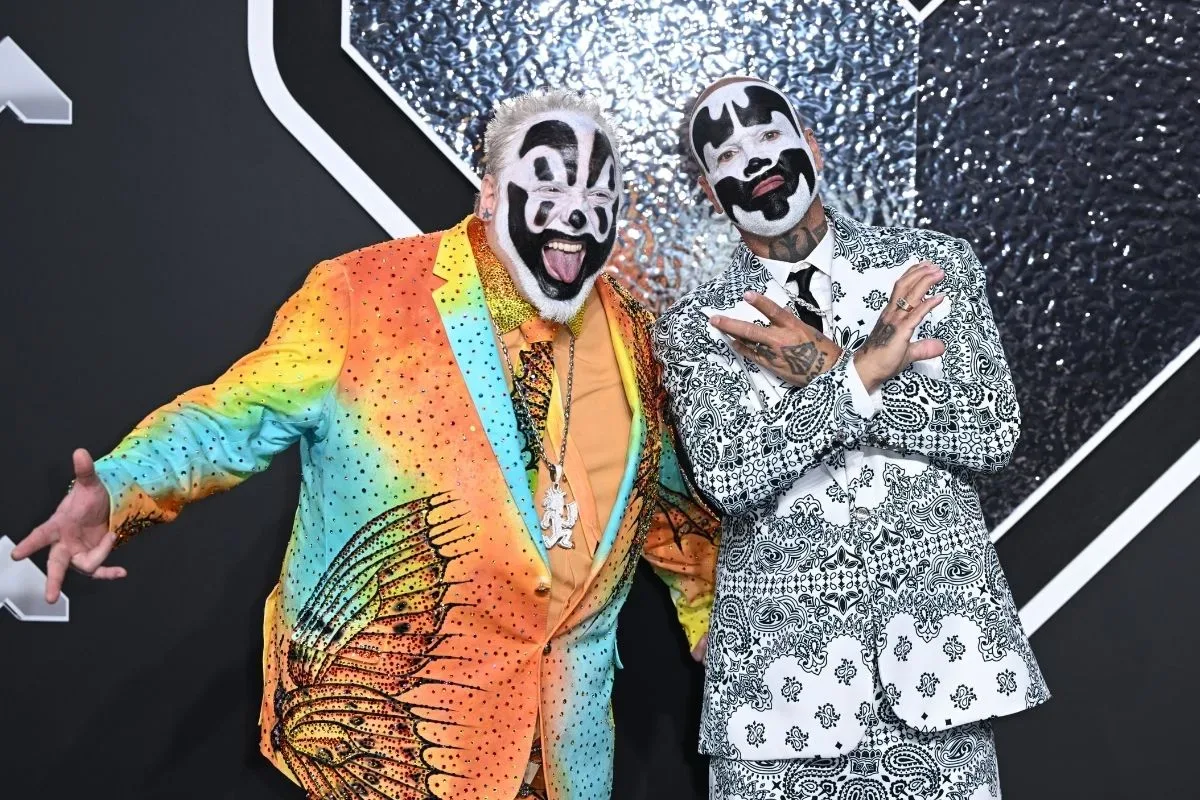
Insane Clown Posse’s Halloween season will not include a paid reunion with the artists associated with the group’s so-called Family Era, at least if Violent J has his way. Asked about the possibility of sharing a stage with Twiztid, ABK and Blaze, Violent J gave an unequivocal answer: “There’s nothing, no amount of money, that would get me to get onstage with those guys.”
The comment matters because the artists named in the question are tied to a substantial chapter of the Psychopathic Records orbit and to a long-running fan expectation that old collaborators could eventually appear together again. Violent J characterized the break as a betrayal, making clear that this is not simply a matter of negotiating a fee, choosing the right venue or finding an anniversary worth marking. He raised only one deliberately extreme hypothetical exception: an arrangement that could end world hunger.
That leaves little room to read his remarks as a teaser for an imminent reunion. It is a direct rejection of the commercial-reunion premise at a moment when ICP is preparing a Michigan Halloween run, including the 33rd annual Hallowicked Clown Show in Detroit.
A history with real creative and business weight
The strength of reunion interest is understandable. Twiztid’s Jamie Madrox and Monoxide came from House of Krazees. After that three-member group broke up, Violent J heard a demo by the pair and signed them to Psychopathic Records. Their time connected to the label included W.I.C.K.E.D., the 2009 album that reached No. 11 on the Billboard 200.
In earlier comments, the members of Twiztid described the relationship as formative. Madrox credited ICP with putting time into teaching the duo and helping refine their music. Monoxide likewise said that the pair spent years learning from ICP. Madrox’s view was nuanced: Twiztid would have continued pursuing music without Psychopathic, but the label changed the scale of the opportunity, expanding the duo’s reach and opening doors.
Those recollections help explain why the prospect of a Family Era-style appearance carries more meaning for fans than a routine guest slot. This was not presented merely as a short-term label arrangement. Madrox described a relationship built through trust and years of work, while Monoxide said ICP came to respect Twiztid’s business ability as well as its music. The duo also recalled being encouraged to adopt face paint after initially worrying that the look might seem too close to ICP’s visual identity.
In other words, the connection covered artistic development, image, touring-era community and the practical work of building a career. That kind of shared past often fuels nostalgia. It can also make a public split feel more personal to the people involved—and can make outside assumptions about a reconciliation especially unreliable.
What “no amount of money” does and does not settle
Violent J’s wording specifically rejects a reunion motivated by payment. In entertainment terms, a reunion is often treated as a transaction: promoters identify demand, artists agree to appear, and a familiar lineup is sold as a limited event. His response pushes back against that model. The issue, in his telling, is not whether the offer is large enough.
It does not, however, establish a full account of every disagreement between the artists, nor does it speak for Twiztid, ABK or Blaze. It also does not make a definitive forecast about every imaginable future circumstance. What it does establish is much narrower and more useful: Violent J does not presently endorse the paid onstage reunion proposed to him.
That distinction is worth keeping in mind whenever legacy-act speculation begins to build. Fans may have a deep attachment to a former lineup, label family or specific touring period. But shared history alone is not evidence that all participants view a reunion as desirable, appropriate or possible. The most concrete information here is the stated position of one principal artist, not an announced plan.
Twiztid’s path after Psychopathic
Twiztid eventually departed Psychopathic Records. Abominationz was identified as the duo’s final release for the label, and in 2015 Twiztid issued its first album through its own Majik Ninja Entertainment.
That move is important context because it marks the transition from the earlier label relationship to an independent business identity. It should not be flattened into a claim that the group’s past work disappeared or ceased to matter. The older catalog, the experiences Twiztid described and the fan associations created during those years remain part of the story. But an artist launching music through its own company is also defining a separate lane.
For listeners, that is the practical reality beneath the reunion conversation. A nostalgic bill might seem simple from the crowd, particularly when it is built around artists with a shared history and recognizable visual language. Behind the scenes, though, such an event involves relationships, individual boundaries and separate careers. Violent J’s latest remarks place those boundaries at the center of the discussion.
Michigan Halloween dates remain the immediate focus
The confirmed activity is ICP’s three-date Michigan Halloween schedule. The group is set for October 29 and October 30 at The Vault in Saginaw, followed by an October 31 show at Detroit’s Masonic Temple. The Saginaw appearances were described as ICP’s first concerts in that city, and the October 29 event was listed as sold out when the dates were announced.
Detroit’s October 31 performance is billed as the 33rd annual Hallowicked Clown Show. The announced music lineup alongside ICP includes Ouija Macc, Wakko The Kidd, Diggy Graves, Ganksta N-I-P and Klokwerk E. None of the reunion figures named in Violent J’s response—Twiztid, ABK and Blaze—are part of that announced lineup.
Hallowicked is therefore best understood on the available details as a continuing annual ICP Halloween event, rather than a return to the former collective configuration raised in the interview. The Saginaw dates add a new city stop, while the Detroit show carries the annual Hallowicked designation and a defined supporting lineup.
The timing also places ICP’s plans within a broader Halloween entertainment rush, a period when special-event programming is especially visible. For a different recent example of Halloween built around a familiar comic persona, see this look at David S. Pumpkins returning to an SNL cold open. ICP’s dates, however, are grounded in live music and the group’s own annual tradition rather than a television sketch revival.
Why the clarification is likely to resonate
For fans who connect the Family Era idea with a particular time in the artists’ careers, the appeal of a reunion is easy to understand. It promises familiar chemistry and a chance to see a formative network of performers occupy the same space again. But nostalgia is not a contract, and it cannot resolve a dispute that one participant describes in terms of betrayal.
Violent J’s answer offers clarity even if it is not the outcome some listeners wanted. There is no announced paid reunion with Twiztid, ABK and Blaze attached to ICP’s Michigan Halloween run. Instead, the confirmed plans are the Saginaw shows and the Detroit Hallowicked event, with the latter featuring Ouija Macc, Wakko The Kidd, Diggy Graves, Ganksta N-I-P and Klokwerk E.
Until any artist involved says otherwise, speculation should remain just that. The relevant announcement is not an old lineup getting back together; it is ICP continuing its Halloween tradition with three Michigan dates and a lineup that has already been identified.