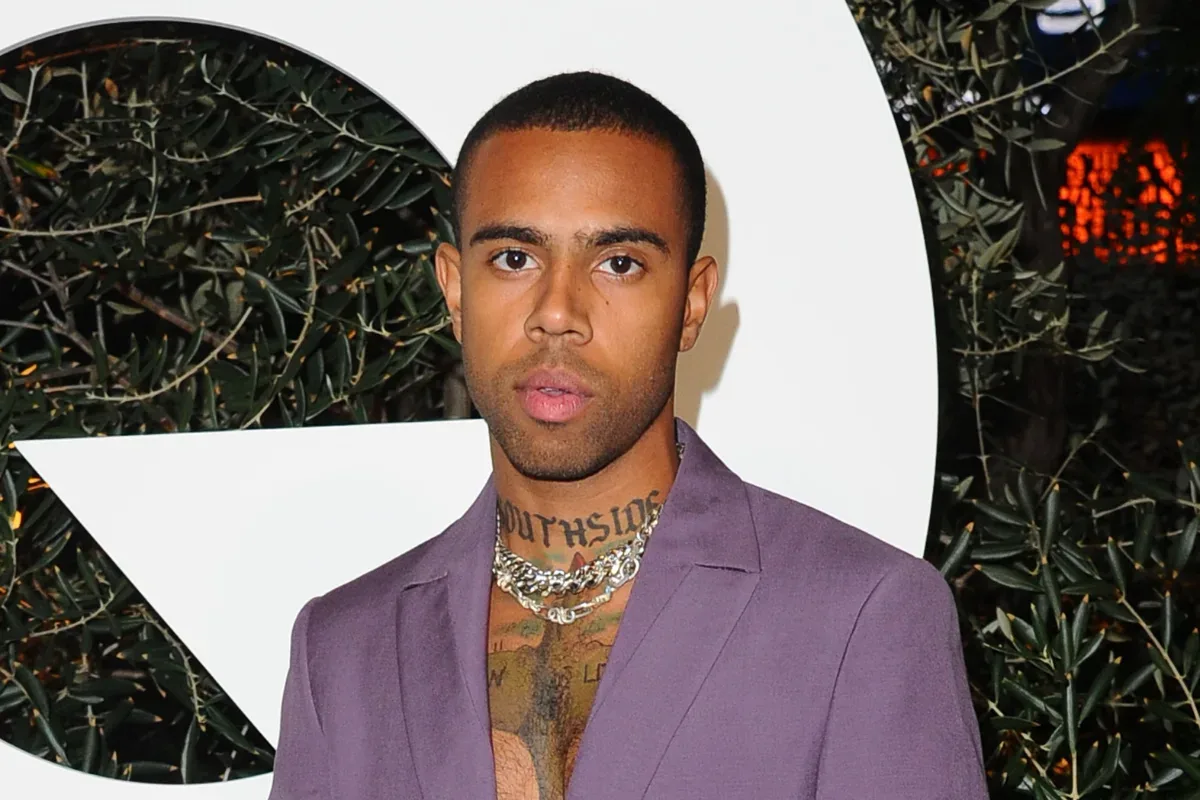
Vic Mensa is drawing a firm line between solidarity and silence. In a conversation with Michigan U.S. Senate candidate Abdul El-Sayed, the rapper addressed anti-Black racism he experienced in Palestine while reiterating his support for Palestinian liberation.
Mensa’s central argument is not that one injustice cancels out another. It is the opposite: a commitment to liberation has to leave room to confront racism wherever it appears. He raised what he called “the elephant in the room,” recalling that children in Palestine used a racial slur toward him. The account sits alongside, rather than overturns, the perspective Mensa has articulated publicly for years about Palestinian civilians and the restrictions he says he witnessed during a 2017 visit.
That distinction matters because public conversations about political solidarity can often become tests of total allegiance. Mensa’s comments reject the premise that backing Palestinian rights means a Black visitor must minimize anti-Black treatment, or that naming anti-Blackness somehow erases concern for Palestinians. His position asks for a more demanding form of coalition: one that can hold multiple realities at once.
A long-running perspective shaped by travel
Mensa’s connection to Palestine predates this latest exchange. In a January 2018 essay, he wrote about travelling there the previous summer with Black artists, scholars and activists through Dream Defenders. He connected what he saw to racial profiling in the United States, particularly the experiences of Black Americans.
That comparison was rooted in observation and analogy, not a claim that every political system, history or lived experience is identical. Mensa has framed his critique around the Israeli state’s treatment of Palestinian civilians and what he personally encountered, while explicitly saying that the critique was not an attack on Jewish people. That boundary is important: criticism of a government’s conduct is not synonymous with hostility toward an ethnic or religious group.
In a separate interview with Celine Semaan, Mensa said the visit had changed his outlook. He described combining lived experience with reading, then using both essays and rap to communicate his reactions. For him, Hip-Hop has educational potential: a cultural language through which artists can turn observation into public discussion.
One memory Mensa has returned to involves Jerusalem, where he said he watched a young Palestinian encounter Israeli soldiers while accompanied by Marc Lamont Hill. He said the young person’s body language reminded him of Black young people facing police on Chicago’s South Side. The comparison is revealing because it focuses on an immediate human response to authority: apprehension, calculation and the instinct to protect oneself during an encounter with power.
He also described a different lesson in Hebron. Mensa said his U.S. citizenship gave him freedom of movement that Palestinian companions did not share. In that account, citizenship is not merely a passport category; it is presented as something with tangible consequences for who can move freely and who cannot. An older man at a Bedouin camp reportedly asked the visiting group to tell people outside the region what they had seen. Mensa said he promised that he would.
Related coverage includes Vic Mensa Reaffirms Palestine Support While Addressing Anti-Black Racism.
Why the anti-Blackness discussion is not a detour
Anti-Blackness, as Mensa uses the term, refers to prejudice and discrimination directed at Black people. He has characterized it as a global problem, not something confined to the United States. His recollection of being called a slur in Palestine is therefore part of a wider point: communities that face oppression can still reproduce harmful racial attitudes internally or toward others.
That is uncomfortable precisely because it resists the easy storytelling that often accompanies international politics. Public debate can reduce people to a single identity or a single political position: victim, ally, opponent, representative. Mensa’s account refuses that flattening. Palestinians may face conditions he has criticized and witnessed, while anti-Black racism can still be real when directed at Black people in Palestinian spaces. Both propositions can be discussed without treating either as disposable.
The practical implication is that solidarity should not operate as a demand for personal erasure. When supporters tell people to avoid mentioning a racist experience because it might complicate a cause, they risk turning solidarity into public-relations management. Mensa’s framing instead suggests that durable alliances require candor, including when that candor is inconvenient.
It also places responsibility on listeners to resist false choices. A person can condemn anti-Black racism and continue to support Palestinian liberation. A person can criticize the Israeli state’s conduct toward Palestinian civilians without directing hostility at Jewish people. These are distinctions that can make a conversation harder, but also more precise.
El-Sayed’s response and the coalition question
El-Sayed agreed with Mensa’s broader point. He recalled a Black teacher introducing him to civil-rights history after the September 11 attacks, and argued against pursuing acceptance at the expense of Black Americans.
His response speaks to coalition politics, a term for people and groups working together around shared interests without needing to share every identity or experience. Coalitions are often strongest when they acknowledge unequal power and different histories instead of asking participants to pretend those differences do not exist.
In this case, El-Sayed’s recollection of a teacher connects political education to personal memory. Mensa similarly treats experience as a foundation for political speech, whether he is writing an essay, recording music or discussing a trip. Neither account suggests that personal experience settles every question about a complex conflict. Rather, both show why firsthand encounters and education can shape the moral lens through which people approach public issues.
The exchange also places a spotlight on the role of artists in political discourse. Mensa does not present Hip-Hop as a replacement for scholarship, organizing or policy. But he does see it as a means of teaching. That matters in an environment where music can reach people who may not encounter the same conversations through traditional political institutions.
Artists who speak about international issues also face a particular pressure: audiences may demand absolute certainty, perfect language or a simple side to choose. Mensa’s approach is more complicated. He is affirming support for Palestinian liberation, describing the inequality he says he saw, and insisting that the racism he encountered be named plainly. The value of that position lies in its refusal to turn empathy into a limited resource.
What Mensa’s position asks of audiences
Mensa’s message is ultimately a challenge to the terms of the discussion. The question is not whether someone must choose between confronting racism and caring about Palestinians. The question is whether a movement’s idea of justice is broad enough to withstand honest testimony from the people within and alongside it.
His past remarks provide the context for why his support has remained intact. He has described seeing a young Palestinian’s interaction with soldiers, recognizing emotional echoes of policing in Chicago, and noticing how his American citizenship altered his own ability to travel. Those experiences informed his criticism of the Israeli state’s treatment of Palestinian civilians. His recent comments make equally clear that this support is not conditional on ignoring anti-Black racism.
For audiences, the useful takeaway is precision. Do not collapse criticism of a state into prejudice against a people. Do not use a Black person’s account of racism as a reason to dismiss concern for Palestinian rights. And do not treat calls for liberation as exemptions from examining racism inside any community.
Those habits will not make contentious discussions easy. They can, however, make them more honest. Mensa’s insistence that both anti-Black racism and Palestinian freedom belong in the same conversation is a rejection of selective empathy—and an argument that solidarity is most meaningful when it makes room for the full truth.
For another example of how culture and language move across audiences, see our coverage of Bengali series reaching Hindi, Tamil and Telugu viewers.