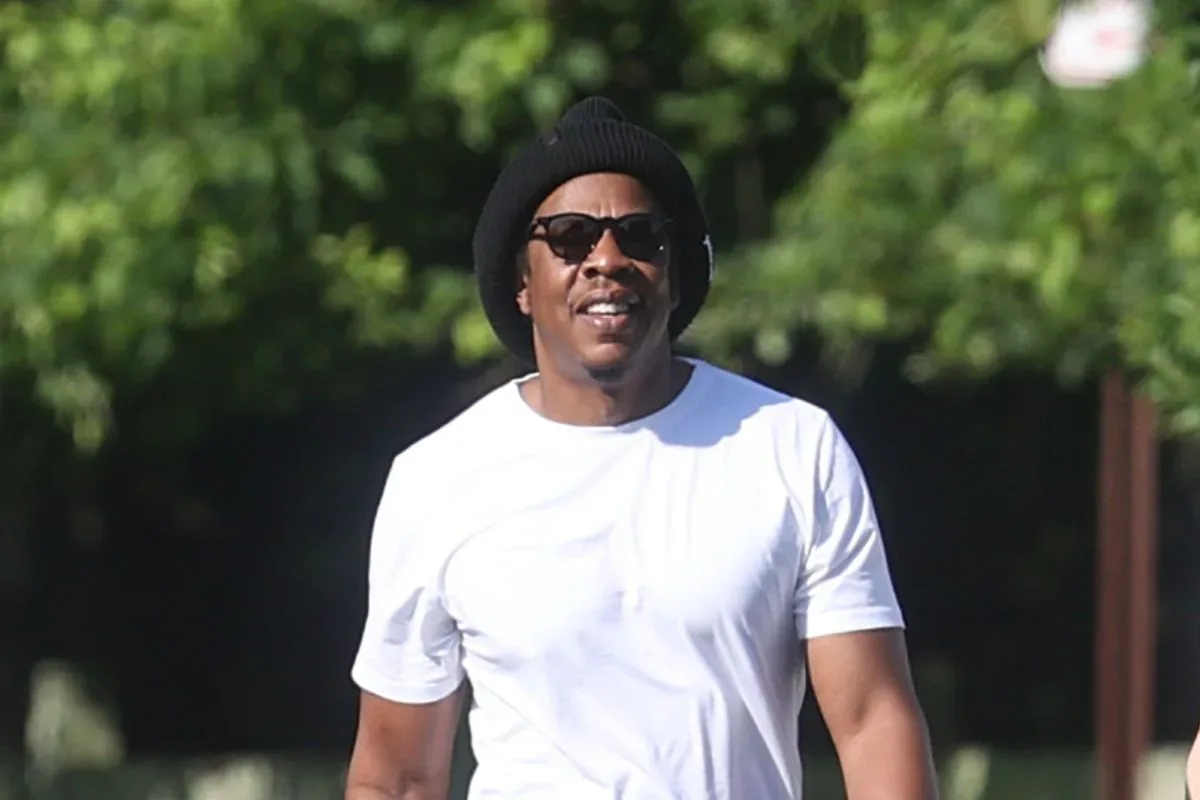
Nuri Muhammad has made a deliberately expansive case for the value of Jay-Z’s art: that the rapper’s gift with words can matter more to Black communities than a billion-dollar charitable check. In a conversation on Club Shay Shay with Shannon Sharpe, the Nation of Islam minister praised Jay-Z’s lyrical ability while arguing that artists should use their creative gifts in service of their communities.
“His gift is worth more than a billion dollars,” Muhammad said.
The point is not that funding, scholarships or institutions are unimportant. Muhammad’s framing instead treats music as a form of influence with a different kind of reach. A donation can support a defined program. A lyric, album or public message can potentially shape how listeners see themselves, their neighborhoods and the problems around them. It can enter everyday conversation, survive beyond a campaign, and help make an issue legible to people who may never encounter it through a speech or policy discussion.
That argument places an unusually high responsibility on artists with a wide audience. Muhammad’s emphasis was on what musicians choose to say with the platform they already possess, rather than presenting philanthropy as the sole—or highest—measure of community commitment.
What Muhammad means by music with a purpose
Muhammad pointed back to the tradition often described as conscious Hip-Hop, naming Public Enemy, Ice Cube and other artists associated with music tied to Black awareness. The term does not refer to one sound, one era or a formal rulebook. In this context, it describes Hip-Hop that directly engages with social conditions, identity, power and community concerns, asking listeners to think beyond entertainment alone.
His observation also makes room for a broader truth about songwriting: cultural impact cannot be reduced neatly to a dollar total. A billionaire’s donation can be quantified, but the long-term effect of an idea carried through popular music is harder to measure. It may inspire, challenge or educate; it may also prompt disagreement. That uncertainty is part of the distinction. Muhammad is talking about the capacity of a powerful artistic voice to influence values and priorities at scale.
For an artist as prominent as Jay-Z, the expectation is especially significant. Muhammad’s position is that lyrical skill is not merely an asset for commercial success. It can be a civic tool if an artist decides to make it one. This is a claim about potential and responsibility, not a claim that a song can substitute for material support.
Jay-Z’s work already extends beyond the recording booth
The available record described in the discussion includes several ways Jay-Z has paired cultural work with community and justice-focused efforts. The Shawn Carter Foundation, established with his mother, Gloria Carter, supports students through scholarships, college tours and other educational programs. Its work has reached underserved students in communities across the United States.
Education is a particularly relevant part of the picture because it connects personal opportunity to the larger community questions Muhammad raised. Scholarships and college-focused programs can help address practical barriers for individual students. Meanwhile, music can put questions of opportunity, inequality and aspiration into public conversation. They do different jobs, but they need not compete with one another.
Jay-Z’s advocacy has also included documentary work. Team Roc credits him as an executive producer of the 2017 series TIME: The Kalief Browder Story, which examined young people in solitary confinement, and the 2018 documentary series Rest in Power: The Trayvon Martin Story. An executive producer role does not mean an artist is necessarily the person making every creative decision on screen. It does, however, identify a meaningful role in helping bring a project forward, often through support, oversight and a public profile that can increase attention.
In both cases, the medium matters. Documentary storytelling can make complex issues accessible through sustained narrative and firsthand accounts. That is different from a song, but it follows the same broad principle at the center of Muhammad’s comments: well-known artists can use creative platforms to direct attention toward subjects that might otherwise receive less public engagement.
Questions about ownership, authorship and the value attached to a musician’s work remain central to music culture as well. For a separate look at how rights and credit can become contested, see the dispute involving The Neptunes’ royalties case.
REFORM Alliance and the probation issue
Jay-Z is also identified as a founding partner of REFORM Alliance. He and Meek Mill helped launch the organization at John Jay College in January 2019, where the conversation centered on the effect of probation and the criminal justice system on families. Meek Mill’s own experience was a central part of the initiative’s public case.
Probation is a court-ordered period of supervision in the community rather than incarceration, often with conditions that people must follow. Muhammad’s argument about community-minded artistry intersects with this issue because criminal justice policies affect not only the person under supervision, but also parents, children, partners and wider support networks.
The account of the launch said the founders raised $50 million to start REFORM. The organization’s stated goals were ambitious: remove one million people from the criminal justice system within five years and cut the probation population by half. Those are stated aims rather than outcomes established here, and that distinction matters. Goals tell readers what an organization seeks to change; they do not, on their own, demonstrate that the change has occurred.
At the 2019 event, Jay-Z connected the issue to family stability and education, saying, “This is a humane issue. When you break the family structure, it affects everyone. Education is the key.” His comments help explain why the education programs, documentary projects and justice initiative belong in the same larger conversation. Each addresses a different pressure point: access to schooling, public knowledge and the legal systems that can destabilize families.
Artistic influence and financial giving are not interchangeable
Muhammad’s comparison invites debate because it sets two very different forms of value beside each other. Money can pay tuition, fund staffing, support legal work or sustain a nonprofit. Art cannot perform those direct financial functions by itself. Conversely, a donation does not automatically produce the emotional connection, shared language or lasting cultural memory that a widely heard record can create.
It is more useful to understand the two as complementary than as rivals. Material investment can give people resources. Creative work can motivate public attention and give a movement language. An artist’s best community contribution may sometimes be funding, sometimes messaging, and sometimes using both at once.
That is also why Muhammad’s challenge goes beyond Jay-Z. It asks what performers owe audiences and communities once their voice becomes influential. The answer will differ from artist to artist, and no single type of output can meet every need. But the central idea is clear: talent has social consequences when it reaches millions of people, and the decision to use that talent consciously can be valuable in ways a balance sheet cannot fully capture.
Muhammad has explored that approach in his own music project
Muhammad’s comments are tied to his own work as well as his assessment of other artists. His official biography describes Black Excellence Manifesto Vol. 1 as a project combining excerpts from his lectures with contributions from Hip-Hop and R&B artists.
That format puts his argument into practice. Rather than separating teaching from popular music completely, the project joins spoken ideas and musical performance. It suggests that messages associated with lectures can travel through a different channel when paired with artists and genres that audiences already engage with.
Whether listeners agree that Jay-Z’s lyrical gift is worth more than a billion dollars is ultimately a matter of values, not a calculation with a final answer. Muhammad’s larger point is easier to identify: a celebrated artist’s words can carry enormous weight, and the most consequential use of that influence may be to help listeners confront the conditions affecting their communities.