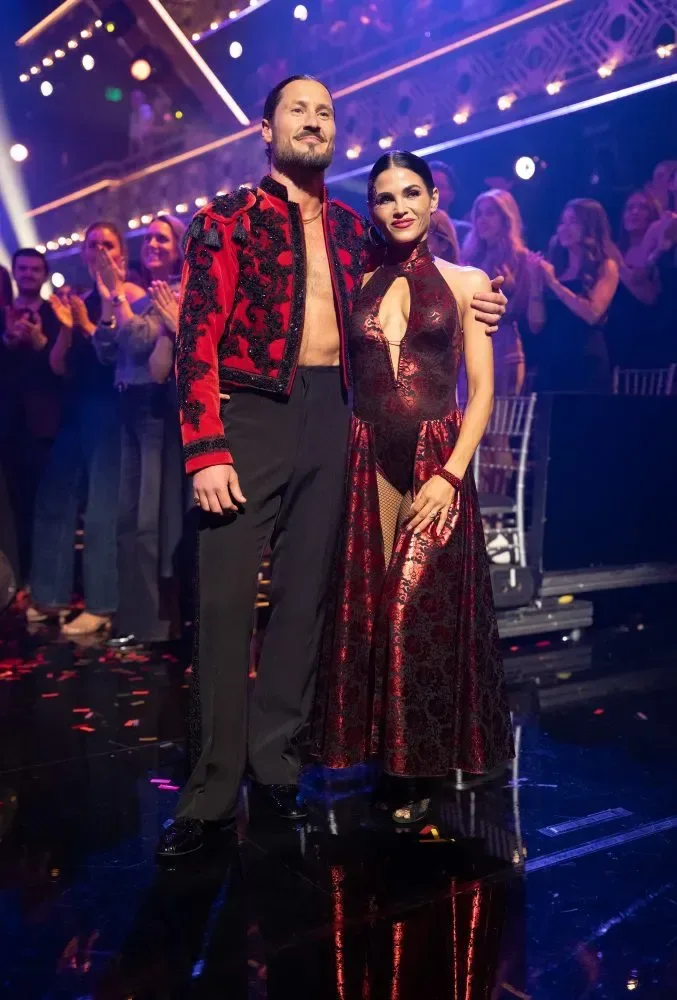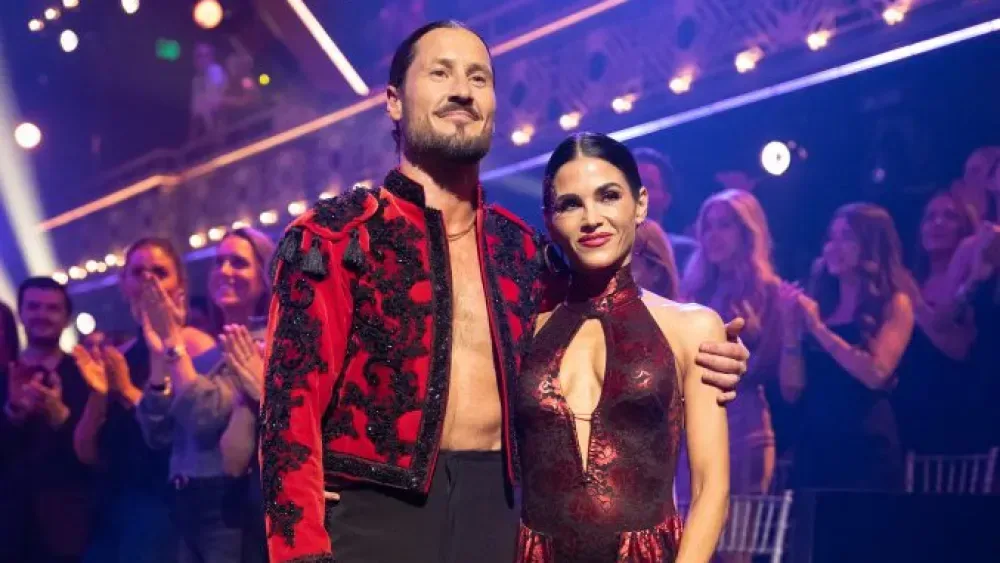
Val Chmerkovskiy will not take part in next week’s Dancing With the Stars following a deleted social-media post aimed at judge Carrie Ann Inaba’s critique of his wife, professional dancer Jenna Johnson.
The show’s production company said the decision followed a post it deemed inappropriate and inconsistent with the standards expected of people connected to the series. Its statement framed the wellbeing of everyone working on the program as non-negotiable and confirmed Chmerkovskiy would be absent from the next ballroom broadcast.
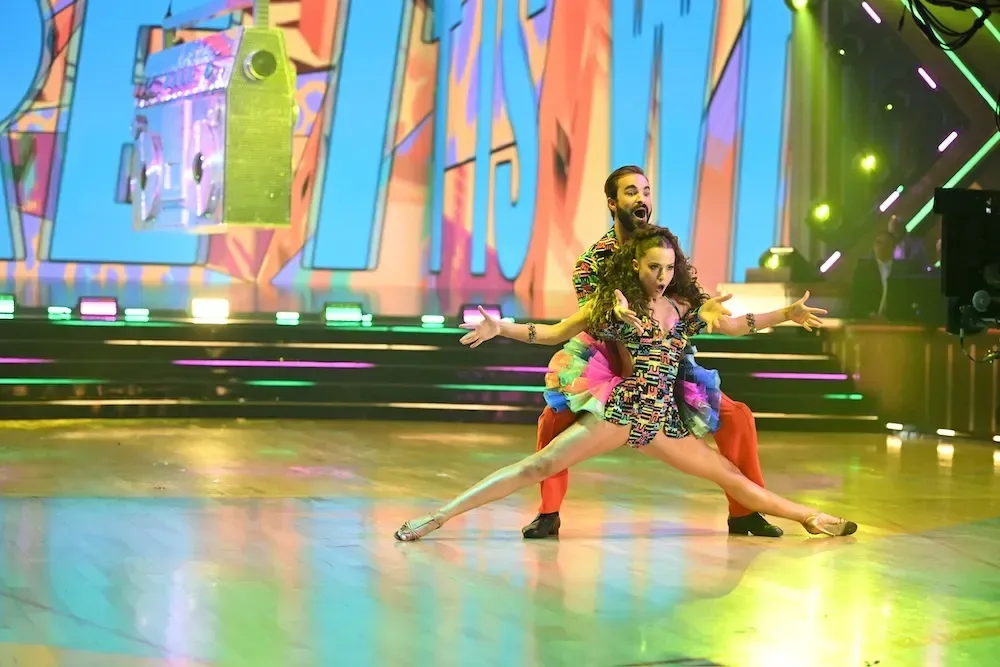
The disciplinary move follows an exchange that began during the October 13 episode. Inaba criticized Johnson’s routine for including a lift, reading the definition of a lift as part of her feedback. In competitive ballroom terms, a lift generally refers to a movement in which one dancer’s feet leave the floor with assistance or support from their partner. The show’s rules and dance styles can make that distinction consequential: a judge’s observation about a lift is a scoring and compliance matter, not merely a broad opinion about performance quality.
What Chmerkovskiy posted and why it escalated
After the episode, Chmerkovskiy posted on TikTok that viewers “almost saw Fresh Prince enter the ballroom,” a reference widely understood as invoking Will Smith striking Chris Rock during the 2022 Academy Awards telecast after Rock made a joke about Smith’s wife. The post was deleted quickly, but Inaba saw it and later thanked people who had alerted her to it on Instagram.
The practical issue is not that a judge’s critique sparked a disagreement. Reality competition shows are constructed around critiques, scores and reactions. The problem is the imagery attached to the response: the post connected a professional disagreement to one of pop culture’s most famous recent examples of physical confrontation. Even when deployed as a meme or a shorthand for defending a spouse, that allusion can be read as threatening, especially when directed at the person who delivered the criticism.
Chmerkovskiy later apologized publicly. He said his instinct had been to defend his wife, but acknowledged that he had made a poor choice by using the meme without considering what it could imply. He said Inaba did not deserve to be pulled into his lapse in judgment.
“Carrie Ann certainly didn’t deserve to get caught in the middle of my bad judgment,” Chmerkovskiy wrote in a statement after the decision was announced.
In an earlier apology shared on Instagram Stories, he said he had contacted Inaba directly and personally. He also recognized the responsibility that comes with having a platform and being a role model, writing that he needed to pause before posting and make sure his social-media activity aligns with who he wants to be.
The show separates the sanction from the celebrity contestant
The absence does not remove Jenna Dewan from the upcoming dedication-themed episode. Dewan, who had been partnered with Chmerkovskiy, is still scheduled to dance a Viennese waltz to “Unchained Melody” in tribute to her mother. She will instead be paired with Alan Bersten, a professional dancer eliminated in week three.
That arrangement is important for a straightforward competitive reason: the show is keeping Dewan’s participation intact while changing the professional assignment around her. A celebrity contestant’s rehearsal schedule, choreography and personal dedication can be central to an episode, and the replacement pairing prevents Chmerkovskiy’s sanction from automatically becoming Dewan’s lost performance opportunity.
The production also emphasized that Dewan had remained professional and respectful of the process. That distinction places accountability on the person responsible for the post rather than treating the surrounding contestant as a proxy for it. It also helps preserve the planned focus of the themed episode: Dewan’s dance and the family member it honors.
Chmerkovskiy likewise said he did not want to become a distraction from an important week or from Dewan’s work. He asked followers to send support to Inaba, Dewan and the larger Dancing With the Stars team, adding that he would watch and cheer everyone on.
Why the incident carries extra weight for Inaba
The episode arrives against a backdrop Inaba has already described publicly. During season 34, she discussed the persistent criticism and booing she receives in the ballroom, noting that fellow male judges Derek Hough and Bruno Tonioli do not receive the same treatment. She said negative reaction has targeted her since the early chat-room era of the series.
Inaba characterized some comments as cruel and said the dynamic can make her feel afraid rather than simply hurt. She described shrinking down during a season, particularly after several weeks of mounting attention. That history does not change the specific facts of Chmerkovskiy’s post, but it supplies relevant context for why a joke that evokes an assault can land differently than a routine complaint about judging.
Judges on a competition program are expected to critique performances, including flagging potential rule violations. They are not insulated from criticism, and viewers often disagree passionately with calls or scores. But there is a meaningful divide between challenging a ruling and using language that gestures toward retaliation against the person making it. The latter shifts a dispute away from dance technique and toward personal intimidation, regardless of whether its author says physical harm was intended.
A social-media lesson with immediate consequences
This is also a concise example of how a deleted post does not necessarily end its impact. Social platforms make rapid publication easy, but screenshots, alerts and reposts can preserve the substance of a message after it is removed. Here, deletion did not prevent Inaba from seeing the post, a public response from her, an apology from Chmerkovskiy or a formal consequence from the production.
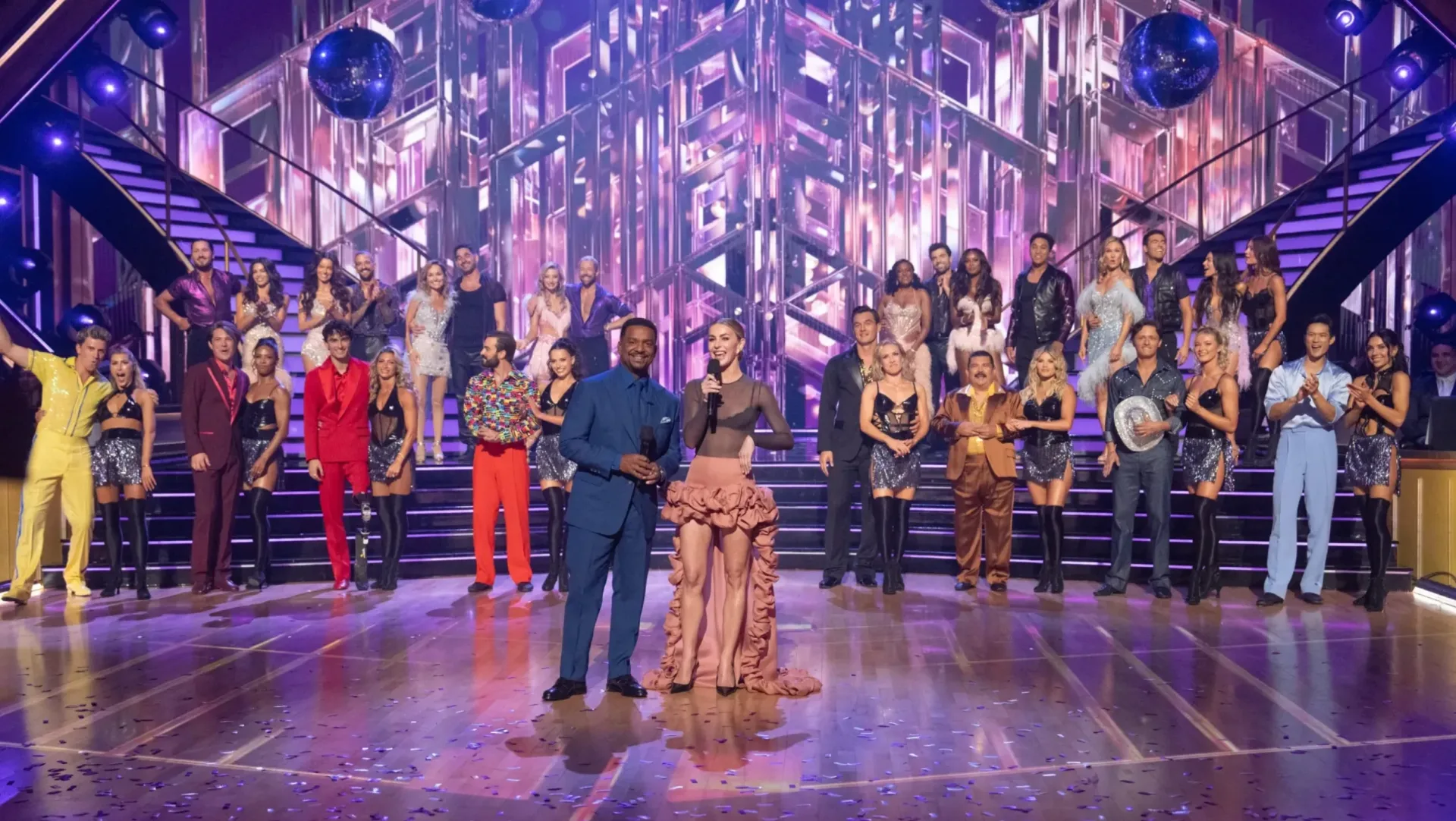
Chmerkovskiy has been associated with Dancing With the Stars since its second season, which makes his one-show removal notable. Longstanding familiarity with a production does not remove expectations around conduct, particularly in public posts involving colleagues. The decision also signals that the ballroom’s professional boundaries extend beyond what occurs during a taped routine or live critique.
For viewers, the next episode will present a noticeable logistical change rather than a complete disruption: Dewan remains in the lineup, Bersten steps in, and the scheduled Viennese waltz remains attached to its personal dedication. For the program, the more difficult part is maintaining a safe working environment while allowing judges to do the job the format requires—evaluating routines without becoming targets of personally directed hostility.
There is a broader pop-culture pattern in the way a single, widely recognized awards-show moment can become meme language detached from its seriousness. The “Fresh Prince” reference may have been intended as a defensive flourish, but its meaning was not confined to private intent. Public references carry the baggage of the event they recall, including the threat or act at their center. In this case, the production’s response makes clear that the implication, not simply the speed with which it was deleted, mattered.
For more entertainment coverage, read our report on Paul Bettany’s comments about resurfaced trial texts.