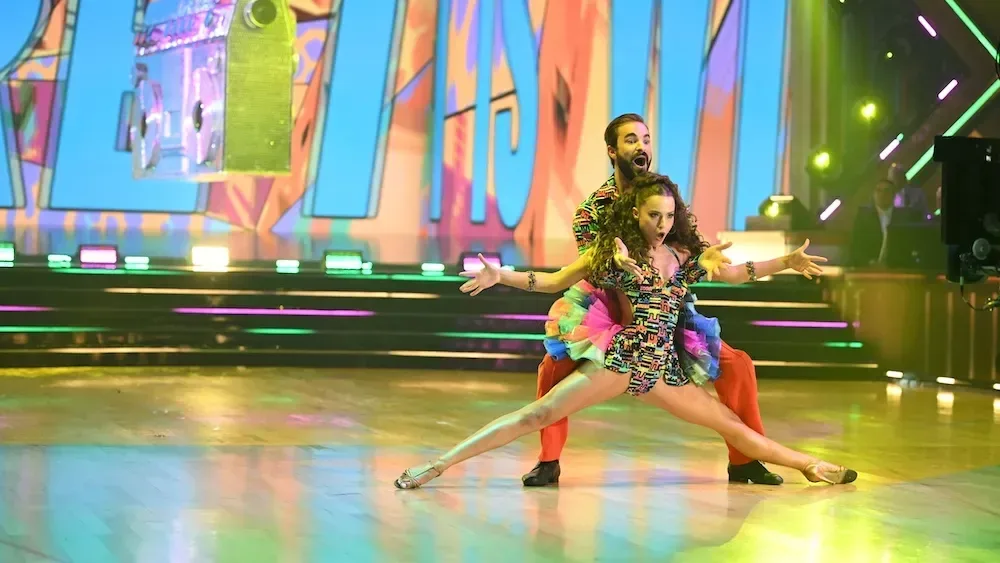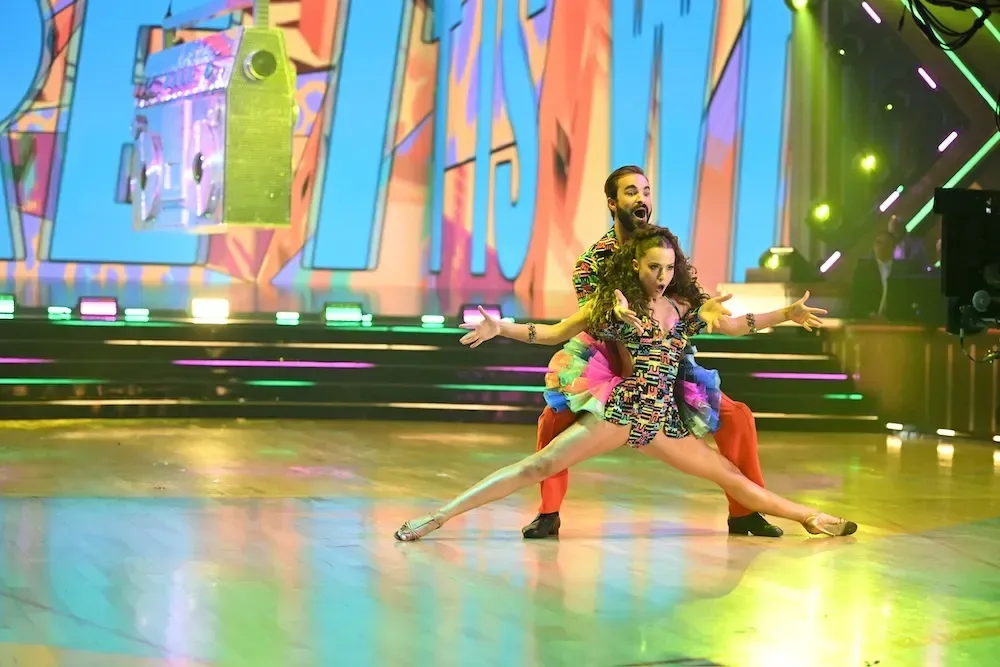
Dancing With the Stars encountered a voting problem during the first night of its Season 35 premiere on Sept. 15, forcing an immediate switch to text-only voting while the episode was still underway.
Hosts Julianne Hough and Alfonso Ribeiro told viewers after the evening’s second dance that online voting was unavailable. The initial instruction was simple: viewers could still support competitors, but they needed to do so by text rather than through the online system.
The situation became more consequential after the third performance. The hosts then clarified that online votes that had been successfully submitted would not count on the first night. Only votes sent by text would be included in the result.
For a competition in which viewer support directly affects who remains, that is not a tiny housekeeping change. It turns the voting method into a central part of the live broadcast, particularly because the premiere format put an elimination at the end of the episode.
What changed during the live premiere
The Season 35 premiere was divided across two nights. The Sept. 15 episode featured the male celebrities, with one contestant set to leave at the end of that broadcast. The following night was scheduled for the female celebrities, with another elimination planned.
Early in the first program, the online voting route went down. At that point, viewers were told to vote via text. Later, the show set the governing rule for the night: text messages would be the only valid viewer votes, while any online submissions that had made it through would be discarded.
That distinction matters because an online outage can create uncertainty in several ways. A viewer may not know whether a submission completed, whether it was received before the service stopped working, or whether the program will treat it as valid. The decision to exclude online votes entirely removed one uncertainty—whether some web votes would count and others would not—but it also meant people who had already used that method had to vote again by text if they wanted their support recorded.
The episode also had an unusually easy naming trap built into the text process. Two contestants had nearly identical first names: Conner Leavitt and Connor Wood. Their required text entries were different: viewers needed to use Conner L for Leavitt and Connor W for Wood.
Related coverage includes ‘Dancing With the Stars’ Season 35 Premiere Shifts to Text-Only Voting.
The spelling difference is not cosmetic in this context. Text voting depends on sending the requested identifier accurately. When a live show must redirect its audience to a backup voting route, clearly separating two similarly named contestants becomes especially important.
Why a text-only pivot has real stakes
In a live elimination format, voting is not merely an audience engagement feature. It is part of the competition’s decision-making process. The switch on premiere night therefore had two immediate practical effects: it narrowed the available ways to participate and required viewers to adapt while performances were still in progress.
A text-only rule also puts a premium on direct, on-air communication. The hosts needed to establish not just that the online system was unavailable, but that online votes already cast would be void for the night. That second message is the crucial one for fairness: it establishes a single channel for the count instead of leaving the possibility that some viewers had access to a method unavailable to others.
There is no supplied indication of what caused the online voting interruption or when the digital option might return. What is clear is the rule used for the Sept. 15 broadcast: text votes, and text votes alone, determined the viewer-voting portion of that night.
Live television has always had room for the unexpected, whether it is a missed cue, a technical hiccup, or a result that needs an on-the-fly explanation. A voting failure is more sensitive than many production glitches because it touches the audience’s role in the outcome. The show’s response made the fallback path visible in real time rather than silently attempting to reconcile different pools of votes afterward.
Night one dances and the scores reported so far
The first group’s routines covered cha-cha, tango, salsa and quickstep, with pop, rock, country, R&B and dance tracks supplying the music. Four scores were reported alongside the early performance lineup:
- Jackson Olson and Emma Slater performed a cha-cha to “Wannabe” by Spice Girls and received 15/30.
- Tyler Cameron and Sharna Burgess performed a tango to “Are You Gonna Go My Way” by Lenny Kravitz and received 17/30.
- Conner Leavitt and Adele Zaikman performed a salsa to “Whoomp! There It Is” by Tag Team and received 12/30.
- Guillermo Rodriguez and Witney Carson performed a cha-cha to “Mr. Big Stuff” by Jean Knight and received 10/30.
Other announced performances from the men’s premiere lineup were:
- Taylor Hanson and Britt Stewart, quickstep to “Tell Her About It” by Billy Joel.
- Ezra Frech and Daniella Karagach, tango to “Since U Been Gone” by Kelly Clarkson.
- Harry Shum Jr. and Jenna Johnson, cha-cha to “Let’s Groove” by Earth, Wind & Fire.
- Connor Wood and Rylee Arnold, cha-cha to “I Like It, I Love It” by Tim McGraw.
The supplied information does not include scores for those latter four routines, nor does it identify which contestant was eliminated. It is important not to infer either point from the partial scoring list or from the voting disruption.
How to read the score format
The scores shown as, for example, 15/30 and 17/30 are totals presented out of 30. They provide a snapshot of the judges’ assessment for that dance, while the text-only voting directive concerns the audience side of the live competition.
That separation is worth keeping in mind when following a premiere-night result. A judging score and a viewer vote are different inputs. The visible number attached to a routine may be useful for comparing the performances listed above, but it does not by itself reveal the full outcome of an episode built around elimination.
In other words, the technology issue did not change the listed dance styles, songs or reported judging totals. It changed the method through which viewers could participate on Sept. 15. The show’s instructions made text participation the sole route that would be counted after the online-voting failure.
A reminder for viewers navigating the two Connors
The most practical detail from the night’s revised voting rules is the distinction between Conner Leavitt and Connor Wood. Viewers were instructed to text Conner L for Leavitt and Connor W for Wood.
That extra initial is the kind of instruction that can disappear in the bustle of a live episode, but it is essential when names overlap. Anyone participating during the first-night window needed to use the correct contestant-specific text label rather than rely on a first name alone.
The broader lesson is straightforward: when a live program changes its voting procedure, the latest on-air directions are the ones that matter. Here, that meant text-only voting, no counting of online votes that had gone through, and careful use of the separate Conner/Connor identifiers.
For more entertainment-world coverage beyond the ballroom, see our report on Zack Snyder’s comments about a former Warner Bros. executive.