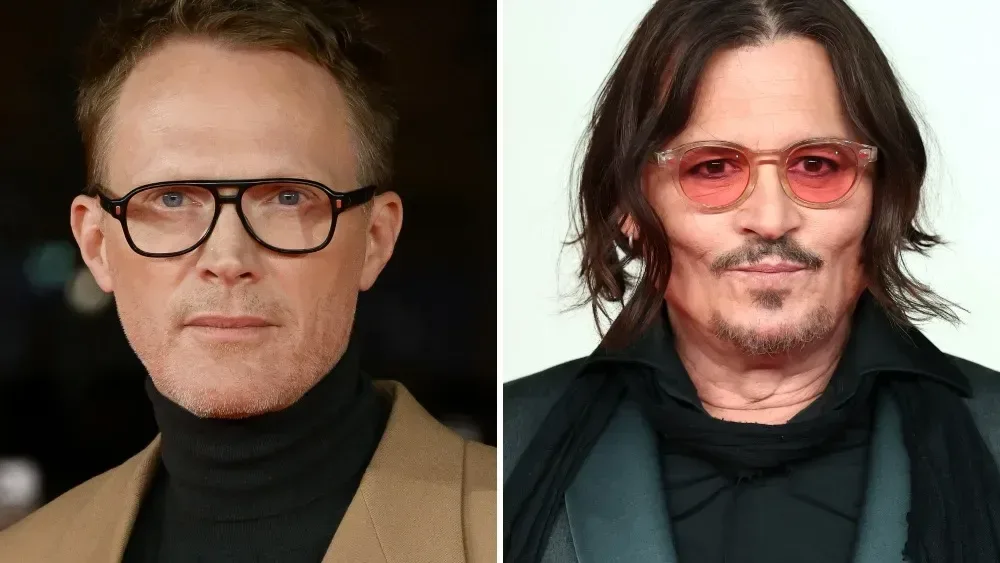
Paul Bettany has addressed the renewed attention around old text messages exchanged with Johnny Depp, saying that the public picture of their relationship did not match the reality of their contact at the time the messages appeared in court.
The actors had worked together on several films, but Bettany said he had not spoken with Depp for years by the time the messages were read during a February 2020 hearing in Depp’s libel case. He added that he has not spoken with Depp since.
For Bettany, the unusual element was not simply that private correspondence from 2013 had become public. It was the suggestion that he was a present-day, close confidant of Depp when, he said, they had long ceased communicating. Bettany chose not to publicly litigate that perception, describing his own life as notably private and saying he believed people would recognize the issue as insubstantial.
What Bettany is clarifying
Bettany’s comments draw a distinction that can get lost when a court case brings old communications back into circulation: professional collaboration and friendship are not necessarily the same thing, and neither automatically describes a relationship years later.
The two performers’ shared credits include The Tourist (2010), Transcendence (2014), and Mortdecai (2015). Those projects establish a working history, but Bettany’s account is that this history was incorrectly treated as proof of an ongoing close friendship during the litigation.
That distinction matters because public discussion of high-profile cases often compresses timelines. A message can be years old; a professional association can be older still; and the person being discussed may not have had any current role in the dispute. Bettany’s explanation focuses on that gap between the historical record presented in court and the relationship observers assumed existed in 2020.
Why the messages drew attention
The messages were controversial because they contained violent and demeaning language about Amber. They were exchanged in 2013 and later read in open court during the 2020 hearing. Bettany’s response included a dark joke invoking a historical drowning test, while Depp’s reply escalated the language further.
It is important to separate two points that can otherwise be blurred together. First, the messages became part of public court proceedings, so they were subject to broad scrutiny. Second, Bettany says their public use led people to make a separate inference about his then-current personal closeness to Depp—an inference he rejects.
Related coverage includes Paul Bettany Says He Had Not Spoken to Johnny Depp for Years When Trial Texts Emerged.
Bettany did not use his recent comments to revisit the language of the exchange or to offer a detailed account of the correspondence. Instead, he addressed the narrower claim that he was being characterized as a close friend despite years without contact.
The case in which the texts surfaced
The hearing formed part of Depp’s libel action against News Group Newspapers, the publisher of The Sun. Depp sued after the paper ran a headline questioning J.K. Rowling’s casting of him in the Fantastic Beasts film series and using the phrase “wife beater.” He argued that the article seriously harmed his personal and professional reputation and caused distress and embarrassment.
In legal terms, a libel claim concerns alleged reputational harm caused by published written statements. Depp’s action placed a wide range of evidence and testimony before the court, including the Bettany messages. In 2020, Judge Andrew Nicol ruled against Depp.
The fact that the texts were aired in a libel proceeding also helps explain why they traveled far beyond the two people who originally sent them. Court evidence can become a focal point for public debate even when an individual connected to that evidence is not the claimant, defendant, or principal subject of the case. Bettany’s remarks are a reminder of the reputational consequences for people who become adjacent to a major public legal conflict.
Old associations can become a fresh public narrative
There is a practical difference between being associated with a celebrity through work, being quoted in evidence connected to that celebrity, and being an active participant in the controversy surrounding them. Bettany’s account places him in the first two categories, not the third.
That is not an argument that the messages were unimportant or that their wording should have escaped attention. Rather, it is an explanation of why Bettany felt the public description of his personal relationship with Depp had become inaccurate. A court record preserves what was said at a particular moment; it does not, by itself, establish the later state of every relationship between the people mentioned in that record.
It also illustrates how screen partnerships can create durable public assumptions. Audiences often see recurring collaborators as a fixed social circle, particularly when the actors appear together across several years and in multiple productions. But a filmography records employment and creative collaboration, not necessarily ongoing private contact.
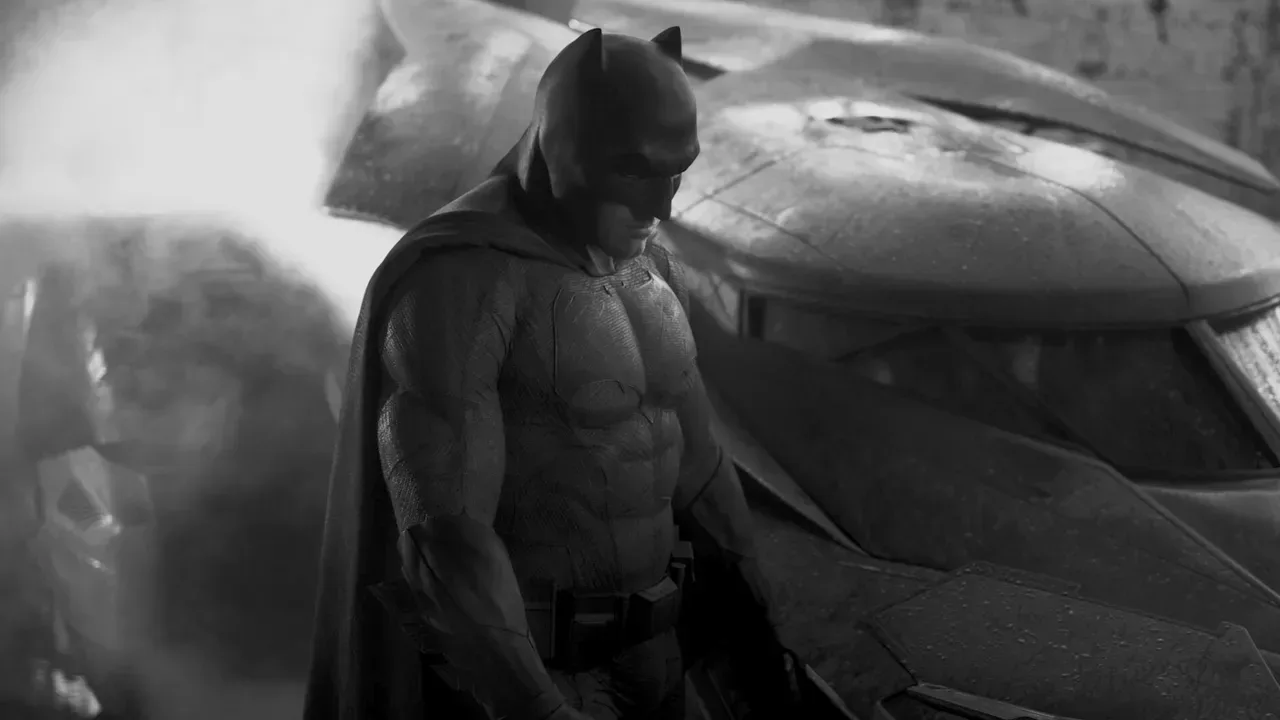
Entertainment coverage regularly has to navigate the difference between a project’s public-facing cast chemistry and the far more limited information available about off-screen relationships. That challenge applies as much to reports about former collaborators as it does to stories about abandoned franchises and creative plans, such as the reported ideas around Ben Affleck’s canceled Batman film.
A deliberately limited response
Bettany’s decision to remain silent at the time was central to his explanation. Rather than issue a public defense or try to reshape discussion around the messages, he said he relied on the fact that his public life and long marriage were already visible to those who followed his work.
That approach did not erase the association created by the trial coverage, but it clarifies why Bettany did not become a more active public figure in the surrounding dispute. His new comments are not framed as a new allegation about the litigation. They are a correction to the idea that the court’s discussion of old texts reflected an active friendship at the time.
The clearest factual takeaway is therefore narrow: Bettany and Depp were former collaborators, the 2013 texts became public evidence during Depp’s 2020 UK libel case, and Bettany says they had not spoken for years before that happened. In an era when old material can rapidly be recirculated without its full timeline, that final point is the one Bettany wants attached to the story.