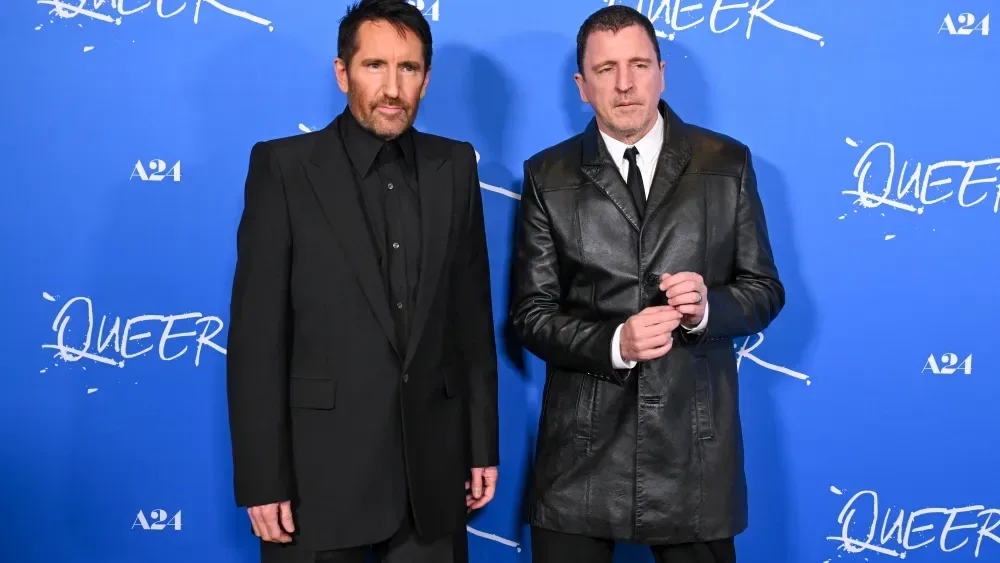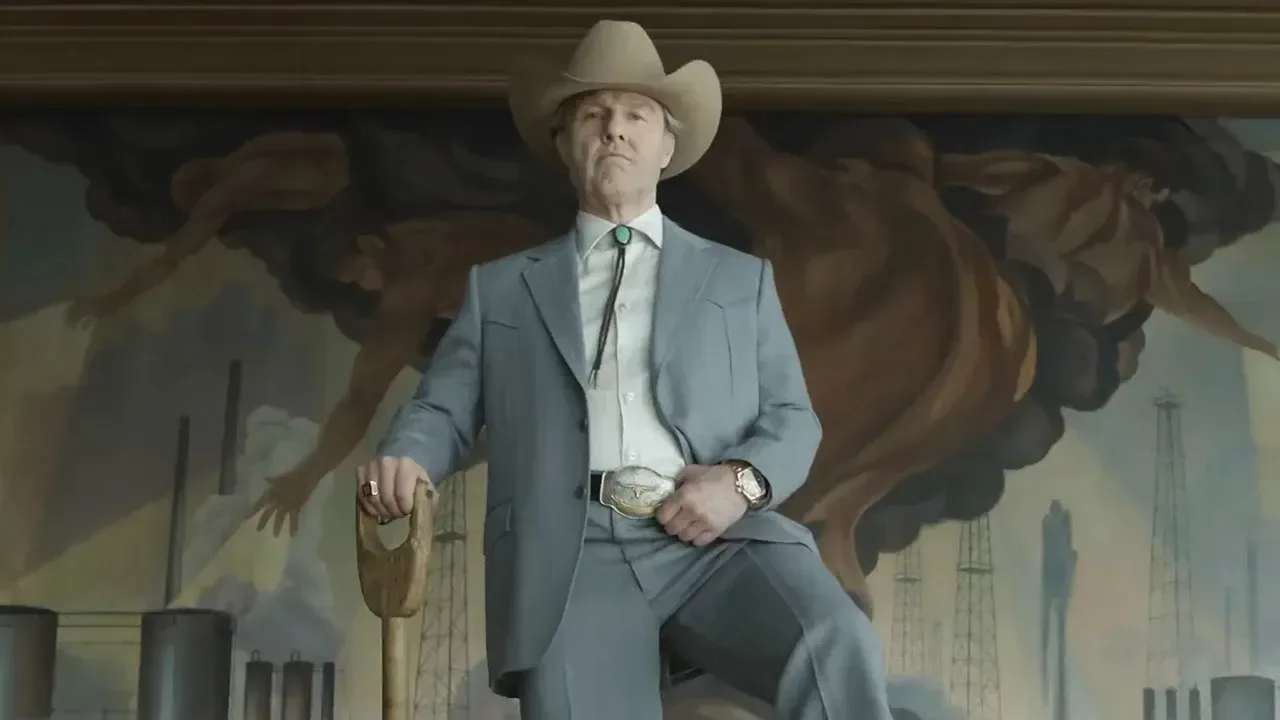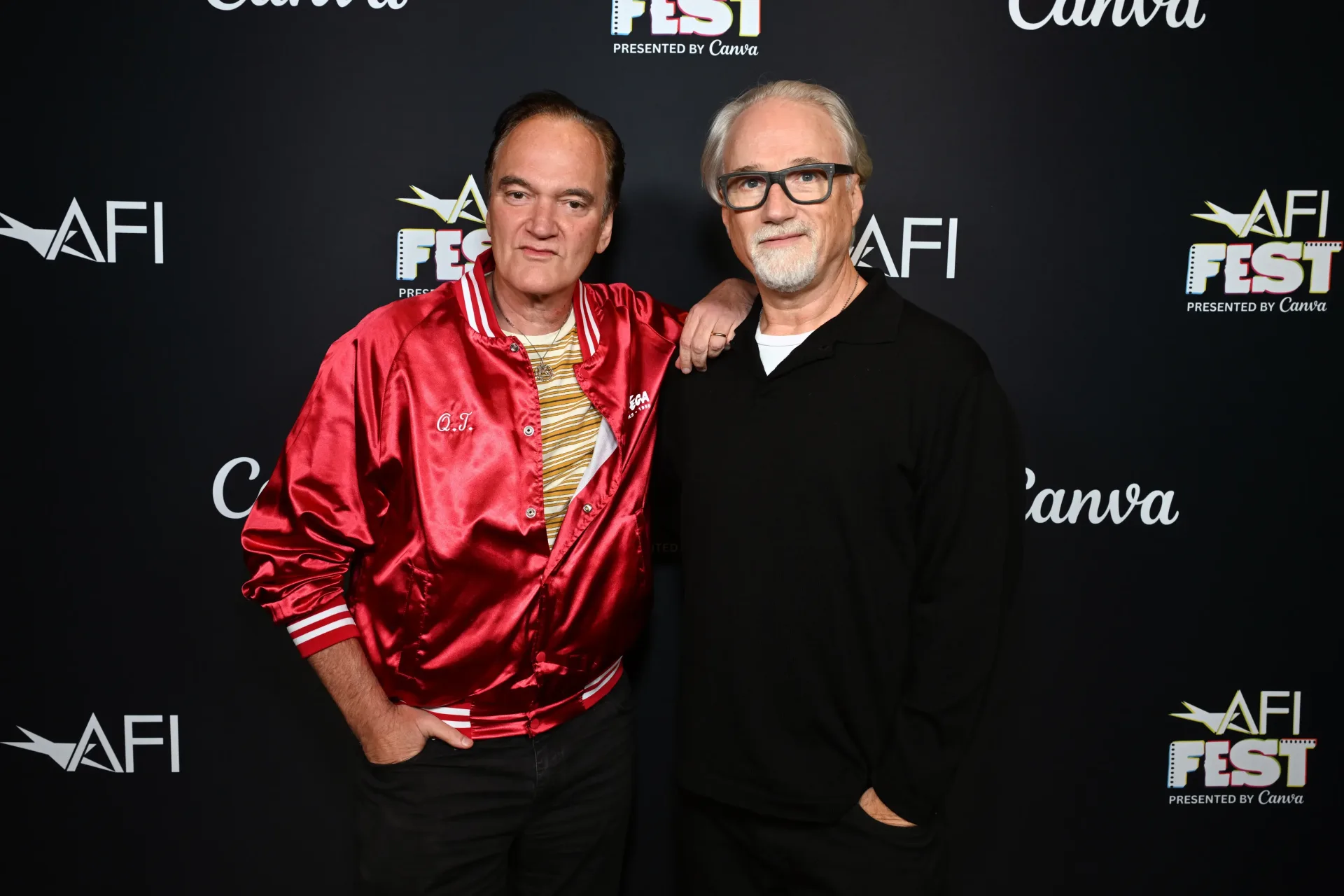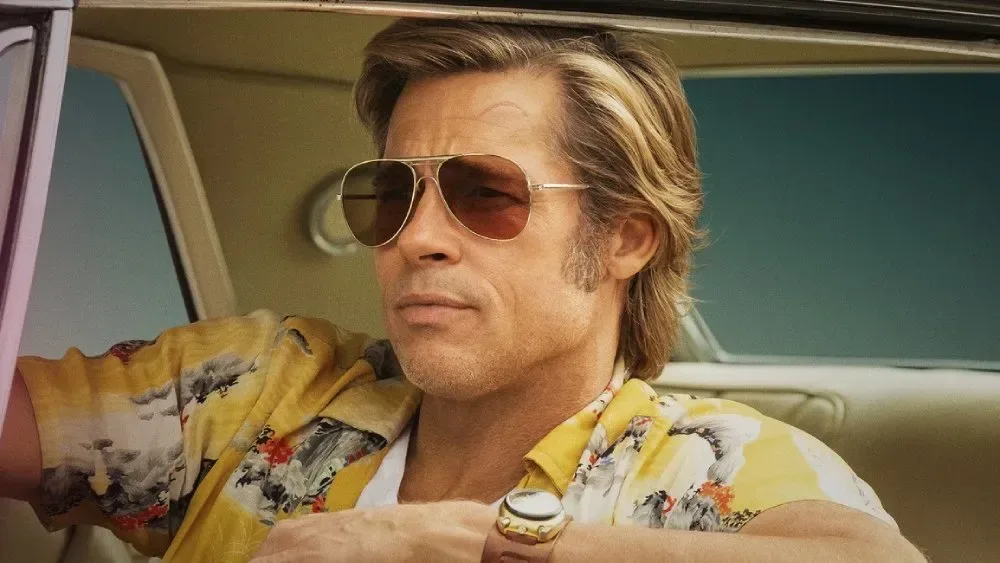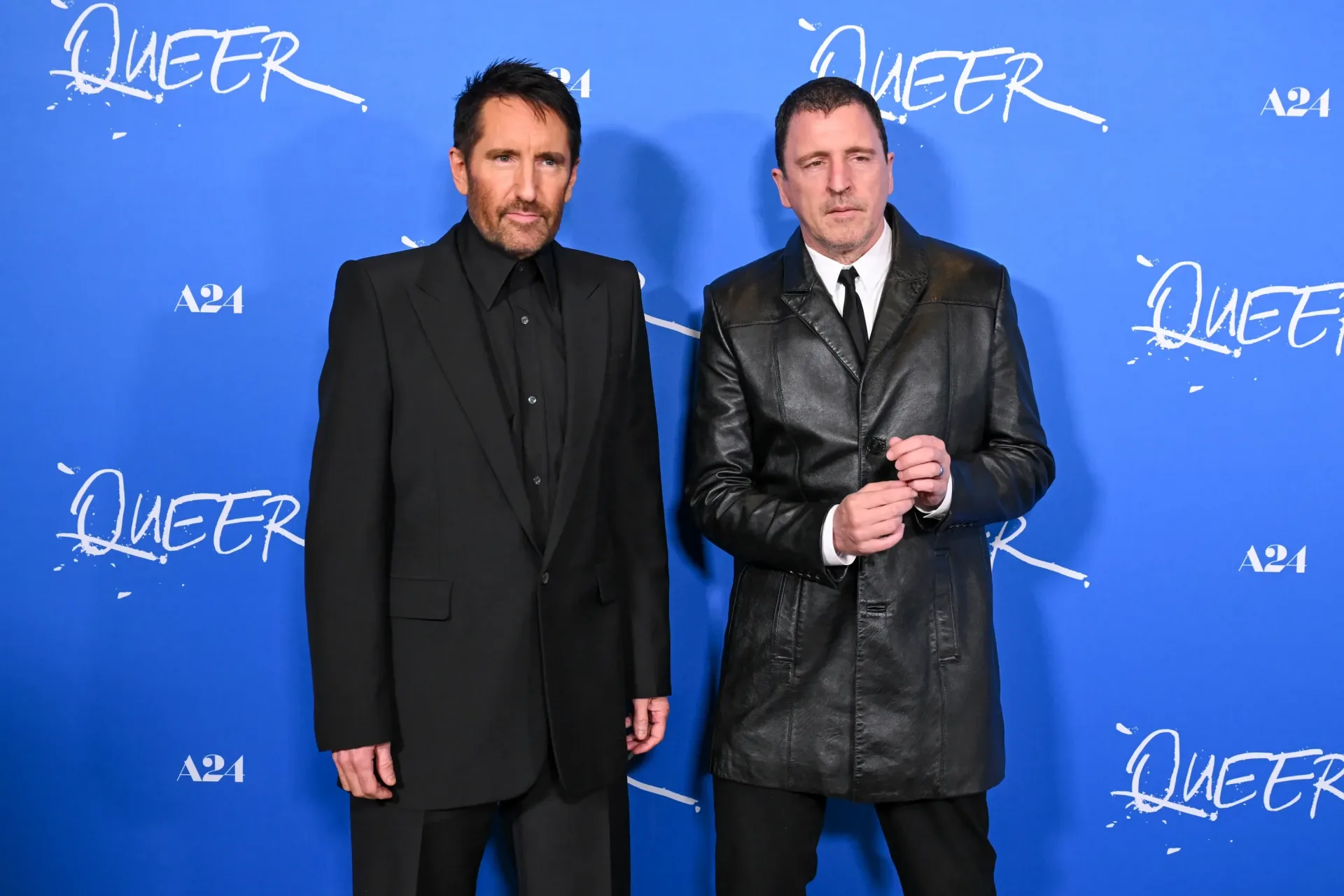
Trent Reznor and Atticus Ross will compose the music for The Further Mis-Adventures of Cliff Booth, reuniting the pair with director David Fincher for a sixth feature-film collaboration. The project is a spin-off from 2019’s Once Upon a Time in Hollywood, centered on Brad Pitt’s Cliff Booth and written by Quentin Tarantino.
The score credit appeared on the film’s poster, putting one of modern film music’s most established director-composer teams behind a movie that arrives with an unusual combination of creative histories. Fincher directs; Tarantino wrote the screenplay; Pitt returns as the title character; and Reznor and Ross bring a partnership shaped by both Nine Inch Nails and a substantial body of screen scoring.
The Further Mis-Adventures of Cliff Booth is scheduled for an exclusive IMAX run beginning November 25, lasting two weeks. It then begins streaming on Netflix on December 23. The cast also includes Elizabeth Debicki, Scott Caan, Carla Gugino, Timothy Olyphant and Yahya Abdul-Mateen II.
A sixth Fincher score, built on a long-running collaboration
Reznor and Ross first worked with Fincher on 2010’s The Social Network. Their music for that film won the Academy Award and Golden Globe for Best Original Score, establishing a creative relationship that has continued across every subsequent Fincher feature named here: The Girl With the Dragon Tattoo in 2011, Gone Girl in 2014, Mank in 2020 and The Killer in 2023.
That continuity matters more than simple name recognition. A film score is the music composed or selected to operate alongside a film’s images, dialogue and editing. Its job can range from underlining emotion to unsettling the audience, establishing a period or location, controlling momentum, or withholding the obvious emotional cue. A recurring director-composer partnership can make that work more precise: the filmmakers share a working language, and the composers have a clearer sense of what the director expects music to do—and, just as importantly, when the director may prefer it not to do very much at all.
Fincher’s five earlier films with Reznor and Ross span markedly different material: a drama about the creation of a social-networking company, an adaptation of a crime thriller, a missing-person mystery, a black-and-white Hollywood story and an assassin thriller. The shared credit does not establish what the new score will sound like, and no details about its instrumentation or musical approach have been provided. It does, however, demonstrate that Fincher has repeatedly returned to Reznor and Ross for films with very different narrative needs.
The pair’s Girl With the Dragon Tattoo work also received the Grammy Award for Best Score Soundtrack for Visual Media in 2013. Together with their awards for The Social Network, that record explains why a new Fincher assignment is meaningful even before any music from the film has been heard. This is not a first-time experiment or a one-off reunion; it is another chapter in a collaboration that has endured for more than a decade.
Why the Cliff Booth connection is especially intriguing
The new movie occupies a different lane from the five previous Fincher-Reznor-Ross films. It is connected to Tarantino’s Once Upon a Time in Hollywood, but it is directed by Fincher and written by Tarantino. The supplied details describe it as taking place eight years after the events of Hollywood. That setup gives the film a recognizable character and world while positioning the new installment as its own production rather than simply another Fincher original story.
Related coverage includes Trent Reznor and Atticus Ross Set for ‘Cliff Booth’ Score.
Cliff Booth was played by Pitt in Once Upon a Time in Hollywood, and Pitt again leads this spin-off. Beyond that central continuity, viewers should be cautious about assuming too much. The available information identifies the project as a spin-off and names its ensemble cast, but it does not spell out the plot, the roles those performers play, the film’s exact period setting, or how closely its tone will resemble its predecessor.
That uncertainty makes the score assignment notable without making it a promise of a particular sound. Reznor and Ross have experience across films including Patriots Day, Soul, Challengers, Bird Box and Queer. Those credits indicate a wide range of screen work outside the Fincher partnership, rather than a fixed formula that can be applied to every new title. Their role on The Further Mis-Adventures of Cliff Booth is best understood as confirmation that Fincher is again working with composers he knows well—not confirmation of the finished film’s mood or musical palette.
Reznor and Ross: collaborators before the soundtrack credits
Ross and Reznor’s creative association predates their Fincher films. They worked together as far back as 2002 on the Tapeworm project, and Ross has contributed to numerous Nine Inch Nails releases. That background is relevant because it places their film scoring within a longer partnership rather than treating it as a separate, occasional side venture.
For audiences, the distinction can be useful. A composer team’s public reputation may begin with a major award-winning score, but sustained collaboration can involve years of shared technical habits, musical shorthand and trust. None of those internal processes have been described for this production, so it would be wrong to claim how the pair is making the Cliff Booth music. Still, their lengthy history gives Fincher a duo that has worked together across multiple projects as well as a long series of films.
It is also worth separating score from soundtrack. A score is music created to accompany the film. A soundtrack can refer more broadly to all music associated with a movie, including songs that were already recorded and later licensed for use. The announced credit concerns the score. No information has been provided about other music that may appear in the film, whether a separate soundtrack release is planned, or whether any Nine Inch Nails material will be used.
The release plan offers two ways to see it
The IMAX-first window begins November 25 and lasts two weeks, followed by Netflix availability on December 23. IMAX is a premium large-format theatrical presentation, generally associated with enlarged screens and specialized projection and sound systems. The announcement confirms an IMAX-exclusive engagement but does not provide venue lists, ticket information, additional theatrical plans or technical presentation details.
For moviegoers interested specifically in the Reznor-Ross score, that release order creates two distinct listening contexts. A theatrical presentation can foreground the relationship between image, dialogue, ambient sound and composed music within a cinema sound system. Streaming offers a later home-viewing option, though individual setups vary considerably. Neither format changes the composition itself, but the environment can influence how prominently a viewer perceives details in a mix.
The two-stage release also means the musical collaboration is part of a larger discussion around a high-profile film event, not merely an album announcement. No standalone score release, track list or release date for the music has been identified. Until further details emerge, the confirmed facts are limited but substantial: Reznor and Ross are scoring the film, Fincher is directing, Tarantino wrote it, Pitt returns as Cliff Booth, and the film has both an IMAX date and a Netflix date.
What is confirmed—and what remains open
- Confirmed: Trent Reznor and Atticus Ross are composing the score.
- Confirmed: This is their sixth film collaboration with David Fincher.
- Confirmed: The film is a spin-off of 2019’s Once Upon a Time in Hollywood and follows Brad Pitt’s Cliff Booth.
- Confirmed: Quentin Tarantino wrote the film, which is set eight years after Hollywood.
- Confirmed: Elizabeth Debicki, Scott Caan, Carla Gugino, Timothy Olyphant and Yahya Abdul-Mateen II are in the ensemble cast.
- Confirmed: IMAX screenings begin November 25 for two weeks, with Netflix streaming set for December 23.
- Not yet detailed: The plot, character roles, specific musical style, soundtrack-song selections and a standalone score release.
For now, the announcement is a strong signal of continuity for Fincher’s filmmaking while opening a new branch of the Cliff Booth story. Reznor and Ross have repeatedly supplied music for Fincher’s features, and their return puts an experienced, decorated team inside a film with a distinct Tarantino connection. Anyone tracking the film’s reception may also want to consider how early critical narratives can shape audience expectations, an issue explored in a recent discussion of John Goodman’s comments on early reviews. In this case, though, the score news offers something firm before a trailer, music sample or plot breakdown: Reznor, Ross and Fincher are making another film together.