David Fincher says the screenplay Quentin Tarantino wrote for The Further Mis-Adventures of Cliff Booth began at 230 pages—material he characterized as “essentially two movies.” The finished Brad Pitt vehicle is expected to run about two hours and 20 minutes, after Fincher cut roughly 60 pages from the draft.
The arithmetic is interesting, but the larger news is creative rather than numerical. This is not simply a filmmaker shaving a lengthy script down to fit a mandated runtime. Fincher has described finding the film’s center in the interactions among people navigating the back alleys of 1977 Hollywood. Tarantino, meanwhile, has framed the project as a crime-story paperback in the mold of Elmore Leonard rather than another loose, hangout-driven visit with Cliff Booth.
That makes the project a distinct proposition: a follow-up featuring a familiar, Oscar-winning character, but one that changes both the time period and the dramatic engine around him.
From a 230-page draft to a 140-minute film
Page count is often used as a quick proxy for projected screen time, though it is not a fixed conversion. Action description, dialogue density, pauses, staging, editing and visual storytelling can all change how much time a page occupies on screen. Still, a 230-page screenplay is plainly expansive material, and Fincher’s description of it as two movies conveys the scale of the initial draft more effectively than a formula could.
A film running approximately two hours and 20 minutes does not suggest a slight or compressed story. Rather, the reported reduction points to substantial selection: situations, characters, digressions or connective material may have been removed or consolidated as the screenplay moved toward production. The supplied details do not identify the specific scenes that were cut, so it would be premature to treat the page reduction as evidence that any particular storyline has disappeared.
What is clear is that Fincher’s interest lies in how the participants collide, not merely in driving viewers from plot point to plot point. He compared the setup to a story told around a bonfire, an image that implies a network of people and encounters rather than a single, narrowly isolated objective. That emphasis can coexist with crime-fiction momentum. In fact, it may be the point: the film appears to be using a fixer’s work as a way to move Booth through overlapping corners of Hollywood.
What a Hollywood fixer means here
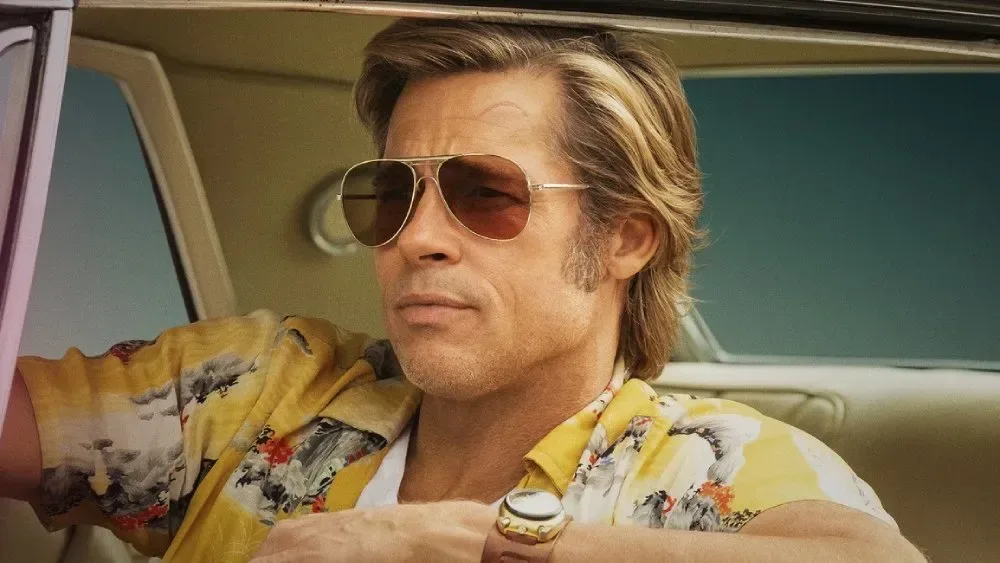
The film is set in 1977, eight years after Once Upon a Time… in Hollywood, and follows Cliff Booth as he takes work as a Hollywood fixer. In broad storytelling terms, a fixer is someone hired to solve sensitive problems, make difficult arrangements or handle situations other people would prefer not to confront openly. The available information does not spell out Booth’s individual assignments, clients or adversaries. But the job description naturally gives the narrative a flexible route into varied people, pressures and secrets.
That structure is especially useful for a character-led crime story. A fixer can cross paths with performers, crew members, operators and vulnerable people without the film needing to remain tied to one workplace or one domestic setting. It also creates an immediate practical question for the audience: what does Booth agree to handle, and where does he draw a line? Those are analytical possibilities arising from the premise, not confirmed plot details.
A sequel that does not promise the same shape
Once Upon a Time… in Hollywood centered strongly on Booth’s bond with Rick Dalton, the fading television actor played by Leonardo DiCaprio. The original also featured Margot Robbie and earned 10 Academy Award nominations, including best picture and best director. Pitt won the supporting-actor Oscar in 2020 for playing Booth.
The new film retains Booth but shifts the setting forward eight years and gives him a different professional role. That alone makes it misleading to assume the new story will simply recreate the earlier film’s rhythms. Tarantino has explicitly differentiated the two. He called the earlier movie a hangout film—one whose pleasure comes substantially from spending time with its characters and its world, even as the looming Cielo Drive setting provides a powerful underlying pull.
For The Further Mis-Adventures of Cliff Booth, Tarantino instead invoked the “flavor” of an Elmore Leonard paperback. The comparison is useful because it identifies tone and story machinery, not a claim of adaptation. Leonard is relevant here in part because Tarantino previously adapted his novel Rum Punch into 1997’s Jackie Brown. The new Booth movie is not described as being based on a Leonard book; the point is that its crime-fiction sensibility is expected to be closer to that kind of paperback propulsion.
“Crime-story paperback” is a compact way to signal an emphasis on complications, colorful operators and escalating consequences. But the specific crimes, stakes and characters remain undisclosed. The strongest expectation supported by the available information is not a checklist of genre events. It is a different mode: Booth is moving from the orbit of Rick Dalton into a 1977 fixer story where crime-fiction texture matters more than the previous film’s hangout framework.
Three creative forces, one final focus
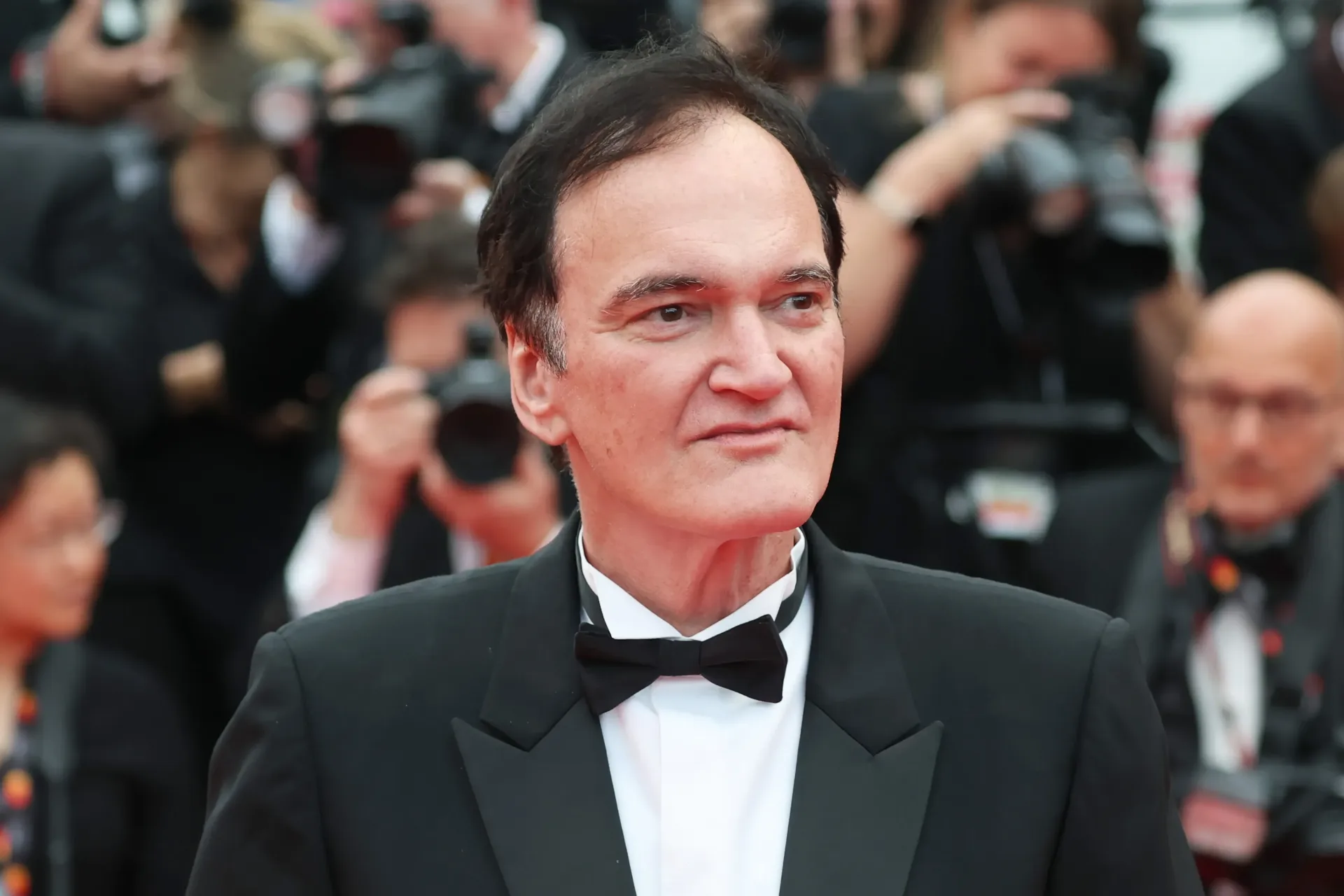
The filmmaking arrangement is unusual enough to be part of the story. Tarantino wrote the screenplay but decided not to direct it. He had considered the project as a possible follow-up to his 2019 film, then chose not to make a sequel his 10th—and potentially final—directorial feature. Fincher stepped in as director, while Pitt returns as Booth.
Fincher described the process as finding the overlap among what Pitt, Tarantino and he wanted to focus on. That is a helpful way to understand why the reported cuts should not be read as a simple battle between a writer’s maximal draft and a director’s shorter movie. The stated aim was shared focus: locating the areas that best served the screenplay, the director’s approach and the lead actor’s performance.
Pitt’s role in bringing Fincher aboard also gives the collaboration an established foundation. The actor and director previously worked together on Se7en, Fight Club and The Curious Case of Benjamin Button. Their reunion does not predict exactly how Booth will be played, but it means the director and star are not beginning from zero while interpreting a character originated in a Tarantino film.
That division of labor also makes the finished film especially worth watching as its own object rather than as an exercise in auteur trivia. Tarantino’s script and Booth are foundational; Fincher’s staging, pace and final selection of material will shape what reaches the screen; Pitt is the bridge between the original film and this new setting. The value of the reported “Venn diagram” is that it resists an overly simple ownership story.
Why the trim matters for viewers
The approximately 60-page cut provides a more grounded reason to expect a focused movie than the label “sequel” does. A shorter screenplay is not automatically better, and a longer one is not automatically indulgent. But a major reduction from an unusually long first draft indicates that the creative team made consequential choices about emphasis.
For viewers, the practical takeaway is to calibrate expectations around a feature-length crime drama rather than a sprawling two-part saga. Fincher says the final runtime is around two hours and 20 minutes. That leaves room for an ensemble and a textured period setting, while remaining far removed from the scale implied by a 230-page draft.
It also means there is little basis to assume that every idea written for Booth’s next chapter will appear in the released version. The first draft and final cut are different stages of a film’s development. A draft can contain avenues a production later decides to streamline; the movie should be judged by the story it tells, not by an imagined inventory of absent pages.
The distribution plan itself is notable. The Further Mis-Adventures of Cliff Booth is scheduled for an exclusive two-week global IMAX run beginning November 25, followed by a Netflix premiere on December 23. That theatrical-window-then-streaming path places a character-driven, crime-leaning Hollywood story in a large-format venue before it reaches a global subscription audience. It arrives at a time when the route between theaters, on-demand access and platform availability remains a live part of entertainment strategy, as seen in other distribution developments such as the restoration of Starz channels and on-demand access on Verizon Fios.
What is known—and what remains open
Several central details are firm: Pitt is back as Cliff Booth; the story is set in 1977; Booth is working as a Hollywood fixer; Tarantino wrote the screenplay; Fincher directed it; and the completed film is roughly two hours and 20 minutes after sizable cuts from a 230-page first draft.
Just as important are the unanswered questions. No detailed plot synopsis, cast rundown beyond Pitt, or account of the exact deleted material is included in the available information. Leonard’s influence is a tonal and structural reference, not confirmation that the story adapts one of his novels. And while the film follows Once Upon a Time… in Hollywood, its new period, job premise and crime-fiction orientation make it more accurate to view it as a Booth-centered continuation with a deliberately altered formula.
For now, the clearest picture is of a large initial screenplay refined into a more contained feature, with Fincher looking for character collisions in 1970s Hollywood and Tarantino pointing toward paperback-crime energy. Cliff Booth’s return is familiar. The route he takes appears designed not to be.