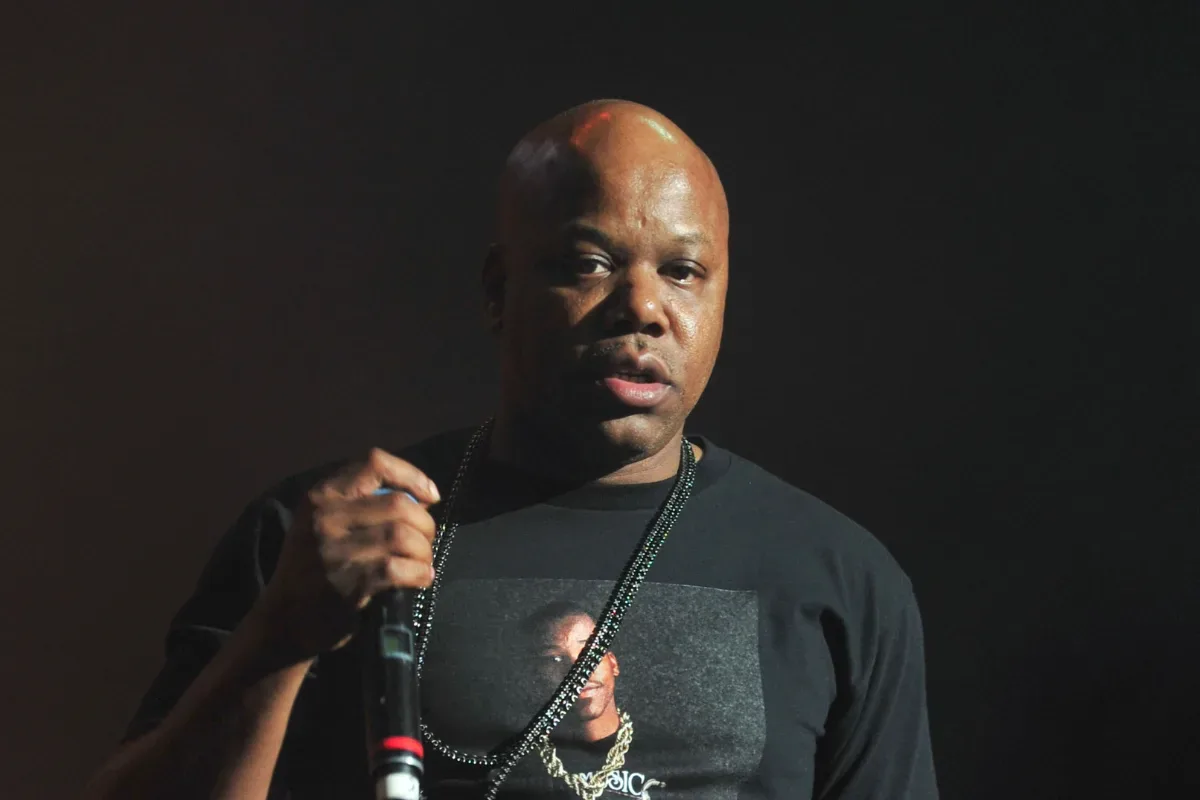
Too $hort has framed Mount Westmore as an unusually favorable equation: sharing a stage with Snoop Dogg, Ice Cube and E-40 can pay more while demanding far less from each individual performer than a solo appearance. In a recent interview, he estimated that his workload in the group sits at roughly 20 to 25 percent of what a solo show requires, though he did not attach a dollar figure to the comparison.
His blunt summary was that Mount Westmore is “the best side hustle I’ve ever had in my life.” It is a memorable line, but it also identifies the practical appeal of the group. Rather than replacing anyone’s separate career, the project gives four established artists a way to create an additional live and recording proposition together.
A group built around four complete solo careers
Mount Westmore brings together Too $hort, Snoop Dogg, Ice Cube and E-40. The name came from Ice Cube, while Too $hort has traced the project’s earliest momentum to phone calls E-40 made during the pandemic. By his account, joining did not take much persuading.
That origin matters because the group was not presented as a conventional new act whose members needed the project to establish a profile. Each artist already had a substantial individual identity and outside commitments. Mount Westmore instead works as a collaboration with its own appeal: four recognizable MCs sharing the same bill and contributing to the same songs.
For audiences, that format condenses a great deal of familiarity into one performance. For the members, it divides responsibilities that a solo artist would ordinarily carry alone. Too $hort’s 20-to-25-percent estimate should be understood as his personal description of workload, not a formal breakdown of rehearsal, travel, business, or production duties. Still, it clearly communicates why he sees the arrangement as efficient.
What “less work” means onstage and in the studio
A solo concert places the central burden on one artist. That performer is expected to fill the set, hold attention across the full runtime, and deliver the defining moments of the night. A Mount Westmore show distributes that spotlight among four people. No single member has to carry every song or every stretch of the set by himself.
The same logic extends to recording. Ice Cube previously explained that a Mount Westmore track allows each rapper to provide one verse rather than requiring one person to build an entire album around his own voice. In hip-hop, a verse is the rapped section of a song, typically distinct from any hook or chorus. Dividing songs among several MCs can create contrast in style and perspective while reducing the amount of material any one participant must write and record.
That should not be mistaken for an invitation to coast. Ice Cube’s point was that a weak verse can become more obvious when it sits next to contributions from three accomplished peers. A collaborative song may ask less total material from each member, but it also creates a direct quality comparison inside the same record. The arrangement lowers volume, not necessarily standards.
Related coverage includes Too $hort Calls Mount Westmore His Best Side Hustle.
That tension is part of what makes a veteran supergroup compelling. The performers benefit from a shared workload, yet the shared billing raises expectations. Listeners are not hearing anonymous contributors; they are hearing four artists whose individual reputations are already central to the premise.
An added business lane, not a substitute for solo work
Too $hort has spoken positively about Mount Westmore’s commercial value before. In 2022, he said the group had brought in millions before its December album release and, crucially, had not cost him solo opportunities. That distinction is central to his “side hustle” description.
A side hustle, in this context, does not mean a casual hobby or a minor undertaking. It means a parallel income stream and creative lane that exists alongside an artist’s main body of independent work. If group appearances generate business without preventing the artists from accepting their own offers, the collaboration can expand their options rather than force an either-or choice.
There is a broader career point in Too $hort’s view as well. He has treated Mount Westmore as evidence that veteran rappers do not need to step away simply because of age. The project’s premise depends on experience being an asset: audiences know what each rapper brings, and the group turns that accumulated recognition into a combined draw.
That does not mean every established artist can reproduce the same model. Mount Westmore has an unusually concentrated lineup of high-profile performers, and its members’ individual careers provide the foundation for the group’s appeal. But Too $hort’s account illustrates why collaborations between established acts can make business sense when they add demand rather than merely redistribute it.
The hard part is coordination
The lower individual share of a show does not eliminate the logistical challenge of operating a four-person group. In an April interview, Too $hort said the members’ busy lives made it difficult to get everyone coordinated. They wanted to perform more shows and release more music, but every member had substantial commitments beyond Mount Westmore.
This is the practical trade-off behind the project. A supergroup can split the performance and recording load, but it has to align several busy schedules before anything happens. One artist can decide to record, travel, or book a date on his own timetable. Four artists need a common opening.
Too $hort said the group had enough recorded material for three albums at that point. The question was not simply whether more songs could be made. It was whether the existing music should be released as recorded or reshaped into new tracks. That is an important distinction: the group’s next-step discussion concerned how to develop material already in hand, rather than beginning another recording cycle from zero.
For fans, that leaves a meaningful degree of uncertainty. The existence of recorded material is not the same as a release schedule, a confirmed album count, or a promise that every track will arrive unchanged. The members still need to decide how they want to present what they have made and find time to execute that plan.
Too $hort’s view of influence: circulation has value
Money was not the only kind of return Too $hort discussed. When asked about protecting his signature B-word, he argued that demanding permission would have prevented it from spreading as widely through pop culture. Hearing it used in films, television, and other artists’ songs was, in his view, a reward of its own.
His comments describe a particular understanding of cultural influence. In this view, a phrase becoming common does not automatically reduce its value. Its repeated use can instead demonstrate how far an artist’s voice has traveled. Too $hort made a related point in 2022 when discussing hip-hop language and style as contributions others can build on.
“Every time you run it, you just pay me.”
The line is less a literal explanation of permissions or compensation than a concise statement of his philosophy: cultural reach itself can be a form of payment. The more a phrase is recognized and repeated, the more firmly it is associated with the artist who made it distinctive.
That outlook complements his description of Mount Westmore. Both ideas place value on continued presence. The group keeps four veteran artists active in a shared format, while the spread of language and style keeps an artist’s influence visible beyond any single release. One is an organized business arrangement; the other is a measure of cultural penetration. In Too $hort’s account, both show why longevity can remain productive rather than merely nostalgic.
Why the Mount Westmore model stands out
Mount Westmore is not presented as an escape from solo careers. It is an additive project where the appeal is precisely the combination of artists who remain individually active. Its potential advantage is straightforward: split the work, preserve the star power, and create a live experience that none of the members offers alone.
There are limits to that efficiency. Scheduling can slow releases and performances, while shared records put every verse under close scrutiny. Yet Too $hort’s remarks suggest those compromises are worth it. For him, the project offers a rare blend of reduced individual workload, meaningful earnings, and a chance for four long-running careers to reinforce one another.
Listeners looking to refine how they experience music outside the concert setting may also find useful options in five Spotify settings that can make your music app feel more like yours.