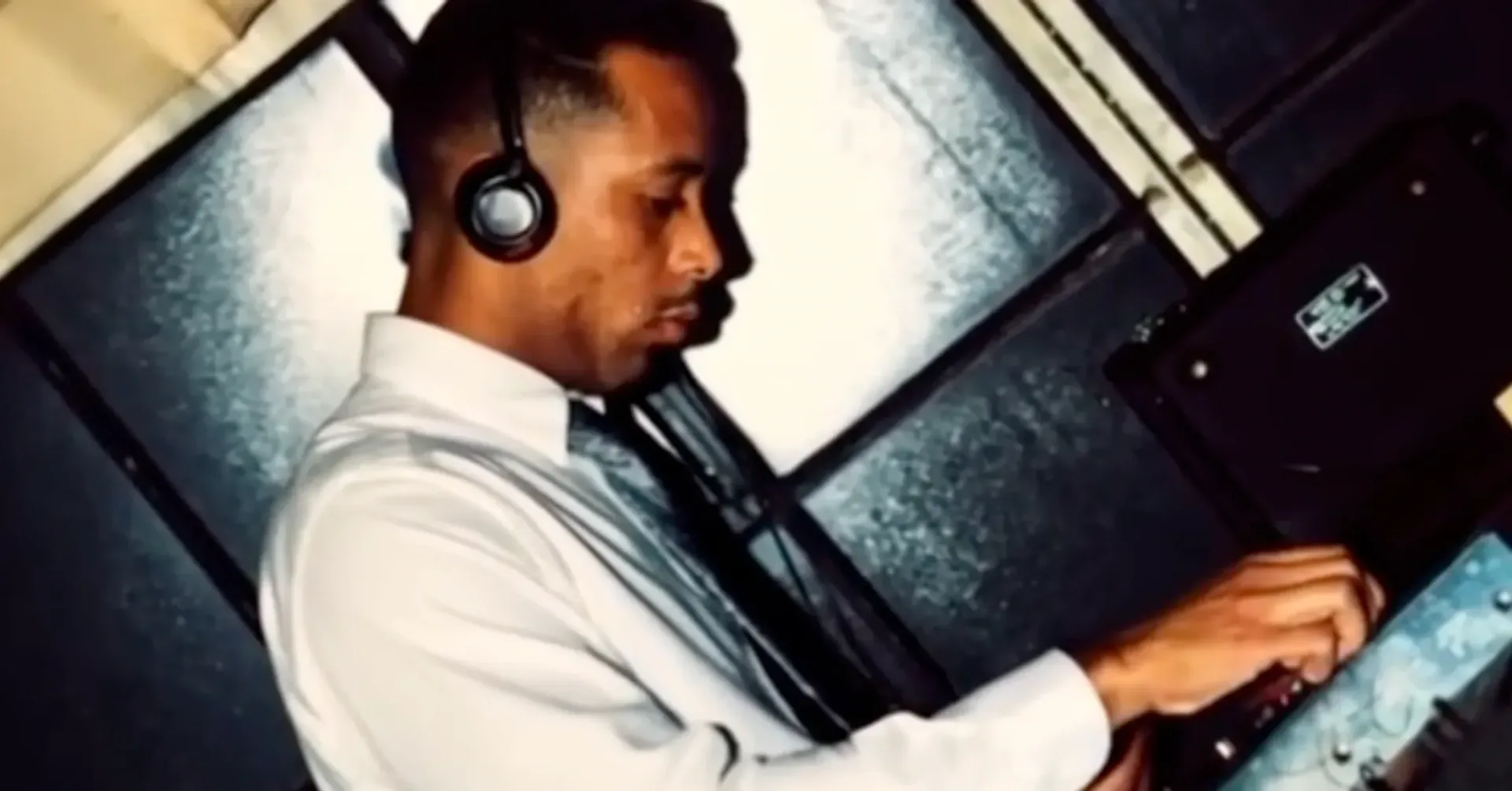
Tone Capone, the influential Bay Area producer best known for building the musical foundation of Luniz’s enduring 1995 hit “I Got 5 On It,” reportedly died on Saturday, September 12. He was 59. Family members shared news of his death the following day. A cause of death has not been publicly disclosed, and no public memorial arrangements have been announced.
Born Anthony Douglas Gilmour in Berkeley, California, and raised in North Oakland, Tone Capone’s story is inseparable from the regional rap scene that grew into one of hip-hop’s most distinctive creative ecosystems. He began as a DJ while at Berkeley High School, then moved toward production at a moment when Oakland, Berkeley, Vallejo, and surrounding communities were cultivating sounds that refused to be treated as a footnote to either Los Angeles or New York.
His work carried the funk-forward pulse associated with the Bay Area, but his legacy cannot be condensed into a regional label or a single smash record. Tone Capone accumulated credits with artists including E-40, Mac Dre, Celly Cel, Dru Down, 3XKrazy, and The Jacka. Still, the opening notes of “I Got 5 On It” remain the immediate point of recognition for many listeners: a lean, unforgettable construction that travelled far beyond the place that made it.
How “I Got 5 On It” Became a Lasting Pop-Culture Sound
Released in 1995, “I Got 5 On It” began as a distinctly local record with a weed-anthem premise and a sound rooted in Northern California. Tone Capone shaped its beat around Club Nouveau’s “Why You Treat Me So Bad,” while Michael Marshall’s contribution helped give the song its instantly identifiable vocal center. Luniz turned those elements into a record that connected locally first, then expanded into a national hit, reaching the Top 10 of the Billboard Hot 100.
For more context, explore AppZapper 3000 Revives a Classic Mac Cleanup Tool With a Fresh Look and Laser-Powered Deletion.
That chart result explains only a fraction of the track’s afterlife. Plenty of songs become hits; comparatively few remain recognizable across generations, formats, and contexts. “I Got 5 On It” endured in clubs, movie placements, commercials, samples, and countless casual musical references. The production’s character was direct enough to lodge in the memory, yet unusual enough to retain its edge decades later.
The song gained another major cultural chapter nearly 25 years after its original release when filmmaker Jordan Peele used it in Us. Reworked in a darker setting, its familiar musical DNA took on a dramatically different feeling. That use did not replace the original track’s identity as a Bay Area rap classic. Instead, it demonstrated how much tension and atmosphere were always present in the underlying musical idea.
For pop culture, that transformation is a reminder that production can outlive the era in which it was made. A great beat may carry the details of its home scene while still being flexible enough to mean something new when another generation encounters it. Tone Capone’s work on “I Got 5 On It” had that rare durability: it could be a radio hit, a party record, a regional anthem, a nostalgic marker, or an unsettling cinematic motif depending on where and when someone heard it.
A Catalog That Reaches Beyond One Signature Track
Calling Tone Capone the producer of “I Got 5 On It” is accurate, but incomplete. His catalog extended across key names in Bay Area rap and mapped a wider history of West Coast collaboration. Among his notable production credits are Celly Cel’s “It’s Goin’ Down” and 3XKrazy’s “Keep It on the Real.” He also worked with Mac Dre on songs including “Fire” and “Not My Job.”
Those credits matter because regional rap histories are often told through only the biggest crossover moments. Tone Capone’s career points to another truth: a scene’s identity is built record by record, through producers and performers working across different cities, crews, labels, and audiences. A producer’s name may not always be front-and-center on a listener’s first encounter with a song, but their choices determine its pulse, its mood, and much of what gives it a lasting identity.
His reach went beyond Northern California as well. Work with Seagram connected Tone Capone with Mike Dean and eventually Scarface. That path led to contributions on Scarface’s The Untouchable, including involvement in “Smile,” Scarface’s collaboration with Tupac Shakur. “Smile” became one of the most prominent records of Scarface’s career, placing Tone Capone’s work within another important strand of 1990s rap history.
Scarface later included Tone Capone among his favorite producers, alongside Dr. Dre and Timbaland. That recognition speaks to the regard Capone earned from artists who understood the craft behind a record’s architecture. Production is often judged by the immediacy of a hook or the size of a single, but peers can also recognize the deeper qualities: a sense of arrangement, a sample decision that changes the entire emotional temperature, or the ability to make a song feel like it belongs to an artist without sounding interchangeable.
From North Oakland to Las Vegas, With Bay Area Roots Intact
Tone Capone had been living in the Las Vegas area since 2021, but his creative identity remained deeply linked to the East Bay. Berkeley and North Oakland were not merely biographical details; they were part of the environment that formed the musical culture in which he developed. Starting as a young DJ before becoming a producer gave him a foundation in how music moves a room, how records speak to one another, and how a carefully chosen fragment can become the center of an entirely new composition.
By the 1990s, his sound had become part of the broader musical fabric of Bay Area rap, particularly its funk-heavy side. That description is useful, though it should not flatten the work into a formula. Funk influence can imply groove, bounce, bass, melodic color, and a willingness to let a track breathe. In Tone Capone’s case, the results could also hold unease and sharpness, qualities that help explain why “I Got 5 On It” could later be reinterpreted so effectively in a horror film context.
His career also illustrates why producers deserve to be discussed as artists in their own right. They connect musical history to new voices: an older recording can be transformed through sampling; a local performer can reach a national audience through the right track; a regional sound can become a permanent part of the wider cultural vocabulary. Tone Capone’s most famous production accomplishes all three.
Why His Work Will Continue to Be Heard
Tone Capone continued working well after the decade that established his name. In the previous year, he joined Yukmouth and Michael Marshall for an oral history centered on “I Got 5 On It,” revisiting the journey of a neighborhood record that became a piece of music still heard roughly three decades later.
That longevity is the essential measure of his best-known work. “I Got 5 On It” did not survive simply because it evokes the 1990s. It survived because it remains musically legible in the present. New listeners can identify its atmosphere immediately even if they do not know every detail of its chart history, sample lineage, or Bay Area context. Longtime listeners, meanwhile, can return to it and hear the local character that helped make it special from the beginning.
His wider production catalog ensures that the story is bigger than one song. From collaborations with Celly Cel, 3XKrazy, and Mac Dre to work that reached Scarface and Tupac Shakur, Tone Capone helped shape records across an important period of hip-hop. His name belongs in discussions of producers whose influence may be felt most clearly whenever a familiar beat begins and the room already knows what comes next.
At the time of reporting, further details regarding memorial plans had not been made public. What remains public, and likely will remain so for a long time, is the music: work rooted in the Bay Area, carried across the country, and preserved in the memories of listeners who recognize the first notes before a lyric arrives.