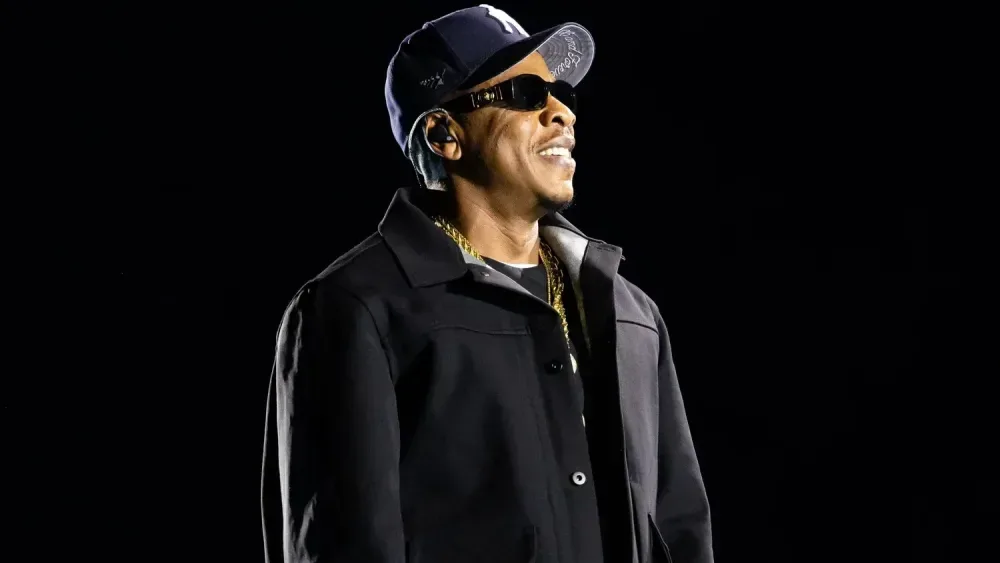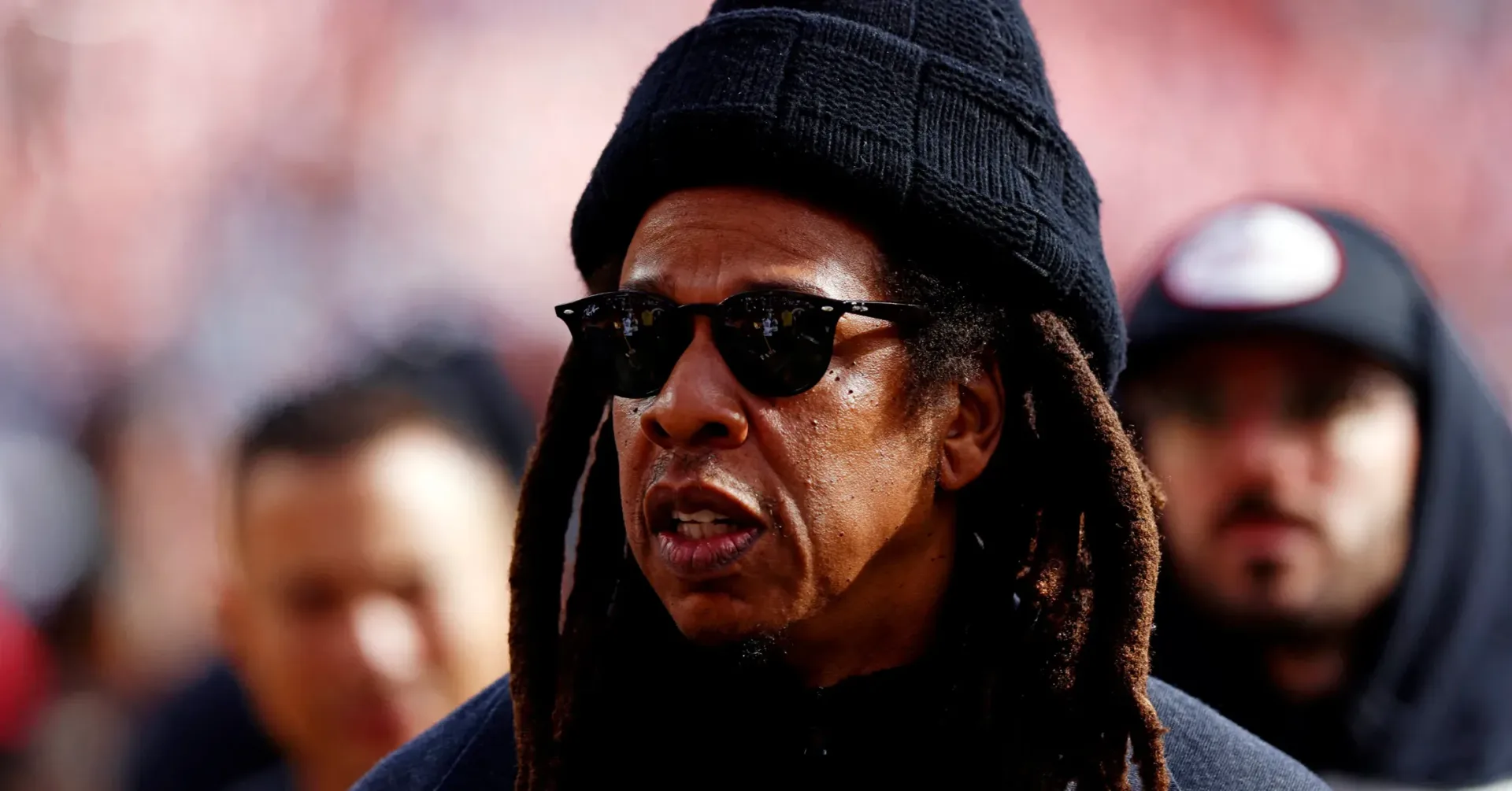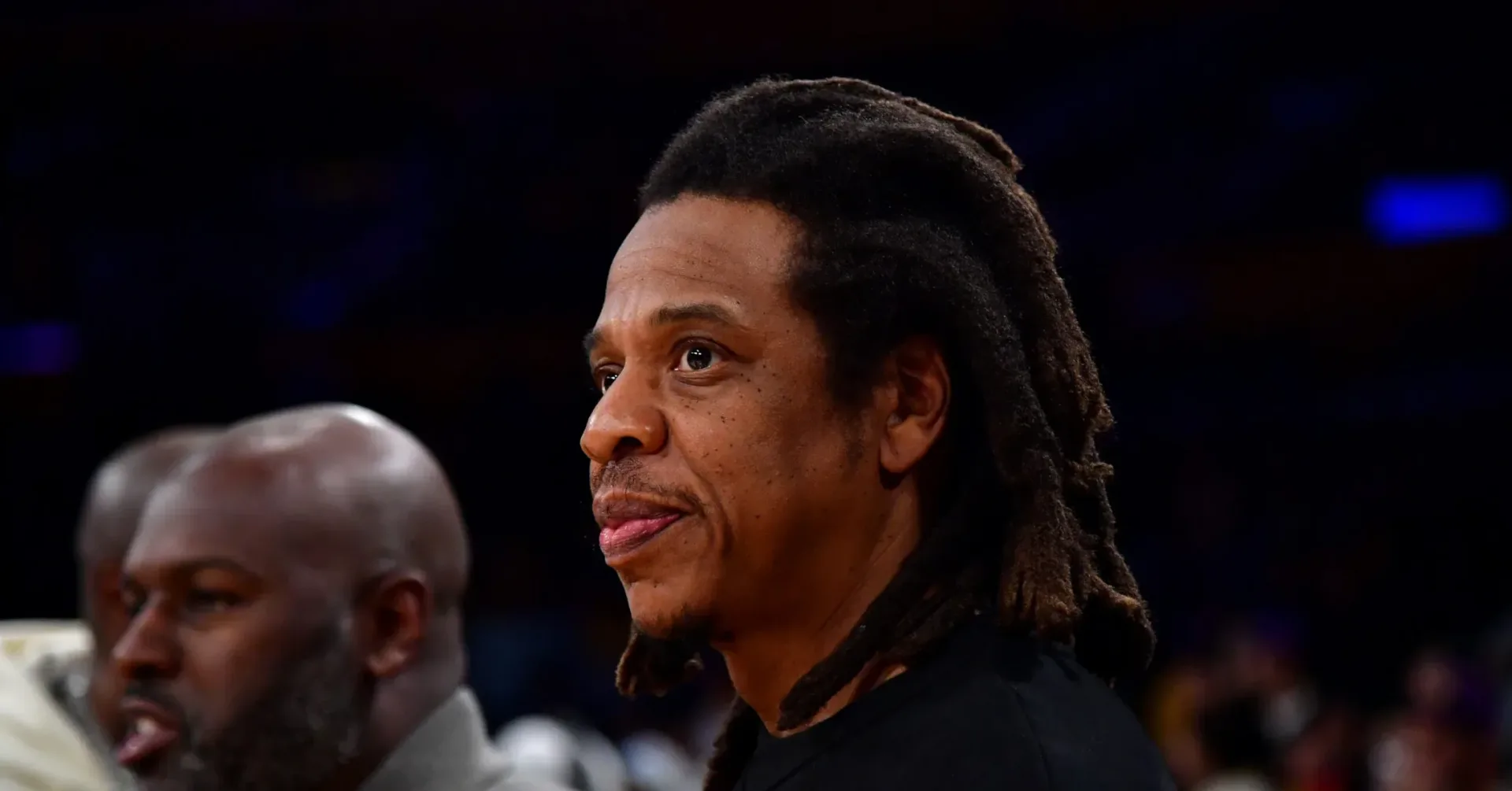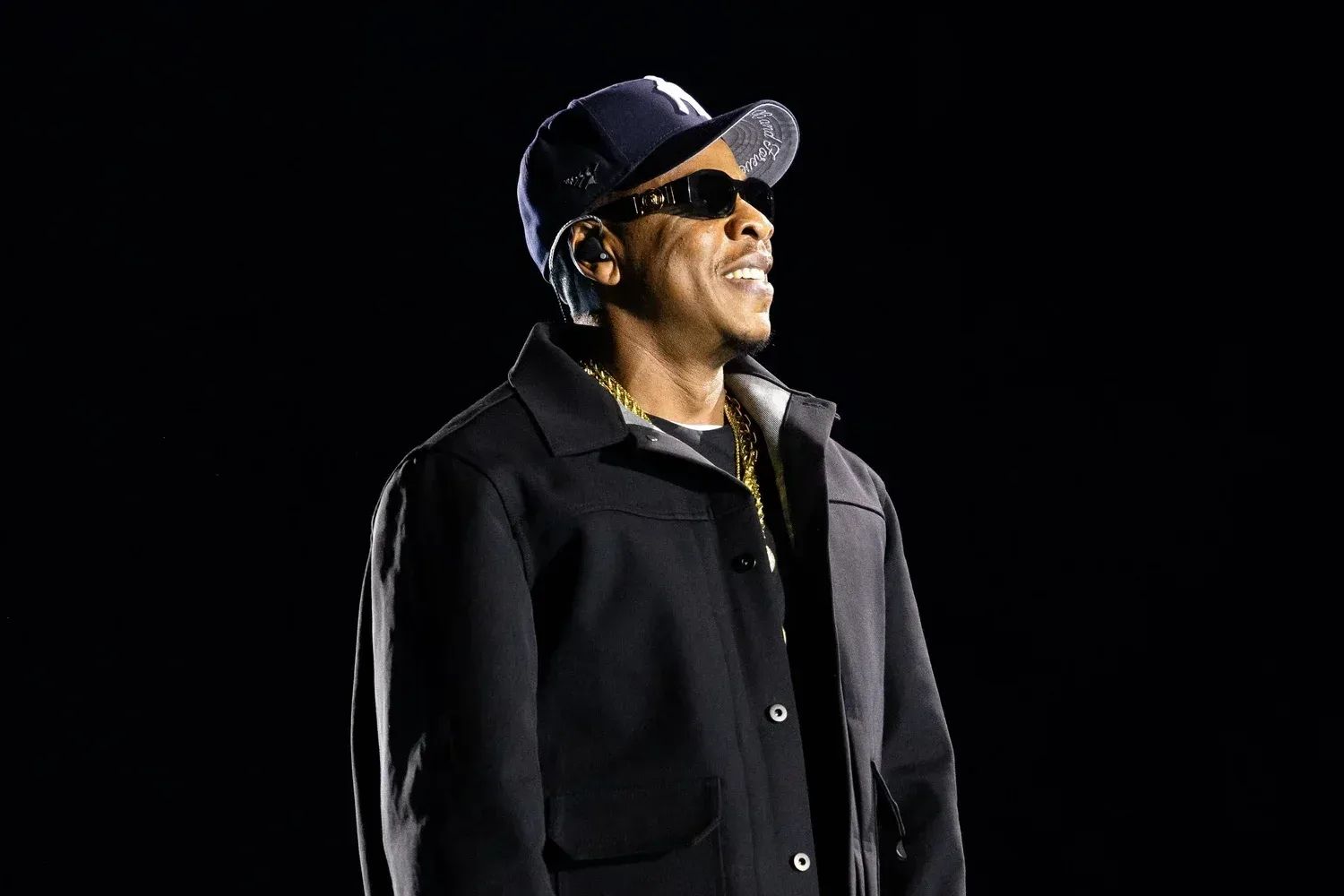
Jay-Z’s first of two SoFi Stadium dates in Inglewood, California, presented the clearest possible argument for the deep-catalog stadium show: keep the songs moving, treat special guests as punctuation rather than a crutch, and make three decades of hits feel like one continuous momentum bar.
The performance was part of the yearlong Jay-Z 30 celebration, which has already included a Roots Picnic headlining appearance, three sold-out Yankee Stadium shows, dates in London and Paris, and an eight-episode HBO docuseries focused on his body of work. At SoFi, Jay-Z worked through a two-hour, 33-song set that began with “Hovi Baby” and closed with “God Did,” moving from early material to arena-scale records without framing the night as a chronological museum tour.
That distinction matters. A catalog anniversary can easily become a greatest-hits checklist, where every song is introduced as an artifact and the pace suffers for it. The SoFi structure instead treated the discography as active performance material. “Izzo (H.O.V.A.),” “Run This Town,” “Hard Knock Life (Ghetto Anthem),” “99 Problems,” “Empire State of Mind,” “N----s in Paris” and “Big Pimpin’” all appeared in the same night, but the programming also left room for songs whose appeal lies more in lyrical detail or emotional weight, including “Can I Live,” “Never Change,” “Song Cry,” “Lucifer” and “This Can’t Be Life.”
A stadium show built around the headliner
Jay-Z has made guest appearances a recognizable part of this celebration. The Yankee Stadium run included Beyoncé, Rihanna, Eminem and Blue Ivy Carter among its cameos, tied in part to milestones for The Blueprint and Reasonable Doubt. SoFi took a more restrained route. The guest list was still substantial on paper, but it was deployed in specific places rather than turning the evening into a relay race of celebrity entrances.
Blue Ivy Carter played keys on “The Story of O.J.” and “Dead Presidents.” The choice placed her in the musical fabric of the show, rather than reserving her for a brief wave-and-exit moment. It also differed from her Yankee Stadium appearance, where she played on “Feelin’ It.” Scarface joined Jay-Z for “This Can’t Be Life,” then performed “Mind Playing Tricks on Me.” DJ Khaled and John Legend appeared for the closer, “God Did.”
That economy helped underline the central fact of the performance: the headliner had more than enough material to sustain the building himself. Stadium production can sometimes make an artist seem smaller, especially when a show’s premise depends on surprise after surprise. Here, the selective cameos did the opposite. Each one intensified a particular part of the set while reinforcing the breadth of the work Jay-Z was already carrying.
There has been public speculation about Jay-Z potentially performing at the Super Bowl halftime show in 2027, an event expected to take place at the same venue. That remains speculation, not a confirmed booking. Still, a concert at SoFi naturally invites comparisons to the kind of compressed, high-stakes staging a halftime performance would demand. The useful takeaway is not that this show confirms anything; it is that Jay-Z’s set demonstrated a viable approach to a huge room. He can lead with instantly recognizable records, draw from multiple eras and use collaborators without surrendering authorship of the night.
What “catalog-driven” means in practice
A catalog-driven set is not simply a long setlist. It is a performance designed around the accumulated recognition and emotional associations of an artist’s songs. Its challenge is sequencing. A performer has to balance crowd-response records with changes in tone, keeping audiences engaged without flattening everything into a single volume level.
SoFi’s 33 songs show how that balance was approached. High-energy cuts including “FuckWithMeYouKnowIGotIt,” “On to the Next One,” “Clique,” “Dirt Off Your Shoulder” and “Jigga My N----” sat beside more reflective selections. “The Story of O.J.” and “Dead Presidents” created a pocket for the keyboard features from Blue Ivy. “This Can’t Be Life” opened a space for Scarface, whose guest spot had both collaborative and historical weight before he shifted into “Mind Playing Tricks on Me.”
The set also used medleys and linked songs to preserve flow. “Excuse Me Miss / La-La-La (Excuse Me Miss Again),” “Give It to Me / Money, Cash, Hoes,” and “N----s in Paris / Big Pimpin’” condensed familiar material into bigger transitions. In concert terms, a medley is more than a way to fit extra titles into a fixed runtime. It can reset the room’s energy, connect different eras and make a crowd recognize a song before it has time to settle into a predictable arrangement.
“Empire State of Mind” served as one of the night’s defining moments. Before it, Jay-Z asked whether he could take the audience to his home, using a New York anthem to bridge Brooklyn identity and a Los Angeles stadium. The gesture fits the larger premise of the tour: the songs are personal landmarks in his career, but they have long since become communal ones for listeners far beyond their original locations.
Visual continuity, not a copy-paste performance
The SoFi show retained elements of the visual language used at Yankee Stadium, including an opening image of Beyoncé shaving Jay-Z’s head. Reusing staging across a run is not automatically repetition. In stadium touring, recurring visuals give a production a recognizable identity and allow songs to retain a designed atmosphere from city to city. The key question is whether the performer can make that framework feel responsive to the room.
At SoFi, the visuals were used to expand tracks such as “Song Cry” and “Lucifer,” while the performer’s interaction with the crowd and band supplied the night’s live immediacy. That is an important division of labor in a large-scale concert: screens and stage images can establish environment, but the music and pacing must create the sense that the event is happening now rather than merely being replayed.
For listeners looking at the set as a career map, the selection also gives a useful snapshot of Jay-Z’s range. There are club- and arena-facing songs, street-rooted records, emotionally heavy material, crossover anthems and collaborative hits. The show does not need every track to represent the same version of Jay-Z. Its force comes from allowing those versions to coexist.
That range is also why the comparatively sparse guest strategy works. Blue Ivy’s keyboard contributions, Scarface’s two-song sequence, and the DJ Khaled-John Legend appearance for “God Did” each had a clear musical purpose. The guests were not presented as proof that a stadium must be constantly replenished with star power. They were accents within a set that had already established its own engine.
Full setlist from the first SoFi Stadium show
- “Hovi Baby”
- “Izzo (H.O.V.A.)”
- “Beach Is Better”
- “FuckWithMeYouKnowIGotIt”
- “N---- What, N---- Who (Originator 99)”
- “Run This Town”
- “The Story of O.J.” with Blue Ivy Carter
- “Dead Presidents” with Blue Ivy Carter
- “Where I’m From”
- “Hard Knock Life (Ghetto Anthem)”
- “Lucifer”
- “No Church in the Wild”
- “Can I Live”
- “Family Feud”
- “U Don’t Know”
- “On to the Next One”
- “Clique”
- “Dirt Off Your Shoulder”
- “I Know”
- “Never Change”
- “This Can’t Be Life” with Scarface
- “Mind Playing Tricks on Me” with Scarface
- “Song Cry”
- “99 Problems”
- “Girls, Girls, Girls”
- “Excuse Me Miss / La-La-La (Excuse Me Miss Again)”
- “Change the Game”
- “Give It to Me / Money, Cash, Hoes”
- “Jigga My N----”
- “Heart of the City (Ain’t No Love)”
- “Empire State of Mind”
- “N----s in Paris / Big Pimpin’”
- “God Did” with DJ Khaled and John Legend
The broader musical context is worth exploring, too: Jay-Z’s work sits in a wide network of rap lineage, sampling and crossover collaboration. For another look at how those connections can travel across generations, see Dionne Warwick’s hip-hop sample map.
SoFi’s first night did not require a constant parade of famous faces to feel monumental. Its strongest statement was simpler: a carefully chosen catalog, delivered with control and supported by a band, can still fill the room. The guests made the show bigger at the margins. The songs made it a Jay-Z show.