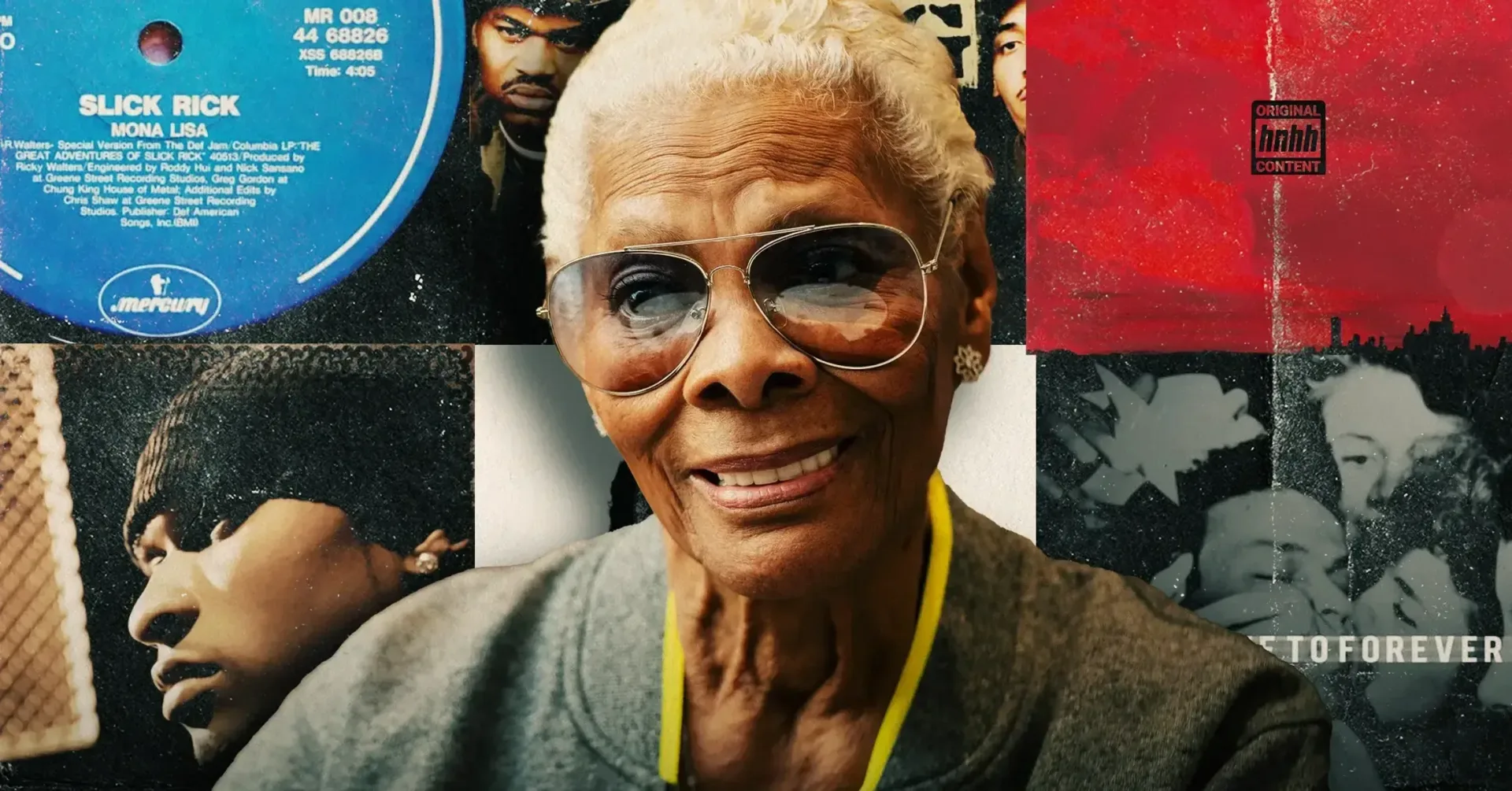
Hip-hop producers have long treated soul recordings as a kind of time-travel machine: find a voice, a chord change, a drum break or a phrase that still carries emotional voltage, then place it in a completely new story. Dionne Warwick’s catalogue is an especially revealing example of that process. Her recordings have appeared in rap, instrumental hip-hop and contemporary R&B across decades, from Slick Rick’s “Mona Lisa” to Doja Cat’s “Paint The Town Red.”
The through-line is not that every later record attempts to recreate Warwick’s sound. Usually, it does the opposite. A producer may isolate a brief vocal phrase, loop a melodic passage, or build around the atmosphere of a performance. The new song can be boastful, comic, ominous, reflective or romantic even when Warwick’s original was a restrained account of heartbreak. That flexibility is the real story: her voice and the songwriting around it could retain their character while being assigned new jobs.
It is also worth making one important distinction. A sample is audio taken from a specific prior recording. A composition is the underlying song: its melody and lyrics. That difference matters here because several rap records use Warwick’s actual recordings, while others draw from later versions of the same Burt Bacharach and Hal David songs—most notably Isaac Hayes’ radically expanded reading of “Walk On By.” Same composition, very different sonic source.
“Walk On By” created two separate sample bloodlines
Written by Bacharach and Hal David, Warwick’s 1964 recording of “Walk On By” is one of the central intersections between her catalogue and hip-hop. Its controlled sadness became a foundation for Slick Rick’s 1988 “Mona Lisa,” a track whose pizza-shop narrative moves in a much less sentimental direction. The contrast shows one of sampling’s most useful tricks: an instantly recognizable emotional texture can be repurposed without carrying its original plot into the new lyric.
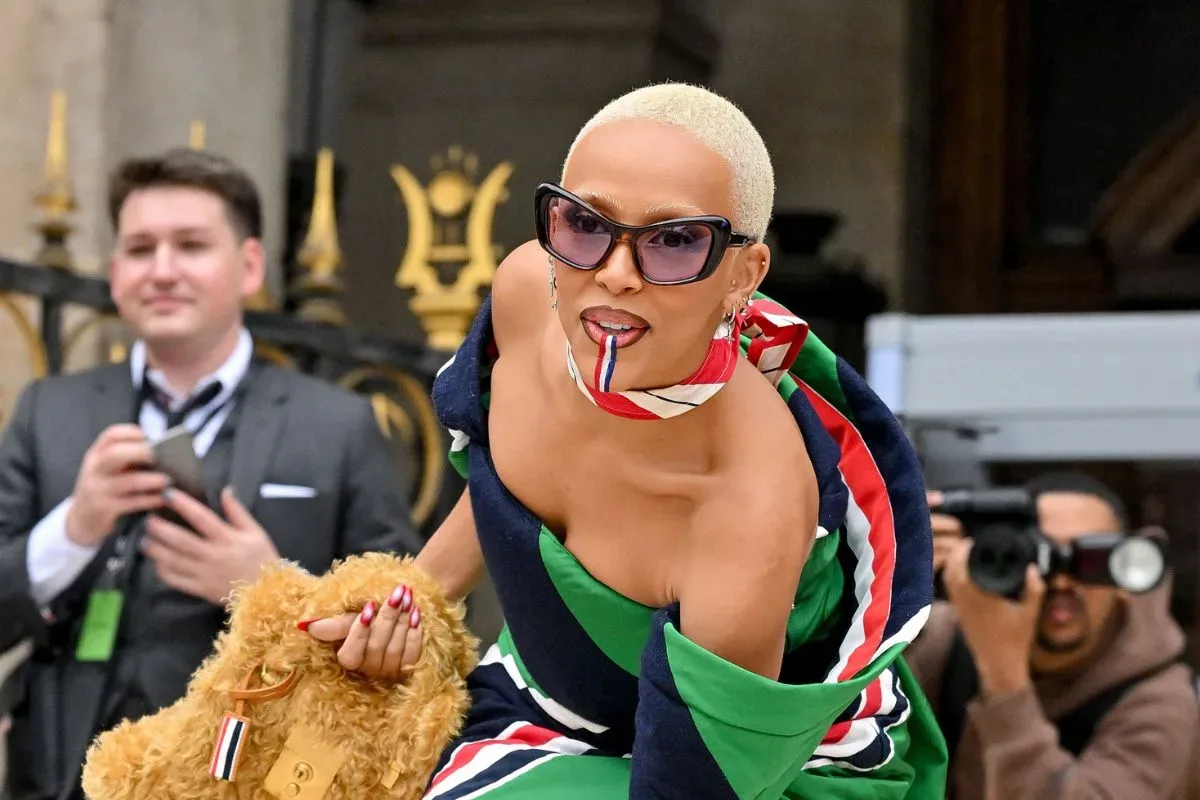
Warwick’s recording later appeared in Logic’s 2013 track also titled “Walk On By.” In 2023, it reached a major new audience through Doja Cat’s “Paint The Town Red,” from Scarlet. Producer Earl on the Beat’s path to that sample was itself part of Warwick’s wider hip-hop afterlife: he had first encountered her while sampling “You’re Gonna Need Me” for Usher’s “Throwback,” then explored further through her catalogue before landing on “Walk On By.”
Warwick welcomed the renewed attention around Doja Cat’s hit, even saying that she had not known who Doja Cat was until her granddaughter told her about the record. That small detail captures the generational handoff sampling can create. A producer may work from a decades-old recording, listeners may discover the sample through a current hit, and the original artist can meet a new audience in reverse.
But “Walk On By” also has a second, equally consequential rap history through Isaac Hayes. His nearly 12-minute 1969 version on Hot Buttered Soul shifts the song away from Warwick’s compact, delicate delivery toward a longer and heavier arrangement. Producers working with Hayes were sampling his performance, not Warwick’s 1964 master recording, even though both derive from the same Bacharach-David composition.
That Hayes branch runs through Compton’s Most Wanted’s “Hood Took Me Under” in 1992, The Notorious B.I.G.’s “Warning” in 1994, and 2Pac’s “Me Against The World,” featuring Dramacydal, in 1995. Foxy Brown’s “Chyna Whyte” and MF DOOM’s “Dead Bent” followed in 1999. Wu-Tang Clan then brought Hayes directly into the family tree when he appeared on “I Can’t Go To Sleep” in 2000. It is a useful reminder that a famous song does not have one fixed sampling identity. The recording selected changes the groove, the tone and the history a new track is invoking.
Heartbreak recordings became lyrical backdrops
Warwick’s 1963 “Anyone Who Had A Heart,” another Bacharach-David song, was used by producer Ayatollah for “Know That,” featuring Mos Def and Talib Kweli, on Mos Def’s 1999 debut Black On Both Sides. Warwick’s original is emotionally exposed and pleading. “Know That” uses its musical feeling behind verses focused on the two MCs’ skills and place in hip-hop.
The move is not a contradiction; it is arrangement as interpretation. A sample can preserve the ache of the older record while the rapper’s writing pushes a different message. The listener hears both timeframes at once: Warwick’s performance and the newer track’s purpose. CyHi The Prynce later returned to Warwick’s recording on “Napoleon,” another example of her early work remaining attractive to lyric-forward rap.
“Make It Easy On Yourself” has a more tangled route. Warwick recorded the Bacharach-David composition as a demo and expected it to be her debut single, but Jerry Butler released the song in 1962. Warwick’s version then appeared on her 1963 debut album, Presenting Dionne Warwick. Ayatollah sampled that recording for Masta Ace’s 2001 “Hold U,” featuring Jean Grae, from Disposable Arts.
There, Warwick’s breakup plea is set against a playful conversation about the complications of staying together. Masta Ace describes a relationship that proves more difficult than his initial attraction suggested, while Jean Grae supplies the other perspective. Instead of simply repeating the original’s parting sentiment, the record creates a dialogue in which the characters remain invested despite their friction. Stack Bundles’ “Breaking Up,” cataloged as a 2019 release, also used Warwick’s version; because the rapper died in 2007, the recording itself necessarily predates that catalog listing.
“San Jose” and a hometown sample with a built-in local signal
“Do You Know The Way To San Jose,” Warwick’s 1968 Bacharach-David hit, is about somebody reconsidering a pursuit of Hollywood success. San Jose rapper MC Twist drew from Warwick’s recording for “I Like It Loud,” on his group’s 1989 album Comin’ Thru Like Warriors. The sample carried an immediate local connection: Warwick’s song had already made San Jose a nationally familiar musical destination, even though its narrative is not a hometown anthem.
MC Twist used the same source again on 1990’s “Cold Chillin’ In San Jo.” In both cases, the sample did more than provide a catchy fragment. It gave the rap records a geographic reference that listeners could recognize before the verses had fully established their setting. Released through Luke Skyywalker Records, “I Like It Loud” belongs to an early, less widely documented part of Bay Area rap history.
A Beatles song reached Wu-Tang through Warwick
Warwick’s route into U-God’s “Rumble” is perhaps the cleanest demonstration of how many hands can sit between a song’s writers and a later sample. John Lennon and Paul McCartney wrote “We Can Work It Out,” and the Beatles released it in 1965. Warwick recorded her soulful interpretation for 1969’s Soulful Dionne. Thirty years later, U-God used her version in “Rumble,” featuring Method Man, Inspectah Deck and Leatha Face, from his 1999 solo debut Golden Arms Redemption.
The production also uses Queen’s “Another One Bites the Dust.” That pairing is not merely a trivia stunt. It illustrates the collage logic of sample-based production, where recordings from different artists, styles and eras can be placed into one track if their textures supply the needed tension. In this case, a Beatles composition passes through Warwick’s interpretation before entering a Wu-Tang-related record.
“You’re Gonna Need Me” connected J Dilla, Usher and modern R&B
Warwick’s 1973 “You’re Gonna Need Me,” from Just Being Myself, offered producers a particularly direct vocal warning: leave now, regret it later. Just Blaze used it for Usher’s “Throwback” from 2004’s Confessions. The result puts Warwick’s certainty in conversation with Usher’s relationship-focused perspective, creating a productive tension between the older recording’s warning and the newer song’s longing.
J Dilla approached the same record differently on “Stop!” from his 2006 instrumental album Donuts. Rather than treating Warwick’s performance as a conventional chorus, he chopped pieces of her vocal into a recurring loop. Chopping means cutting a sample into short sections and rearranging or repeating them; it can make a familiar singer sound rhythmic, fragmented or hypnotic without losing the personality of the original voice. “Stop!” also incorporates fragments of Jadakiss and other rap recordings. Donuts arrived three days before Dilla’s death and has since become one of hip-hop’s most celebrated instrumental albums.
The line continued in 2023 with Chlöe Bailey and Chris Brown’s “How Does It Feel,” produced by Hitmaka and Cardiak. That duet revisited “You’re Gonna Need Me” while also drawing on the approach established by “Throwback.” For listeners tracing samples, it is a practical example of a record’s influence traveling by more than one route: the original recording remains the root, while an earlier sample-driven hit can help point newer producers toward it.
Deep cuts show the catalogue was bigger than the obvious standards
Warwick’s sample story is not limited to “Walk On By.” “Move Me No Mountain,” from her 1975 album Then Came You, began as a Love Unlimited recording in 1974 before Warwick made her own version under producer Jerry Ragovoy. Big K.R.I.T. sampled Warwick’s rendition for “Egypt Cotton” from his 2014 mixtape King Remembered In Time. CyHi The Prynce used the same source for 2012’s “James Harden,” and Premo Rice followed with “Silk Sh*t” in 2019.
Those selections matter because they show producers digging beyond a handful of universally known singles. Warwick’s 1970s material offered a different palette from the Bacharach-David classics: still soulful and vocal-led, but capable of serving the warmer, more expansive feel sought by artists such as Big K.R.I.T.
Warwick’s relationship with hip-hop has also included candid conversation rather than passive nostalgia. In the 1990s, she invited Snoop Dogg and Tupac Shakur to her home to discuss misogynistic lyrics and their depiction of women. Looking back, she framed their willingness to listen as respect, not intimidation. Later, her social-media humor introduced her to younger listeners, including exchanges about Chance the Rapper and The Weeknd’s names; her interaction with Chance eventually led to a collaboration.
That context makes her positive response to later sampling more meaningful. Sampling does not erase disagreements about lyrics, values or artistic responsibility. But it can form a bridge across generations, allowing an artist’s older work to circulate in new forms while the original creator remains an active voice in the culture. Warwick’s recordings have endured because they provide producers with more than recognizable hooks: they offer moods, tensions and vocal character that can survive a total change of genre.
For another snapshot of rap’s current live-scale ambitions, see Jay-Z’s SoFi Stadium run. Warwick’s sample map sits at the opposite end of the production chain, but both stories underline hip-hop’s ability to make musical history feel present tense.