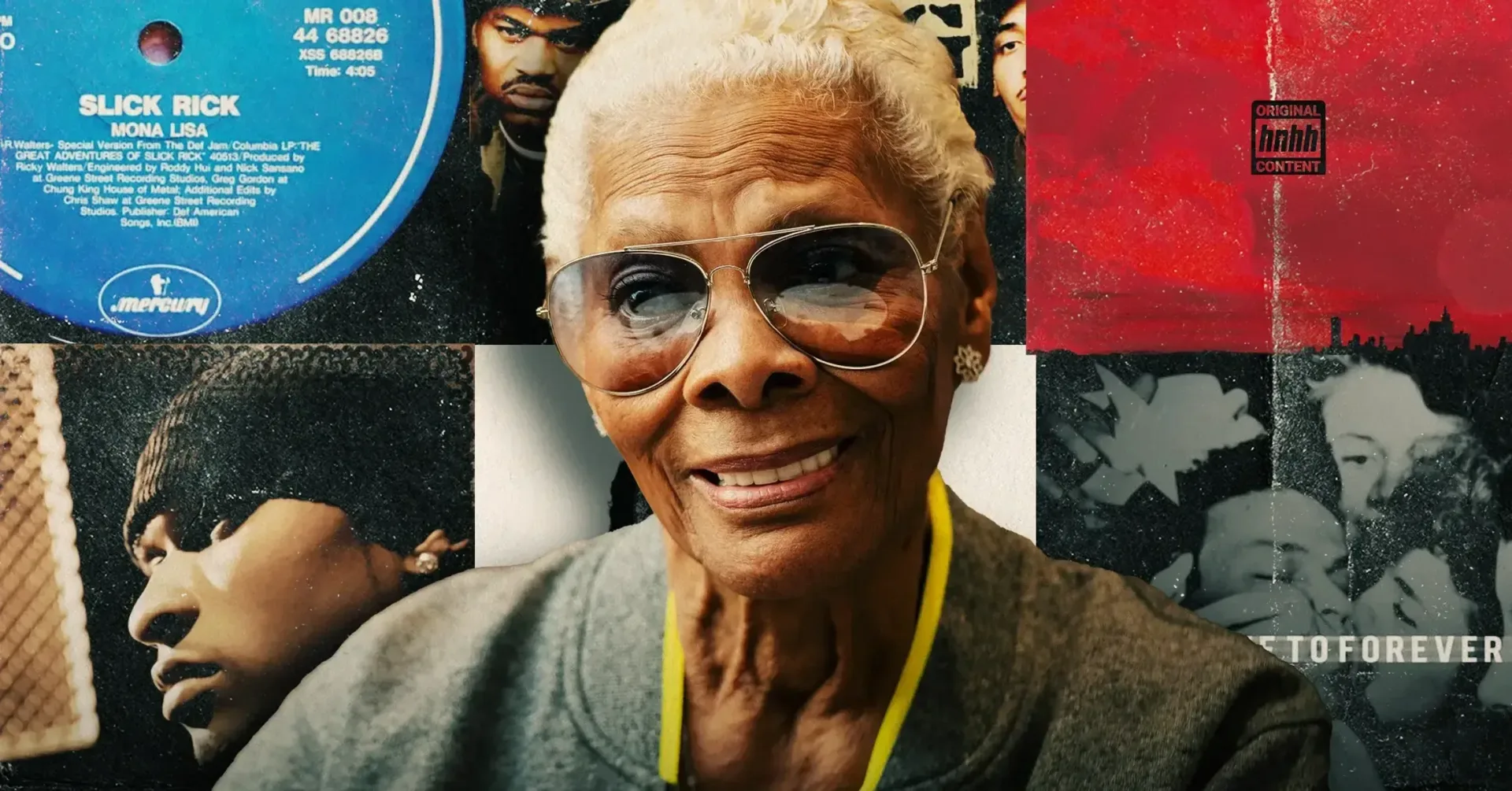
Music can carry a film’s most compact piece of storytelling. A familiar vocal, a sampled groove or an unexpectedly placed pop recording can establish a character’s ambition before the plot spells it out. That idea is central to director Joanna Natasegara’s selections for The Disciple: A Wu-Tang Fable, a film following Cilvaringz—born Tarik Azzougarh—and the one-copy album Once Upon a Time in Shaolin.
Natasegara singled out a notably broad group of tracks: Nas and Lauryn Hill’s “If I Ruled the World (Imagine That),” Mariah Carey and Ol’ Dirty Bastard’s “Fantasy” remix, Wu-Tang Clan’s “C.R.E.A.M.” and Cher’s cover of “Walking in Memphis.” The choices reach across rap, pop and a cover version that, on the available information, is intentionally left as a mystery.
What ties them together is not simply fame or decade. The selections sketch a world shaped by New York rap, Wu-Tang’s collaborative identity, the creative reuse of recorded music and one protagonist’s desire to get close to a scene led by the Clan. They also underline a useful distinction for viewers: a song’s cultural significance and its narrative job are related, but they are not necessarily the same thing.
Nas and Lauryn Hill frame Tarik’s aspiration
Natasegara identified Nas and Lauryn Hill’s 1996 “If I Ruled the World (Imagine That)” as the track that most directly expresses Tarik’s dream. In her explanation, it represents his wish to belong to the remarkable New York music scene led by Wu-Tang Clan.
That makes the selection more than period-flavored scene dressing. It gives the film an emotional shorthand for ambition: the gap between admiring a creative movement and finding a place within it. Since the film concerns Cilvaringz and Once Upon a Time in Shaolin, the one-copy album associated with him, that aspiration is particularly consequential. The premise is not merely about listening to Wu-Tang from a distance; it is about a person pursuing a connection to an unusually influential artistic collective and its orbit.
The choice also creates a bridge between artists rather than reducing the story to one isolated corner of hip-hop. Nas and Lauryn Hill’s collaboration can evoke a larger New York musical ecosystem, while Natasegara’s own wording keeps Wu-Tang at the center of Tarik’s goal. The point is not that every artist or song must belong to the same sound. It is that a scene can be defined by exchanges of influence, ambition and audience attention.
The “Fantasy” remix is positioned as a high-point release
Mariah Carey and Ol’ Dirty Bastard’s “Fantasy” remix performs a different function in Natasegara’s selections. She placed the upbeat collaboration at one of the film’s high points. Where “If I Ruled the World” expresses a long-range aspiration, “Fantasy” appears to supply lift and momentum for a pivotal moment.
Its value in that context is easy to understand without assuming details that have not been disclosed. A high-point song needs energy, recognition and a sense of occasion. Pairing Carey with Ol’ Dirty Bastard brings together pop scale and a Wu-Tang member’s unmistakable presence, making the recording an apt candidate for a moment meant to feel expansive or celebratory.
Related coverage includes Wu-Tang Film Director Details Nas, ODB and Cher Music Picks.
The track’s construction also fits the broader musical logic around Wu-Tang. The 1995 remix drew on a Tom Tom Club sample. A sample is a portion of an existing recording incorporated into a new work, whether as a musical phrase, rhythm, vocal fragment or other audible element. Sampling is not just a technical process of lifting a sound; in creative terms, it can put different eras and styles into conversation. Here, a pop hit, an Ol’ Dirty Bastard appearance and material associated with another group converge in a single recording.
That layered quality matters because Natasegara cited Wu-Tang’s relationship to music and film samples as a reason her music selections range so widely. The Carey and ODB pairing is therefore not merely an upbeat detour from a Wu-Tang story. It illustrates the kind of cross-genre, cross-reference thinking that surrounds the film’s musical framework.
“C.R.E.A.M.” carries Wu-Tang’s sample-based foundation
“C.R.E.A.M.” is the clearest direct connection to Wu-Tang’s own catalogue. Natasegara named it as a favorite from the Clan’s 1993 debut, and its history supplies a concise example of how much revision can sit behind a recording that later feels inevitable.
The song’s underlying sample came from the Charmels’ “As Long As I’ve Got You,” written by Isaac Hayes and David Porter. That fact is useful background, but it should not flatten “C.R.E.A.M.” into a simple before-and-after equation. Sampling creates raw material; arrangement, performance, lyrics, vocal roles and the eventual structure transform that material into the finished work listeners recognize.
RZA has described “C.R.E.A.M.” as a song that did not emerge in its familiar configuration immediately. One earlier version paired him with Ghostface Killah. Another reportedly ran for 12 minutes, featured Raekwon and Inspectah Deck, and carried the title “Lifestyles Of The Mega Rich.” After Wu-Tang secured its debut-album deal, RZA wanted the beat included on the record. He felt Raekwon and Inspectah Deck worked best together on it, but the track still lacked a crucial element: a hook.
A hook is the memorable musical or lyrical passage designed to recur and anchor a song—often, though not always, its chorus. RZA identified Method Man as the ideal person for that job at the time, describing him as the group’s melodic member and a particularly sharp hook writer. The account offers a practical view of group creation: choosing the strongest available combination of voices is part of composition, not an afterthought once the beat exists.
For The Disciple, “C.R.E.A.M.” can consequently signify several things at once: Wu-Tang’s early catalogue, the importance of sampled source material, and the collaborative decision-making that helped shape its sound. Natasegara’s selections do not present the Clan’s music as a static museum piece. They point back to a process—records evolving through alternate versions, member combinations and a decision about who could complete the song’s center.
Film music has to follow the story, not simply the playlist
The discussion around these picks also aligns with a filmmaking principle RZA has articulated through his own work in film. He has said that a score must serve the story, recalling a cue designed to match the instant a character opened her eyes. In other words, effective film music is governed by timing and dramatic purpose, not only by whether the music is good in isolation.
A score generally refers to music composed or assembled to support a film’s scenes and dramatic movement. The available details do not establish which of Natasegara’s selections are score cues, soundtrack placements or simply songs she highlighted in discussing the project, so those categories should not be conflated. Still, RZA’s point gives valuable context for how music can be judged in a screen narrative: it must land at the right instant and carry the scene’s needs.
That perspective helps explain why Natasegara assigns distinct roles to the selections she discussed. “If I Ruled the World” is tied to Tarik’s aspiration. The “Fantasy” remix is associated with an upbeat high point. “C.R.E.A.M.” brings in a foundational Wu-Tang work and its sample-driven creative lineage. Each has a different narrative or thematic assignment rather than being included solely because it is recognizable.
It is also a reminder that a director’s music choices can communicate character, setting and movement without excessive explanation. A single track may tell viewers what kind of moment they are approaching, but it can also complicate that expectation when placed against the image in a surprising way. Natasegara’s reference to film samples in Wu-Tang’s artistic world suggests that this interplay between sound and cinematic association is part of the appeal.
Cher is the selection with the withheld explanation
The outlier is Cher’s 1995 cover of “Walking in Memphis,” originally released by Marc Cohn in 1991. Natasegara called it a surprise selection and said its placement makes sense within the film, while declining to explain the connection.
That restraint is meaningful. There is a temptation to decode every unexpected song choice in advance, particularly when a title seems far removed from the project’s most obvious musical associations. But no specific scene, plot point or thematic rationale has been provided here. The responsible reading is simply that the choice is purposeful and that its intended connection remains unrevealed.
For audiences, that leaves Cher’s recording as a genuine point of curiosity rather than an invitation to invent a theory and treat it as fact. It may ultimately stand out precisely because Natasegara has situated it beside choices that are more readily linked to Wu-Tang, New York rap and sampling culture. A surprising song can make a viewer listen more closely when its moment arrives.
A playlist shaped by collaboration and contrast
Together, Natasegara’s picks give The Disciple: A Wu-Tang Fable a musical outline built on more than genre labels. Nas and Lauryn Hill articulate the protagonist’s ambition. Carey and Ol’ Dirty Bastard bring buoyant crossover energy to a high point. “C.R.E.A.M.” connects the film to Wu-Tang’s debut-era work, the Charmels sample beneath it and RZA’s account of how the song developed. Cher supplies an unresolved, intentional surprise.
The common thread is creative assembly. Wu-Tang’s sample practice joins pre-existing sounds into a new identity. “C.R.E.A.M.” changed through multiple versions before its final vocal arrangement took shape. The “Fantasy” remix places Ol’ Dirty Bastard in a major pop context while drawing on Tom Tom Club material. And the film’s selections themselves move among artists and styles to express different pieces of its narrative.
That broad musical lens makes the project’s focus on Cilvaringz feel appropriately expansive. A story about an artist pursuing proximity to Wu-Tang is also a story about the gravitational pull of a cultural world: the beats, hooks, samples, collaborations and ambitions that make the world larger than any one recording. For more on contemporary rap projects that combine multiple musical traditions, see That Mexican OT’s genre-spanning CUCUY plans.