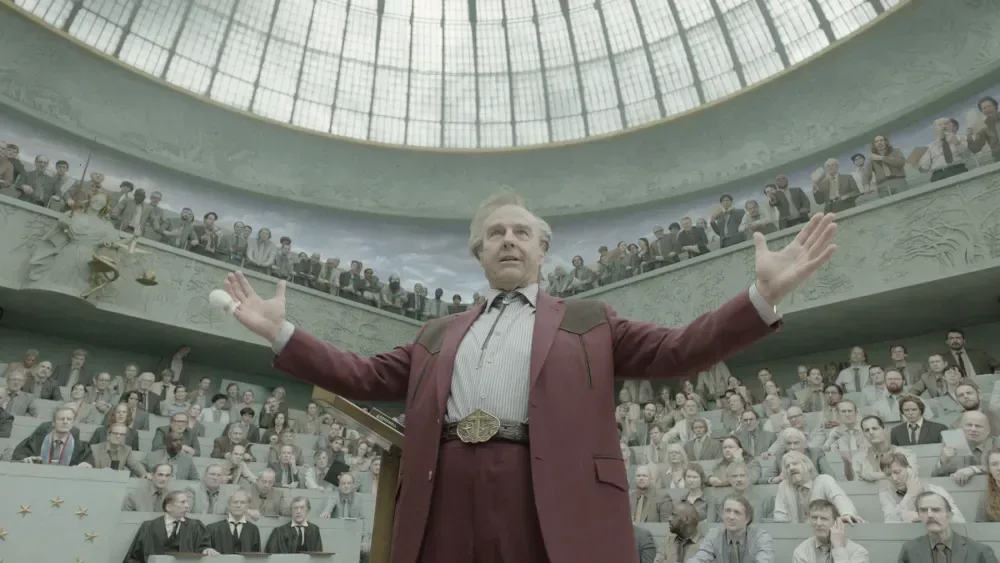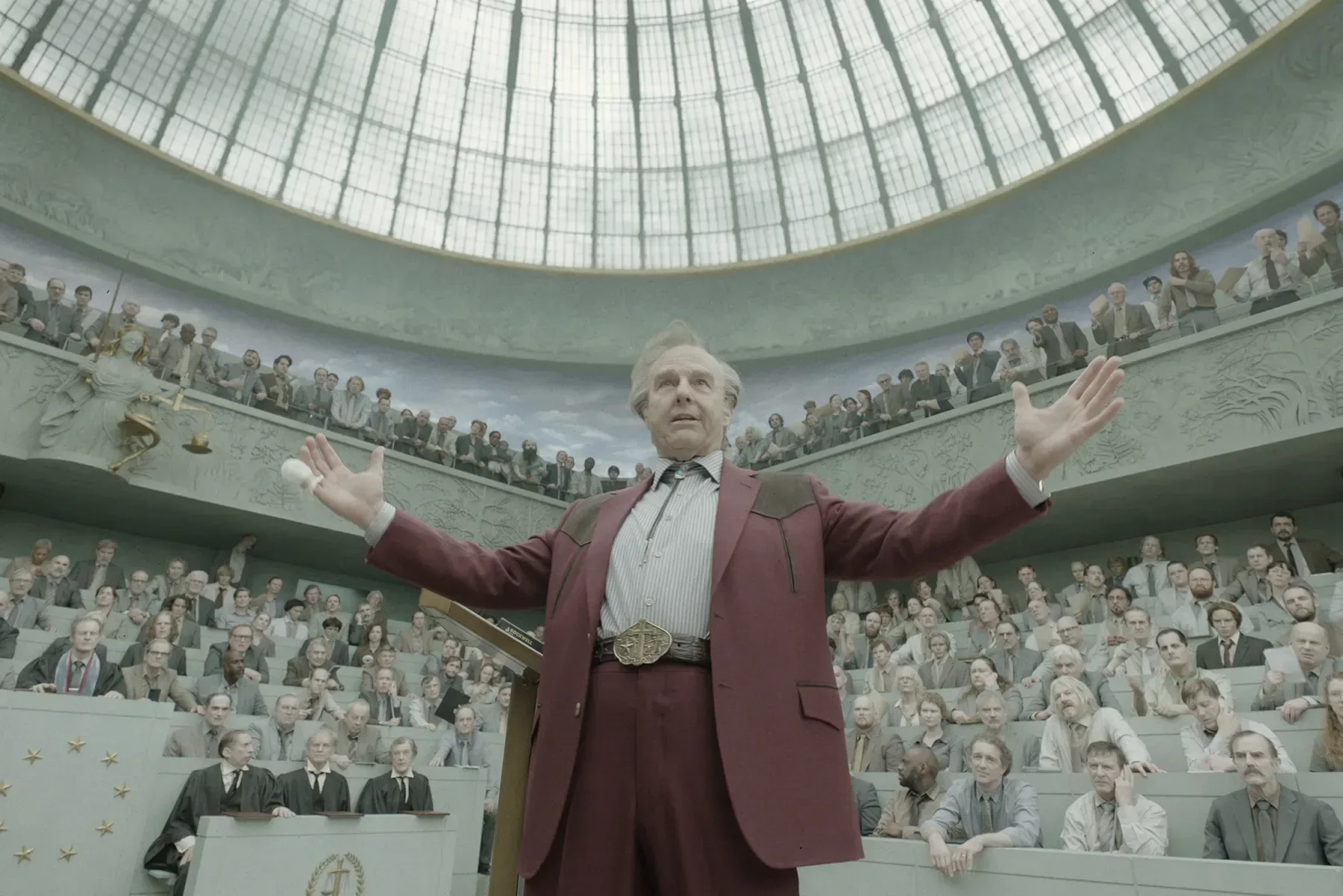
For a brief, gloriously peculiar stretch of internet time, Tom Cruise’s upcoming Digger was being treated as cinema’s best-kept show-tune secret. A final trailer led viewers to wonder whether the film had quietly concealed an entire musical beneath its marketing: Cruise, transformed by substantial makeup and prosthetics, appeared in imagery that some read as stage-like, while background performers seemed, to eagle-eyed trailer watchers, as if they might be singing.
That theory has now hit a rather firm non-musical note. Two people familiar with the production have said that Digger is not a movie musical. The answer may disappoint anyone hoping for an Iñárritu-directed chorus line starring Cruise, but it does not make the audience response any less understandable—or any less entertaining.
In the trailer era, a few seconds of striking imagery can become a full-blown communal reading of a film. Viewers pause, zoom in, compare shots, argue over production design and decide that an apparently ordinary detail must be a clue. It is a kind of pop-culture puzzle-solving that sits somewhere between a detective board and a game community picking apart an unexplained frame in a reveal trailer. The evidence here was visual, uncertain and immediately shareable: a rotating platform associated in many minds with theatrical staging, plus what looked to some viewers like people vocalizing in the background.
Author Jason Pargin neatly captured the appeal of the speculation in a September 10 post on X, calling the possibility that Digger was secretly a musical his favorite conspiracy theory at the time. The joke worked because the proposition felt just plausible enough to invite another look at the trailer. A secret musical is a much more entertaining possibility than a trailer simply using unusual blocking, an expressive set or performers caught in the middle of a non-singing moment.
Why the Trailer Read Like a Stage Production
Trailers are built to communicate mood at speed, not to patiently explain every image. A circular or rotating piece of scenery can suggest performance, ritual, spectacle, confinement, artificiality, motion or psychological instability. In a trailer, it can do several of those things at once. That is especially true when the central figure is nearly unrecognizable. Cruise’s costuming, makeup and prosthetics make the viewer work harder to identify the character and the world around him, which creates extra room for theories about what kind of movie is being advertised.
Musicals also have a familiar visual language even when nobody is audibly breaking into song. Ensembles arranged behind a lead, deliberate body positions, heightened lighting and theatrical environments can all evoke that language. A trailer does not need to show choreography or provide a song clip for audiences to make the connection. If a shot has the atmosphere of a performance number, viewers may start scanning it for signs that the entire picture is operating by musical rules.
That does not mean the reading was confirmed by the footage. It means the footage had enough ambiguity to support it. Trailer analysis frequently turns ambiguity into a feature. Fans are not merely waiting to be told what a film is; they are trying to infer it from what has been withheld. In this case, the question was less “Did the preview explicitly promise a musical?” and more “Why does this visual moment feel like it could belong in one?”
The distinction matters. Marketing materials can deliberately foreground texture and mystery without identifying genre in a straightforward way. A brief image may be selected because it is arresting, not because it explains plot mechanics. Background actors can appear to be singing for many reasons that have nothing to do with the film becoming a full musical. And a platform can rotate without launching a climactic number called “Digger’s Lament.” The internet, tragically, will have to imagine that one for itself.
Related coverage includes ‘Digger’ Is Not a Secret Musical Despite Trailer Speculation.
An Iñárritu Project That Already Invites Questions
Digger arrives with a creative team that gives every unusual frame additional weight. Alejandro G. Iñárritu directs and co-wrote the screenplay with Alexander Dinelaris, Nicolás Giacobone and Sabina Berman. The story is credited to Jez Butterworth, Berman and Iñárritu. That combination of names, along with the trailer’s conspicuously stylized moments, helps explain why viewers were ready to search for a more unconventional premise than the marketing has plainly spelled out.
Cruise has described an unusually direct beginning to his involvement with the project. In an interview with Empire, he said Iñárritu read the script to him aloud across several days. Cruise explained that he likes hearing a writer present an idea because it lets him experience the rhythm and world of the material from an audience’s perspective, through the writer’s own voice.
“I want the writer to read me his idea, because then I can see where we’re going,” Cruise said. “We’re exploring rhythms, and I’m feeling the world.”
The word “rhythms” is not evidence that Digger includes musical numbers, before anyone starts pinning red string from that quote to the rotating platform. But it does suit the larger point: films have rhythm long before they have songs. Dialogue, editing, movement, staging and sound all shape a movie’s internal pulse. A trailer can communicate that pulse so strongly that audiences begin assigning it a genre label that the filmmakers never intended.
A Cast Built for a Hard-to-Read Ensemble
Cruise is joined by Riz Ahmed, John Goodman, Sandra Hüller, Michael Stuhlbarg and Jesse Plemons. It is a cast whose presence makes even limited trailer moments feel loaded with potential. When a preview offers striking faces, altered appearances and ensemble images without much plainspoken explanation, it encourages viewers to supply their own narrative architecture. Is a group gathered for work, ceremony, conflict, performance or something stranger? The trailer may not be answering yet, but audiences will happily form hypotheses.
The musical theory, then, was not necessarily a prediction based on conventional musical marketing. It was a response to a preview that appeared to operate on a heightened visual wavelength. Modern audiences are deeply accustomed to surprise announcements, hidden cameos, delayed title reveals, genre pivots and promotional misdirection. The expectation that a major film might be holding back a central hook is no longer especially outlandish. It is part of how viewers engage with major releases before they can see the whole work.
That kind of vigilance can make a trailer more fun, even when the conclusion is wrong. For some viewers, the pleasure lies in solving a riddle. For others, it is in collectively making an elaborate joke out of a few frames. Either way, it turns marketing into an event rather than a reminder on a calendar. Movie fans have similarly spent years revisiting individual details, performance choices and historical context in projects such as a colonial-era haunting examined through its setting and atmosphere; the urge to decode what images imply is not limited to a single genre.
What Is Actually Known About Digger
For now, the key correction is simple: Digger is not a musical. The final trailer created the impression for a segment of the audience, but the production information available does not support the theory. The film has also not been widely screened for press, leaving viewers with trailers and official details rather than a broad range of full-film reactions.
Digger is scheduled for release on October 2. Until then, the unusual trailer shots will likely continue to be revisited—just with a slightly different question attached. Instead of asking where the hidden songs are, viewers can ask what the rotating platform, transformed lead performance and watchful background figures are actually doing in the film’s story.
That is still a worthwhile mystery. A trailer does not need to conceal a musical to make people curious. Sometimes it only needs to show an image strange enough that thousands of people independently decide it looks like someone ought to be singing.