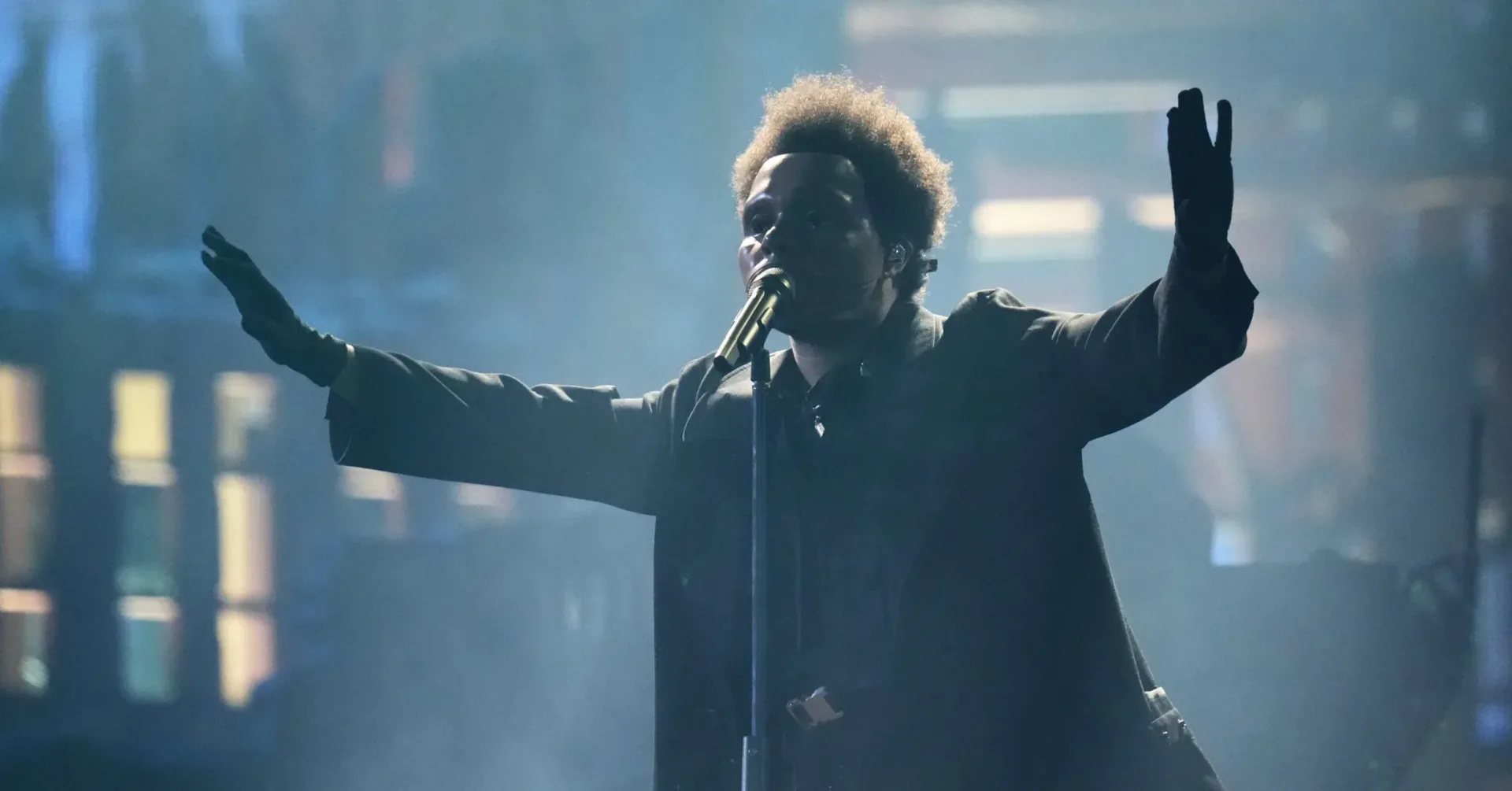
The Weeknd’s new song Hong Kong is built as a highly specific tribute rather than a generic tour stop souvenir. The track incorporates original Cantonese vocals by Faye Wong from her 1993 Cantopop recording Monsoon, also known as Seasonal Wind, and arrived on streaming services across East and Southeast Asia on October 31.
It first appeared in public at Kai Tak Stadium on October 24, opening a four-night run in Hong Kong. That rollout matters because the song’s music, artwork and concert visuals all point toward the same place. Instead of using one broad visual shorthand for the city, the presentation combines harbor views, street-level details, local food spots and landmarks with an unmistakable connection to a landmark era of Hong Kong pop and film culture.
For an artist playing stadium-scale dates, that degree of localization is the notable part. The song does not merely mention Hong Kong or use it as a backdrop. Its central musical connection is Wong’s own Cantonese voice, tied directly to a 1993 record, while the visual choices place the release among recognizable images of the city.
A 1993 Cantopop voice at the center of the song
Cantopop is Cantonese popular music, a broad umbrella that includes the Hong Kong pop tradition in which Wong’s early-1990s recordings sit. By drawing from Monsoon/Seasonal Wind, Hong Kong brings a recording from that tradition into a contemporary release led by The Weeknd.
The significance is in the specificity of the selection. This is not simply a use of an older melody or a visual nod to Hong Kong’s musical past: the release uses Wong’s original Cantonese vocals. That makes the earlier recording an audible part of the new song’s identity and gives listeners a direct bridge between a 1993 work and a 2026 rollout.
The live debut and streaming release also arrived amid The Weeknd’s Asia dates, which expanded from 11 stadium shows to 17. The itinerary is scheduled to close with two Kuala Lumpur performances on November 4 and 5. Within a larger regional tour, Hong Kong appears designed around one city’s cultural memory rather than presented as a one-size-fits-all tour visual.
Artwork that connects music to Hong Kong cinema
The cover art deepens that connection through Christopher Doyle, the cinematographer who shot Wong Kar-wai’s Chungking Express. The image used for the single comes from Doyle’s own Hong Kong photography collection.
Doyle’s connection to Wong is especially meaningful in this context. Faye Wong and Tony Leung starred in Chungking Express, meaning the cover creates a second route back to Wong beyond the sampled vocal: a photographer and cinematographer associated with a film in which she appeared. The artwork therefore ties together a city photograph, a major screen collaboration and a singer whose 1993 performance is heard in the track.
Related coverage includes The Weeknd’s “Hong Kong” Connects Faye Wong’s 1993 Voice to a Citywide Visual Tribute.
That is a carefully layered cultural association, but it is worth separating fact from interpretation. The known facts are that the song incorporates Wong’s original vocals, the cover uses Doyle’s photograph, and Doyle shot Chungking Express. The interpretation is that these elements make the release feel like a deliberate meeting point for Hong Kong’s pop and cinema histories. The combination strongly supports that reading, even without reducing the city to a single film reference or a single nostalgic image.
The concert visual favors lived-in details over a postcard view
The visual package shown with the concert debut included Victoria Harbour, a red-sailed junk, red taxis and Mong Kok neon. Those are large, instantly readable markers. But the footage also went smaller: dim sum locations, roasted chestnut sellers, street traffic and ordinary gathering places appeared beside the skyline.
Specific sites included the circular footbridge in Causeway Bay, the Tsim Sha Tsui waterfront and The Peninsula. Put together, those places give the visual a route through different textures of Hong Kong rather than leaving it at a skyline montage. Harbor scenery and neon have clear visual impact on a stadium screen; the food stalls, vehicles and pedestrian spaces make the setting more grounded.
That distinction is important for city tributes in pop performance. A visual can be geographically identifiable without being especially observant. Here, the inclusion of everyday commerce and movement—taxis, chestnuts, dim sum and footbridges—helps explain why viewers responding to concert footage focused on familiar streets and sounds. The material did not only present landmark architecture from a distance. It framed parts of the city that can carry personal recognition for people who know them.
The visual language joins harbor spectacle with neighborhood-scale details, while the musical foundation reaches back to Wong’s 1993 Cantonese recording.
Why the late-1980s and early-1990s reference point fits
Director Evan Larsen said the video was completed in roughly a week ahead of its concert premiere and identified nostalgia for the late 1980s and early 1990s as central to its appeal. That period framing clarifies why Wong’s 1993 vocal is more than an archival curiosity. It places the musical choice in the same emotional and visual neighborhood as the city imagery.
Nostalgia in this case does not mean the production is presenting Hong Kong as frozen in the past. The visuals include ongoing street life as well as famous locations, and the song is a new release. Rather, the presentation uses a particular historical tone to connect a current stadium performance with a recognizable cultural period. The contrast between a modern global pop tour and an early-1990s Cantonese vocal is the project’s central creative tension.
The quick turnaround is notable as well. Producing a city-specific film in about a week before a large live premiere leaves little room for unnecessary ornament. The reported locations suggest that the production concentrated on clear, resonant details: waterfront views, a junk, taxis, neon, food and pedestrian landmarks. The result can communicate its setting quickly to a concert audience while retaining enough local specificity to reward closer attention.
A local work inside a massive global tour
The Weeknd’s After Hours Til Dawn Tour had passed $1 billion in gross revenue by November 2025, with more than 7.5 million tickets sold across 153 shows. Those figures underline the scale surrounding Hong Kong: this is a release connected to an enterprise that reaches millions of ticket buyers.
Scale can make local references feel interchangeable, especially when global tours move rapidly from city to city. The material around Hong Kong takes a different approach. Wong’s recording gives the song a musical anchor that cannot be swapped for a generic regional cue, while the footage names and shows concrete locations within the city. The combination makes the Hong Kong dates feel distinct within the wider run.
It also arrives at a moment when questions around the reuse, adaptation and control of musical material are receiving wider attention. For related context on artists’ involvement in remix terms, see this look at calls for artist-set terms in proposed AI remix tools. Hong Kong is a different kind of project, centered on an existing vocalist and a place-specific creative presentation, but it illustrates why provenance matters: knowing whose voice is heard and what cultural setting surrounds it changes how a new work is understood.
Ultimately, Hong Kong is defined by how closely its components align. Wong’s original Cantonese vocals point back to 1993; Doyle’s cover photograph invokes Hong Kong cinema; and the debut visual moves from Victoria Harbour to Mong Kok, Causeway Bay and Tsim Sha Tsui. The result is a compact piece of pop-world-building with a precise geographic and cultural focus.