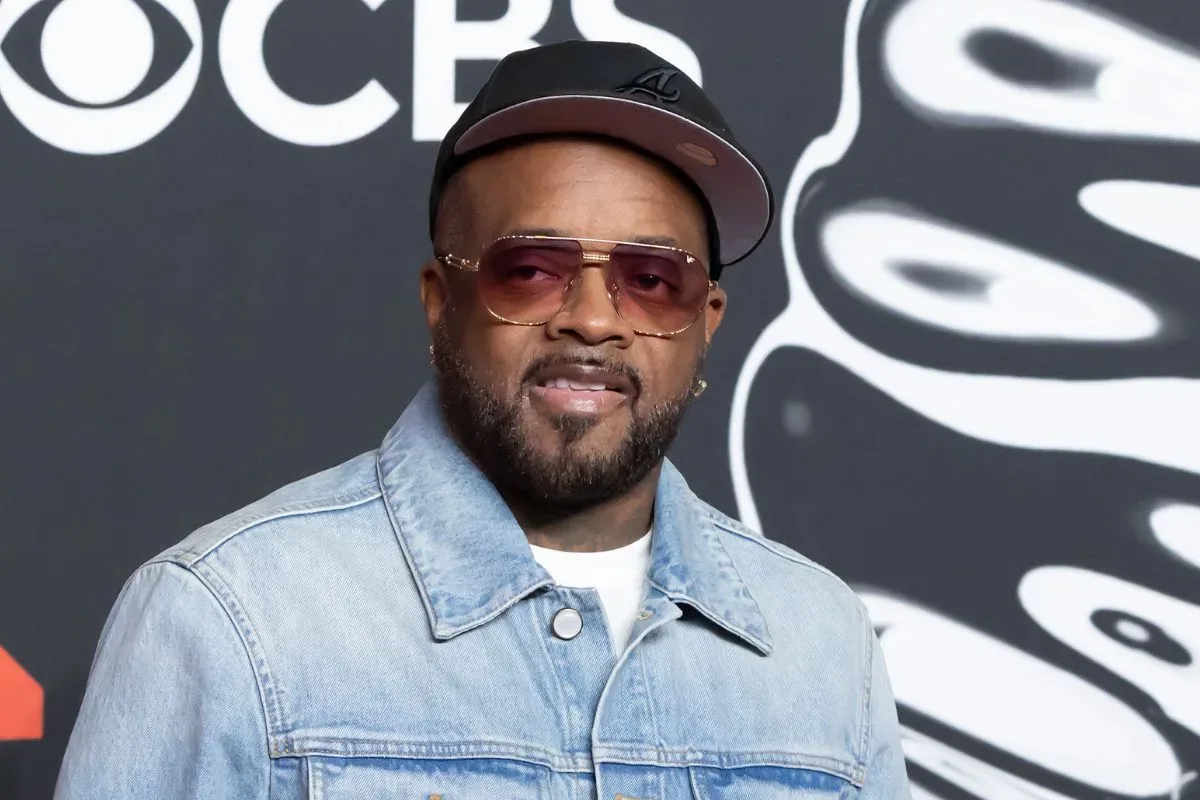
Jermaine Dupri is arguing that permission alone is not enough for artists confronting Spotify’s planned generative-AI remix tool. In an October 31 Instagram post, the producer called for musicians to collectively establish the terms under which fans could use AI to remake songs, including a fee set by the people who made the work and the right to decide which recordings are eligible.
The proposed feature has been described as a paid add-on for Spotify Premium subscribers, intended to let users employ generative AI to rework songs or record covers. Dupri’s position is that the commercial value in that activity should not be determined solely by a platform or its licensing partners. He wants artists and producers involved in setting the price, as well as in choosing whether particular songs can enter the program at all.
“Spotify is scheduled to make $21.85 billion THIS year, so artist we need to come together and create a fee for what we want, and what songs we allow this to happen to,” Dupri wrote, ending with the demand that the company “cut us in” or abandon the plan.
His post centers a key dispute emerging around creative AI: the question is not merely whether an artist technically opts in. It is also who has negotiating power, what compensation applies after that approval, and whether creators have meaningful control over how closely a new version can travel from the original track.
What Spotify has said about the AI remix plan
Spotify has outlined licensing agreements with Universal Music Group, announced in May, and Believe, announced in October. The stated structure for Believe and TuneCore artists includes voluntary participation and royalty payments when listeners stream the versions produced through the tool.
The participation process described so far has two layers. Artists represented through those companies would first agree to consider AI programs, then make a separate decision about Spotify’s specific proposal. That distinction matters: general openness to AI opportunities would not automatically place an artist’s catalog into the remix feature.
Spotify has also said fan-created versions would point listeners back to the original track and artist. In practical terms, that creates a potential discovery loop. A listener encountering a reworked version could be directed toward the source recording, which may generate additional plays for the original release.
But the available details leave important commercial questions unresolved. No royalty split has been specified publicly in the outlined terms, and there is no stated mechanism for an individual artist or producer to set a separate fee for use of a given song. Those gaps are the heart of Dupri’s objection.
Related coverage includes Jermaine Dupri Calls for Artist-Controlled Terms on Spotify AI Remixes.
Consent, credit and compensation are related—but different
Spotify co-CEO Alex Norström framed the Universal arrangement around “consent, credit, and compensation” for participating artists and songwriters. Those are three useful concepts, but they should not be treated as interchangeable.
- Consent means a rights holder has agreed to participate. It addresses whether the work may be used in the program.
- Credit concerns identification and attribution: whether listeners can find the source track and recognize the underlying artist or songwriter.
- Compensation covers payment. It raises further questions about how money is calculated, whom it reaches and whether a payment model reflects the value created by the new feature.
A system can provide one of these while still leaving disagreements over the others. A creator might welcome the exposure of a link to the original track, for example, while believing that the reuse itself requires a clearer direct payment. Likewise, an opt-in model can establish consent without answering Dupri’s separate demand that artists help determine pricing.
The Universal agreement also includes music publishing rights. That is significant because publishing concerns the composition—the underlying songwriting—while a recording right concerns a particular recorded performance. Spotify’s planned covers-and-remixes service therefore reaches beyond recording artists alone and includes songwriters in the licensing framework described to date.
Why a per-song choice could matter
Dupri’s call for artists to choose which songs can be used reflects the fact that a catalog is rarely a single, uniform asset. Creators may regard different works differently. One song may feel especially suitable for fan reinterpretation; another may be tied to a specific vocal performance, production choice or artistic identity that its makers do not want altered through an AI-assisted tool.
That does not mean every creator will make the same decision. The central point is control over the choice. The existing outline of voluntary participation suggests an opt-in path, but Dupri is pressing for terms that explicitly place creators and producers at the bargaining table—especially around compensation and track-level eligibility.
His argument is also broader than streaming royalties. Traditional streaming compensation concerns plays of a released recording. A paid product that enables subscribers to make new versions of that recording introduces another layer of value: access to a system built around familiar songs, their compositions and their cultural recognition. Dupri is asking whether the people whose work anchors that system should share in revenue on terms they help set.
Generative AI and the difference between remixes and covers
Generative AI refers here to technology that can help produce new audio or musical versions from prompts, inputs or reference material. Spotify’s planned use is framed around fan remixes and covers, but those labels describe different creative relationships to an earlier work.
A remix ordinarily reworks aspects of an existing recording or song. A cover is a new performance of an existing composition. In practice, AI-assisted tools can complicate the boundary because they may reshape vocals, arrangement, style or other musical elements in ways that do not fit neatly into familiar categories.
That complexity helps explain why both recording and publishing rights appear in the planned licensing approach. It also explains why a simple promise of attribution may not settle creator concerns. The more a tool allows a fan to substantially transform material, the more consequential the rules become for permission, payment and the presentation of the original artist’s work.
For listeners, the proposed tool could offer a new way to engage with favorite music. For rights holders, however, it creates decisions about how much flexibility to allow and under what economic terms. The creative novelty is inseparable from the licensing structure behind it.
Dupri’s criticism fits a continuing AI-music debate
This is not Dupri’s first public challenge to technology companies entering the music business. In 2024, he criticized AI music generator Udio and questioned why people outside the industry should be able to dictate the rules for those whose work sustains it.
That earlier criticism gives context to his Spotify comments. He is not rejecting the issue as a narrow dispute over one product feature. His concern is about whether musicians, songwriters and producers can collectively retain leverage as tools that build on music become part of major consumer platforms.
The timing also connects to a wider pop-culture question: audiences are increasingly encountering AI as part of a finished entertainment experience rather than as an invisible back-end technology. Recent debate around AI-assisted music has included disclosures about AI being used in specific recordings, such as a reported AI choir on a Kid Rock and Eminem collaboration. Spotify’s proposed remix feature would take the idea further by inviting subscribers into the process of generating new versions.
What remains unknown
The available outline gives some guardrails: participation is voluntary for the Believe and TuneCore artists covered by the stated terms, royalties are contemplated for streams of tool-made versions, and those versions would link listeners to the original music. Yet substantial details have not been disclosed.
- The size and structure of royalty payments for AI-made versions have not been specified.
- It is not clear whether compensation would be divided differently among recording artists, producers, songwriters and other rights holders.
- No artist-set fee model has been described.
- The public information does not detail how creative boundaries for individual songs would be handled beyond the opt-in framework.
- The exact experience subscribers would have when making remixes or covers has not been fully outlined.
Those unknowns make Dupri’s demand less about a finished product than about establishing leverage before its terms are settled. His call is for artists to organize around a shared position: creators should not simply receive whatever payment structure results from platform negotiations; they should participate in defining the structure.
Spotify’s licensing deals show that the company is pursuing an authorized route rather than describing unrestricted use of music. Dupri’s response argues that authorization needs a stronger creator-controlled economic component. As AI remix tools move from concept toward consumer features, the difference between an opt-in checkbox and artist-led dealmaking may become one of the biggest questions surrounding them.