The Weeknd’s stop in Saitama delivered an unusual convergence of pop music, anime imagery and video-game auteur energy: an unnamed new song inspired by Neon Genesis Evangelion, a contribution from “Cruel Angel’s Thesis” singer Yoko Takahashi, and concert visuals directed by Yoko Taro.
That combination is enough to make the performance notable on its own. It becomes more intriguing because Taro has already been associated with an upcoming Evangelion project, and the visual montage reportedly mixes familiar anime material with footage that appears to be new. The images also include Eva Unit-01 facing Nier: Automata protagonists 2B and 9S.
For now, the responsible reading is that these elements are provocative imagery rather than confirmation of a crossover, a game, a soundtrack placement, or any other specific project. Still, the performance puts several creative connections in public view at once—and it gives fans a tangible new artifact to inspect while waiting for firmer details about Taro’s Evangelion work.
What appeared at the Saitama performance
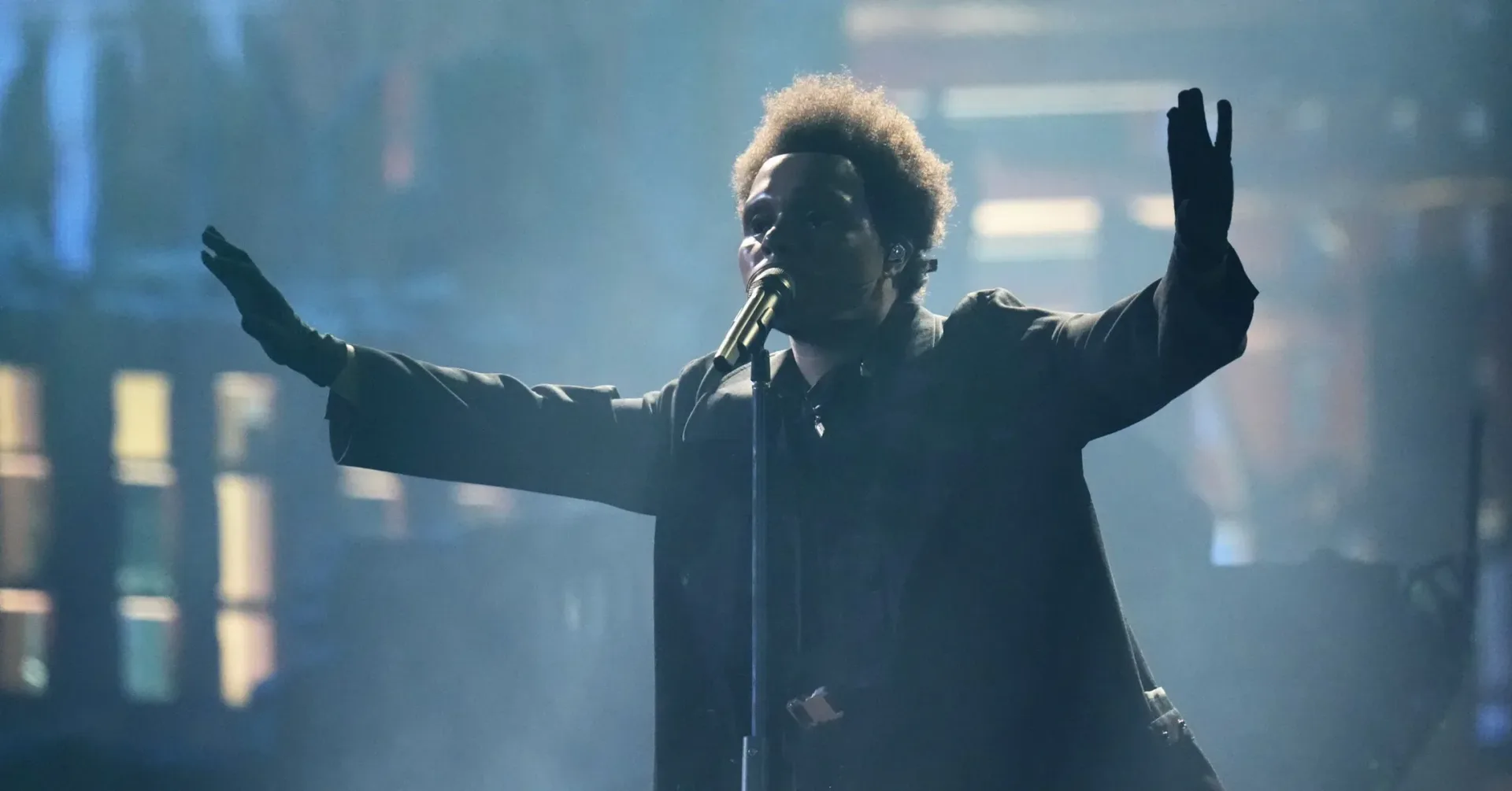
Abel Tesfaye, performing as The Weeknd, debuted the new track on Saturday during his Saitama appearance. The song has not been named in the available information. Its Evangelion connection is not merely implied by the accompanying screen material: it incorporates samples from “Cruel Angel’s Thesis,” the franchise’s famous theme song, and features Yoko Takahashi, the vocalist closely associated with that song.
In music, a sample is an excerpt of an existing recording used within a new composition. That can mean a brief musical phrase, a vocal fragment, or another identifiable part of the earlier sound recording. Here, the use of material from “Cruel Angel’s Thesis,” alongside Takahashi’s involvement, makes the new track an overtly Evangelion-inspired piece rather than a fan inference based only on visual style.
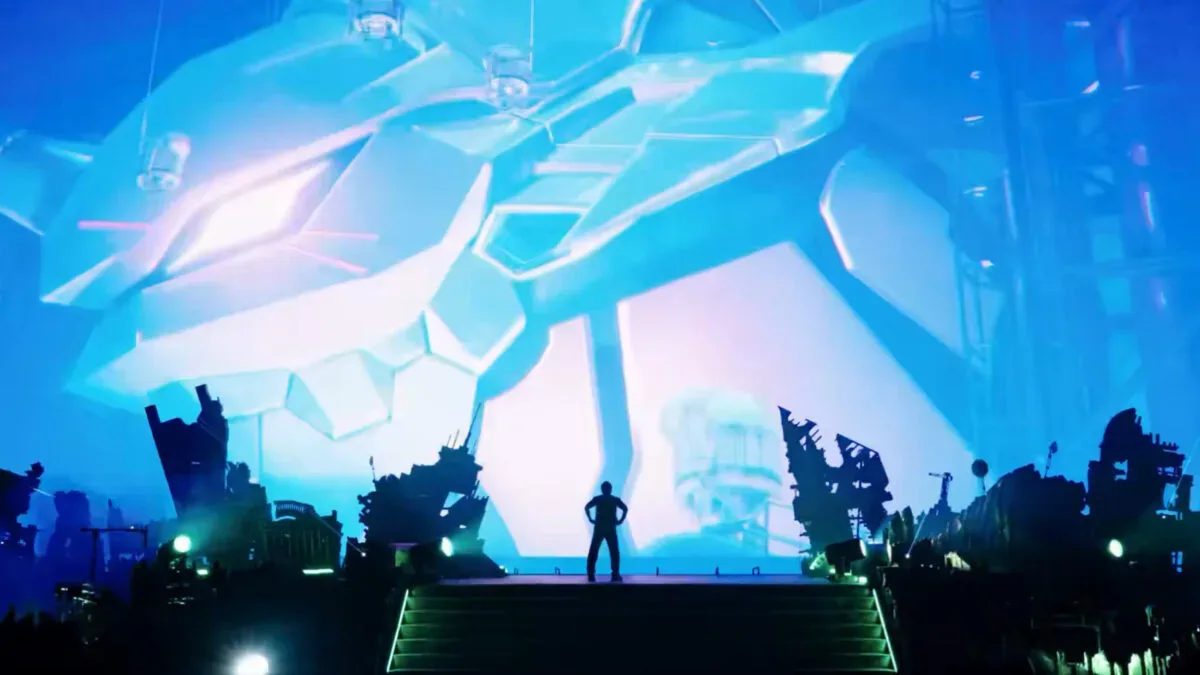
The concert video is equally central to the moment. Taro directed the visuals, which reportedly include existing footage from the anime as well as material that looks original. The distinction matters. Reusing established footage can frame a performance with the series’ iconography and emotional vocabulary; original-looking animation or imagery can potentially be a teaser, a standalone concert-film asset, or something made for another purpose. Without an official explanation of which it is, the footage should be treated as a question mark—not as a definitive preview.
Why Yoko Taro’s involvement attracts scrutiny
Taro is the creator of the Nier games and is connected to an upcoming run on Neon Genesis Evangelion. His participation in a performance built around the anime therefore lands differently from a conventional licensed visual package. It naturally encourages viewers to look for themes, design details, and possible signals about that forthcoming work.
Reports describe poetic text appearing across the concert visuals in a manner similar to an earlier teaser. Repeated language or presentation can suggest an intentional visual identity shared between promotional materials. But it does not, by itself, establish that every image in the concert montage belongs to the future series. Concert visuals often work through association and atmosphere; they are designed to intensify a live song, not necessarily to function as a complete production announcement.
Related coverage includes The Weeknd's Japan Concert Debuts Evangelion-Inspired Song With Yoko Taro-Directed Visuals.
That difference is useful for fans trying to separate what is known from what is being inferred:
- Known: The Weeknd performed a new, unnamed song inspired by Evangelion.
- Known: The track uses “Cruel Angel’s Thesis” samples and includes Yoko Takahashi.
- Known: Yoko Taro directed the visuals shown with the performance.
- Known: The montage includes established anime footage and reportedly some seemingly original material.
- Known: Eva Unit-01, 2B and 9S appear together in at least one still.
- Unconfirmed: Whether the original-looking material is from Taro’s upcoming Evangelion project.
- Unconfirmed: Whether the Unit-01, 2B and 9S image signals a formal crossover.
- Unconfirmed: Whether the new Weeknd track will be used in the future series.
This is not an attempt to drain the weirdness out of the event. The strange overlap is precisely what makes it compelling. It is simply important to recognize that a striking image can be a deliberate conversation-starter without being a product roadmap.
The Eva Unit-01, 2B and 9S image is a tease, not a confirmation
The clearest point of intersection between Taro’s gaming legacy and his newer anime involvement is the reported still showing Eva Unit-01 looking toward 2B and 9S. Unit-01 is one of the instantly recognizable Evangelion units, while 2B and 9S are the central characters of Nier: Automata. Putting them in one image creates an immediate crossover reading because both sides carry enormous visual recognition.
But a shared frame is not the same as a shared project. A crossover normally means characters, settings, stories, or licensed content formally moving between properties. No such arrangement has been confirmed here. The image may be an affectionate collision of works linked by Taro, a visual metaphor, an event-specific nod, or something with a more concrete future purpose. The currently available information does not decide among those possibilities.
That restraint is particularly important in a live-performance setting. Screens at concerts are allowed to be elliptical. A single still can efficiently communicate a creative relationship or a mood in seconds. It does not need to explain itself in the manner of a trailer, a product page, or a formal announcement.
For Nier fans, the practical takeaway is to enjoy the appearance of 2B and 9S without assuming there is a new game, collaboration, or playable content around the corner. For Evangelion fans, the more grounded takeaway is that Taro’s involvement is already producing imagery that puts the franchise in conversation with his best-known game characters.
Could The Weeknd’s music be part of the next Evangelion project?
The performance makes that possibility easy to imagine, but it remains unverified. The strongest evidence is simply the degree of creative overlap: The Weeknd has delivered an Evangelion-focused song, Takahashi appears on it, and Taro directed the accompanying images. That is meaningful coordination. It is not confirmation that the track will appear in a future series.
A song debuting with franchise-focused visuals can be a dedicated live-event work, a standalone release in waiting, a promotional collaboration, or a component of a larger production. The available details do not establish which path this one will take. Nor has a title for the song been provided, which limits what listeners can reliably track beyond clips and performance reports.
There is, however, a broader reason the speculation has traction. Tesfaye has recently been publicly associated with several figures and properties from game culture, including Hidetaka Miyazaki, Goichi Suda, a private demonstration of Persona 6, art from Yoshitaka Amano, and enthusiasm for the upcoming About Fishing. Those interactions show interest and proximity, but they do not collectively prove a hidden gaming or anime initiative. Public fandom, networking and collaboration can look similar from the outside.
Fans should therefore keep the claims on separate tracks. The concert performance is real. Taro’s direction of the visuals is real. The Weeknd’s wider engagement with game creators is real. A future soundtrack placement or a broader partnership is still speculation until it is explicitly identified.
Why this crossover of mediums works so well
There is a practical artistic logic to this collision of music, anime and games. “Cruel Angel’s Thesis” is a powerful cultural shortcut: even when used in a new context, it immediately calls up Evangelion for listeners familiar with the series. Takahashi’s participation strengthens that connection, placing a voice associated with the earlier theme beside a newly debuted song.
Taro’s direction adds another layer. His creative reputation is strongly linked with games, but directing visuals for a live performance is not a side issue here. It makes the screen presentation a meaningful piece of the collaboration rather than decorative background. The montage gives an unnamed track a visible identity and turns the performance into a site for franchise-related imagery, including material audiences may not recognize.
This is also why the original-looking footage has become the key point to watch. Existing clips establish recognition. New imagery creates forward-looking attention. When the two appear together, viewers are encouraged to compare the familiar against the unfamiliar and ask whether the latter belongs to an upcoming story. That is an effective form of teaser language, even if it ultimately proves to have been created solely for the stage.
Anime-and-music collaborations can also carry different meanings for different audiences. A Weeknd listener may encounter Evangelion through the song’s samples and its visual language. An anime fan may discover a new track through Takahashi’s involvement. A game fan may arrive because of Taro and stay for the unexpected Unit-01, 2B and 9S tableau. The event is built from recognizable entry points without requiring all viewers to come in with the same background.
What to watch for next
The next useful information would be straightforward: a name for the song, clarity on whether it will receive a release, and a direct description of the original-looking footage. Details about Taro’s forthcoming Evangelion run would also help establish whether the concert materials are linked to that project or are an adjacent creative collaboration.
Until then, the Saitama debut stands as an unusually rich one-off moment: an unnamed song rooted in a landmark anime theme, a guest appearance by the singer associated with that theme, and visuals led by the creator behind Nier. It is more than enough to prompt careful speculation. It is not enough to settle the questions it raises.
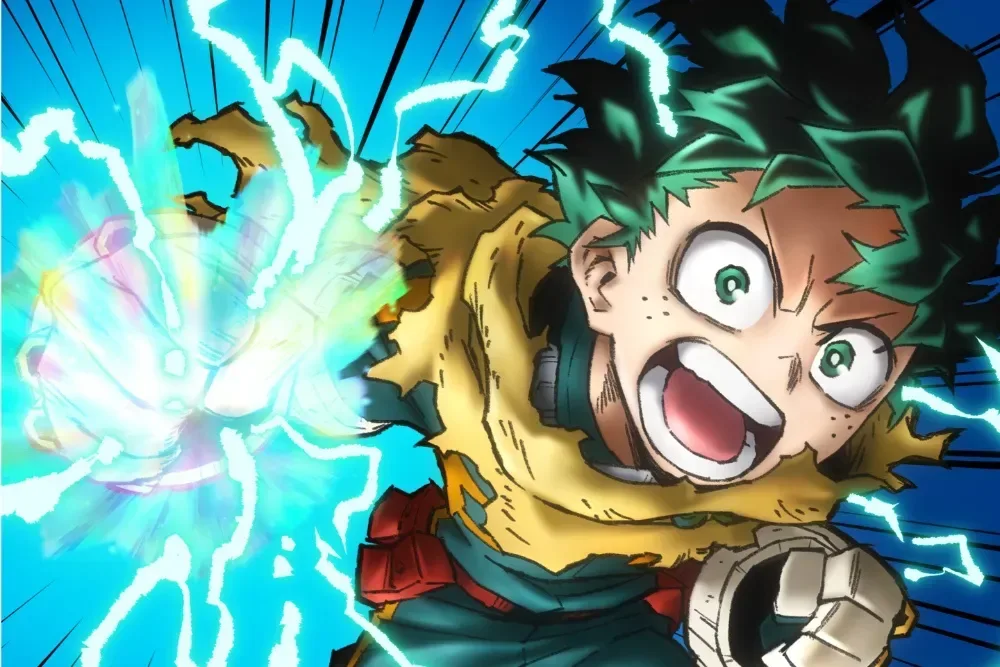
For another example of anime music being revisited through a new collaboration, see this look at the “You Say Run” reimagining for My Hero Academia.