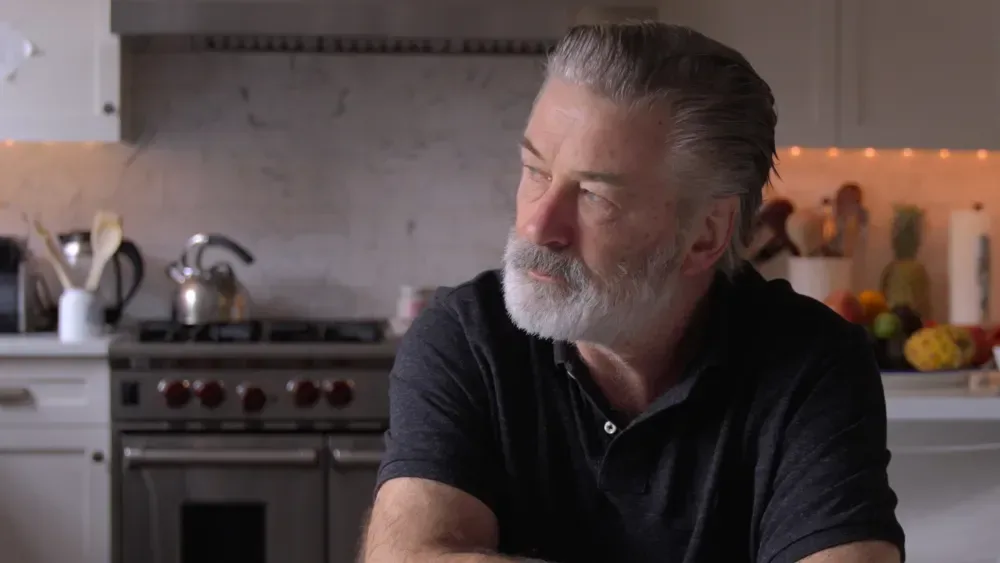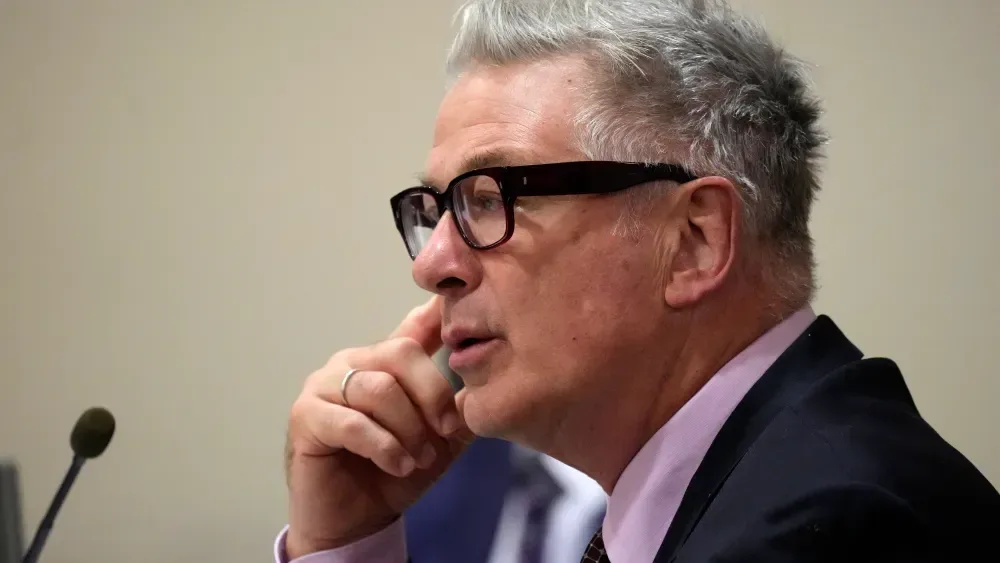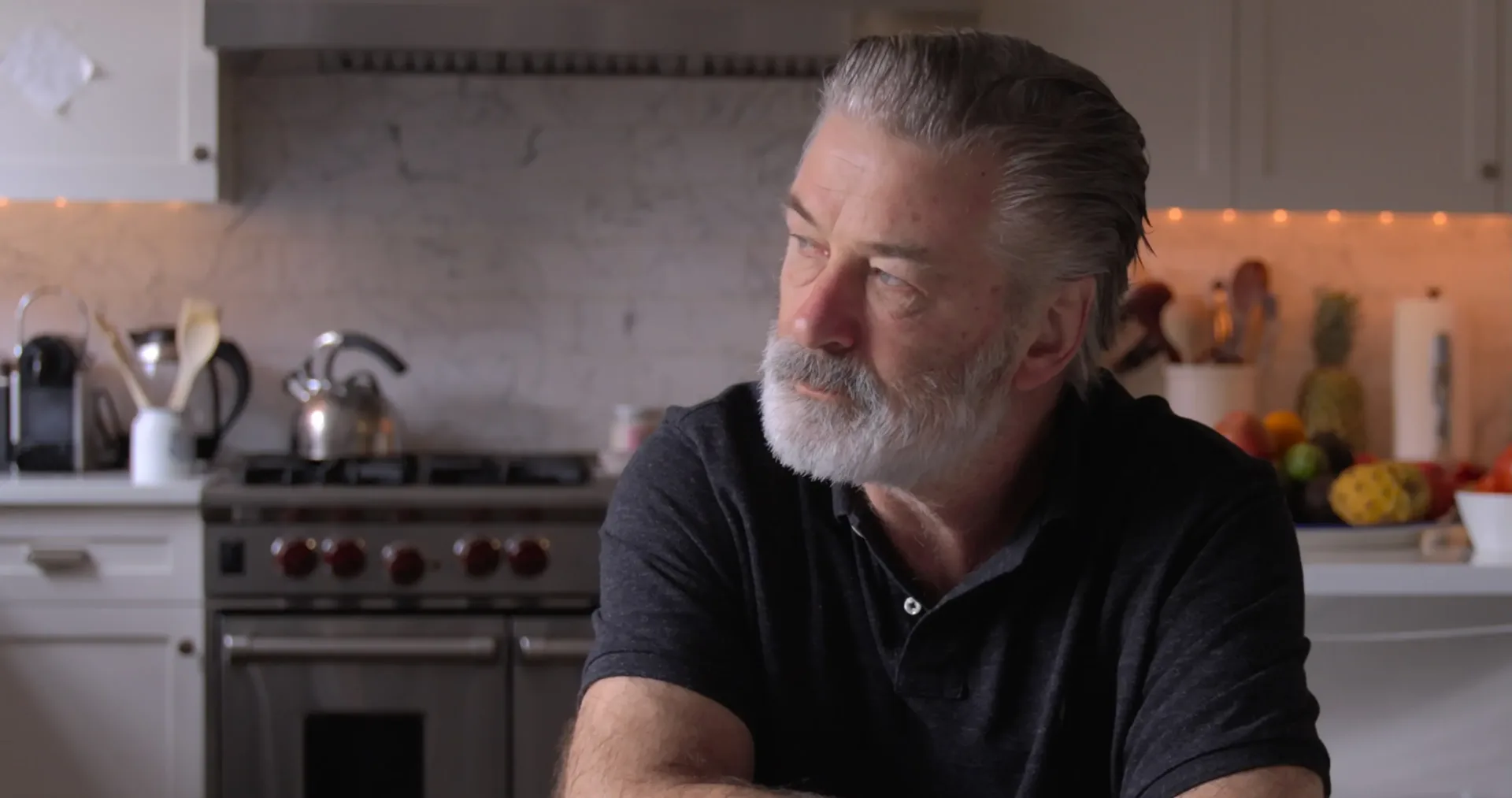
A trailer is now available for The Trial of Alec Baldwin, a documentary from Oscar-nominated filmmaker Rory Kennedy centered on the aftermath of the fatal 2021 shooting on the set of Rust. The film is scheduled to begin its theatrical release across North America on Oct. 16.
The subject is necessarily a grave one. Cinematographer Halyna Hutchins was killed on Oct. 21, 2021, when a prop gun being held by actor Alec Baldwin discharged during work on the Western production. The documentary follows Baldwin through the public, legal and personal turmoil that followed, while placing the tragedy and Hutchins’ death at the center of a story that became inseparable from arguments about responsibility, criminal justice, media attention and celebrity.
Kennedy began filming Baldwin in 2023 after contacting him about the project. Baldwin was initially reluctant, but later agreed to participate and granted the filmmaker broad access during the period surrounding his prosecution and trial. That access distinguishes the film from a straightforward recap assembled entirely from headlines, courtroom footage and retrospective commentary. It promises a view of a public figure navigating an intensely visible legal case, while also addressing the broader circumstances around a fatal workplace incident.
A documentary built around tragedy, scrutiny and a public trial
The trailer frames The Trial of Alec Baldwin as an examination of what happens after the initial shock of a catastrophe gives way to public judgment. In the immediate wake of the shooting, the event was widely understood as an accidental and devastating occurrence for those present. But the case quickly generated larger and more heated questions: Who should be held accountable? What does legal culpability mean in the context of a film set? How should blame be discussed when a high-profile defendant is involved? And can coverage of a case stay focused on its facts when its most famous participant has a long-established public persona?
Those are difficult questions for any documentary to approach, especially when the person who died was Hutchins. The film’s stated framing recognizes the central loss suffered by Hutchins’ family, friends and colleagues, even as it follows the effects of the prosecution on Baldwin and his family. Kennedy has described the project as one in which more than one person can be harmed by a tragedy, without treating those harms as identical. That distinction matters. A film exploring Baldwin’s experience is not the same thing as shifting the focus away from Hutchins; the challenge will be whether the completed documentary can hold both realities with clarity and care.
The case also unfolded in an environment where commentary travels at breakneck speed. Social platforms, television segments, tabloid imagery, paparazzi photographs and opinion-driven posts can turn legal developments into a kind of ongoing spectator event. Baldwin’s fame, political outspokenness and reputation for angry public moments made him an especially polarizing figure. The documentary appears interested in how that profile shaped the response to the case, potentially affecting not only the discussion surrounding him but the way audiences interpreted every new development.
What the timeline tells us
Filming began before Santa Fe County prosecutors dropped two involuntary manslaughter counts against Baldwin. Kennedy’s cameras continued to follow him as the case moved forward, including when he went to trial in July 2024. That period is the documentary’s key dramatic spine: not simply the occurrence of a criminal proceeding, but the experience of living through it while the public conversation outside the courtroom remains active and frequently hostile.
A documentary covering an ongoing or recently concluded legal saga has to contend with competing narratives. Courtroom cases move through filings, rulings, hearings and testimony, while public discussion often reduces them to a handful of viral moments. The trailer suggests Kennedy is looking beyond that reduction. Rather than presenting the story solely as a celebrity scandal or a procedural chronology, the film appears positioned to examine the strain produced when a person’s private life, professional career, legal jeopardy and public identity all collide.
That approach could make the film relevant beyond one individual or one production. Film and television crews work in high-pressure environments requiring detailed safety procedures and trust across departments. When something goes catastrophically wrong, the consequences extend far beyond the people whose names dominate headlines. A responsible documentary must acknowledge the human cost while remaining precise about what is known, what was argued in legal settings and what remains a matter of interpretation. The trailer’s emphasis on the changing public reaction indicates that accuracy, perception and celebrity may be among the work’s principal tensions.
Rory Kennedy’s access and the question of perspective
Full access to a subject can be an enormous asset for a nonfiction filmmaker. It can provide scenes that are unavailable to reporters or viewers: family conversations, unguarded moments before court appearances, preparations for public events and the exhausting downtime between major developments. It can also raise a basic audience question: how does a director preserve an independent viewpoint while working closely with a subject who has allowed cameras into his life?
That is not a question unique to The Trial of Alec Baldwin; it is fundamental to intimate documentary storytelling. Access does not automatically make a film sympathetic or unsympathetic. Its value depends on how it is used, what context is supplied and whether the documentary makes room for the full weight of the underlying event. Kennedy’s stated concern for Hutchins and her family, alongside her desire to explore a broader spectrum of people affected by the tragedy, signals the balancing act the film intends to undertake.
It is also worth separating the documentary’s subject from a simplified demand for a villain or a hero. Public cases often invite audiences to select a side before all the details have been weighed. But a film can be most useful when it resists the impulse to turn a complex, devastating event into a familiar morality play. Hutchins’ death cannot be abstracted into a plot device, and Baldwin’s celebrity should not substitute for examination of the legal and human issues involved. A documentary that gives viewers space to sit with discomfort rather than delivering easy catharsis may be better suited to the material.
The people behind the production
Kennedy produces The Trial of Alec Baldwin alongside Mark Bailey and Julia Marchesi. Its executive producers are Jared Underwood, Andrew C. Robinson, Colin Marshall, Todd Thompson, Rita Powers, Tanner Cusumano, Rob Guillermo, Ray Maiello, Louis Krubich, Dan Fried, Randy Jones Toll and Steven Toll.
With the trailer now released and an Oct. 16 theatrical start set for North America, audiences have a clearer indication of the documentary’s intended scope: it is not limited to a courtroom account, nor is it presented simply as a portrait of an actor. Instead, it follows the fallout from a fatal on-set shooting through the perspective of a defendant whose public image became part of the story itself.
For readers tracking film and television projects with a more conventional fictional focus, see our coverage of the YA rowing drama Crew Girl. Kennedy’s documentary occupies a far different space: a nonfiction work shaped by loss, legal process and the difficult task of examining how public narratives are formed after tragedy.
Whether The Trial of Alec Baldwin successfully reconciles its access-driven portrait of Baldwin with its obligation to address Hutchins’ death will be central to how viewers receive it. The trailer makes clear that the film is entering that conversation knowingly, with its eyes on the gap between an event’s facts and the often volatile machinery of fame, outrage and judgment that can grow around them.