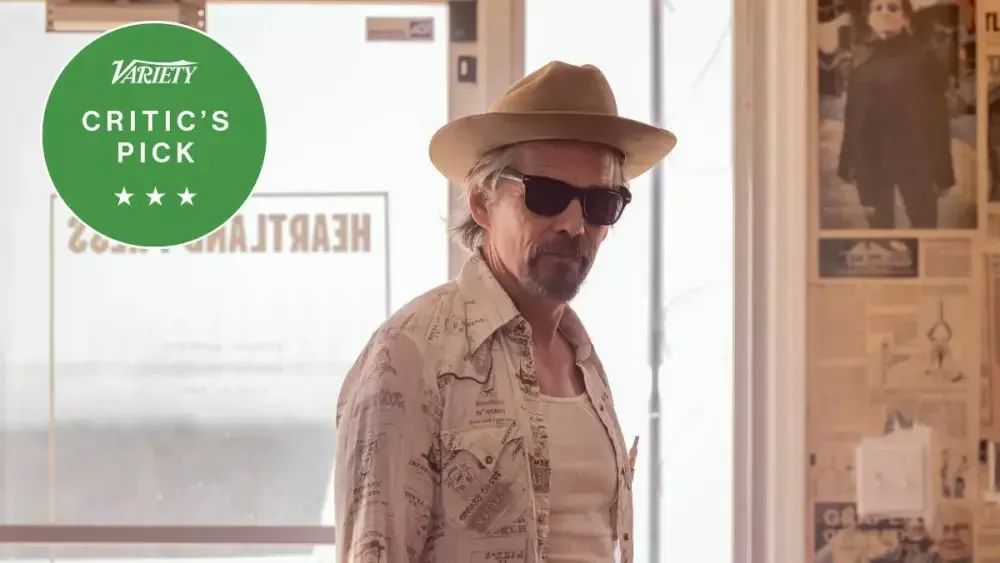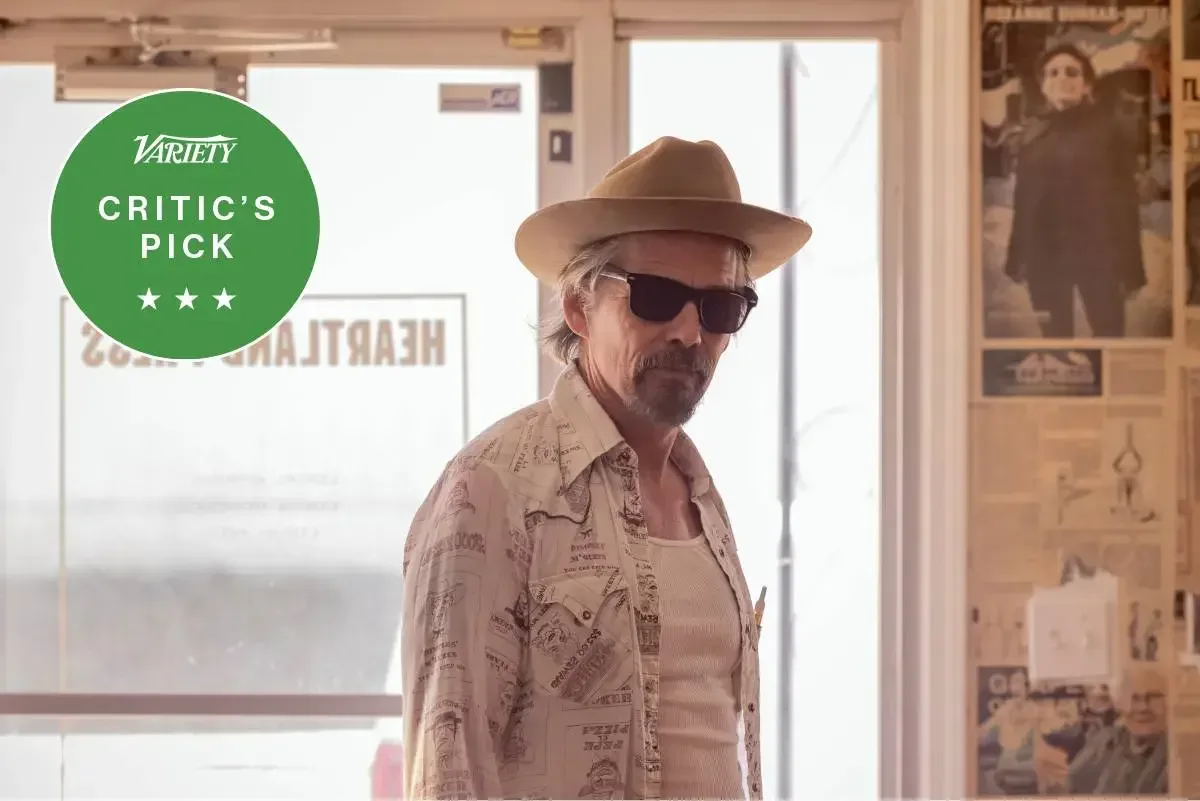
The Lowdown is returning to its familiar, wonderfully unstable formula: a man who cannot stop talking, cannot stop digging and probably should not be allowed near a potential conspiracy without supervision. Season 2 of Sterlin Harjo’s Tulsa-set drama gives Ethan Hawke’s self-styled “truthstorian,” Lee Raybon, a fresh case after the fallout of his previous investigation. It also gives him something arguably more dangerous than a lead: a new person to impress.
The first two episodes premiere on FX and Hulu on Oct. 14 at 9 p.m. ET. Remaining episodes are scheduled to air weekly on Wednesdays. Hawke again stars and executive produces, with Keith David returning alongside new central additions Betty Gilpin and Tommy Lee Jones.
For viewers who appreciated the first season’s mix of local color, frayed personal relationships and low-key investigative momentum, the key takeaway is simple: Season 2 does not appear to discard the show’s identity in pursuit of a bigger, louder mystery. Instead, it treats Lee Raybon’s world as a serial paperback series might: the lead investigator remains constant, while a different case brings in a new set of suspects, vulnerable people, oddballs and institutions with reasons to keep their business private.
Lee Raybon starts Season 2 with recognition — and no new restraint
A few months have passed since Lee published his piece on Dale Washberg, the deceased black sheep of a powerful local family. Dale, played in Season 1 by Tim Blake Nelson, was not turned into the subject of a simple scorched-earth exposé. Lee’s reporting became a more reflective tribute, shaped by his realization that publicizing private damage can satisfy the reporter’s ego as much as it serves the public.
That distinction matters for the new season. Lee has received some affirmation for the work, including a local journalism award. Yet even an evening designed to celebrate him becomes an opportunity for Lee to deliver a drunken rant to a captive gala crowd. It is an efficiently revealing setup: the character wants his work to matter, but he also wants the room to recognize that it matters. Those desires are not identical, and the gap between them is where much of the show’s humor and friction lives.
“Truthstorian” is not a standard journalism title. In Lee’s case, the term conveys both his commitment to finding buried stories and his tendency to turn every revelation into something grandly personal. He runs a used bookstore while taking freelance reporting assignments, a combination that fits the program’s paperback-noir sensibility. The world of old books, rumors, local grudges and unofficial archives is not decoration; it is the practical ecosystem in which Lee operates.
Season 2 introduces Ginger, a public defender played by Betty Gilpin. Lee encounters her at the awards gala, and he is immediately drawn into her problem. Ginger believes she is being followed, and the person she most needs to locate is Mekko Dean, a former client who is Native and incarcerated. She cannot reach him in lockup. When Lee goes to the prison and someone who is plainly not Mekko appears for the visit, the situation stops looking like a routine communication failure.
Ginger’s word for the apparent substitution is “rupidoop,” a deliberately silly label for a deeply concerning possibility. It also suits a show that can move from institutional misconduct to a bizarre turn of phrase without losing its balance.
Betty Gilpin’s Ginger changes the shape of the investigation
Ginger is positioned as a loose noir-style femme fatale, but the label needs an explanation. In classic noir, a femme fatale is often a mysterious woman whose presence pulls a protagonist into danger, desire or moral compromise. The Lowdown plays with that outline rather than presenting Ginger as a remote, calculating seductress. She is anxious, extremely verbal, compassionate and acutely alert to people’s weaknesses. Lee is attracted to her, but the series makes her much more than an object of his fascination.
In fact, Ginger recognizes Lee’s main operating tactic with unusual precision. She describes him as somebody who overwhelms others with words until they yield. It is a funny observation, but it also clarifies Hawke’s performance and the character’s investigative method. Lee does not glide through a room with the polished confidence of a traditional fictional detective. He barrels through it. His urgency can disarm people, exhaust them, annoy them or persuade them to give away more than they intended.
Ginger has comparable empathy and verbal velocity, making her a credible partner rather than merely the person who hands Lee a case. Her connection to Mekko establishes an immediate human stake in the mystery. A missing person inside a prison system is not an abstract puzzle, particularly when concerns include potential surveillance and an apparent swap at a scheduled visit.
The trail eventually leads Lee and Ginger toward corrupt police and a questionable diversion program. A diversion program generally refers to an alternative path intended to steer someone away from standard criminal processing, often through supervision, services or other requirements. The term alone does not establish wrongdoing. In this story, the program is described as shady, signaling that its stated purpose and actual function may not align. That makes it a fitting object of Lee’s attention: a system with bureaucratic language, vulnerable people caught within it and powerful figures who may prefer not to be examined.
Tommy Lee Jones brings Lee’s father back from the dead — figuratively
The season’s other major complication is Lee Sr., played by Tommy Lee Jones. Lee’s father is an itinerant con man whose relationship to deception is the direct inverse of Lee’s obsessive relationship to truth. Their arrival in the same story does more than create an obvious father-son clash. It puts Lee’s own habits into context.
Lee has been trying to be a reliable father to his teenage daughter, Francis, played by Ryan Kiera Armstrong. He does not always succeed. Season 2 makes clear that he is attempting to improve on what he experienced growing up, while still carrying enough unresolved resentment to bend the principles he says he believes in.
Francis quickly identifies the contradiction. Lee raised her believing that her grandfather was dead. His defense — that Lee Sr. was “dead to me” — cannot survive the basic factual problem. It is a personal lie in the life of a protagonist whose public mission is truth-telling.
This is a stronger conflict than a simple revelation that Lee has an unpleasant parent. It challenges the hero’s self-image. Lee can criticize institutions for concealing inconvenient realities, but he has also concealed a fundamental family reality from his own daughter. That does not make him interchangeable with the people he investigates. It does make him more complicated, and it gives Francis grounds to question him without the show needing to flatten either character into a moral lesson.
Francis remains important because the relationship with her was the emotional foundation of the first season. The new mystery expands the show outward; the father storyline pushes inward. Together, those threads suggest a season interested in the costs of truth, not merely the excitement of finding it.
Tulsa is more than an investigation backdrop
Lee’s current case moves through 4H fairs, horseback rides, prison visits, legal offices and other corners of Oklahoma life. The setting is treated as populated terrain rather than a generic “small city” stage. People who cross Lee’s path have their own agendas, jobs, anxieties and peculiarities.
Some encounters lean comic, including a prison guard who pressures Lee to try his cheeseburgers, with the show emphasizing that the offer is exactly as literal as it sounds. Others carry a darker weight, such as the single mother Mekko has left behind. The season also introduces a fellow journalist who consciously favors uplifting local coverage over Lee’s brand of muckraking.
Muckraking is aggressive investigative reporting aimed at exposing corruption or wrongdoing. It can be essential public-interest work, but the show gives space to an uncomfortable point: revelations can have collateral effects, and not every journalist sees confrontation as their day’s most valuable service. The other reporter’s preference for a hog-contest story may be comic, yet it is also a challenge to Lee’s certainty that every assignment must become a crusade.
That tension appears central to the series’ appeal. The Lowdown is not described as a whodunit that stands or falls solely on a last-episode explanation. A whodunit is a mystery format primarily organized around identifying who committed a crime. Here, the question of Mekko’s fate emerges gradually, but the experience is built around character interactions and the specific atmosphere of the places Lee visits.
Hawke’s performance keeps that slower, more observational approach from becoming too comfortable. Lee is restless and high-strung, a man whose intensity can turn a quiet errand into an event. His familiar outfit — short-sleeved shirts, sunglasses and a Stetson — works like a private-detective uniform adapted for a civilian reporter who might be as likely to sell a book as chase a lead.
Returning players make the world feel lived in
Season 2 is not structured as a complete reset. Keith David’s Marty has moved from working as a private investigator for Dale Washberg’s brother to serving as managing editor for The Heartland Press, where Lee occasionally works. That shift gives Marty a new position in Lee’s professional orbit while preserving the sense that characters’ lives continue after a previous case ends.
Kyle MacLachlan also returns as Donald, Marty’s former employer and now the governor, for a midseason appearance. Rafael Casal, who plays Francis’ stepfather, is among the season’s directors alongside Scott Teems. Sterlin Harjo created the series.
The continuity is useful because Lee’s investigations need a community around them. A lone-wolf detective can wander into a new town each week with no history, but Lee’s stories gain texture from the fact that people know him, remember his prior reporting and have opinions about his reliability. His occasional work at a local paper, his bookstore and his family connections tie him to Tulsa even when he is tempted to behave like an outlaw investigator.
That mix of civic attachment and personal messiness is what keeps the premise from being merely a genre exercise. The case may involve institutional wrongdoing, but the season also has room for an editor, a governor, a daughter, an estranged father, a public defender and a series of people who make the town feel too complicated to reduce to a clue board.
What to expect from the release
The Oct. 14 debut delivers two episodes, establishing both the Mekko Dean investigation and the new pressure points in Lee’s personal life. Subsequent installments arrive weekly on Wednesdays. The central cast named for the season includes Ethan Hawke, Keith David, Betty Gilpin and Tommy Lee Jones.
For a separate piece of actor-and-premiere oddity from the wider pop-culture circuit, see how Henry Cavill had to prove he was himself before inviting Geralt voice actor Doug Cockle to a Witcher premiere.
The practical viewing expectation for Season 2 is not a rapid-fire puzzle box. It is a character-driven mystery with a deliberate pace, a new investigative partner for Lee, an unresolved prison-related disappearance and a family secret that tests whether its hero practices the honesty he demands from everyone else. In Lee Raybon’s hands, even a truth can arrive looking suspiciously like trouble.