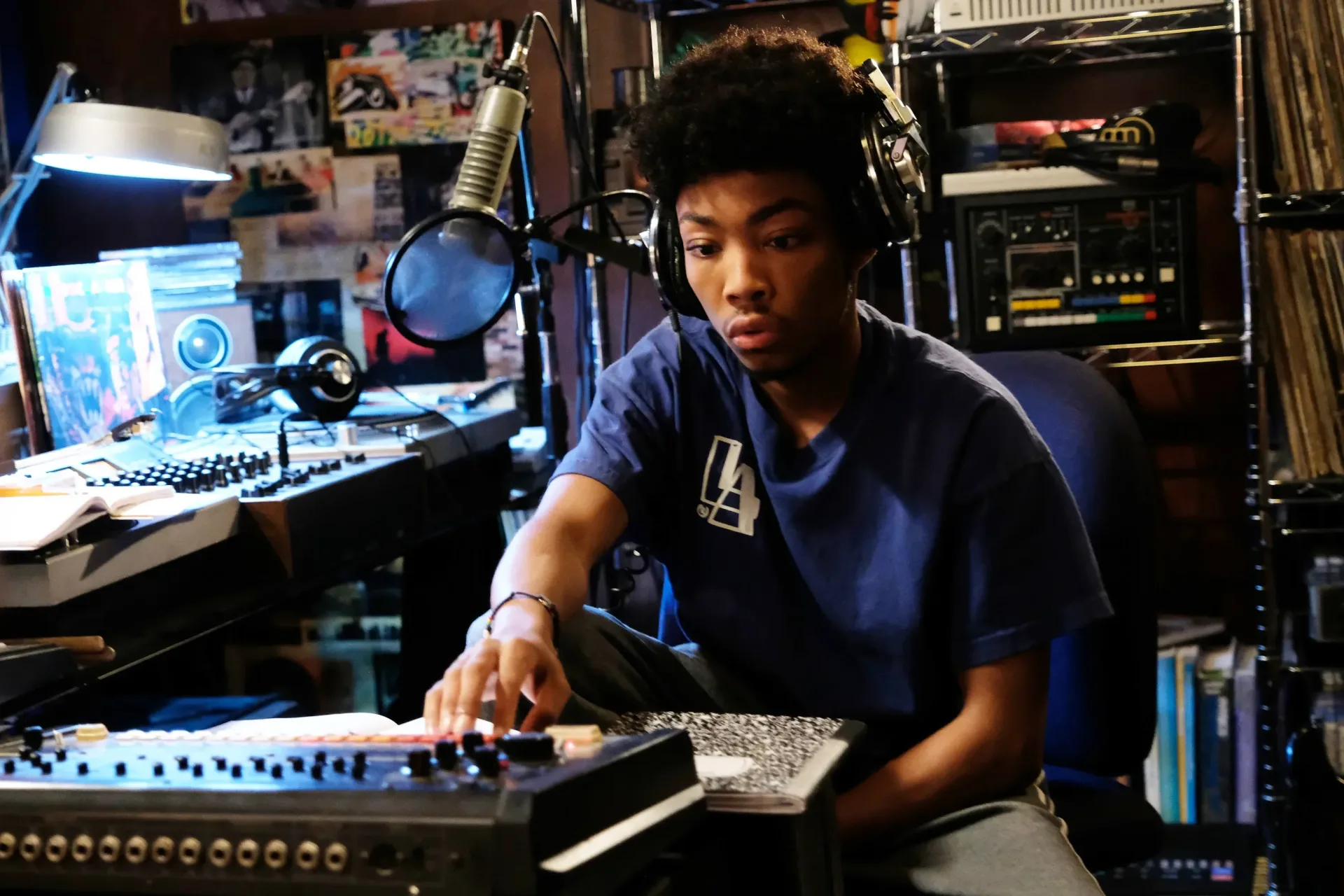
FX’s ensemble comedy Adults is having a notably bigger second season, with Disney reporting a 40% rise in viewing compared with Season 1. The comparison covers global viewing across Hulu and Disney+ during each season’s first 12 days, rather than a narrowly defined U.S.-only streaming total.
The most striking part of the reported increase is where it happened. International viewership was up 100%, meaning the show’s audience outside the United States doubled relative to Season 1’s comparable window. Disney did not release raw audience figures, watch hours, account totals, or a country-by-country breakdown, so the 40% and 100% changes are the central measurements available. Still, those percentages point to a comedy that has widened its reach considerably in its sophomore run.
For a series built around a specific setting and a close-knit group of friends, that overseas growth is especially meaningful. Adults follows five twenty-somethings sharing space in New York and trying to handle the overlapping chaos of relationships, jobs, family, and friendship. Its premise is deliberately intimate: no dragons, no capes, no intergalactic tax tribunal. Just the considerably more frightening prospect of being young, underprepared, and living in the house where one of your friends grew up.
What Disney’s reported numbers do—and do not—say
Disney’s comparison puts Season 2 ahead of Season 1 by 40% after 12 days of worldwide viewing on Hulu and Disney+. That is a useful early indicator of momentum, but it is not the same thing as a complete performance report. No exact count was provided, and there is no accompanying information on completion rates, episode-by-episode viewing, audience retention, or the split between the two streaming platforms.
Those missing details matter because percentage gains can describe very different underlying totals. They do not diminish the reported improvement; they simply set the boundaries of what can be concluded. What is clear is that the company sees a meaningful upward movement in the second season, driven substantially by viewers outside the U.S.
The 100% international increase also makes the global component impossible to treat as a footnote. A doubling in overseas viewing suggests that the series is reaching audiences beyond its original domestic base more effectively than it did in its first season. Since no territory-level results were shared, it remains unknown which markets were responsible for the largest gains or whether that growth was distributed broadly across the international rollout.
In a streaming environment where a show’s appeal can travel faster than its furniture budget, a New York comedy does not have to become less local to find a wider audience. The room-mate pressure cooker, work anxiety, romantic misfires, and friendship negotiations at the center of Adults are all familiar ingredients—even when the address happens to be Samir’s childhood home.
Season 1 also received a fresh lift
The newer season is not the only part of Adults seeing increased attention. Disney said Season 1 streaming viewership has risen 50% since the July 31 release of Marathon Day, a standalone prequel episode that arrived one month before Season 2.
That detail suggests Marathon Day gave both returning viewers and prospective newcomers another doorway into the show before the second season arrived. A prequel positioned outside the main season can function as a compact refresher for people who remember the characters but not every prior mishap, while also offering a lower-commitment entry point for curious viewers. The reported 50% rise for Season 1 does not establish exactly how audiences used the episode, but the timing ties renewed interest in the first season to the prequel’s release.
It is a tidy bit of streaming strategy: invite people in with a standalone chapter, then leave the earlier season and new episodes close at hand. Whether anyone actually calls it strategy or merely a well-timed opportunity to hang out with these characters again, the reported viewing lift shows that the catalog side of the series benefited too.
That renewed Season 1 attention is important alongside the initial 12-day results for Season 2. It means the show’s current moment is not solely about viewers jumping directly into new episodes. It also includes people circling back to the beginning, which can help a character-based comedy build a more stable audience over time. The show is not just trying to win the group chat for one weekend; it is giving people a reason to reopen the chat history.
A sharper critical reception for the second season
The audience growth arrives alongside a significant change in the show’s Rotten Tomatoes standing. Season 1 was listed at 77%, while Season 2 reached 100%. Those scores reflect the aggregation site’s critical classification, not a universal measurement of every viewer’s response, but the jump is nonetheless a conspicuous marker of stronger critical consensus around the newer episodes.
The improvement also aligns with the common arc of an ensemble comedy finding its rhythm after its first stretch. A show centered on five friends needs the cast dynamics to feel lived-in rather than diagrammed. The premise can introduce the personalities, but the appeal rests on whether their shared scenes begin to feel like an actual social ecosystem: people who know which button to press, which old argument to restart, and which disaster is too ridiculous to be solved alone.
That chemistry is central to Adults. The series follows Samir, played by Malik Elassal; Billie, played by Lucy Freyer; Paul Baker, played by Jack Innanen; Issa, played by Amita Rao; and Anton, played by Owen Thiele. The five friends are all living together in Samir’s childhood home, giving the series a built-in collision zone for private problems, public problems, and the special category of problem created when several people share a kitchen.
The show’s New York setting places love, work, friendship, and family in constant conversation with one another. At this life stage, those areas rarely stay in their assigned lanes. An employment issue can become a roommate issue; a romantic issue can become a whole-apartment issue; a family issue can arrive precisely when everyone was planning to pretend they had their lives together. The premise gives Adults an ensemble structure in which every personal storyline can quickly become communal business.
The people behind the apartment chaos
Adults was co-created by Ben Kronengold and Rebecca Shaw, who also serve as executive producers. They are joined in the executive producer group by Nick Kroll, Sarah Naftalis, Jonathan Krisel, Alicia Van Couvering, and Rob Rosell. FX Productions is the studio behind the series.
Kronengold and Shaw’s comedy background is part of the show’s creative identity, but the series ultimately has to earn its audience episode by episode through the work of its cast and the believability of its central friend group. The Season 2 data indicates that the show is presently doing more of that work in more homes around the world, with international audiences supplying a major portion of the change.
It is also a useful reminder that television success is not always a single dramatic spike with a neat explanation attached. Here, several related signals are moving in the same direction: Season 2 is up 40% in its global 12-day comparison, international viewing is up 100%, and Season 1 has climbed 50% since the release of Marathon Day. The critical score has risen from 77% for the first season to 100% for the second.
None of those figures tells the complete story alone, especially with no exact totals disclosed. Together, however, they describe a series with more attention around it than it had during its first season—and with that attention arriving from both new-season viewing and renewed interest in what came before.
New York remains a reliable arena for stories about ambitious, messy people trying to figure out adulthood one rent payment, career wobble, and overly honest apartment conversation at a time. For more pop-culture conversation rooted in the city, see how the Goneies turned podcast banter into a New York awards show. In the case of Adults, the current numbers suggest that its particular five-person version of that chaos is connecting more widely in Season 2.