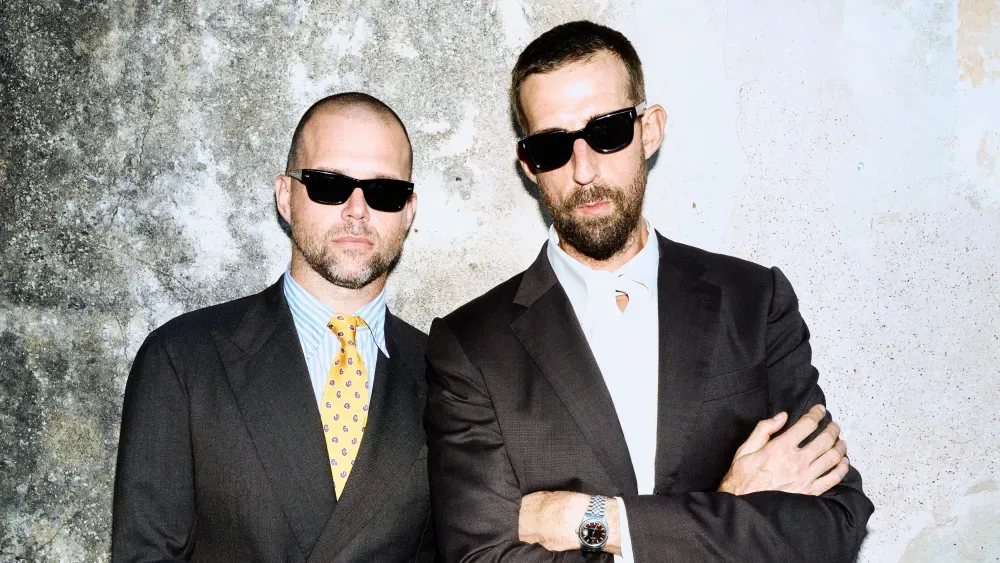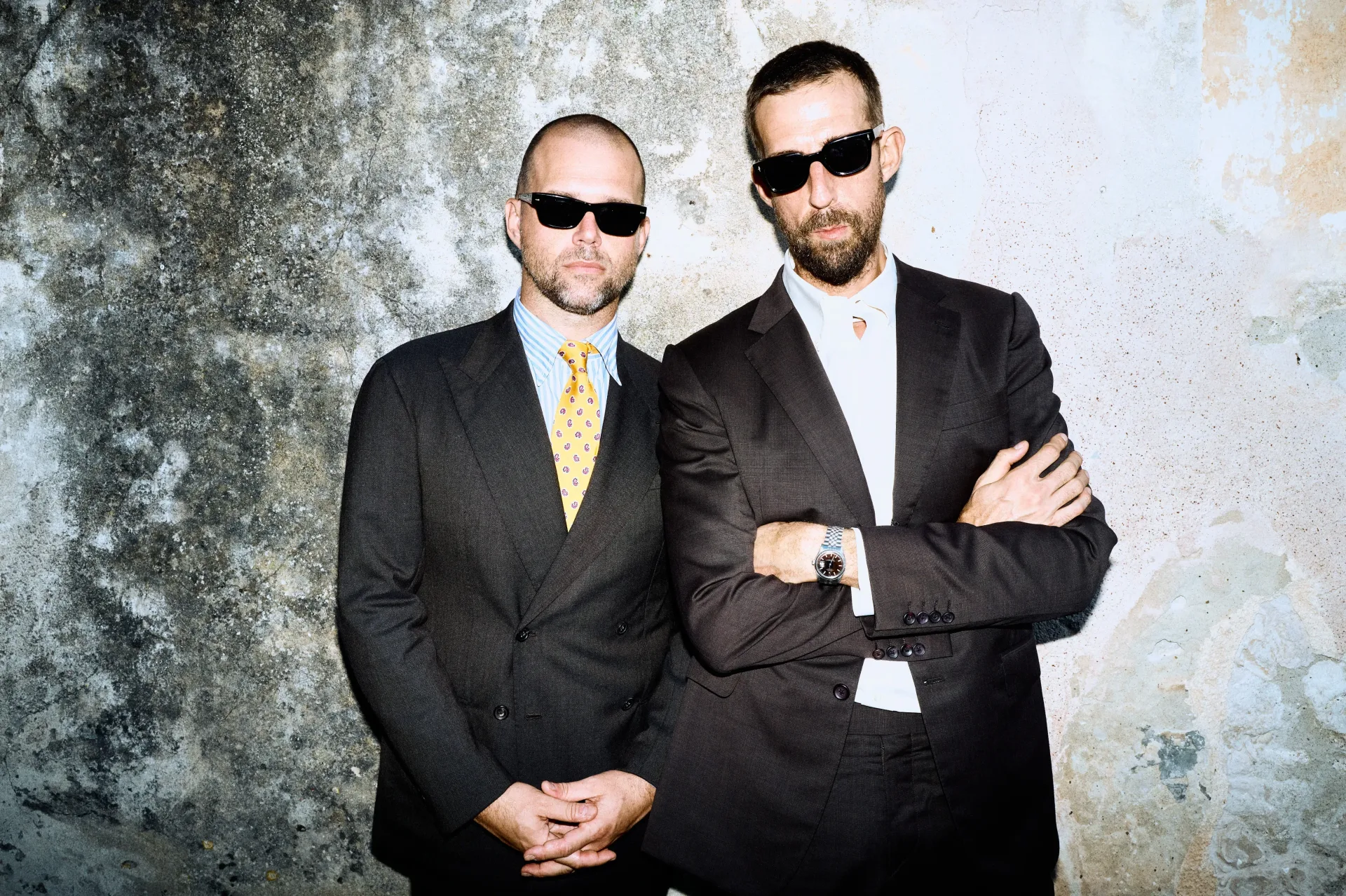
There is no shortage of awards ceremonies, but the inaugural Goneies is betting that a deliberately strange one can still feel like an occasion. The live event from pop-culture podcast How Long Gone is scheduled for Tuesday at Racket NYC in Manhattan, with hosts Chris Black and Jason Stewart transforming the sort of bit that normally evaporates after a podcast episode into an actual night of trophies, nominees, music and friendly public ridicule.
That jump from audio chatter to a venue-stage production is precisely the point. Black and Stewart have built their audience through sharp, conversational cultural commentary, red-carpet work and international podcast touring. The Goneies represents their largest live undertaking so far, and it embraces the qualities that conventional awards shows often try to sand down: aggressively specific categories, a small voting body, unclear standards and a trophy expressly designed to be used as a drinking vessel.
The event is arriving during a major television-awards week, but it occupies a different lane entirely. Rather than claim institutional grandeur, the Goneies appears built around the pleasure of recognizing the people, albums, places and internet-adjacent cultural moments that circulate in the duo’s particular orbit. Its comic framing is not accidental. The show began as a hypothetical riff and then accumulated enough momentum to become a real date on the calendar.
A joke that became a production
Stewart and Black began discussing the idea after talking about the Las Culturistas Culture Awards, the annual show associated with Bowen Yang and Matt Rogers. Their question was simple: what would an awards show look like if it were calibrated to their own sensibility? The answers started arriving as fake categories, including Best Normal Restaurant, before the imaginary ceremony became much harder to dismiss as imaginary.
Ian Wheeler, co-founder of podcast distribution hub Talkhouse, supplied the name: the Goneies, including its intentionally absurd spelling. Wheeler has encouraged the hosts to bring their on-mic ideas into physical spaces, helping turn a recurring premise into an event with sponsors, performers and ticket holders. The spirit of escalation remains intact, though. The group has also joked about a future UFC-style card in which podcasters fight one another, an idea that is probably best kept as an idea for the benefit of everyone’s dental coverage.
The Goneies is also an example of a podcast using an in-person event to deepen its community. Half of the room is expected to be people connected to the show, with the remaining half made up of ticket buyers. Sponsors include Threads, Meta’s social platform, and amplifier company Marshall. Those partnerships suggest that the event’s slightly niche cultural vocabulary is not preventing it from finding commercial support.
That blend of audience intimacy and professional infrastructure is increasingly important for personality-led media. A podcast listener is not simply a passive download number; they may be someone prepared to show up in a room, see a performer, buy a ticket and join a ritual that only makes full sense if they know the recurring jokes. The Goneies turns that relationship into a visible gathering rather than leaving it as an invisible metrics dashboard.
The trophy is meant for beverages, not bathroom shelves
Every award show needs an object to hold aloft, and Black and Stewart gave their own award one non-negotiable design instruction: a winner must be able to drink from it. In other words, the Goneie is closer in spirit to a communal championship cup than a polished statuette destined to collect dust beside a sink.
The finished trophy reportedly came out larger than anticipated. Wheeler shared an image of it next to honors on his own shelf, including a Peabody, and the Goneie apparently dwarfed them. That disproportion is fitting for an event whose humor rests in treating something intentionally low-stakes with lavish seriousness. Its physical excess makes the concept clearer: the trophy may matter less than a traditional institution’s prize, but it can occupy considerably more space.
There is a sly critique in that design choice. Prestige awards frequently present permanence as their ultimate virtue—an object to display, a credential to preserve. The Goneies instead foregrounds temporary, messy use. A recipient can drink from the thing. The award is less a monument than an invitation to make a memory, ideally before somebody puts it in the dishwasher and discovers that glory is not always top-rack safe.
Music, nominees and deliberately questionable rules
The ceremony’s musical component is substantial. Grammy-winning producer Brad Cook will lead the house band, while Blondshell, Kevin Morby and J. Mascis are among the announced live performers. That lineup gives the show a reason to appeal beyond committed listeners of the podcast. Someone with no interest in the hosts’ provocations could still turn up for an unusually concentrated indie-rock bill.
Some of the nominees have been disclosed, while the full category list remains under wraps. The It Girl of the Year field includes Rachel Sennott, Audrey Hobert, Ch’lita Collins, Veronika Slowikowska, Mary Beth Barone, Ivy Wolk and Jake Shane. The list itself captures the Goneies’ lack of interest in neat category boundaries: the label is cultural shorthand, not a bureaucratic designation.
Album of the Year is similarly broad. Drake and Charli xcx are in the running alongside Kevin Morby and Kurt Vile, putting major pop names and durable indie favorites in a single deliberately unruly contest. The choices make a statement about the show’s interests, but they do not claim to establish a definitive critical hierarchy. That is a useful distinction. The Goneies is presenting taste as conversation and comic argument, not as a peer-reviewed paper delivered from a marble podium.
Its voting procedure reinforces the joke. Black and Stewart are the entire voting body, and winners have not been informed in advance. Attendance may help a nominee’s chances, because being in New York and available to receive a trophy is plainly beneficial. It is not the kind of system that will produce lengthy forensic debates about vote counts—although, given the online population involved, somebody will almost certainly attempt one anyway.
Traditional awards ceremonies frequently promise exhaustive impartiality while remaining shaped by campaigns, voters, eligibility minutiae and the practical realities of who can attend. The Goneies dispenses with the pageantry of pretending otherwise. Its rules are subjective because its premise is subjective. The ceremony’s credibility depends not on neutrality, but on the audience understanding exactly what kind of game is being played.
Why awards-show fandom still matters
For all the sarcasm surrounding the event, Black and Stewart’s project comes from genuine affection for award shows. They have recalled bonding over watching older music-awards broadcasts together in hotel rooms. Their argument is that these ceremonies once created broader moments of cultural attention, and that many modern versions have become less compelling than they used to be.
The Goneies is their effort to retain what they consider the entertaining parts: musical performances, people gathering in a room, categories people can debate and jokes directed at attendees. The show’s target list includes their own famous friends, so its roast energy is not meant to flow in only one direction. That balance matters. An awards parody works best when its architects are willing to stand inside the splash zone.
It also fits a larger pattern in which internet-native communities build their own ceremonies, conventions and rituals. The institutions may be newer, the rules looser and the jokes more aggressively niche, but the impulse is old-fashioned. People still want a night that says a particular corner of culture is worth getting dressed up for. In the gaming world, community events often thrive for the same reason: the biggest announcements are only part of the draw, while the shared language and the people in the room do the rest. That sense of gathering is central to why fan events can matter beyond their headline reveals.
A Bowen Yang olive branch
The inevitable comparison for the Goneies is the Las Culturistas Culture Awards. Black has previously criticized Yang on How Long Gone, making the resemblance between the two podcast-founded award shows potentially awkward. But organizing the Goneies appears to have changed Black’s view of the situation.
Black said he sent Yang an apology through Instagram two days before discussing the event, acknowledging that the Goneies was borrowing from a format Yang and Rogers had already made successful. Yang received the gesture warmly, and Black characterized the exchange as the end of their beef.
It is a small but unusually candid admission about how creative scenes operate. Rivalry, teasing and criticism can be part of the entertainment, particularly among people who occupy adjacent spaces and share audiences. Yet creating a similar project can reveal the labor that goes into making the original work function. The best outcome is not that everyone abandons their distinct sensibilities; it is that they can recognize the overlap without turning it into a permanent feud.
For the Goneies, that resolution arrives before the first winner takes a sip from the oversized trophy. On Tuesday, Racket NYC will host a new ceremony that knows exactly how silly it is, while still taking the production seriously enough to bring in a house band, performers, sponsors and a room full of nominees. In an awards landscape often burdened by importance, that may be its sharpest qualification: it understands that cultural recognition can be both a joke and something people sincerely want to celebrate.