The Glee reboot is moving forward with a series order at Disney+ and Hulu, and the response from the show’s famously committed fanbase is less a standing ovation than a perfectly synchronized mixture of screaming, side-eye and pre-emptive emotional damage.
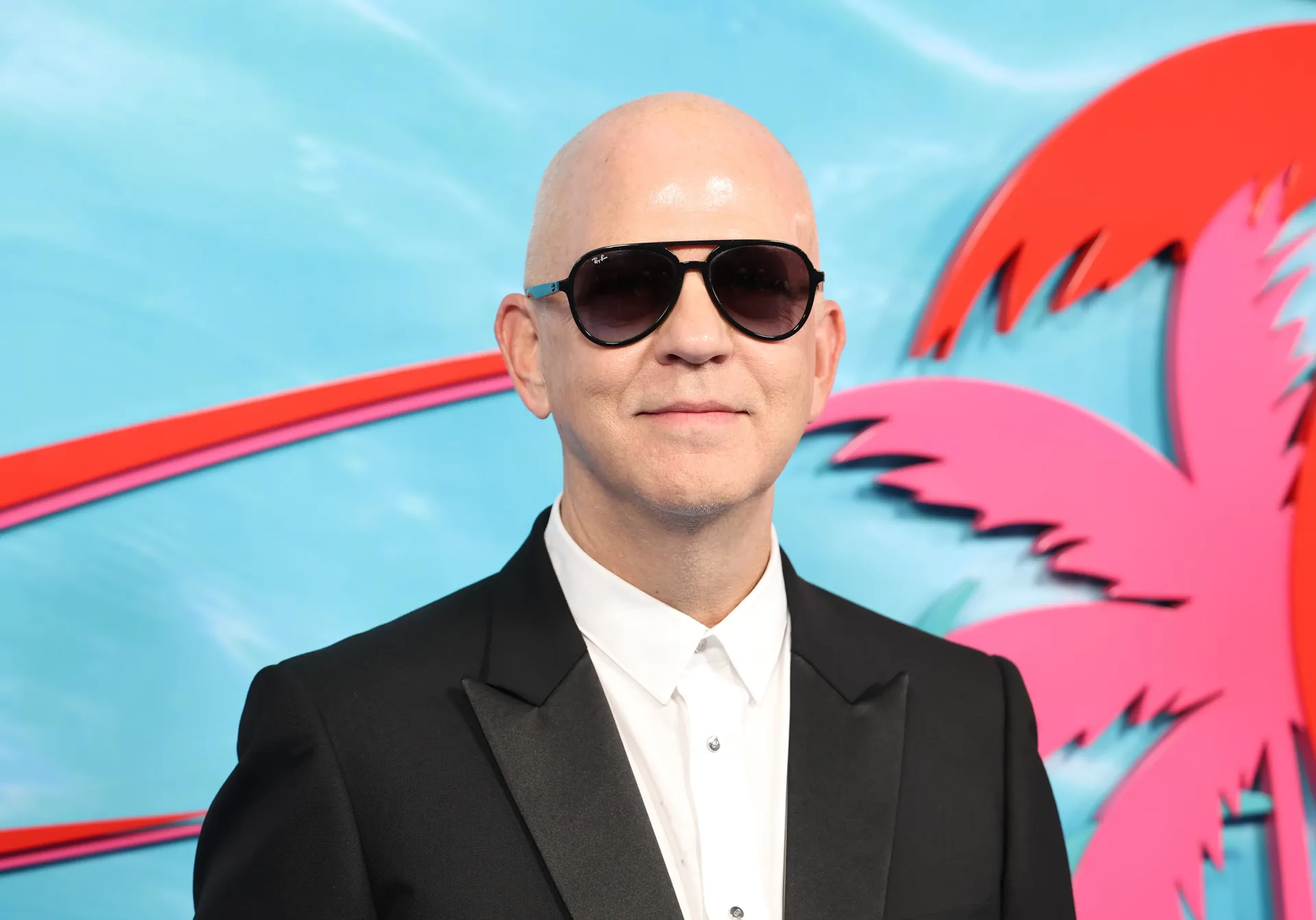
Ryan Murphy had previously said he still loved the musical series, then revealed that a script was complete and that he had spoken with roughly 10 original cast members about returning. The series-order news did not arrive with a full casting announcement. Since then, however, Lea Michele and Heather Morris have confirmed that they are involved.
That gap between a confirmed revival and a fully explained revival is where the anxiety lives. Glee was not merely a high-school musical comedy to its audience. It was a weekly pop-culture event built around characters, song choices, outrageous jokes, relationships and a willingness to swing wildly between satire, sincerity and outright chaos. A new version therefore carries an unusual burden: it needs enough of the old show’s identity to feel recognizably Glee without simply replaying it—or reopening stories fans regard as complete.
One fan summed up the prevailing mood neatly: “This is the best worst day of my life.” Another put the optimistic version of the same feeling more bluntly: “This is gonna be so bad! I’m so happy and can’t wait.” For a reboot, that is not necessarily a contradiction. It is the entire pitch.
A series order is real news—but many of the biggest details remain open
A series order means the project has been picked up to become a series, rather than remaining only a possibility or a script in development. It establishes that the reboot is moving ahead at Disney+ and Hulu. It does not, on its own, answer every question fans are asking: which original actors will be in it, which characters might return, whether it will introduce a new student ensemble, or how directly it will connect to the earlier story.
The available information supports a few clear points:
- Murphy has said a script was finished.
- He has spoken with around 10 original cast members about coming back.
- The initial series-order news did not include a full cast list.
- Michele and Morris have subsequently confirmed their participation.
Everything beyond that deserves cautious wording. Fan wish lists are not casting confirmations, and a conversation with a past cast member is not the same thing as a signed return. That distinction matters especially for a show whose audience is already treating the empty spaces in the announcement as a referendum on what the reboot should be.
The concern is understandable. One widely shared joke argues that a Glee revival without an announced cast is simply “a really expensive school choir.” The line is funny because it identifies the central issue: songs and a school setting can recreate the broad premise, but they cannot automatically recreate the attachment viewers formed with the people who made the original ensemble work.
Why excitement comes with baggage
Glee’s early run was both popular and critically acclaimed. It presented a heightened version of high-school life in which students could transform personal conflict into a show-stopping number, a cruel hallway encounter into a group anthem, or a faculty meeting into a reason for someone to sing at maximum volume. Its musical format made each episode feel flexible. A familiar song could establish a joke, reveal an emotion, frame a rivalry or give a minor character a spotlight.
But fans remember that the series later struggled with a rotating cast and increasingly shocking plot turns. That history has shaped the reboot reaction. Many viewers are not rejecting the idea of more Glee music; they are asking whether the new series can preserve the sharpness and emotional connection they valued without repeating the unevenness they believe marked later seasons.
This is a practical creative problem, not just nostalgia talking. An ensemble musical series has to do several jobs at once: introduce characters quickly, give performers distinct voices, select songs that feel purposeful, balance comedy and drama, and keep a crowded cast from disappearing for long stretches. Glee’s premise makes all of those tasks more visible. When a character gets a solo, audiences notice who is being centered. When a relationship gets a duet, viewers can read it as story emphasis. When a song choice lands poorly, it can feel like a mismatch in both music and character writing.
In other words, the song list is not a side dish. It is part of the storytelling engine. That is why fans are already pitching artists including Olivia Rodrigo and Chappell Roan, and why another popular reaction embraced the simplest possible benefit: the reboot could supply many more tracks for people to identify with the phrase, “they sang this on Glee.”
That may sound like a joke, but it gets at a real part of the show’s legacy. Glee created a shared shorthand around covers, performances and unexpected musical pairings. A new series will inevitably be judged not only by whether its songs are current, but by whether each selection tells viewers something meaningful about the character singing it.
For viewers interested in how music platforms package identity as much as sound, Apple Music’s new visual identity experiment is a useful reminder that music is often presented as a broader cultural language, not simply a playlist. Glee’s covers have always worked in that territory: songs become character statements, punchlines and fan-memory markers all at once.
The original cast is the emotional center of the debate
Calls for a reunion dominate much of the reaction. Fans have singled out Jane Lynch, who played cheerleading coach Sue Sylvester and won an Emmy for the role in 2010, as someone they strongly want back. Sue’s caustic, unpredictable presence was a major part of the original show’s comic identity, so the desire for Lynch’s return is about more than a cameo. It is a desire for a particular kind of Glee energy.
Yet the conversation is also rooted in remembrance. Fans have paid tribute to Naya Rivera, who played Santana Lopez and died in 2020. Comments emphasizing that Glee should not return without her are not a literal production demand that can be fulfilled. They are expressions of how central Rivera and Santana remain to the audience’s understanding of the series.
That makes nostalgia unusually delicate here. A reboot can bring back a setting, a format or selected performers, but it cannot restore every part of the original group. Treating that limitation with care is likely to matter far more than trying to manufacture a sense that nothing has changed.
It also explains why the role of original cast members is such a high-stakes question. Returning performers could potentially provide continuity and acknowledge the audience’s memories. But they would not erase the need for the reboot to establish its own purpose. A new ensemble, if there is one, would need room to become more than a collection of references. The creative challenge is finding a relationship between legacy and new material that does not reduce either side to decoration.
Fans are drawing bright lines around Brittana and Klaine
The strongest boundaries in the reaction concern the original show’s queer relationships. “Don’t touch Brittana” and “Don’t touch Klaine” have become recurring refrains.
Canon is the term fans use for story events and relationships considered part of a work’s established continuity. In this case, concern about “re-evaluating” canon means worry that a reboot could revise, undermine or revisit relationship arcs that audiences consider especially important. Brittana refers to Brittany and Santana; Klaine refers to Kurt and Blaine.
The sensitivity is clear from the way fans describe those arcs: they are not treating them as loose plot material for a new show to remix casually. They are treating them as meaningful parts of the original series’ legacy. Any reboot that engages with prior continuity would therefore face a difficult choice. It can acknowledge beloved arcs, but acknowledgement is not the same as reopening them. It can build new queer stories, but new representation does not automatically require rewriting old relationships.
That distinction may be the most useful lens for reading the fan response. The outcry is not simply resistance to change. It is a request for precision: know what these characters meant, know why these arcs mattered, and do not confuse renewed attention with necessary revision.
A fandom built for the comment-section era is back on the clock
The reboot has also revived the culture around Glee itself. Terri Schuester Updates, an X gimmick account that has remained active since the original show ended, immediately recognized a possible professional renaissance: actual Terri Schuester updates could be on the way.
That response captures what the new series order has already accomplished. Before viewers know the full cast, premise or song slate, the reboot has reactivated a well-practiced fan language of memes, character advocacy, affectionate mockery and impassioned arguments. Glee has always been a show people could both love and loudly litigate.
Whether that energy turns into sustained viewing will depend on information still to come. Fans are clearly interested in the music. They are deeply invested in how the original cast and characters are handled. They are wary of a return that repeats the parts of the earlier series they found frustrating. And, despite every warning siren, many are visibly ready to watch.
For now, the most accurate description of the Glee reboot’s reception is not simple excitement or simple dread. It is anticipation with a playlist attached—and a fandom keeping the receipts.