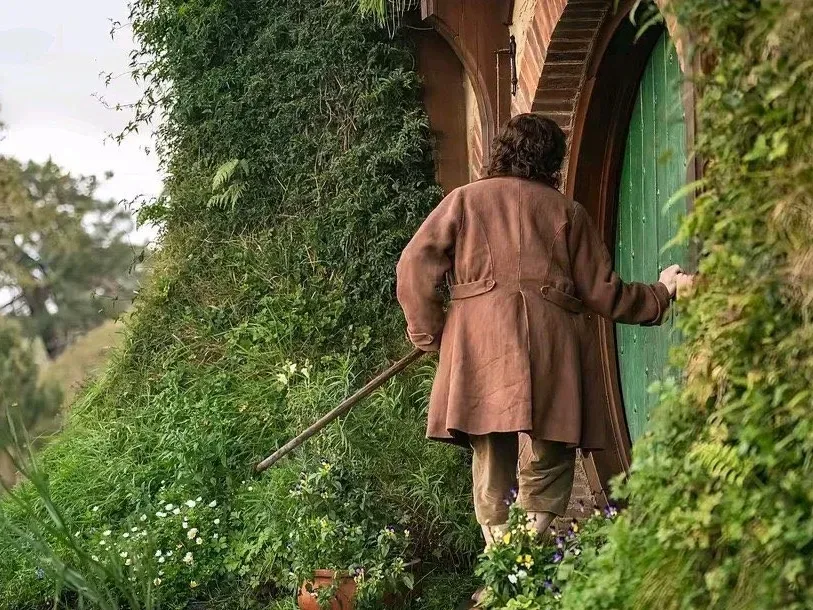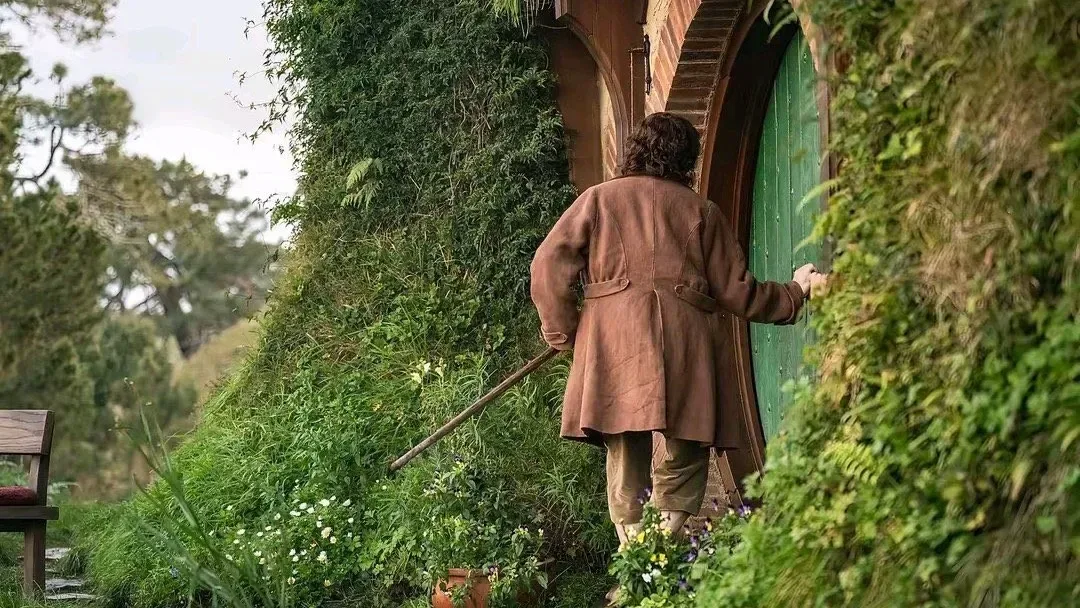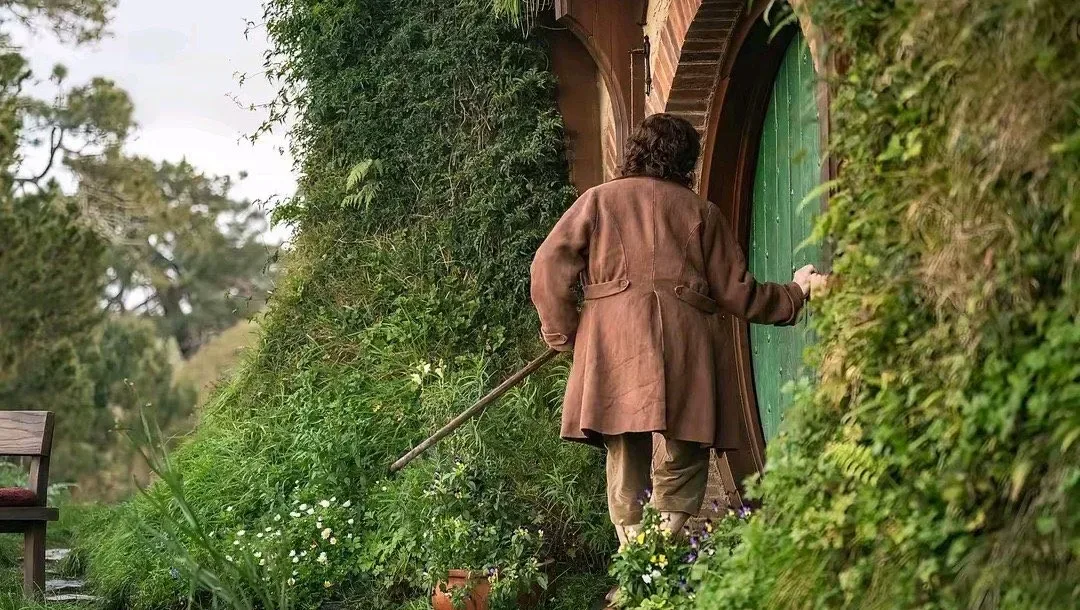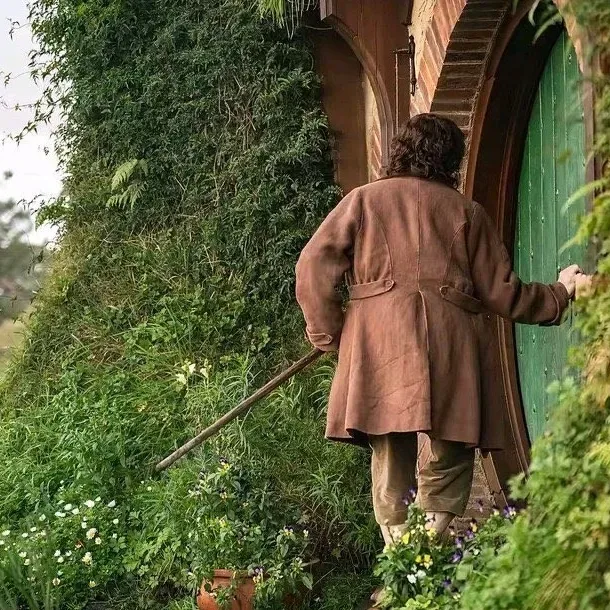
Middle-earth is returning to a particularly familiar patch of grass. Newly released behind-the-scenes photos from The Lord of the Rings: The Hunt for Gollum offer a first glimpse of Frodo Baggins and the Shire while production continues in New Zealand. The images arrive for Hobbit Day and, in the most appropriately teasing fashion possible, show Elijah Wood’s returning character only from the back.
That restrained reveal is enough to establish the intended atmosphere. Frodo is dressed in recognizably Hobbit-like costume amid a setting populated by other Hobbits, while Andy Serkis—who is directing the film as well as returning as Gollum—is seen working behind a camera. The material is not a trailer, character poster, or clear look at the finished visual effects. It is a small production-window peek. Yet it places the new movie squarely in the visual territory audiences associate with the Shire.
The Hunt for Gollum is scheduled for release on December 17, 2027. It is filming in New Zealand and is positioned as a prequel to the events of The Lord of the Rings: The Fellowship of the Ring.
A Frodo reveal that deliberately withholds the face
The most immediately notable choice in the set photos is what they do not show. Wood’s Frodo is present, but viewers cannot see his face. That means there is no completed on-screen comparison to make yet between the returning actor and the younger version of Frodo expected in this part of the story.
Serkis has previously said that the production will use some de-aging, with machine learning forming part of that process. De-aging refers to visual-effects work used to make an actor appear younger on screen. It can involve digital adjustment of an image after filming; the exact techniques and extent can vary from project to project. In this case, Serkis’s comments establish that some characters must be made to look younger than they did roughly 25 years after Fellowship of the Ring.
That context makes a rear-view image a sensible early glimpse rather than a promise about the final frame. A set photo records a moment during production. It does not necessarily represent the final color, compositing, makeup, or digital effects work audiences will see in theaters. The film’s eventual treatment of Wood’s appearance remains something viewers will need to judge from finished footage.
The involvement of machine learning is also specific to a production workflow, not a declaration that a performance has been replaced. Serkis described it as part of the process for de-aging certain actors. That distinction matters, especially as public conversations around AI imagery often blur the line between digital post-production tools and entirely generated material. A recent discussion of authorship and AI in film art similarly underlined the importance of identifying what was actually made by artists and what technology was used for; that issue has surfaced in another movie-related creative dispute.
Why the Shire is an important early image
The Shire does more than supply a dose of cozy nostalgia. Its presence tells audiences that the story’s scope reaches into the lives of characters closely tied to the original trilogy, even though the title foregrounds Gollum. The released images show multiple Hobbits, not just Frodo, creating the impression of a living community rather than a single isolated cameo setup.
That visual approach has practical storytelling value. The audience already understands the Shire as Frodo’s home and as a place far removed from the danger linked to the One Ring. Beginning from, or returning to, that recognizable environment can make the central hunt feel more personal. The film’s premise concerns various characters pursuing Gollum to learn the location of the One Ring, so the image of Frodo and the Shire implicitly connects an intimate Hobbit world with a far wider search.
There is still a great deal the photos cannot confirm. They do not establish how large Frodo’s role will be, whether the Shire sequence occurs at the film’s opening or elsewhere, or how the individual characters’ paths intersect. The safest reading is simply that the Shire is part of the production and that Wood is again playing Frodo.
The story occupies a narrow but consequential gap
The movie’s premise centers on the effort to find Gollum and discover where the One Ring is. This period receives a brief depiction in the prologue of The Fellowship of the Ring and is also addressed only briefly in Tolkien’s writings. That leaves the production working in a section of the wider story that is recognizable to established viewers while still offering room to dramatize events that have not previously dominated a feature film.
Calling it a prequel is useful, but the timing needs care. It is not presented as a brand-new origin story for the entire setting. Rather, it is set before the first film in the existing trilogy, in a period when the location of the Ring—and Gollum’s knowledge of it—has enormous stakes. The central dramatic engine is therefore pursuit: multiple figures trying to reach Gollum and extract the information he possesses.
That structure gives Serkis an unusual double responsibility. He is directing the movie while also reprising Gollum, the character whose performance-capture work became one of the defining technical and acting achievements associated with the earlier films. Performance capture is a process in which an actor’s movements and expressions are recorded and used to inform a digital character. The supplied production details do not specify the techniques planned for Gollum in this film, but Serkis’s return keeps the character connected to the performer most identified with him.
Returning faces, plus two announced additions
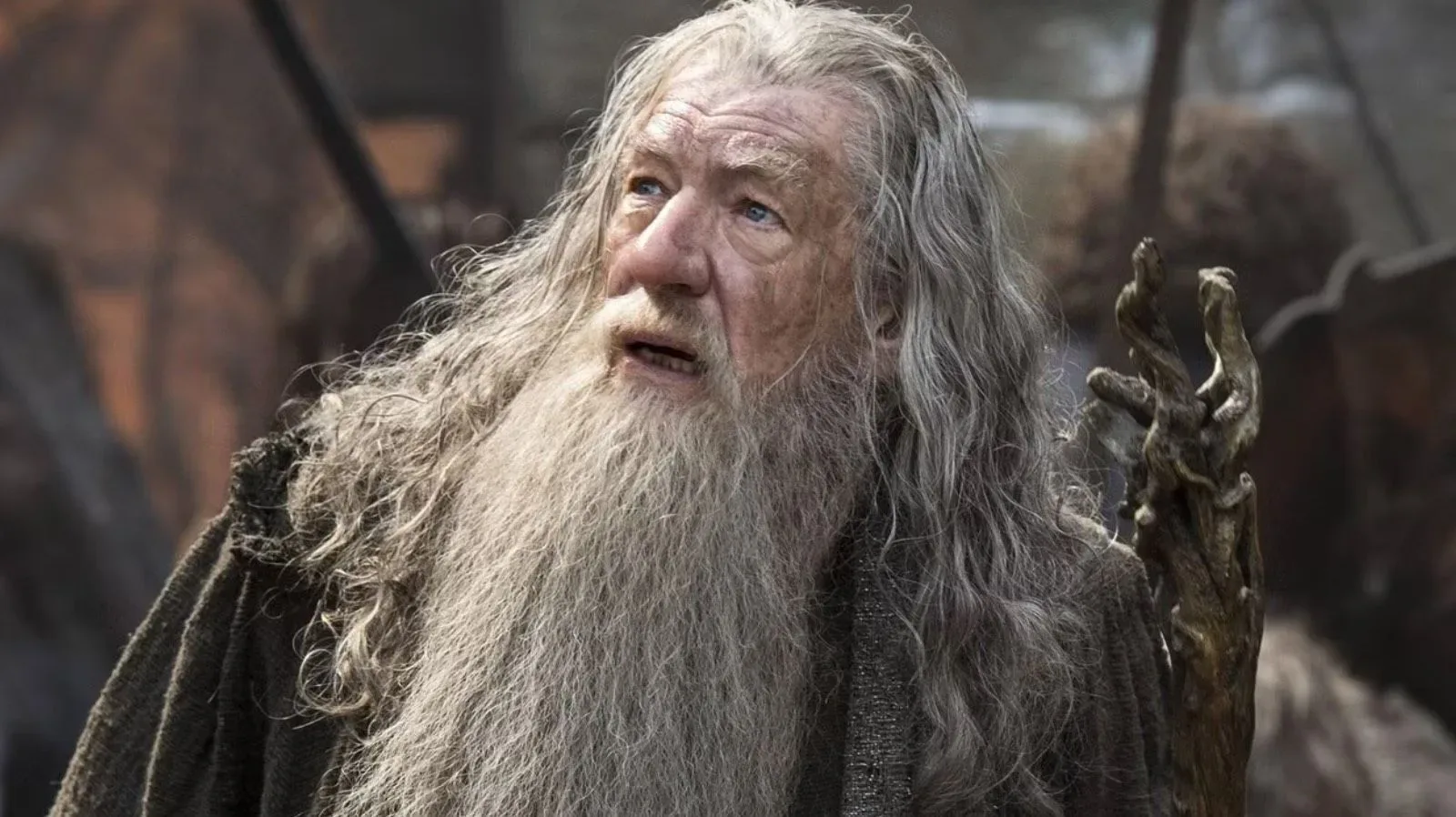
Wood is not the only performer from the earlier Middle-earth films set to return. Ian McKellen is returning as Gandalf, and Lee Pace is reprising Thranduil, the Elven king he played in The Hobbit film trilogy. Serkis, of course, is again connected to Gollum both on screen and from the director’s chair.
The announced cast also includes Jamie Dornan as Aragorn, taking over the role previously played by Viggo Mortensen, and Anya Taylor-Joy as Seren, described as a new “lethal elf.” Of those details, Seren is especially significant because the character is identified as a new addition rather than one drawn from the previously named returning film roles. What that means for the story, her allegiances, or the size of her part has not been established by these set photos.
The combination illustrates the film’s central balancing act. It is built around familiar characters—Frodo, Gandalf, Gollum, Aragorn, and Thranduil—whose existing screen portrayals bring powerful expectations. At the same time, new casting and a newly named character indicate that the project is not merely restaging a sequence already fully depicted on film.
Peter Jackson, who directed the earlier Lord of the Rings films, has said Serkis has freedom to make the movie while Jackson remains available to assist where helpful. That arrangement gives the project continuity with the previous filmmaking team without presenting Serkis as a caretaker simply reproducing an old template. For an audience assessing the film before footage arrives, that distinction may be as meaningful as any single costume image: the project is seeking recognizable Middle-earth texture under a new director’s lead.
What can—and cannot—be read from the production glimpse
The images provide a useful checkpoint for fans, but not a finished-picture checklist. They confirm or reinforce several concrete points:
- Filming is underway in New Zealand.
- Elijah Wood is back as Frodo Baggins.
- The Shire and a wider Hobbit presence appear in the production material.
- Andy Serkis is actively directing on set as well as returning as Gollum.
- The movie is currently dated for December 17, 2027.
They do not reveal finished de-aging effects, the film’s exact plot progression, a full costume presentation for the returning cast, or footage of Gollum. They also cannot settle larger questions about tone. The Shire imagery looks inviting, but the underlying premise is a search driven by the threat of the One Ring. A pleasant set image and a tense narrative can comfortably coexist.
For now, the strongest takeaway is intentionally modest: The Hunt for Gollum has begun to show its physical world. Frodo is back in the Shire, Serkis is on the set, and the production is making clear that its route into this earlier chapter will run through familiar Middle-earth landmarks before the hunt tightens around Gollum and the Ring.