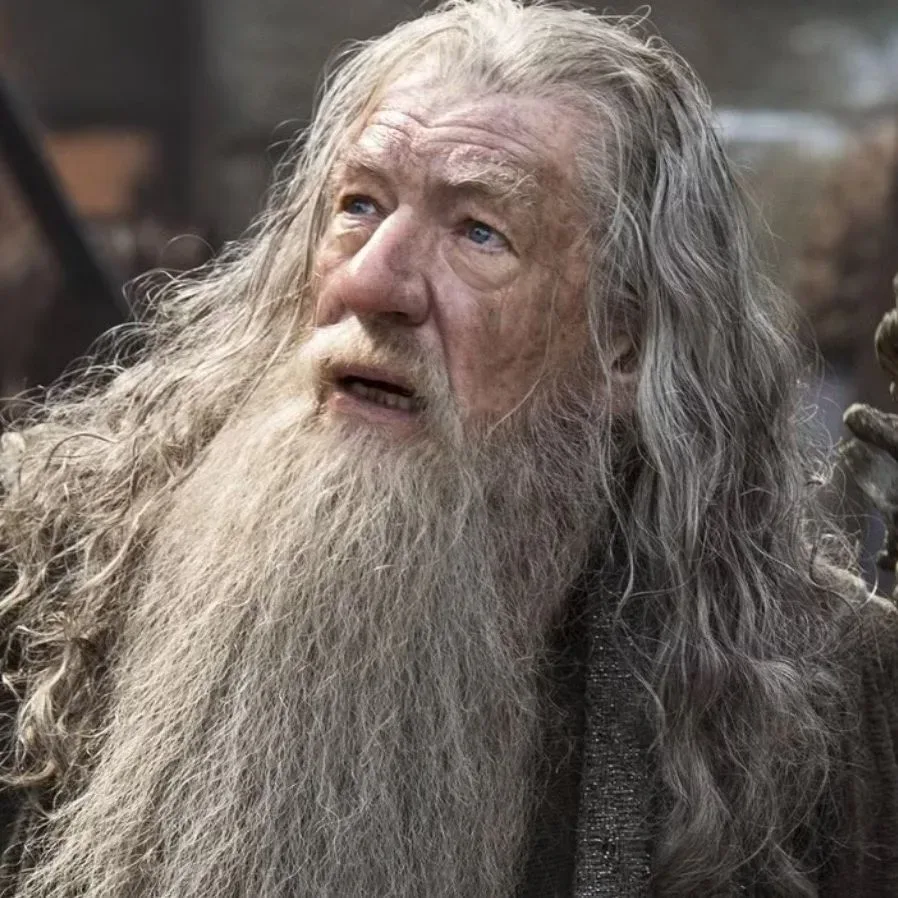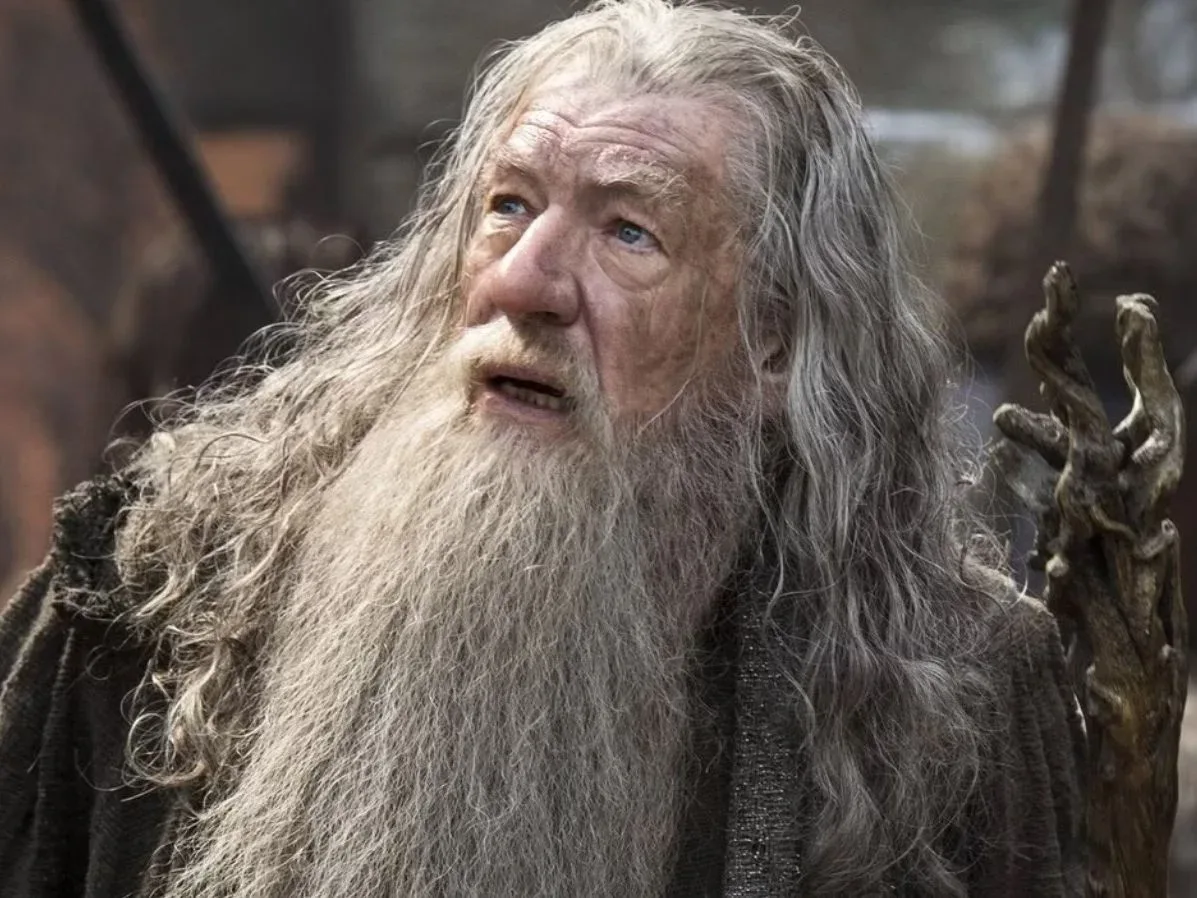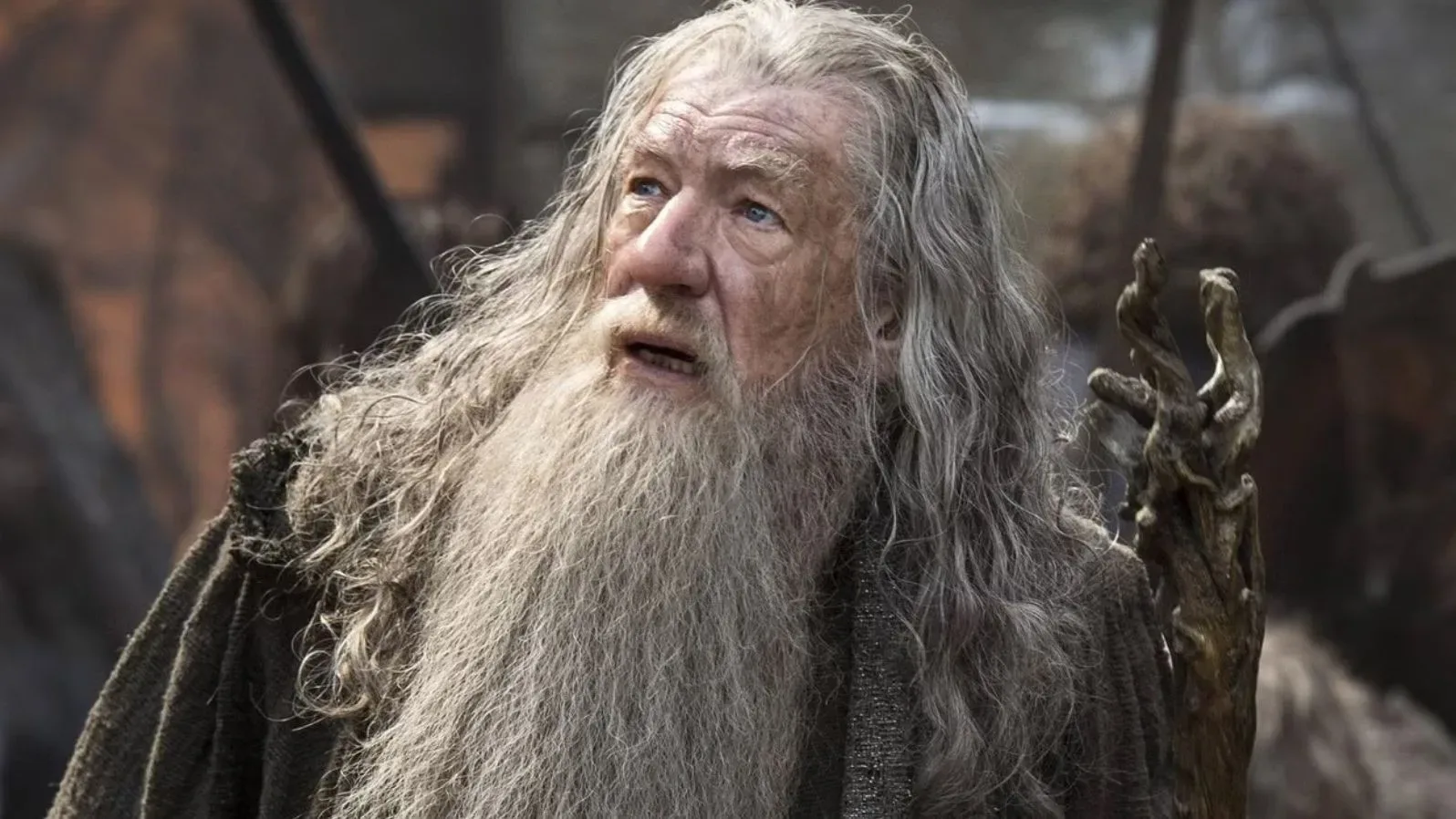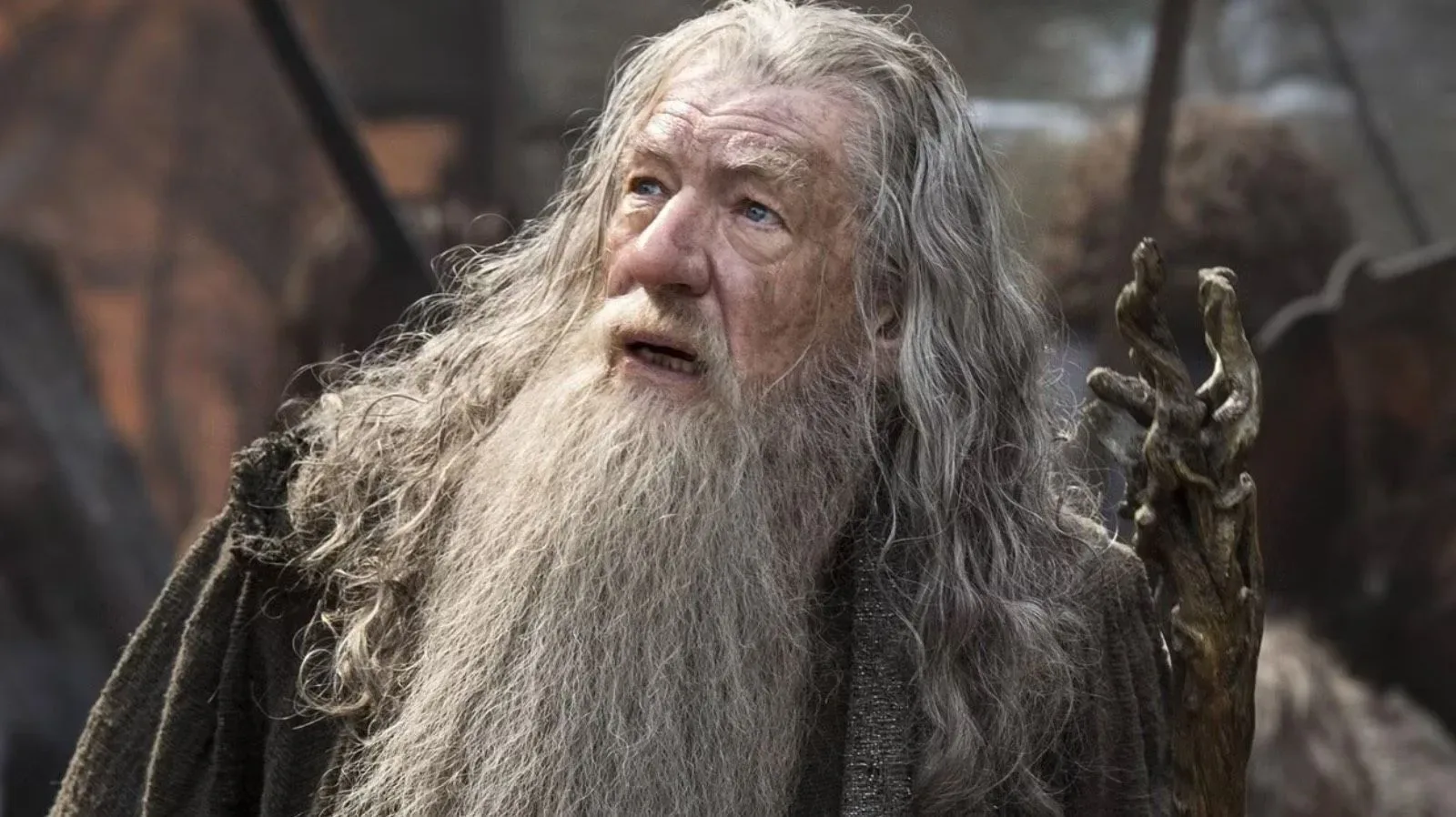
Ian McKellen’s return as Gandalf the Grey is beginning to take shape outside the usual trailer-and-poster circuit. A video in which McKellen narrates musician Troye Sivan’s music video for “Party” shows the actor in an appearance that closely recalls Middle-earth’s pipe-smoking wizard: grey clothing, the familiar pointed hat, and a look immediately recognizable to viewers of the live-action films.
It is important to separate the image from a formal studio reveal. The video was made in connection with Sivan’s music, not presented as a dedicated promotional launch for The Lord of the Rings: The Hunt for Gollum. Still, it provides a meaningful early indication of how McKellen may look when he returns to the role for the forthcoming film, currently set for a theatrical release on December 17, 2027.
For fans, the significance is less about a single hat or a grey robe than about continuity. Gandalf is one of the defining screen presences of the six previous live-action Middle-earth movies in which McKellen has appeared. Bringing the actor back gives The Hunt for Gollum a direct connection to both the original Lord of the Rings trilogy and the later Hobbit films, where his Gandalf served as a steady guide through very different corners of the setting.
Why this fleeting Gandalf glimpse matters
The visible return of Gandalf’s signature silhouette does a great deal of work before viewers know much about the new movie’s finished scenes. In a long-running screen fantasy franchise, costume and performance are inseparable parts of character recognition. Gandalf’s staff, hat, beard, pipe, and grey palette are not random decorations; together, they create an instantly readable visual language for the character.
That does not mean an image from a music-video appearance confirms the final costume design, plot, or tone of the film. It does, however, make McKellen’s involvement feel more tangible. His last appearance as Gandalf in a live-action Middle-earth feature was 2014’s The Hobbit: The Battle of the Five Armies. The interval since then makes the prospect of seeing him inhabit the role again especially notable.
Performance continuity can be every bit as important as visual continuity when an actor returns to an established fantasy part. Viewers have strong expectations for Gandalf’s measured speech, flashes of temper, humor, physical frailty, and underlying authority. The costume may provide the immediate recognition, but McKellen’s interpretation is what turns those recognizable pieces into Gandalf rather than simply a wizard dressed in grey.
That balance between an actor’s work and a character’s external transformation remains a recurring point of interest in franchise filmmaking. The practical demands of screen alterations can be substantial, as illustrated by a recent account of how one film’s prosthetic process was dramatically shortened. No comparable detail has been provided about McKellen’s Gandalf preparation here, but the broader point stands: familiar screen identities often depend on many carefully coordinated creative choices.
A search for Gollum puts Gandalf at the center
The Hunt for Gollum is described as a prequel chapter centered on the urgent effort to find the former owner of the One Ring before it reaches Frodo Baggins. That premise gives Gandalf a natural place in the story. His understanding of the Ring’s danger, and his concern over what Gollum may know, make him one of the characters most closely connected to a search of this kind.
Gollum, also known as Sméagol, is not merely a supporting curiosity in the wider story of the Ring. His obsession with it and his long possession of it make him a key link between the Ring’s earlier history and the larger conflict that follows. The new film’s setup therefore creates a chase-driven frame: the people looking for Gollum are pursuing information as much as they are pursuing a person.
That distinction matters. A hunt narrative can suggest action, but its stakes can be investigative as well. The search is tied to questions of identity, knowledge, and timing: who has encountered the Ring, what they know about it, and whether that knowledge can reach the wrong hands. Gandalf’s role in such a story would logically involve both urgency and interpretation, since he has long been associated with recognizing threats that others underestimate.
What “motion capture” means for Gollum’s return
Andy Serkis is expected to direct the film and return as Gollum. His performance is associated with motion capture, a production technique that records an actor’s movements so they can help drive a digital character on screen. The term is sometimes used loosely, but its essential purpose is to preserve the performer’s physical choices—movement, posture, gesture, and timing—within a computer-generated character.
For Gollum, the method matters because the character’s personality is conveyed as much through bodily behavior as through dialogue. His uneasy movements, shifting expressions, and abrupt changes in mood have made him one of the most distinctive digitally created figures in major fantasy cinema. Serkis directing while also performing the character creates an unusual overlap between filmmaking leadership and on-screen characterization, although no details have been provided about the movie’s specific production process.
The returning cast creates several points of continuity
McKellen is not the only familiar Middle-earth performer attached to the film. Elijah Wood is set to reprise Frodo Baggins, while Lee Pace is expected to return as Thranduil, the Elven king. Serkis’s dual role as director and Gollum completes a group of returning performers whose characters connect the project to different stretches of the existing live-action saga.
The reported involvement of Frodo is particularly intriguing because the premise is framed around the search for Gollum before the Ring comes into Frodo’s possession. Without further story information, it would be premature to treat that casting detail as proof of a particular narrative structure. A return could potentially take many forms, and no plot mechanism has been detailed. For now, it is simply one of the elements that makes the project’s timeline and presentation worth watching closely.
Thranduil’s return similarly broadens the possible Middle-earth canvas. Lee Pace’s character is associated with the Woodland Realm and the Elven side of the world seen in the Hobbit films. His involvement suggests the film may not be limited to one location or one strand of the hunt, but the available information does not establish where, how extensively, or alongside whom Thranduil will appear.
New faces, familiar names, and a major Aragorn question
The reported newcomers include Anya Taylor-Joy as an elf named Seren, Kate Winslet as Marigol, Jamie Dornan as a ranger identified as Strider, and Leo Woodall as another ranger named Halvard. These names invite obvious speculation, but the distinction between confirmed information and rumor is especially important with franchise casting.
Marigol is rumored to have a family connection to Sméagol before his transformation into Gollum. That relationship has not been established as a confirmed story detail, so it should be treated as a possibility rather than settled character history. If accurate, it could give the story a route into the personal past surrounding Gollum; if not, the name alone tells audiences very little about her narrative role.
Dornan’s reported casting as Strider carries perhaps the biggest built-in comparison. Strider is the ranger identity associated with Aragorn, the character played by Viggo Mortensen in the original trilogy. A different actor stepping into that part would place the new film in dialogue with one of the franchise’s most beloved portrayals. The challenge is not only visual resemblance or action credentials. It is finding the right version of a character who is known to audiences under one identity but is operating under another within the story.
In practical storytelling terms, “Strider” is useful because it emphasizes the ranger persona: a figure of the wilderness whose background is not immediately apparent to everyone around him. That identity can support mystery and movement through a hunt narrative. Yet the project has not publicly laid out how prominently the character will feature, so any expectations about his arc, relationships, or encounters should remain tentative.
What audiences can reasonably take from the reveal
The music-video appearance gives audiences a small but resonant sign that McKellen is once again visually inhabiting Gandalf. It does not answer the larger questions around The Hunt for Gollum: how the film will handle its place in the timeline, which characters will share scenes, how much of the story will focus on Gollum himself, or how the returning and new cast members will fit together.
Those unanswered questions are not a flaw in the glimpse; they are simply the limit of what it is. The video is not a trailer, a plot summary, or a formal introduction to the film’s full creative approach. Its value lies in the simple power of recognition. McKellen, grey once more, is enough to make the next Middle-earth expedition feel less abstract.
With Serkis set to direct and perform Gollum, and with McKellen, Wood, and Pace among the returning actors, the film is positioning itself around recognizable links to earlier live-action Middle-earth stories. The reported additions of Taylor-Joy, Winslet, Dornan, and Woodall point toward a cast that may expand that familiar framework. Until more official material arrives, Gandalf’s reappearance is a reminder that even an incidental video can become a notable moment when it involves one of fantasy cinema’s most enduring characters.