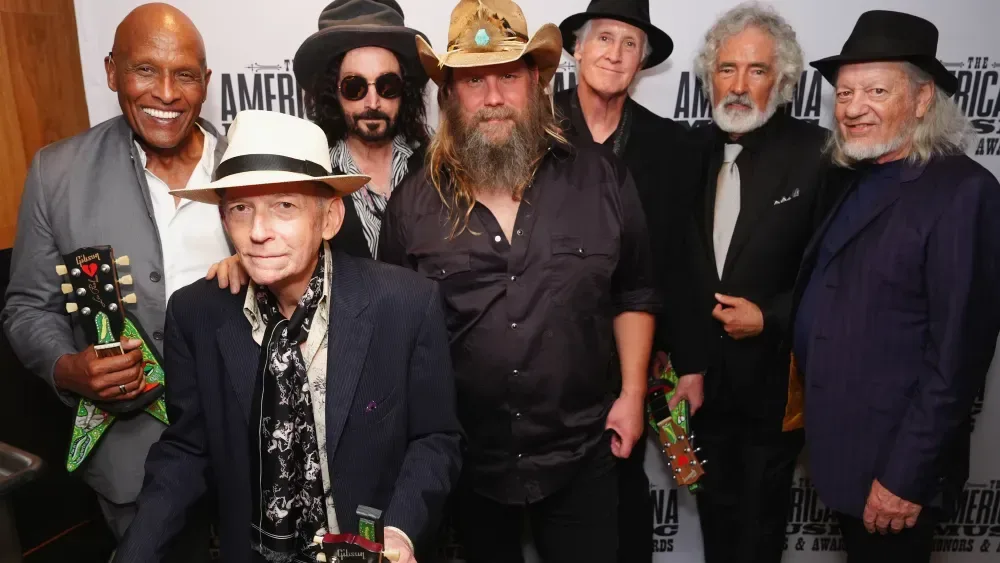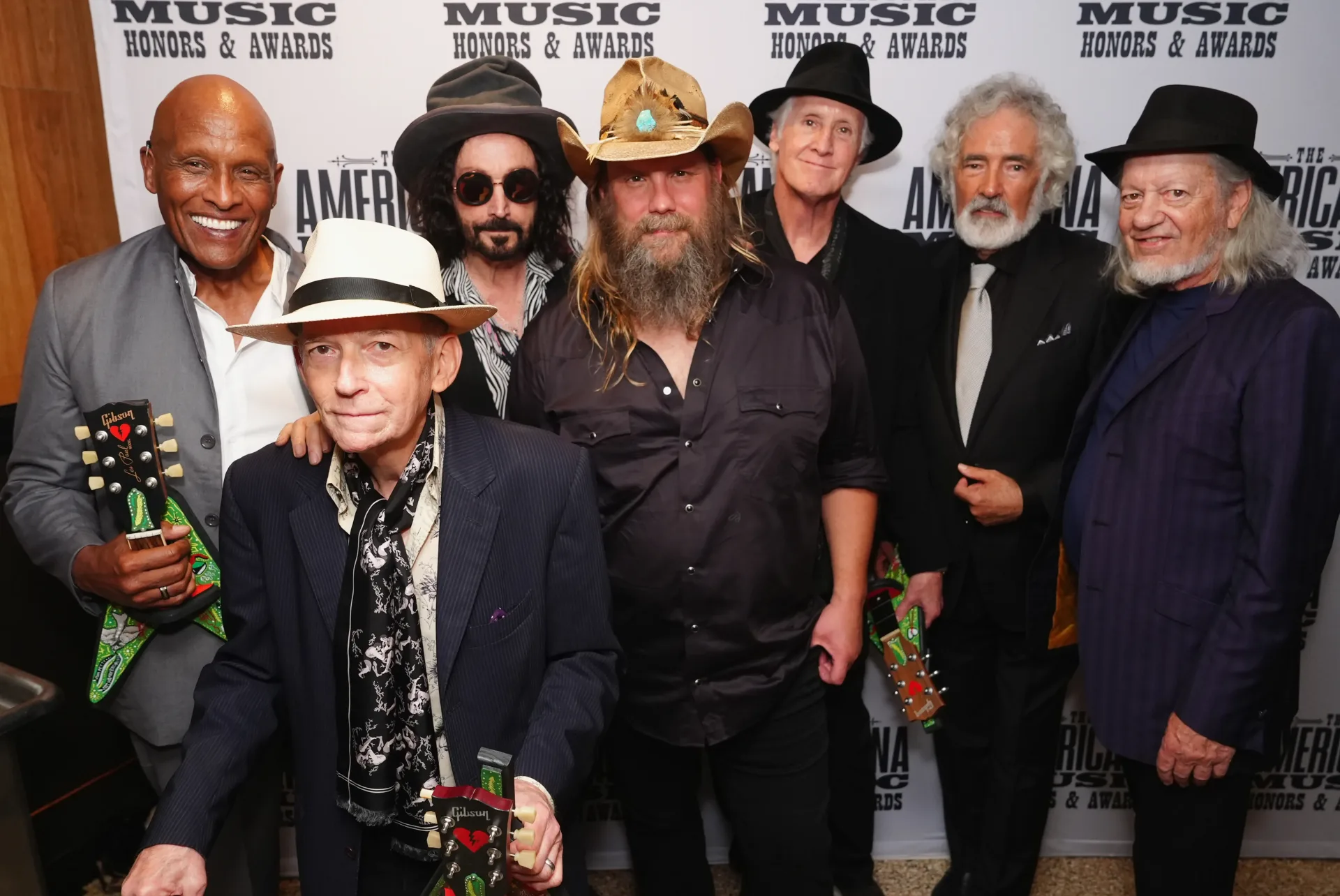
Tom Petty and the Heartbreakers’ original core reunited in Nashville on September 16, 2026, with Chris Stapleton taking the vocal spotlight for a three-song performance at the Ryman Auditorium. Mike Campbell, Benmont Tench, Stan Lynch and Ron Blair played “American Girl,” “Breakdown” and “You Wreck Me” to open the Americana Honors & Awards, creating a deliberately brief set that nonetheless carried the weight of several different chapters of the band’s history.
The appearance was not presented as a new Heartbreakers tour, a permanent revival, or a substitute for Petty, who died in 2017. It was a one-night performance connected to a lifetime achievement honor. That distinction matters. The emotional force of the moment came from hearing musicians who helped build these songs return to them together, while Stapleton brought a lead voice strong enough to guide the performance without pretending to erase its history.
There was also a notable wrinkle in the lineup. Lynch, the original drummer, yielded the kit for the final song to Steve Ferrone, Petty and the Heartbreakers’ later drummer. Scott Thurston, who performed multiple instrumental and vocal roles with the band in its later decades, also joined. Rather than treating the group’s personnel changes as competing versions of the past, the finale put several eras on the same stage.
A reunion with a 24-year gap at its center
The important number in this reunion is not simply the time since Petty’s death. Campbell had initially described the night as the first time the band had played together since 2017, but Tench clarified the deeper historical gap the following day: the group had not performed with Lynch since 2002, when he appeared with them at their Rock and Roll Hall of Fame induction.
That makes the Ryman set the first performance by Campbell, Tench, Lynch and Blair together in 24 years. Blair had left the band before Lynch did, but returned during the 2000s. Lynch, meanwhile, had been absent from the Heartbreakers lineup since leaving in the 1990s. The significance was therefore tied to reunion in its literal sense: musicians reconnecting with the people with whom they first shaped a particular sound.
Tench described the experience as getting back into the songs with “the original cats” who had made them roughly 50 years earlier. It is an especially revealing phrase because it places the emphasis on collective creation. Rock audiences often remember the frontperson first, understandably so in Petty’s case, but a long-lived band’s identity rests in arrangements, entrances, rhythmic habits, instrumental tones and backing vocals that become second nature only through years of working together.
That is what a reunion of this kind can reveal. A song title and lead melody may be familiar to virtually everyone in the room, but the musicians’ shared instincts are the harder thing to replicate. Campbell’s guitar, Tench’s keyboards, Blair’s bass and Lynch’s drumming represent an early framework for the Heartbreakers’ records and stage language. Bringing them together for three songs offered a compact illustration of how much personality can live inside a band arrangement.
Chris Stapleton’s role: lead singer, not an imitation
Stapleton’s role was potentially the night’s most difficult assignment. Singing Petty material in front of the original musicians puts any guest vocalist in an impossible position if the goal is imitation. The more useful task is to carry the songs with conviction while respecting the qualities that made them inseparable from Petty’s voice in the first place.
Related coverage includes Heartbreakers Reunite With Chris Stapleton at Nashville Honors.
Stapleton apparently had a humanizing false start. Campbell said the singer missed the opening line of “American Girl” because he was so absorbed in listening to the musicians around him. He then came in on the lyric, and the performance continued. Campbell said Stapleton later explained that he had been “completely enthralled” by the band.
It is a small mistake, but it conveys the stakes better than a polished anecdote might have. Stapleton was not stepping into a routine guest slot. He was standing before players whose musical relationship with Petty extended across decades, and before an audience aware of every note’s emotional context. The missed entrance did not change the substance of the performance; if anything, it underscored that this was a living, vulnerable moment rather than a mechanical tribute.
Lynch later described Stapleton as a “North Star” onstage, pointing to the practical function of a commanding lead vocalist in a multi-member performance. He said singing alongside Stapleton gave the set an added layer and helped bring it together. In band terms, backing vocals do more than make a chorus louder. They add harmonic support, texture and a communal sound that can make a frontperson feel embedded in a group rather than isolated in front of one.
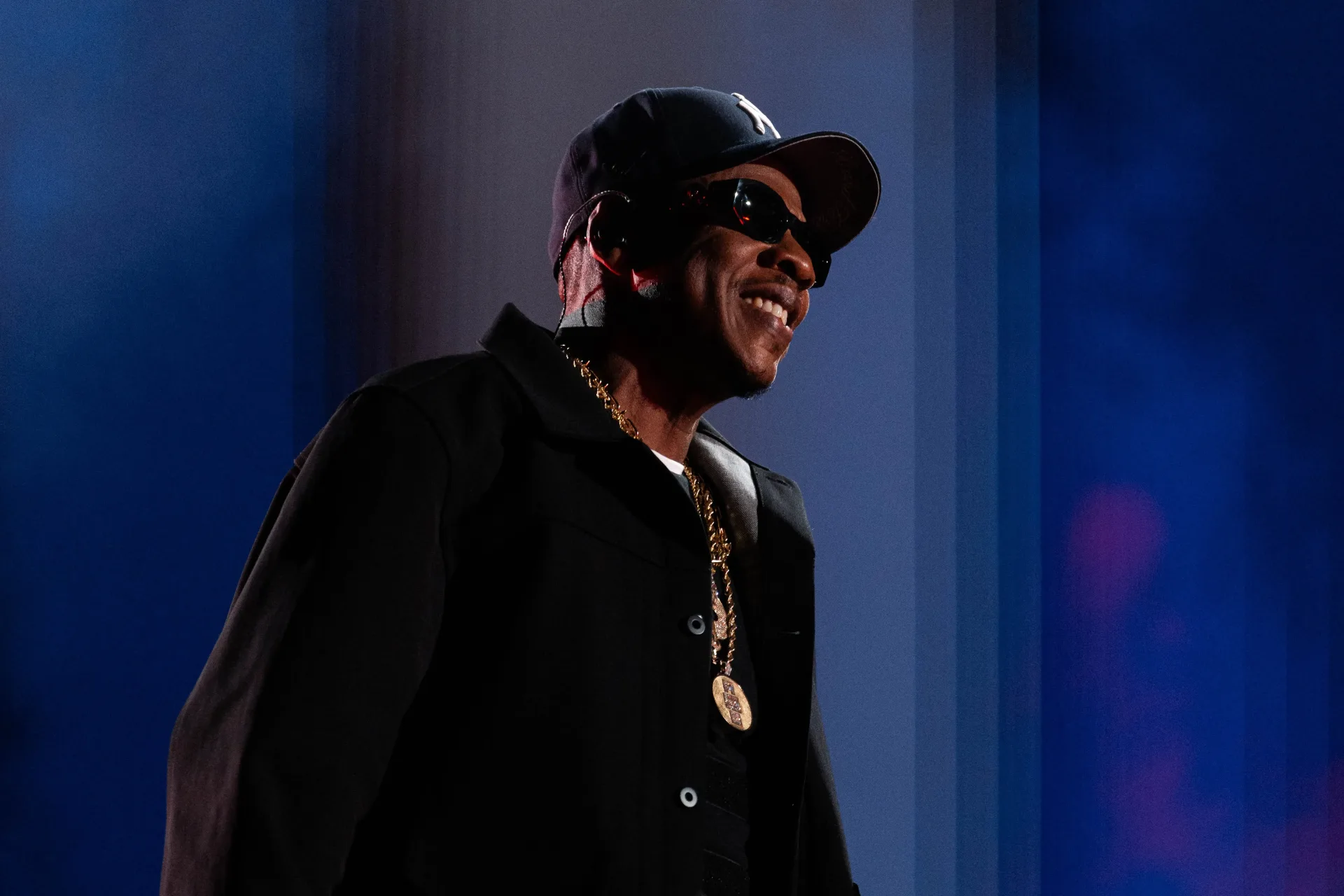
For readers interested in how artists discuss catalog, performance and musical identity from the inside, Joking Joystick has also looked at JAŸ-Z’s catalog-spanning conversation about craft. The details differ, but the underlying question is similar: songs endure not just as recordings, but as bodies of work artists keep interpreting, protecting and passing through new contexts.
The rhythm section made room for two Heartbreakers eras
The final song’s transition from Lynch to Ferrone was one of the clearest symbols of the evening. Ferrone succeeded Lynch behind the drums and played with Petty for years. Having both drummers take part could have been framed as a novelty, but the public exchange afterward suggests a more generous reading.
Blair said Ferrone had sent him a text praising their time together as a rhythm section, saying Blair could “swing” and “rock.” Rhythm section is the term for the players—most often bass and drums—who establish a song’s pulse, drive and harmonic foundation. The distinction is useful here because it helps explain why swapping drummers is never merely a visual change. Each drummer’s feel affects how a bass player places notes, how guitars push or relax against the beat, and how the entire band moves through a song.
Lynch also described walking over to embrace Ferrone during the closing bow. He said the two had barely known one another and had only spoken for the first time that night. His account was disarmingly direct: he wanted to know Ferrone, raised his hands for a hug, and did not know how the gesture would be received. It was.
That encounter is more than a pleasant postscript. Bands with long histories often accumulate awkward dividing lines: original members and replacements, people who left and people who stayed, personal loyalties and professional necessities. The Nashville performance acknowledged the timeline without forcing its participants to choose one “real” version of the Heartbreakers. The original lineup materialized for the set; the later-era musicians were not erased from the story.
Blair brought a little self-deprecating humor to the following day’s discussion, saying he had made a mistake during “Breakdown” but played the next number well. He also jokingly apologized for his own backing vocals while praising Lynch’s contribution. Those comments matter less as technical scorekeeping than as evidence of musicians who were not trying to memorialize themselves in glass. They spoke about the set as musicians do: what landed, what went wrong, and what felt good to play.
Memory, grief and the music that remains
Adria Petty, Tom Petty’s daughter, introduced the transition from the reunion set into the awards portion of the event. She thanked Stapleton for helping bring the musicians together and said she felt soul and trust in the performance. Her comments located the evening in something larger than nostalgia. She spoke of music’s capacity to move, educate and comfort people, and of her father’s reverence for his work as a songwriter and messenger.
She also recalled a 2009 statement from Petty in which he said he never saw another band and wished he belonged to it, because he believed he was already in the best one. It is an unusually concise explanation of why the Heartbreakers matter as more than a backing unit. Petty’s songs placed a singular writer and singer at the center, but his own words recognized the ensemble around him as an essential creative home.
Tench kept his acceptance remarks simple, saying the band means the world to him and that it means a great deal that it still matters to listeners. Campbell was more expansive, noting that the honor fell on Blair’s birthday and encouraging the audience to sing for him. He then spoke candidly about grief for Petty, saying he expected to grieve for the rest of his life while also insisting that the music remains alive.
Campbell described the Heartbreakers as musicians who understood each other and who shared a Florida upbringing that fostered a brotherly connection. He also ran through the group’s internal nicknames: Blair as “Snake Man,” Tench as “Mad Dog Genius,” Lynch as “Miles Beyond,” Thurston as “Duck Head,” Ferrone as “Tiger,” and Petty, at one point, as “Pink Elvis.” The levity did not dilute the tribute. It supplied the kind of detail that makes mourning feel personal rather than ceremonial—the private language of a group that spent years on the road and in studios together.
Campbell closed by saying he missed “rocking around” with his best friend. That sentiment is why the Nashville set should not be read as a simple argument for a future tour, even if three songs naturally leave audiences imagining more. No plans for further Heartbreakers performances were discussed at the panel. The event’s value was in what it was: a rare, finite gathering that honored Petty without trying to turn absence into an illusion of return.
What the three-song set actually proved
It proved that the Heartbreakers’ musical bond is recognizable even after a long separation. It proved that Stapleton could enter those songs with enough authority and respect to make the collaboration meaningful. It proved that a band history can include both its original and later personnel without flattening the differences. And it showed that remembrance does not have to mean flawless reverence. There can be missed opening lines, admitted errors, nervousness, jokes and an uncertain hug between two drummers.
Most importantly, the performance separated tribute from replacement. Petty was repeatedly present in the conversation because the music and the friendships remain inseparable from him. Yet Campbell, Tench, Lynch, Blair, Ferrone and Thurston were also allowed to be what they are: musicians with their own histories in the band and with one another. Stapleton did not become Tom Petty; he became the guest vocalist who helped make one extraordinary reunion possible.
For a few songs in Nashville, the Heartbreakers’ past was not reduced to a museum piece. It was loud, imperfect, collaborative and emotionally immediate—the closest thing a legacy act can offer to proof that the chemistry people remember was never just a story about one person.