The Cat in the Hat has always had an elegantly compact premise: a disruptive stranger turns a dull day upside down, the house becomes a glorious disaster zone, and the children are left deciding whether the experience was freedom, catastrophe or both. The new digitally animated film takes that small-scale act of rebellion and inflates it into a 107-minute fantasy adventure full of portals, workplace rules, time manipulation, giant threats and what appears to be a considerable inventory of sequel-friendly oddities.
That is the central problem with this version of The Cat in the Hat. It does not merely update Dr. Seuss; it appears determined to build a broad, contemporary animation machine around him. The results sound energetic and occasionally imaginative, but also profoundly over-equipped. A character whose appeal rests on rude unpredictability becomes a very friendly agent of highly organized mayhem.
Bill Hader’s Cat is approachable, perhaps too approachable
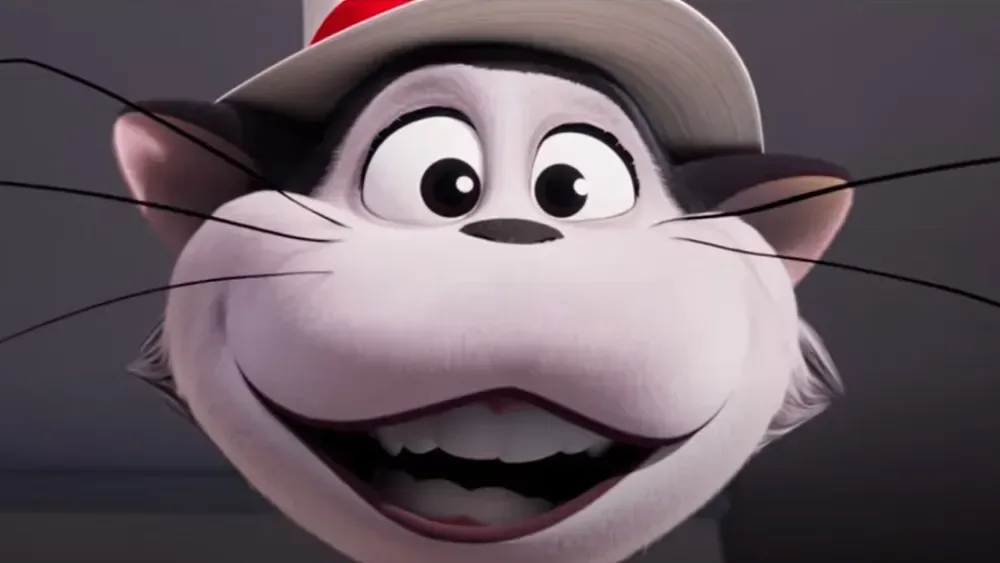
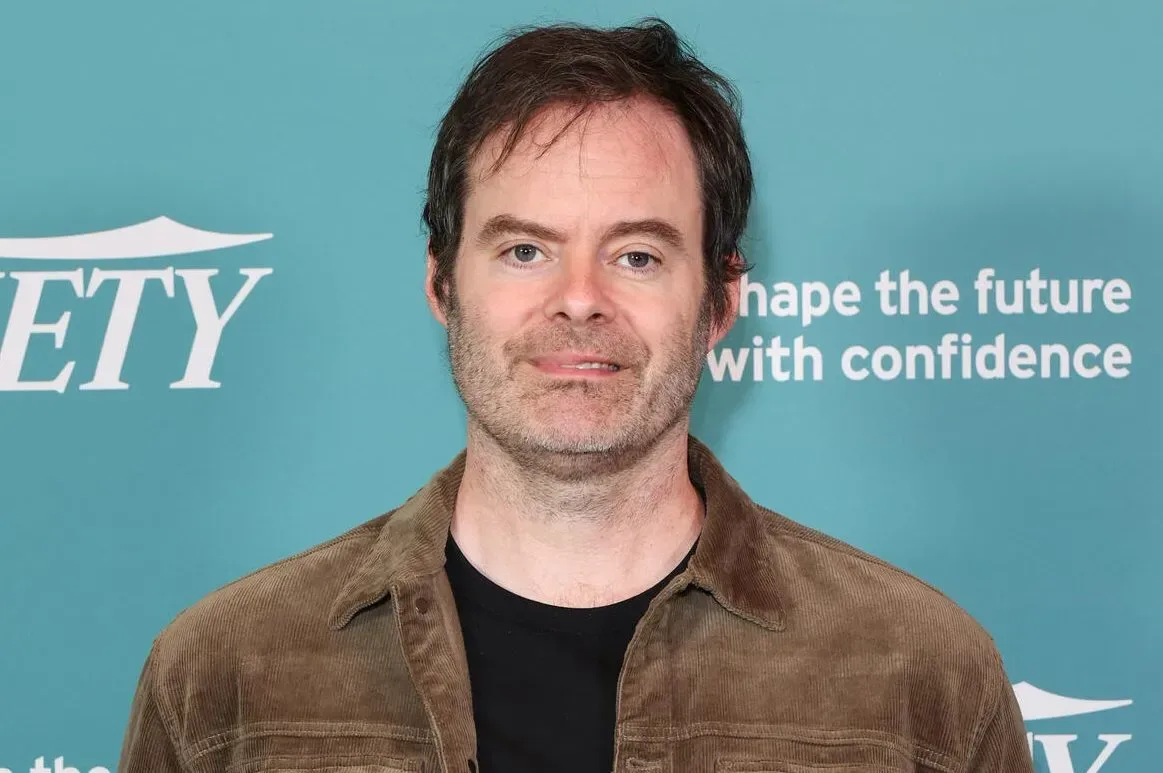
Bill Hader voices the Cat and is also an executive producer. His take avoids the particularly alarming visual and vocal choices associated with the 2003 live-action film starring Mike Myers. That is a meaningful improvement: this Cat is not positioned as a nightmare in furry formalwear. He is warm, buoyant and recognizably built for a family animation.
But safety comes with a cost. The Cat’s original trickiness is difficult to separate from his appeal. He is not simply a cheerful mascot who arrives to improve a child’s mood. He is an intrusion: a figure who makes a mess because the mess exposes how suffocating a gray afternoon can be. The new portrayal reportedly leans much harder toward likeability, making him feel less like a dangerous little miracle and more like an employee trained to project enthusiasm.
That occupational framing is not metaphorical. The film makes the Cat an office worker at a huge organization that dispatches him to help clients feel better. His performance is tracked by a “Mess-o-Meter,” a score that turns misbehavior into an administrative metric. It is an unusual choice for a character most associated with disregarding adult systems, and it helps explain the film’s broader tension: an icon of impulsive play has been placed inside an elaborate framework of missions, equipment and corporate rules.
A new family, then three portals
The story centers on Gabby, voiced by Xochitl Gomez, after she moves to a new city with her younger brother Sebastian, voiced by Tiago Martinez, and their single mother Carmen, voiced by America Ferrera. Gabby is lonely, unsettled and tired of being identified as a trumpet-playing “band nerd.” Her emotional displacement gives the movie a sincere starting point, while Sebastian and the family’s British goldfish, Waffles, make up the immediate audience for the Cat’s arrival. Matt Berry voices Waffles.
Waffles’ irritation at the Cat is among the clearest surviving links to the original book’s domestic comic tension. The goldfish’s perspective matters because the classic story works partly through opposition: the Cat finds chaos enchanting, while someone has to recognize that the house is being wrecked. Yet this film quickly moves beyond a single home under siege.
Three unopened boxes, one tied to each family member, become literal doorways to other worlds. The device turns personal belongings and old memories into a sprawling fantasy map. Gabby’s wish to return to the hometown she misses is linked to the Cat’s “Go-Backer,” a stopwatch-like object capable of reversing time. The magical red couch becomes a transforming vehicle. The Cat can pull an entire supply depot’s worth of objects, including a grand piano, from his hat.
Those are not inherently bad ideas. A portal fantasy can give animation room to become visually unruly, and Seuss has never been short on impossible objects. The issue is proportion. A story that begins with a new child struggling to settle into a new place becomes an itinerary of destinations and props: an underwater sequence, a circus, musical interruptions, a monster battle and a cluttered storehouse of magic gear.
What “franchise logic” means here
Franchise logic is the habit of designing a film not only as one complete story but as a platform for expanding characters, settings and recognizable items. It often favors lore, teams, collectibles, running references and scalable threats. None of those tools are automatically artistically empty. They become a problem when they dilute the emotional core or substitute recognition for comedy.
The new film seems especially vulnerable to that trap. Thing One and Thing Three appear, while Thing Two’s absence is treated as a mystery. More Things exist beyond the original small group, forming a broader clan. They do not speak; instead, their communication is built from claps, tongue clicks and body percussion. The film even makes a self-aware joke about their own franchise potential.
Self-awareness is not the same thing as a critique. A joke acknowledging that cute side characters look positioned for merchandise can be funny, but it does not necessarily stop the characters from functioning exactly that way. The Things sound cuddly and marketable rather than especially comic, their one-note sound design more of a branding feature than a source of escalating chaos.
The larger action is similarly scaled up. The family’s travels lead to the Something, a glowing-eyed monster and the story’s major confrontation. The film reportedly piles on visual diversions such as swimming underwear, an operatic whale with a plastic-rainbow unicorn horn, and a marching band performing “Shake It Off.” These images may provide momentary spectacle, but a barrage of disconnected inventions does not automatically acquire the snap of Seussian nonsense.
There is a distinction worth making. Surrealism is not just randomness. In a children’s fantasy, it is the pleasurable sense that reality has bent according to a strange but coherent comic imagination. A fish wearing a hat can feel more surreal than a universe-sized battle if the image has an internal rhythm, surprise and attitude. When every new scene introduces another object, creature or location, surprise can become routine.
The video-game feeling without a game
The film’s construction has a distinctly game-like quality: enter a new zone, gather a tool, navigate a set piece, reach a larger obstacle, then advance toward a boss-sized enemy. Its portals, transforming couch, score-like Mess-o-Meter and giant Supply Closet all reinforce that impression. It resembles the imagined outline of a game called The Cat in the Hat Saves the Universe, despite no game being part of the material described here.
That does not mean games are the issue. Games can use progression systems to make players feel agency, allowing them to learn spaces and mechanics at their own pace. In a film, those same systems must serve character and momentum without offering interaction. A meter is only dramatically useful if its changing number tells viewers something meaningful; a magical item needs to matter beyond enabling the next spectacle. Here, the apparatus seems to make the Cat’s world feel busy, not necessarily more alive.
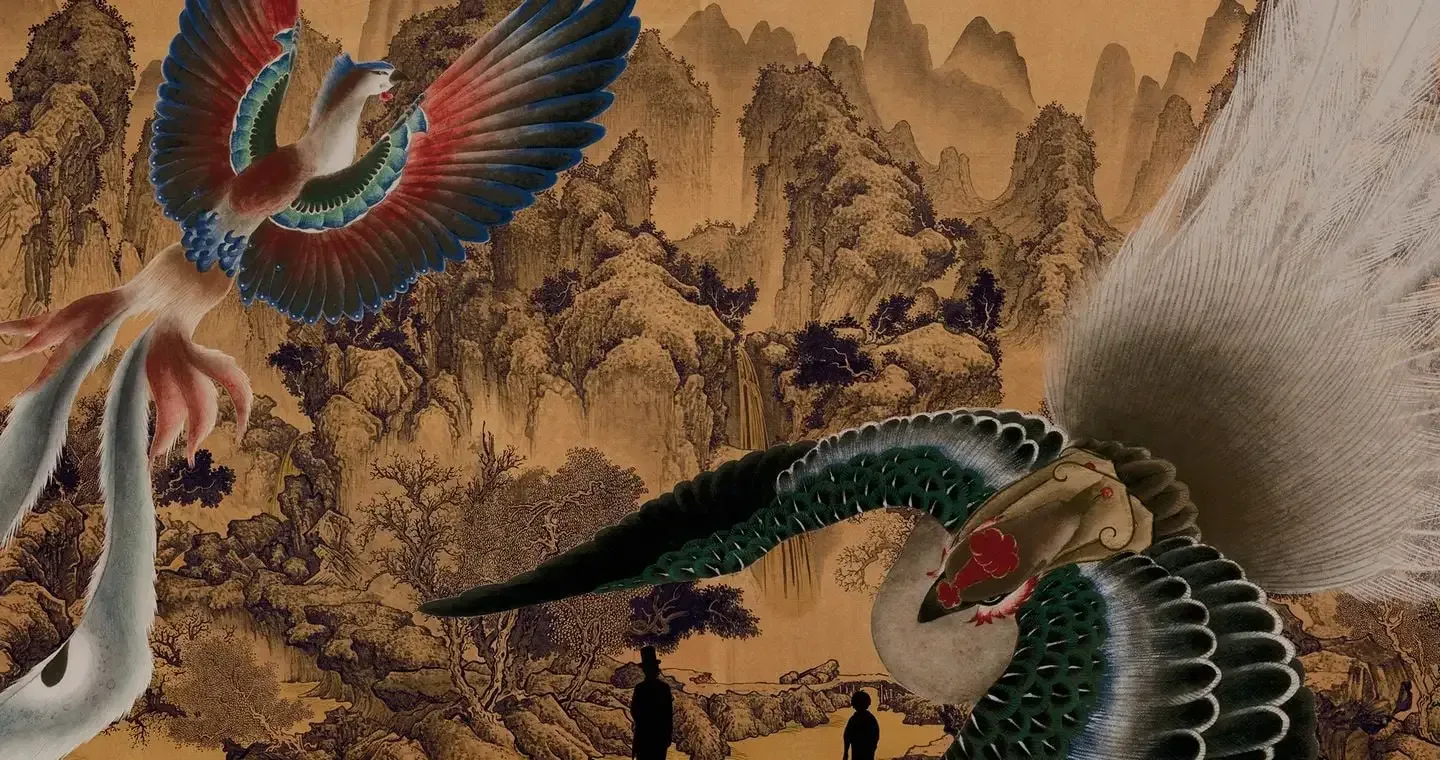
For a much more promising example of controlled visual disorder as an aesthetic rather than sheer clutter, see this look at Magic Atlas and controlled chaos. The phrase matters. Chaos can be designed with intention. It needs contrast, timing and space for an image or a joke to land.
Scale overwhelms the story’s most useful idea
Gabby’s desire to go back is the film’s most emotionally intelligible engine. Moving can make a child feel as though a previous life has been sealed inside a box, unreachable except through memory. The three portals could have developed that notion: each one might reveal why an old place is precious, why it cannot be recreated exactly and how new belonging forms.
Instead, the story’s personal premise appears crowded by the machinery built around it. The Cat’s employer, the storage facility in his hat, the time device, the Things’ expanded family and the climactic monster all compete for attention. The result is not necessarily devoid of feeling; it is underfelt because every sincere moment has to fight through another layer of gadgetry.
That is why calling the movie a superhero-style adventure for younger children is less about capes than scale. The architecture is familiar: a vulnerable protagonist, a newly discovered world, a cascade of sidekicks and artifacts, a massive threat and an ending pointed toward a larger universe. For some families, that density may be the attraction. There is always another colorful thing to look at, another destination to visit, another creature or concept to process.
But The Cat in the Hat was never short on material. Its enduring power came from the opposite of density. A rainy day, two children, a fish, a house, a cat and a mess were enough. The new film has directors and screenwriters Alessandro Carloni and Erica Rivinoja attempting a far more expansive version, with music by Lorne Balfe and a supporting voice cast that includes Quinta Brunson, Giancarlo Esposito, Bowen Yang, Paula Pell and Titus Burgess.
Verdict: bright, busy and oddly cautious
This is not a repeat of the 2003 live-action misfire. Its animation-first approach and Hader’s genial performance give it a much less abrasive foundation. Yet the choice to make the Cat palatable, combined with a structure built from portals, product-ready sidekicks and escalating fantasy action, leaves the adaptation feeling hesitant about what makes the character disruptive in the first place.
The film is rated PG and runs 107 minutes. Its biggest gamble is that modern family entertainment needs a universe when it might have needed a living room. For viewers happy with relentless invention, there may be enough color and motion to sustain the trip. For anyone hoping for the compact, unruly spirit of Seuss, this Cat may seem to have brought too much stuff in his hat—and too little mischief in his claws.