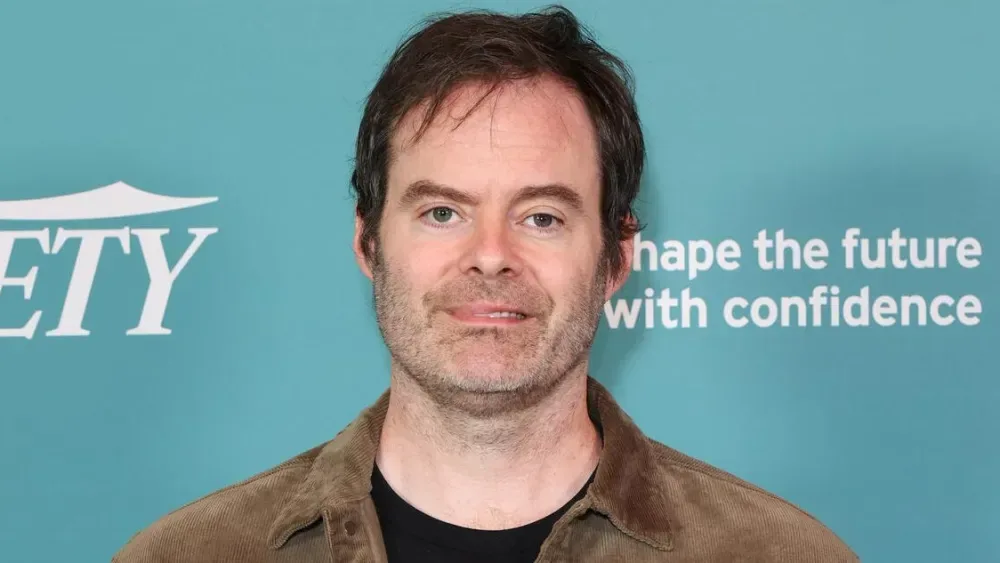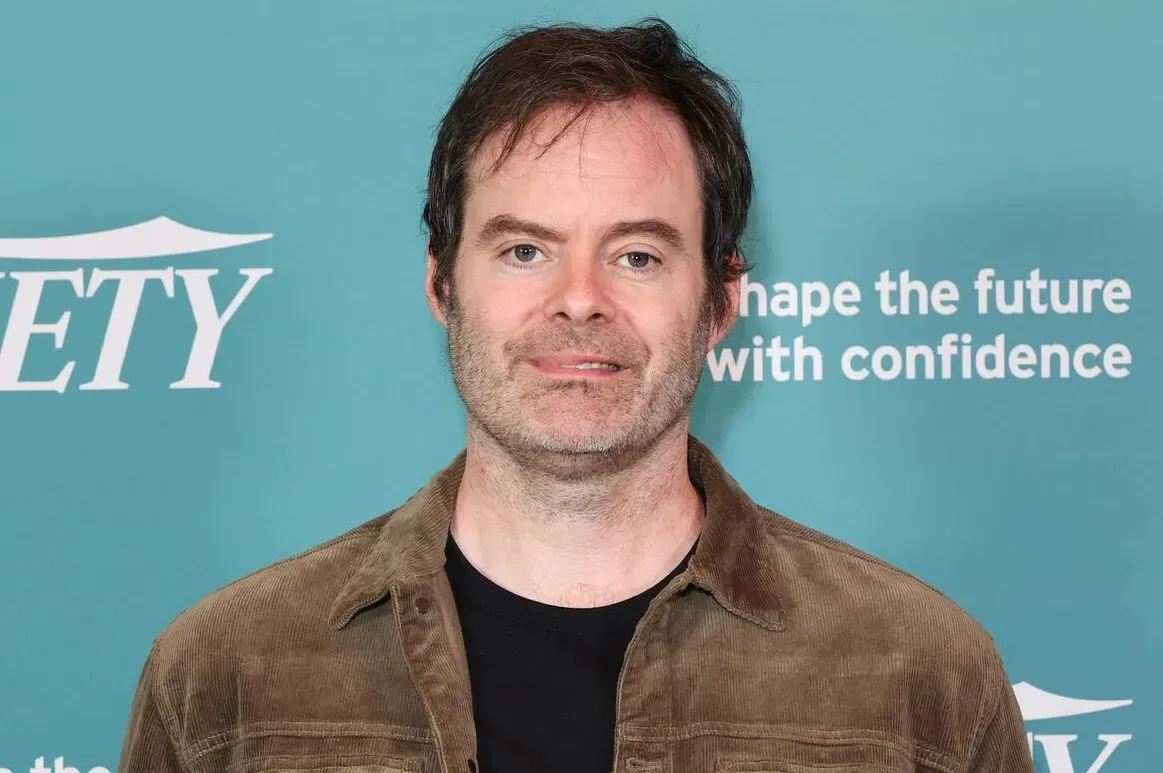
Bill Hader is entering a particularly varied stretch of work: a psychological horror feature he wrote and directed, a new animated take on The Cat in the Hat, and a potentially very dark HBO series about Jim Jones and Jonestown. But at a Los Angeles entertainment-and-technology event, the conversation that framed all of those projects was artificial intelligence—and what it cannot replace.
Hader’s position was neither an uncomplicated rejection of every new tool nor an enthusiastic invitation to automate the creative process. His concern centered on the people whose skill makes filmed entertainment possible, especially production designers. If a technology can genuinely assist artisans rather than remove them from the work, he suggested, that is the more constructive use. The important distinction is practical: a production designer is not simply someone who makes an image look attractive. The role involves shaping the physical visual world of a project—environments, objects, texture and the visual character that supports a story.
That focus makes Hader’s comments more substantive than the usual “AI good” or “AI bad” split. Film and television are made by interconnected departments, and a supposed efficiency gain is not automatically a creative gain if it displaces people responsible for the decisions that give a production identity. Hader praised those workers as artisans, a word that matters here: it emphasizes craft, judgment and experience rather than treating visual design as an interchangeable output.
AI as a tool is not the same as AI as an author
Hader acknowledged the familiar anxiety that arrives with new technology: fear that jobs will disappear. Yet he left room for tools that help people do their work. What he did not accept was the idea that current AI can eclipse filmmakers. He said he has not encountered anything that made him believe it was better than Martin Scorsese.
That line is funny because it sets an extremely high bar, but it also captures the core argument. Technical capability and artistic authorship are different things. A system may generate material, alter imagery or help organize tasks, but filmmaking is built from choices: what a scene means, when a performance should hold back, which details establish a character’s inner life, and how every department’s work fits a larger point of view. Hader’s own career offers a useful example of why that distinction is important. Barry was not merely a premise about a hitman interested in acting; its identity depended on shifts among comedy, tension, violence and character discomfort. Hader co-created the HBO dark comedy with Alec Berg, played its lead role and directed most of its episodes.
His remarks also touched on why AI’s reception can be generationally complicated. Hader said younger people he has spoken to seem especially wary of it, describing their concern that anything can be manipulated and their awareness of the people building the systems. He contrasted that with his own excitement at getting an iPhone, without giving much thought to Steve Jobs at the time.
That is not a broad survey of young people, and Hader did not present it as one. It is an observation from his own conversations. Still, it points to a real creative-industry concern: manipulation is not just an abstract technical concept when audiences and workers are thinking about images, voices and performances. Trust in what people are seeing or hearing has value, particularly when entertainment is built around recognisable performers and crafted visual worlds.
Why voice acting is much more than reading lines
Hader will voice the Cat in the Hat in Warner Bros.’ animated reboot, which is due in November. It reunites him with co-director Erica Rivinoja, a collaborator from South Park nearly two decades ago. Hader said he largely followed Rivinoja’s lead, explaining that the character is so iconic that his aim was to stay out of the way and deliver the best work he could.
His joking answer when asked how he approached the role—“The same way I approached Barry”—is an efficiently Hader-ish way to dodge turning preparation into a sacred ritual. The rest of what he said, though, gives a clearer picture of the job. An established character carries audience expectations, and an actor has to find a performance that serves the new production without treating the part as a blank slate.
Hader also pushed back on the assumption that voice work is easy because the actor is not on a physical set or in costume. He described it as exhausting, involving hours of intense vocal performance and repeated versions of the same line. His example was a simple command, “Open the door,” recorded over and over with requests for another variation. That repetition is not necessarily waste. Animation needs options: changes in rhythm, volume, timing, emphasis and emotional intent can all play differently once a line meets a character design, music, editing and animation.
In other words, voice recording is a performance process, not a one-take shortcut. “Energy” in this context means more than loudness. A performer may need to preserve clarity and character while repeating emotional beats long after an ordinary conversation would have ended. Hader recalled being so depleted after an Inside Out recording session that he needed to stop for water on the drive home because his brain felt fried.
That account is a useful counterweight to the persistent notion that screen work can be reduced to a finished voice file. The file is only the end product. Before it, there are countless decisions, takes and adjustments—human effort that cannot be properly measured by how effortless the final animated scene seems.
For viewers awaiting the new film, Hader’s description does not reveal plot details or promise a particular interpretation. It does indicate that Rivinoja’s direction was central to his approach and that the production treated the part as demanding performance work, not simply a celebrity voice cameo. Fans following other major screen reimaginings may also want to see how the Resident Evil reboot is faring at the box office.
They Know adds psychological horror to Hader’s slate
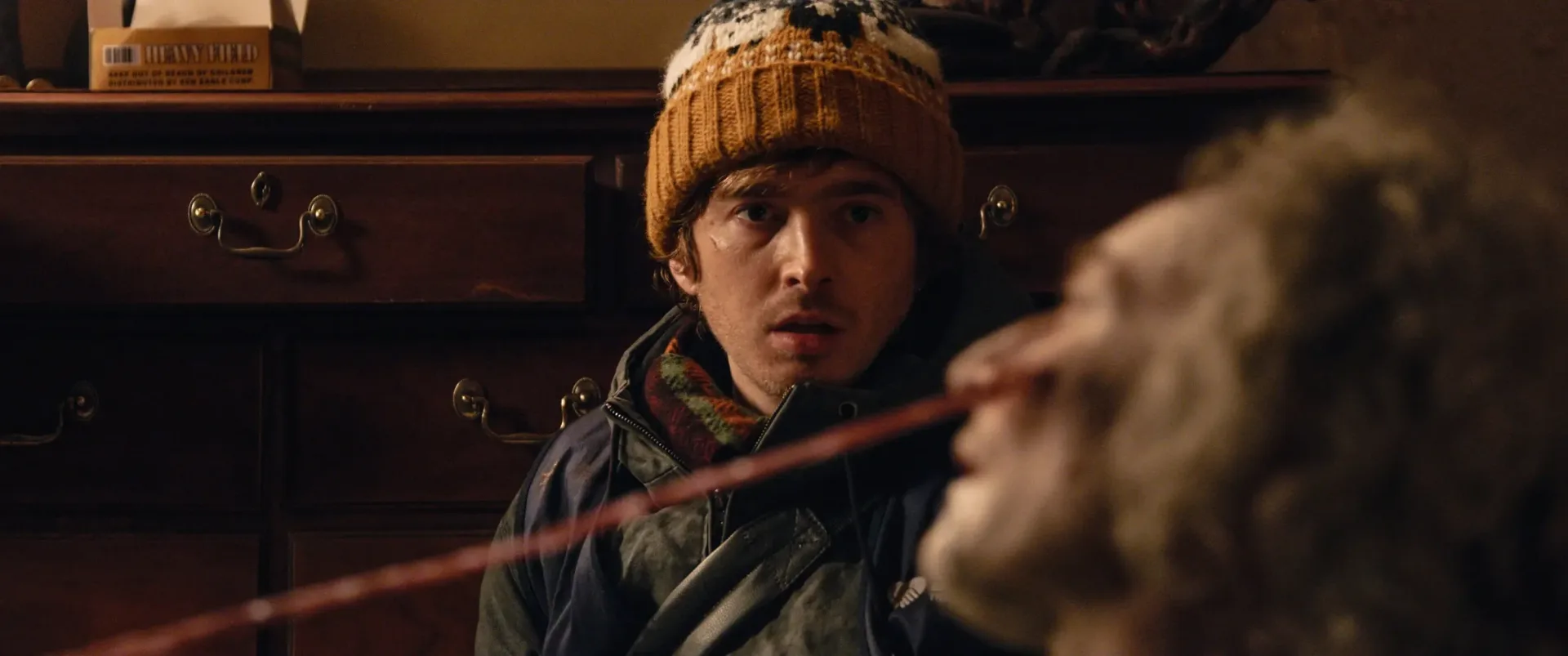
Hader’s next feature is They Know, a psychological horror film that he wrote and directed. He will also star opposite Linda Cardellini. The available details establish its genre and Hader’s multiple creative roles, but not its story, release date or wider cast. That limitation is worth stating plainly: “psychological horror” describes a mode of horror that puts mental and emotional experience at the center, but it does not tell audiences what the film’s specific scenario will be.
The project is nevertheless notable as a post-Barry move because it keeps Hader in a role that extends beyond acting. As a writer-director-star, he is responsible for a substantial portion of a film’s perspective, structure and execution while also performing inside it. The combination makes his skepticism of machine-made creative supremacy feel grounded in the kind of collaborative, hands-on work he is actually doing.
It would be premature to turn that into a prediction about the movie’s tone or quality. The supported takeaway is simpler: Hader is moving from the completed dark-comedy series into a feature built around psychological horror, with Cardellini as his co-star.
The Jonestown series remains in development
On television, Hader confirmed that he and Daniel Zelman are still working through an HBO project about Jim Jones and Jonestown. He stressed that the subject is “very rough,” and he did not offer a production schedule, cast confirmation or a guarantee that he will star. Earlier reporting had indicated that he was developing the project and could potentially appear in it; the latest update keeps the important uncertainty intact.
That careful language matters. A project being discussed or developed is not the same thing as a series that has been ordered, filmed or assigned a release date. Fans should therefore treat this as confirmation of continuing development, not as evidence that an HBO Jonestown show is imminent.
The gravity Hader attached to the material also helps explain why a simple status update is all he was prepared to give. Stories involving real, traumatic events require more than a compelling premise. Development can involve questions of approach, perspective and tone that cannot be answered by a casual tease. Nothing in Hader’s comments establishes how the project will address those issues, only that he and Zelman are still working on it.
There is still room for Documentary Now!
Not every item on Hader’s slate is so severe. He said he would be open to making more Documentary Now!, the mockumentary series made with Fred Armisen, Seth Meyers, Rhys Thomas and John Mulaney. Hader called the prospect amazing and spoke warmly about enjoying the show.
Again, openness should not be confused with a renewal or a new season announcement. No new episodes, dates or production plans were confirmed. But the comment does keep a door open for a return to the comedy series, which is a notably lighter possibility alongside psychological horror and a project about Jonestown.
Taken together, Hader’s updates show an artist moving across animation, horror, television drama and comedy while keeping a consistent emphasis on human craft. His AI comments were not a claim that technology has no place in production. They were a reminder that assistance is not authorship, and that a tool’s value should be judged partly by what it does to the people making the work. For someone who has acted, written, directed and spent long recording sessions delivering versions of the same line, that distinction is not theoretical—it is the job.