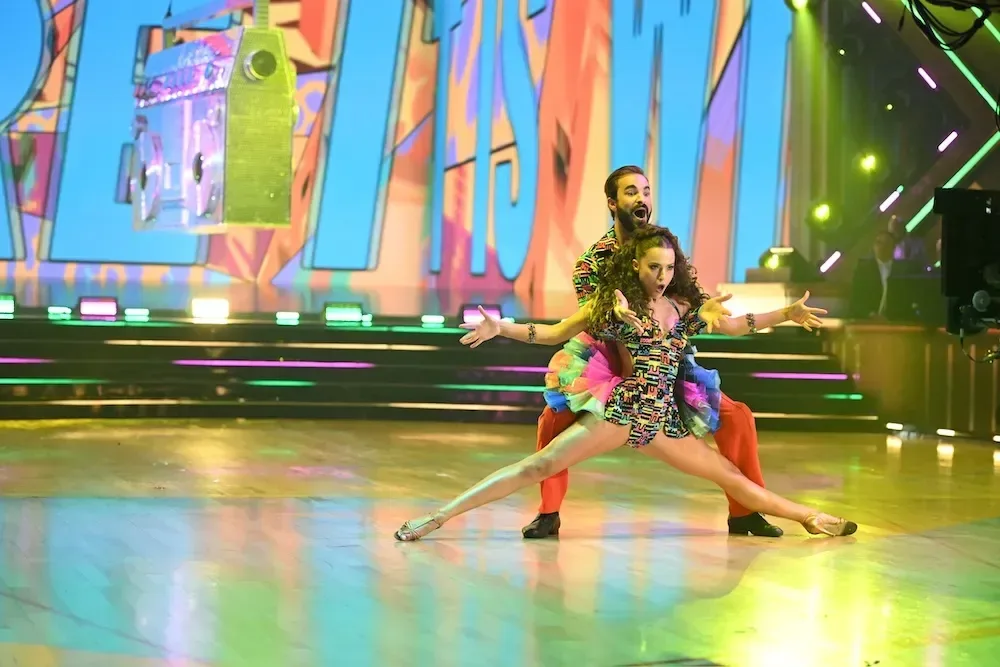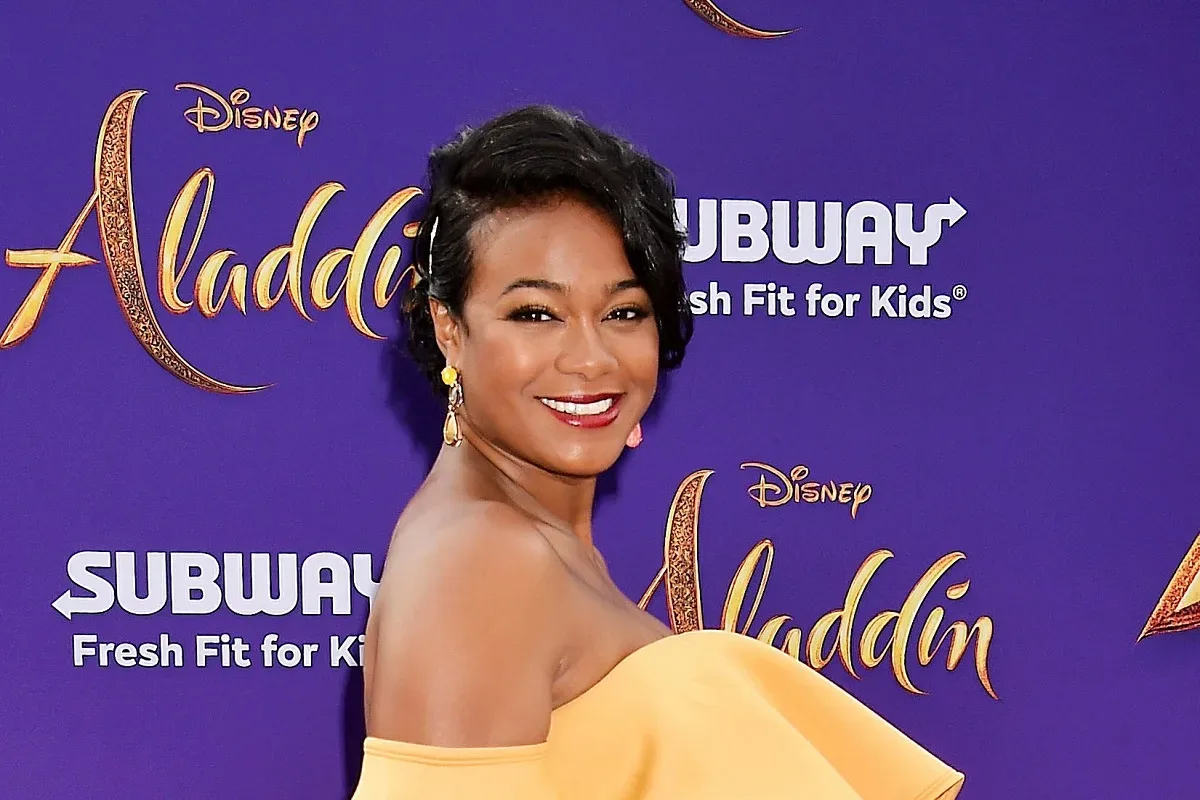
Tatyana Ali and Alfonso Ribeiro shared a television stage again for a tribute to James Avery, the actor who played Philip “Uncle Phil” Banks opposite them on The Fresh Prince of Bel-Air. The reunion came during the October 20 Dedication Night episode of Dancing With the Stars, where Ali performed with professional partner Jan Ravnik before Ribeiro joined them in the closing portion.
It was a reunion built around more than a familiar sitcom association. Ali, who played Ashley Banks, and Ribeiro, who played Carlton Banks, used the dance to remember Avery as a mentor and father figure in their lives. The routine ended with Ali and Ribeiro embracing tearfully as Avery’s portrait appeared behind them.
Ali and Ravnik earned 32 points from the show’s four judges, their best total of the season. They remained in the competition after the episode, alongside every other couple; the program instead said it would hold two eliminations the following week.
A personal song choice for a personal dedication
Ali performed a Viennese waltz to her own recording of Nancy Wilson’s “(You Don’t Know) How Glad I Am.” She selected the song because Wilson was among Avery’s favorite artists, making the music a direct part of the remembrance rather than simply a backing track selected for dance-floor mood.
A Viennese waltz is a ballroom dance in three-quarter time, generally characterized by a quicker, continually turning flow than the slower waltz. In a televised dedication format, that structure can create a feeling of sweep and momentum, while the musical choice gives the performance its emotional anchor. Here, the meaning rested in the relationship between Avery and Wilson’s work, and in Ali’s decision to supply the vocal herself.
Wilson’s original recording was a landmark in her career. Released in 1964, it led to her first Grammy win, for Best Rhythm & Blues Recording at the 1965 ceremony. That history does not change the on-floor purpose of Ali’s interpretation, but it underlines why the song carries a substantial musical legacy as well as a private connection to Avery.
The performance also places Ali in the unusual position of contributing in two disciplines at once: dancing on the program while recording the version used for the routine. Nothing in the result depends on treating that as a novelty. Instead, it made the tribute feel authored from within, with Ali’s voice helping establish its tone before she and Ravnik moved through the choreography.
Ribeiro stepped away from the host position
Ribeiro now co-hosts Dancing With the Stars. For the Avery tribute, he temporarily left that usual responsibility and entered the performance. The change mattered because it made room for the former on-screen siblings to share an active moment rather than merely acknowledge their connection from elsewhere on the set.
Related coverage includes Tatyana Ali and Alfonso Ribeiro Reunite for James Avery Tribute on Dancing With the Stars.
His appearance was reserved for the final stretch, preserving the routine as Ali and Ravnik’s competition dance while allowing the ending to become a shared memorial. It is an effective distinction: the scored ballroom piece belonged to Ali and her professional partner, while Ribeiro’s participation made its final image a reunion between two performers whose association with Avery reaches back to their time as a television family.
Ali described Avery as “very much a father figure for all of us” in the episode introduction. She also said that he taught her to think of performance as something beyond employment—a means of giving something to other people. Those reflections explain why the dedication was framed around an artistic act, rather than an isolated clip or a brief spoken mention.
Ribeiro said he felt blessed to take part. Ali said she felt fortunate that they were able to have the experience together again and that Avery would have been proud. The tearful embrace and portrait gave those sentiments a simple visual resolution, without needing to turn the moment into a recreation of their sitcom roles.
Why James Avery remains central to Fresh Prince reunions
Avery died in 2013, but his absence has remained present when members of the Fresh Prince cast gather. In 2017, Ali and Ribeiro were among the former castmates who publicly remembered him while sharing images from a reunion.
That continuity gives the dance its context. The tribute was not presented as a newly discovered connection or a one-night promotional callback. It followed years in which former colleagues have continued to identify Avery as a defining presence in their shared history.
For viewers who know Avery primarily as Uncle Phil, the performance offered an important divide between character and person. Philip Banks was the father of Ashley and Carlton within the show. Ali’s and Ribeiro’s remarks addressed Avery as a figure of paternal guidance beyond the script. The two ideas naturally overlap in the public memory of the series, yet the Dedication Night dance was explicit that the emotional significance came from their real relationship with the actor.
That is also why Ribeiro’s entry carries more weight than a standard cameo. Carlton and Ashley are remembered as siblings, but Ribeiro and Ali came together to acknowledge the performer who helped shape an environment they still describe in familial terms. The routine did not need to rely on character catchphrases, costume references or comedy to make that point.
The score matters, but it is not the whole story
The judges awarded Ali and Ravnik 32 points, their highest score of the season. In competition terms, that is a concrete sign of progress for the pair. A season-best total can improve momentum and validate work done across rehearsals and performances, even though the supplied details do not break down the individual judges’ marks or their specific critiques.
It would be a mistake, however, to reduce the night to a score. Dedication Night asks participants to make a performance carry personal significance, and the elements Ali chose—the Wilson song, her own vocal recording, Ribeiro’s involvement and Avery’s portrait—were designed around that purpose. The 32 establishes how the routine fared within the contest; the dedication explains why it stood apart for Ali.
The absence of eliminations also meant the episode did not force an immediate contrast between the tribute and a departure from the competition. Ali and Ravnik advanced, but so did the rest of the field, with two eliminations announced for the next episode. As a result, the memory of the dance can sit first as a memorial moment, rather than being immediately overtaken by a result.
A performance about continuity
Ali had chosen to honor Avery before knowing whether she would reach Dedication Night. That detail makes the routine feel less like an opportunity that appeared only after a favorable competition outcome and more like an intention she carried through the season. Reaching the episode gave her the platform to complete it with Ravnik and, at the end, with Ribeiro.
There is a clear thread connecting the night’s details: Avery’s influence on Ali’s understanding of performing, Wilson as one of his favorite artists, Ali’s decision to record the song, and Ribeiro’s return to the floor. Each element points outward from the competition toward a relationship that continued long after The Fresh Prince of Bel-Air.
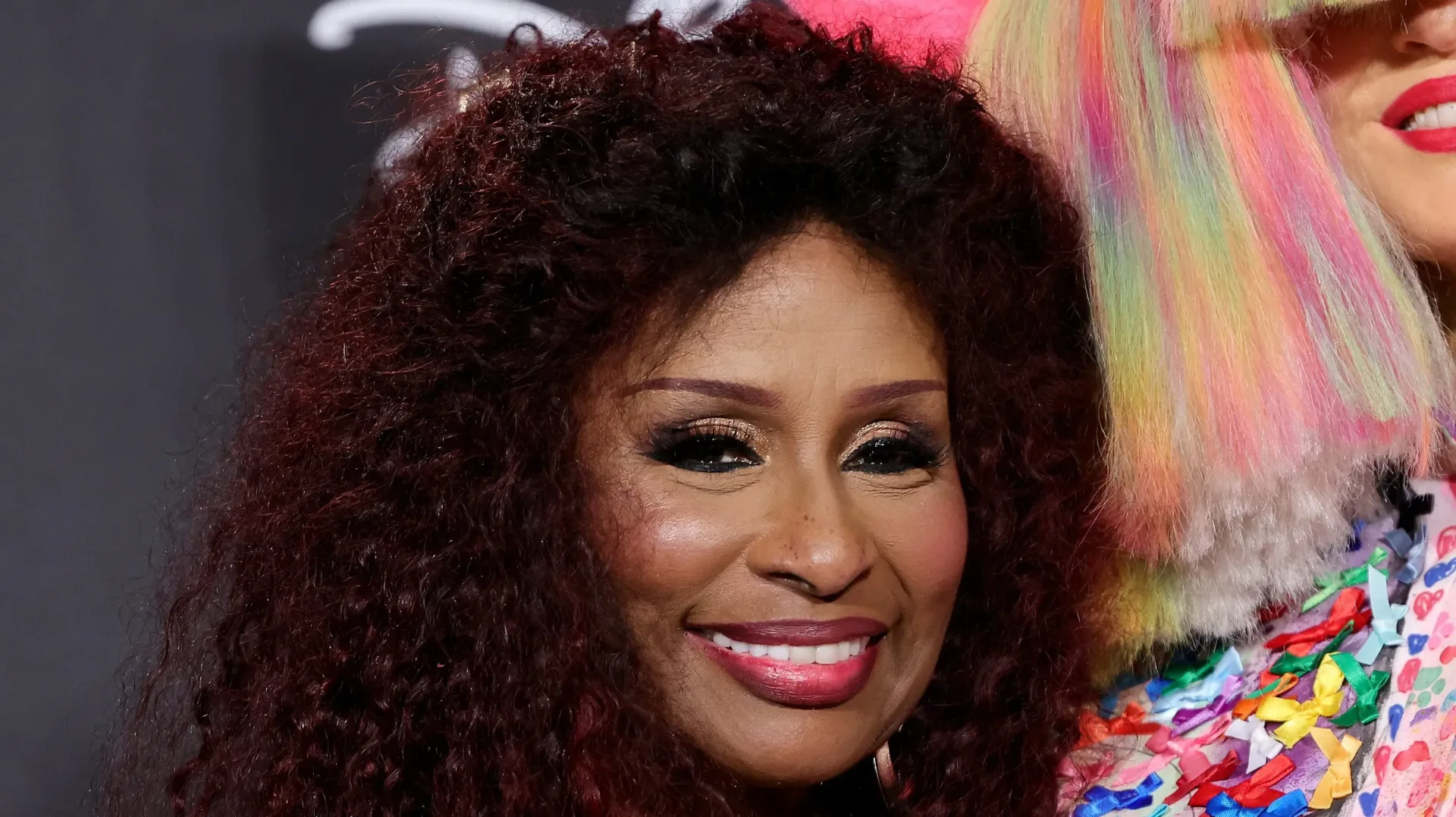
It also arrives in a wider moment of public attention for musical legacies and their keepers. Readers interested in another major singer being recognized can read about Chaka Khan’s Classic Soul honor at the 2026 Soul Train Awards. In Ali’s dance, the musical legacy was more intimate: a cherished Nancy Wilson song used to remember the man who cherished it.
The strongest image from the performance may ultimately be its least technical one: Ali and Ribeiro standing together in front of Avery’s portrait. The waltz, recording and score gave the moment its structure. Their hug made its meaning unmistakable.