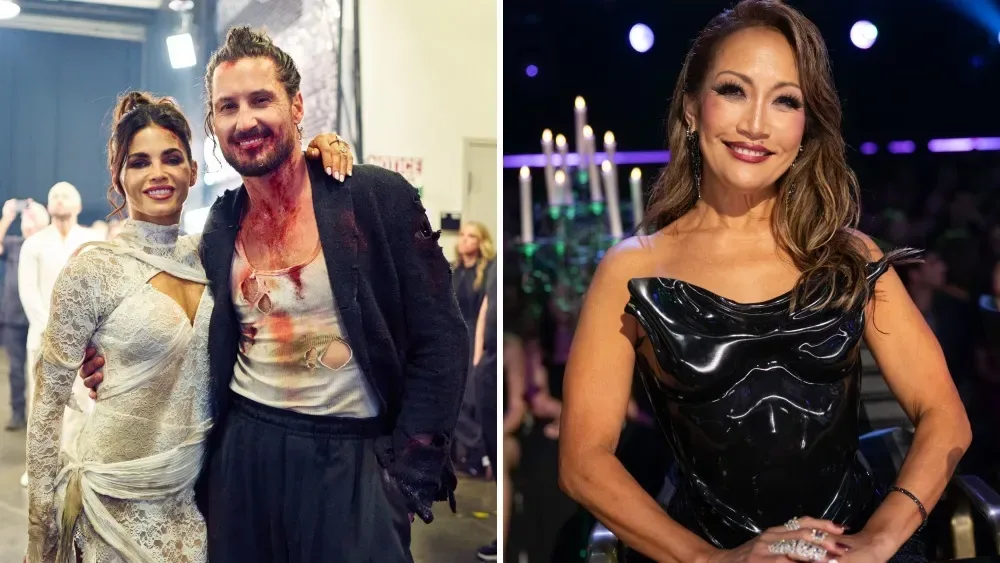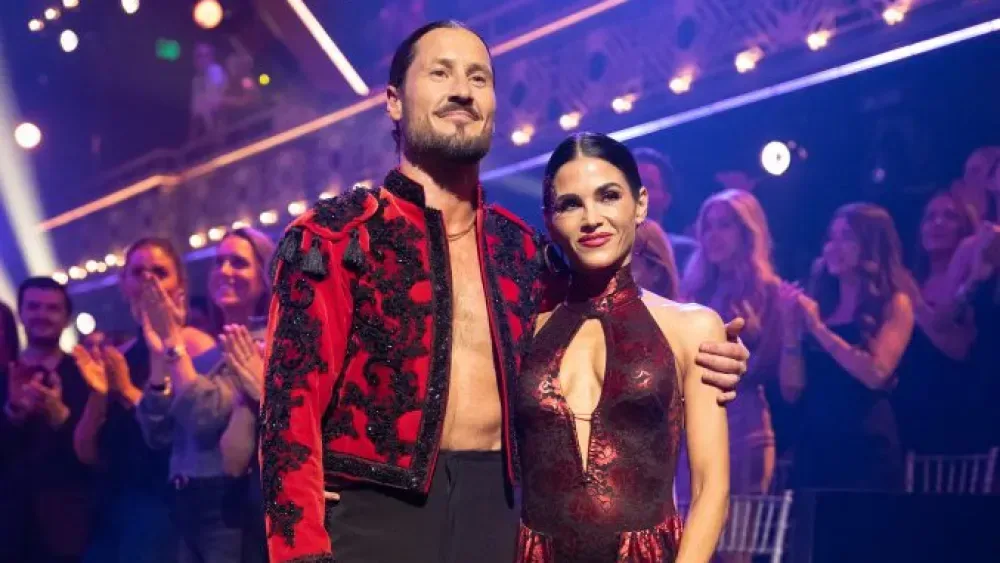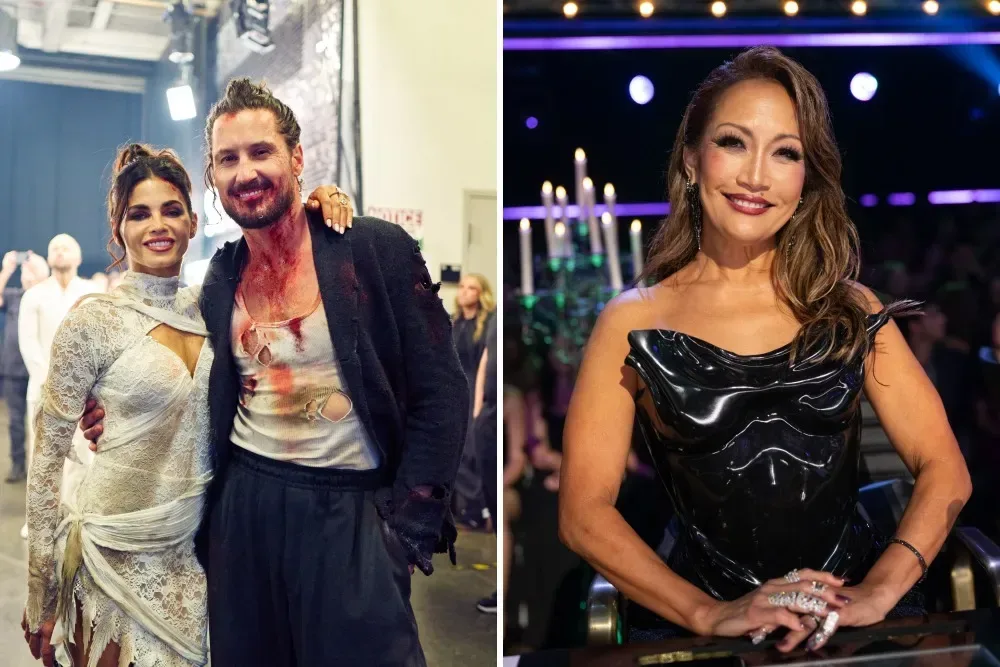
Val Chmerkovskiy has returned to Dancing With the Stars after a one-week suspension, with the dancer publicly apologizing to his partner Jenna Dewan and later reconciling with judge Carrie Ann Inaba.
The dispute grew out of a social-media post Chmerkovskiy made after the October 13 episode, when Inaba critiqued his wife, fellow judge Jenna Johnson. In a TikTok Story, Chmerkovskiy wrote that viewers “almost saw Fresh Prince enter the ballroom last night.” The remark was interpreted as a reference to Will Smith striking Chris Rock at the 2022 Oscars. BBC Studios deemed the post inappropriate and removed Chmerkovskiy from the competition for one week.
His return on Tuesday night did not simply reset the show to its usual dance-and-scores routine. It put three distinct relationships at the center of the moment: the professional partnership between Chmerkovskiy and Dewan, the judge-and-competitor dynamic involving Inaba, and the broader question of how criticism of performances should be handled when emotions spill beyond the ballroom.
An apology to Jenna Dewan came first
In the pre-dance package shown during Tuesday’s episode, Chmerkovskiy addressed Dewan directly. “We are back together. I am so sorry for all the chaos. You did not sign up for that, and I feel awful,” he said. Dewan replied that she forgave him and had missed him.
That exchange matters because Dewan was the person immediately affected within the competition format. A professional-and-celebrity pairing is built around rehearsal time, choreography, the live performance and the public evaluation that follows. Whatever the initial dispute involved, the suspension interrupted the pair’s work together. Chmerkovskiy’s apology recognized that Dewan did not choose to become part of the conflict.
It also gives the episode a clearer distinction between responsibility and fallout. Inaba’s critique of Johnson may have sparked Chmerkovskiy’s reaction, but Dewan was not connected to that critique. The on-air apology focused on the disruption caused to his own partner rather than treating the controversy as just another talking point for a reality competition package.
Chmerkovskiy and Inaba embrace after the show
After Tuesday’s broadcast, Chmerkovskiy and Inaba embraced in a moment captured across social media. Chmerkovskiy described speaking with Inaba as “cathartic relief” and emphasized that he wanted her to feel safe and hear directly from him that he held no ill will toward her.
“I want nothing but joy for her and as much as the world might say otherwise, I want her to know how I feel, not how others want me to feel, but how I genuinely feel,” Chmerkovskiy said. “I will have nothing but love for Carrie Ann. I have nothing but respect for what she has to say.”
Related coverage includes Val Chmerkovskiy Returns to ‘Dancing With the Stars’ After Suspension, Reconciles With Carrie Ann Inaba.
The emphasis on speaking firsthand is notable. Social platforms can turn a short post into an extended argument among viewers, with people assigning motives and escalating a dispute long after the people directly involved have had a chance to speak. Chmerkovskiy’s comments frame the reconciliation as a personal conversation rather than an attempt to win the online reaction.
That does not erase why the suspension happened. The post was considered inappropriate, and the program imposed a concrete consequence. But the return and embrace show a separate development: the people at the center of the conflict were able to address it directly. In a competition built on critique, that distinction is important. A judge’s feedback can be sharp or emotionally difficult without becoming a personal feud, while a competitor or professional can object to a ruling without threatening the legitimacy or safety of the judging environment.
Inaba says standards and practices limited what she could say
Earlier Tuesday, Inaba posted a lengthy Instagram statement addressing the situation. She said she had not discussed it sooner out of professional courtesy to contestants still competing and because standards and practices keep judges and competitors separated.
Standards and practices is the term Inaba used for the rules and procedures that govern conduct around the production. In this case, her description suggests limits on direct contact or public discussion while the competition remains active. The precise details of those procedures were not laid out, so it would be a mistake to assume more than Inaba stated. Her central point was that silence did not mean indifference; she was observing the boundaries she said were in place.
Inaba also said she and Johnson had already hugged after what she described as the “Super Bowl show,” calling Johnson an absolute professional and saying the two worked through the moment together. Inaba added that she later learned Johnson had been deeply hurt and offered to talk with her at any time.
That account places the original critique in a more specific context. The disagreement was not presented by Inaba as a continuing conflict with Johnson. Instead, she said they had addressed their interaction and that she remained open to further conversation. Chmerkovskiy’s later post, and the consequences that followed, became a separate issue.
For fans, the useful takeaway is that a televised judging exchange is only one slice of what occurs around a performance. Viewers see scores, comments, rehearsal packages and the live reaction, but production rules and private conversations can shape what participants are able to say publicly afterward. That can make the silence surrounding a dispute appear more absolute than it actually is.
The lift-rule discussion could outlast the controversy
Inaba also addressed a substantive rules issue: lifts. She said she had offered to discuss the lift rule and the way she enforces it, pointing followers to a video by Sharna Burgess about lifts, assists, and which dances permit them. Inaba further said she believes a new lift rule should be created for next season.
A lift rule, in the context Inaba described, is not merely an abstract judging preference. It concerns the distinction between a lift and an assist, as well as whether a particular dance allows either. Those distinctions can affect how choreography is designed, how a routine is evaluated and how judges explain their calls to viewers. Inaba’s statement does not specify what a proposed new rule would say, and no change has been confirmed. Still, her request makes clear that she sees room for better shared understanding among dancers, judges and the audience.
“Working together to create a better understanding between the dancers and the judges and our audience is important to me, as we move forward,” Inaba wrote.
That is the most practical part of the episode’s aftermath. A controversy centered on a reaction to judging may still produce a useful conversation about how judging standards are communicated. Rules work best on competition television when performers know how they will be applied, judges can articulate their reasoning consistently, and viewers can follow the difference between a permitted creative choice and a violation. Inaba’s proposal does not solve that issue by itself, but it identifies the area where clarification could be valuable.
Why the resolution is bigger than a viral moment
This story is ultimately less about a single post than about how a live competition protects the people working within it. Chmerkovskiy’s suspension established that a joke invoking violence toward a judge crossed a line. His apology to Dewan acknowledged the cost to a partner who had been pulled into the resulting chaos. His conversation with Inaba then addressed the person toward whom the post had been directed.
Inaba’s statement adds another layer: judges are not only giving opinions in the moment. They are applying rules, operating under production procedures and balancing their own public role against relationships with performers. Her call for a future lift-rule update suggests that transparency and clearer definitions may be a more constructive response than allowing competing interpretations to harden into resentment.
There is no indication in the available information of a finalized new lift policy, nor a detailed account of every conversation held off camera. What is clear is that Chmerkovskiy is back in the ballroom, Dewan accepted his apology, and he and Inaba have made amends. The next meaningful test is whether the discussion about lifts and judging can become clearer before the next season, rather than resurfacing only when another performance sparks an argument.
For more television developments, see our coverage of Melanie Lynskey’s upcoming limited-series role.