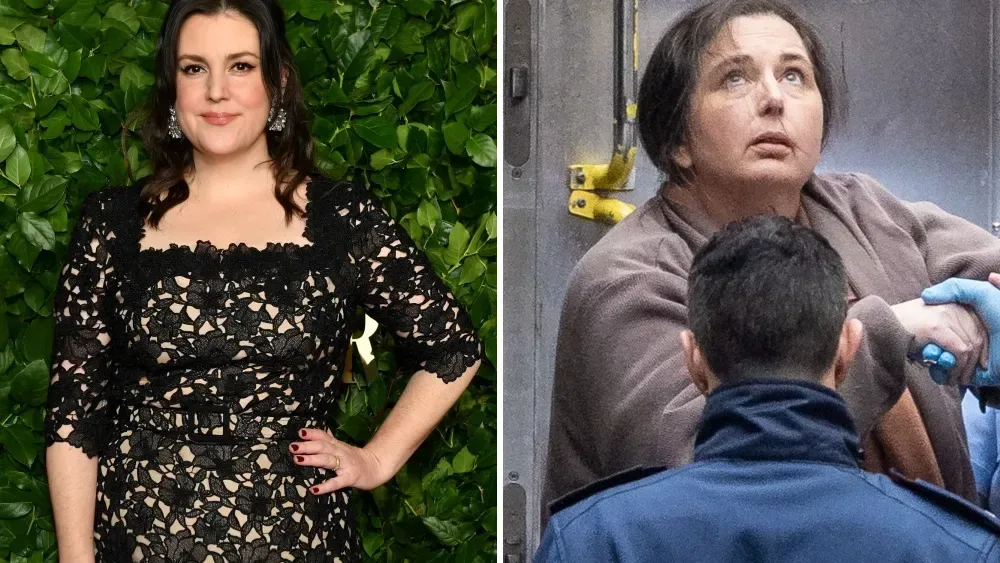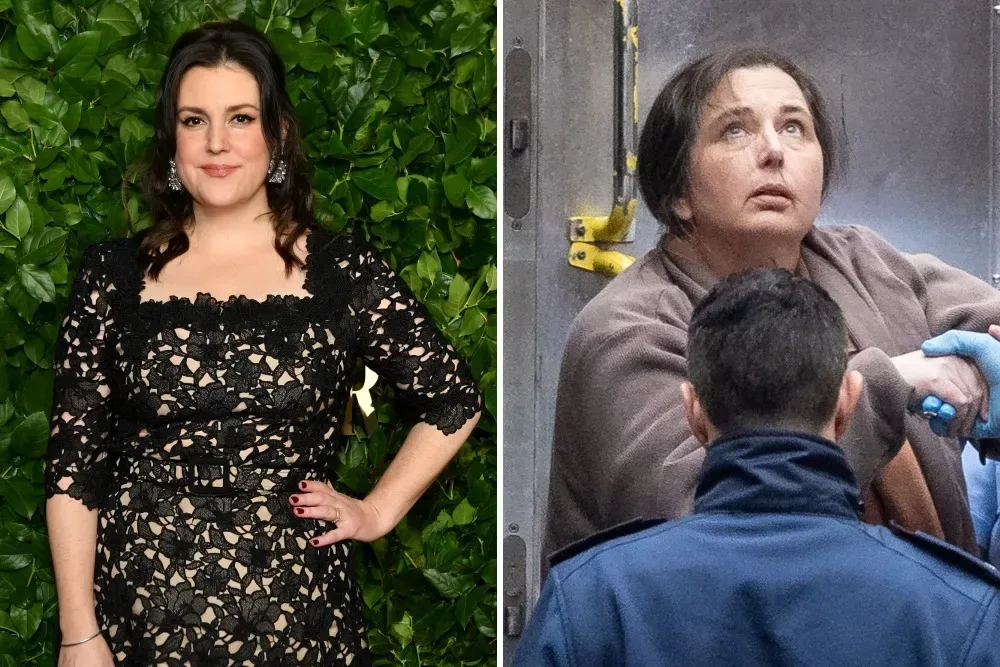
Melanie Lynskey is set to star in and executive produce Mushroom Murders, a newly greenlit Paramount+ limited series centered on the case involving Erin Patterson and toxic death cap mushrooms.
The six-episode drama will focus on a tightly defined period: the 97 days between a meal prepared for guests and Patterson’s arrest. That choice of timeframe is one of the clearest indications yet of the show’s intended shape. Rather than attempting to recount every stage of the broader case, the series is built around an escalating interval in which a seemingly domestic event develops into an investigation with devastating consequences.
Patterson was convicted on multiple counts of murder and attempted murder after preparing food for guests containing toxic death cap mushrooms. The case drew worldwide attention, and the project turns that public interest into a scripted, finite story rather than an open-ended procedural.
A limited series built around a specific 97-day window
“Limited series” generally means a television drama designed to tell a self-contained story over a predetermined number of episodes. In this instance, that number is six, with Daina Reid directing every episode. A single director across the full run can help a short dramatic project retain a consistent visual language, pace and point of view—particularly important when the narrative covers a concentrated span of time.
The confirmed 97-day structure also establishes an inherent source of tension. The audience knows from the project’s premise that an arrest is coming, but the drama’s central question is likely to concern the route toward that moment: how suspicion develops, how investigators work through uncertainty, and how the people connected to the meal respond as the stakes become clearer.
That is distinct from a conventional whodunit. A whodunit usually organizes its mystery around identifying the person responsible. Mushroom Murders, as described, is more closely positioned as a real-life investigation drama. Its suspense comes from chronology, pressure and the narrowing space between a meal and an arrest, not from the promise of a fictional puzzle with a concealed answer.
The decision to stop the stated scope at the arrest is significant. It means the series’ dramatic center is the period of uncertainty and investigation rather than a broad retelling of court proceedings. It also gives the creative team a concrete endpoint that can support a six-episode format without requiring the story to extend beyond its announced focus.
Lynskey’s dual role matters
Lynskey’s involvement is not limited to the lead performance. She will also serve as an executive producer, placing her among the project’s senior creative contributors. An executive producer credit can cover different responsibilities from production to production, so it should not be read as a detailed description of day-to-day duties. At a basic level, though, it signals a role beyond acting alone and a closer connection to the show’s overall development and execution.
Related coverage includes Melanie Lynskey to Star in Paramount+’s ‘Mushroom Murders’.
Her recent television work makes the casting a notable fit for a character-driven limited drama. Lynskey currently stars in Paramount+’s Yellowjackets, which is heading into its fourth and final season. Her work on that series has earned two Emmy nominations for lead actress in a drama. She also received a 2023 Emmy nomination for a guest performance in The Last of Us.
Her previous credits include Two and a Half Men, Candy, Togetherness and Mrs. America. That body of work spans comedy, ensemble television, historical drama and true-crime-adjacent material. For Mushroom Murders, the key practical point is not that any one prior role predicts the new performance, but that Lynskey arrives with experience carrying emotionally complicated television stories across multiple tones.
Her presence also gives Paramount+ a recognizable lead for a series based on a case with strong international awareness. In a short-form, real-life drama, the lead performer has a particularly large task: anchoring the show while leaving room for investigators, guests and other affected figures to have narrative weight. The announced executive-producer role suggests Lynskey will have a stake in how that balance is developed.
The team behind the series
Mushroom Murders was created by Anya Beyersdorf, Daina Reid and Deb Balderstone. All three will executive produce, while Reid will direct all six episodes.
Beyersdorf will write with Dianne Taylor and Belinda Chayko. The writing team includes several creators with credits connected to Fires and Dustfall, while Beyersdorf’s previous work includes Fake and Apple Cider Vinegar. Reid’s directing credits include The Handmaid’s Tale, Shining Girl and Run Rabbit Run. Balderstone’s credits include Ticket to Paradise and Palm Beach.
Those credits do not reveal how the series will dramatize each event, and none have been announced as a guide to its exact tone. They do, however, outline a production led by people whose work crosses drama, suspense and Australian screen storytelling. With Reid directing the complete run, the show has an established creative lead bridging the creator and director positions.
Xavier Marchand is also an executive producer, alongside Sophia Mogford for Paramount+. Soapbox Pictures will produce the series.
Why the death cap detail is central to the premise
The title and the reported case both place mushrooms at the center of the story, but the relevant term is specific: death cap mushrooms. The supplied details identify them as toxic. That specificity is crucial because it is not merely atmospheric true-crime branding; it is the factual element that connects the meal to the alleged poisoning and the subsequent criminal case.
For the series, the mushroom detail creates an unusually ordinary setting for an extraordinary event. Meals often carry associations of hospitality, familiarity and trust. A drama set in the aftermath of a meal can draw tension from the collapse of those expectations, then trace how concern becomes scrutiny. The premise therefore has both an investigative dimension and a human one: the people affected are connected by a shared occasion before they are connected by an investigation.
That does not mean the series should be treated as a substitute for legal reporting or a documentary record. A scripted dramatization uses performers, scenes, dialogue and structure to tell a story. The confirmed facts establish its subject and timeframe; they do not tell viewers in advance how each scene will be written or which perspectives will receive the greatest emphasis. The six-episode format should be evaluated on what it ultimately presents, rather than assumptions made from a headline or a real case alone.
What has been announced—and what has not
The announcement establishes several key production facts: Paramount+ has greenlit the series; Lynskey will star and executive produce; the story will cover the 97 days between the meal and Patterson’s arrest; and Reid will direct all six episodes.
It does not provide a release date, a premiere window, a full cast list or character breakdowns. It also does not set out episode titles, a trailer, a production-start date or a detailed account of how the show will divide its time among the investigation and the people involved. Those are meaningful omissions for audiences deciding what kind of series this will be, so it is best not to fill the gaps with guesses.
For now, the most accurate description is a six-part Paramount+ limited drama with Lynskey at its center, focused on the period leading from the meal to Patterson’s arrest. The project is part of a broader continuing TV slate for the actor, whose Yellowjackets run is approaching its final season. Readers following other major television casting and development news can also see the latest update on the next chapter of the Friday film series.
The challenge of turning a real case into drama
Real-life crime adaptations face a basic creative challenge: they must create a coherent dramatic experience without blurring the difference between dramatized scenes and established public facts. A narrowly defined timeframe can be useful here. It keeps the narrative focus on a particular sequence of events and can discourage a project from trying to encompass every public development surrounding a case.
At the same time, a 97-day structure can make each development carry more weight. The show will need to portray movement from uncertainty toward arrest in a way that is comprehensible to viewers while respecting the seriousness of the underlying deaths and attempted murders. The announced creative team and six-episode plan set the framework; the final series will determine how responsibly and effectively it uses it.
The most concrete takeaway is that Mushroom Murders is not simply a title attached to a headline-generating case. It has a defined narrative boundary, a complete episode count, a single director for the full season and a lead actor who is also joining the executive-producing team. Those elements point to a deliberately contained television project, with the 97-day interval serving as its dramatic clock.