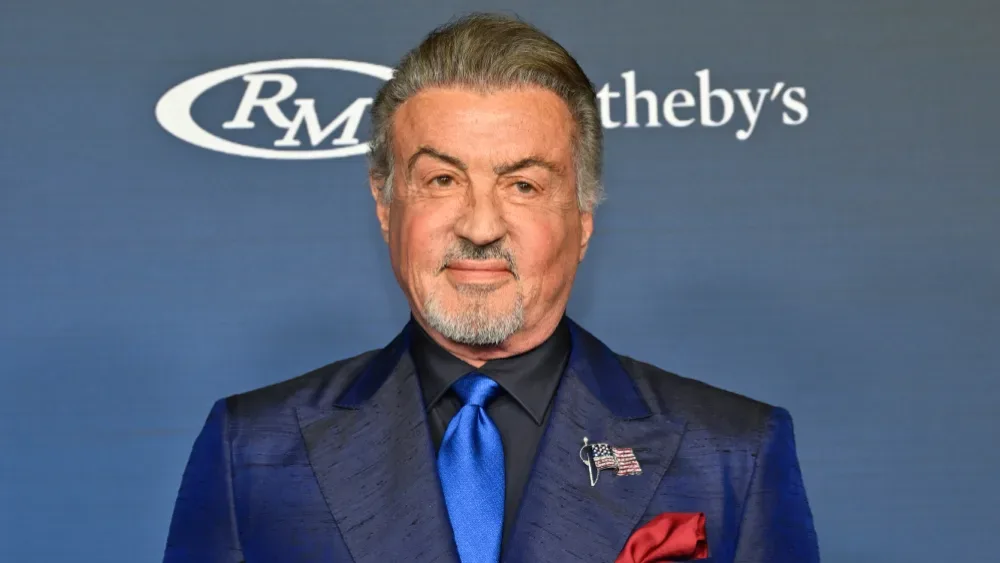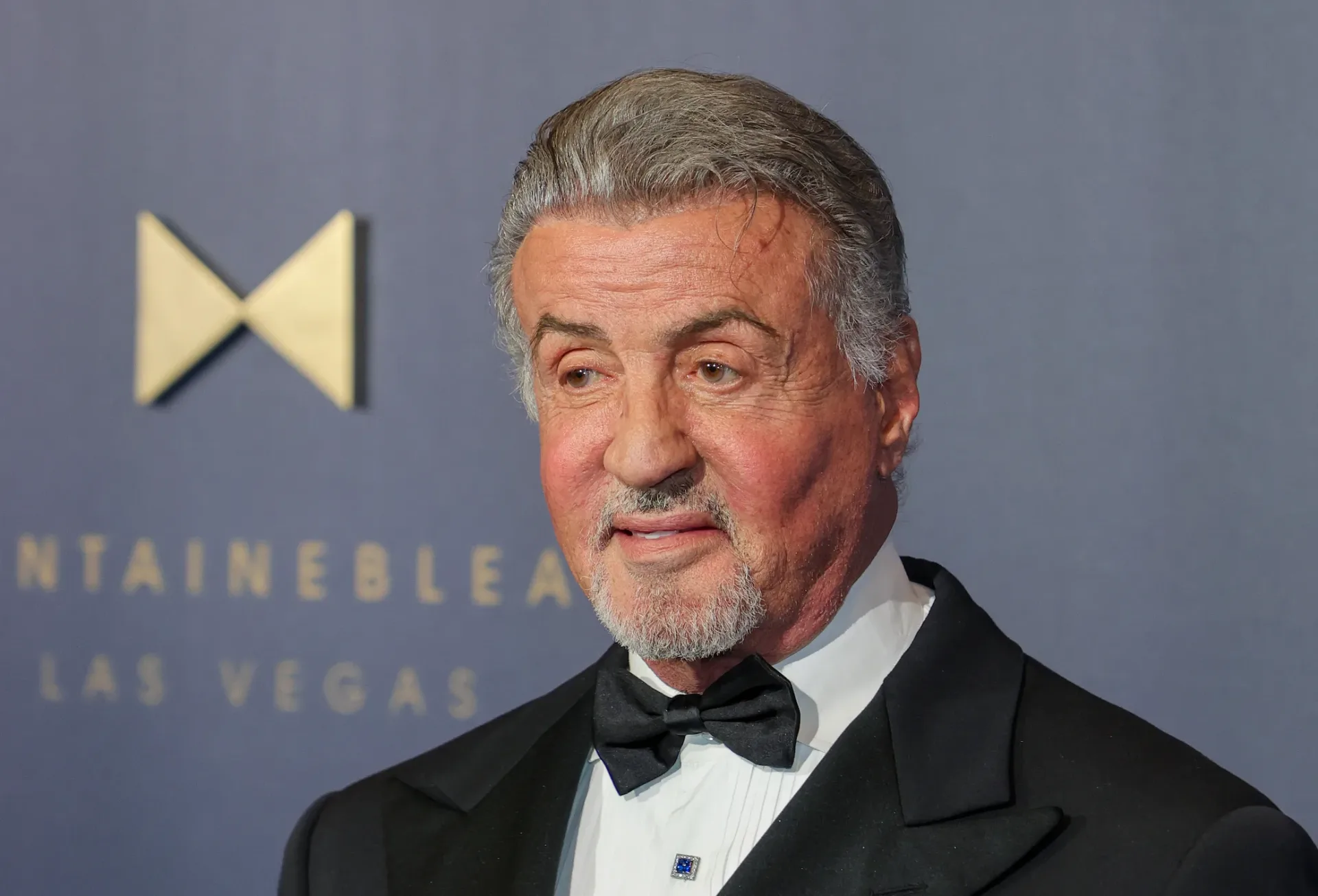
Sylvester Stallone has made his position on artificial intelligence in filmmaking unusually plain: he expects it to remain, expects fierce resistance to it, and believes refusing to engage with it will not make it disappear. The actor said he faced substantial pushback over an idea for a hybrid production combining human performance and AI, but he remains prepared to take that chance.
The comments return attention to a project Stallone has discussed before: a proposed way to play a younger John Rambo using AI alongside de-aging visual effects. That pitch did not move forward. A separate John Rambo origin movie is currently in development with Noah Centineo set to play the character; Stallone is not involved in that production.
What makes Stallone’s argument more complicated than a simple technology endorsement is that he agrees, at least in part, with the objections coming from the creative community. He described the criticism as valid, while arguing that the direction of travel is nonetheless unavoidable. It is a very Stallone-shaped stance: take the punch, acknowledge it hurt, then insist the training montage has already begun.
The Young Rambo Idea Was About More Than Looking Younger
Stallone previously outlined a scenario in which AI could help place his likeness into an 18-year-old Rambo story set in Saigon. His basic case was that the technology had become capable enough to construct a younger version of the character with his own image, making the concept less implausible than audiences might initially assume.
It is important to separate two ideas that often get folded together under the broad label of “AI.” De-aging visual effects alter or reconstruct an actor’s apparent age for a performance. The term can cover multiple digital techniques, including face replacement and manipulation of facial detail. AI-assisted likeness work, as Stallone is discussing it, raises the prospect of using trained systems to reproduce or modify a performer’s recognizable image as part of the final screen performance.
Those concepts can overlap, but they are not automatically the same thing. The first question is creative: can a younger-looking version of a familiar actor serve the story? The second is personal and industrial: who controls the image, what permission was granted, and where does the boundary sit between an actor’s work and a digitally generated extension of that actor?
Stallone’s terminology—“half-human, half-AI”—is broad rather than a description of a confirmed production workflow. There is no released film, finished test, or stated production plan attached to the remark. The concrete point is narrower: he wanted to explore a movie that combined a human element with AI, and the effort prompted opposition.
“AI is here to stay,” Stallone said, while also conceding that creative-community concerns are justified.
Related coverage includes Sylvester Stallone Says AI Is Here to Stay Amid Young Rambo Debate.
Why the Backlash Is Not Just About Nostalgia
A Rambo story with Stallone presented as a much younger man would put several uncomfortable questions into one very recognizable headband. Fans may see continuity and a chance to preserve an original performer’s connection to a defining role. Critics may see an example of how digital versions of established stars can concentrate opportunities around people who are already famous.
Stallone himself identified that latter concern when discussing young actors. His daughter, Scarlet Rose Stallone, is an actress, and he said he had advised her to consider gaming or another field because AI could make acting even harder to enter.
That warning matters because the debate is not only about whether an older star can plausibly portray a younger character. It is also about the work surrounding that choice. A production that leans on a famous person’s past appearance may create fewer openings for a new performer to become associated with a major role. That does not mean every AI-assisted production necessarily removes a job, nor does the available information establish what the abandoned Rambo proposal would have required. It does mean that the concern is easy to understand in a profession where landing one visible part can be career-defining.
Stallone’s position contains this tension. He argues that performers and studios have to face an accelerating technology rather than wait to be overtaken by it. Yet he also says the technology could raise the difficulty for those trying to get their first meaningful chance. It is not a contradiction so much as an admission that adapting to a new tool can be personally attractive while still creating a harsher marketplace for other people.
Consent Is the Crucial Detail Behind an “Avatar” Future
Stallone also referred to people selling their images and suggested audiences could see many avatars of deceased stars such as Elvis. That observation points toward the central practical issue in screen AI: likeness rights. A likeness is the recognizable identity conveyed by somebody’s face, voice, gestures, or other distinctive traits. In an AI context, conversations about likeness generally turn on whether its use was authorized and on the specific terms of that authorization.
For living actors, the immediate questions are straightforward even if the answers may not be: Did the actor agree? Did they know how their image could be used? Does the permission cover only one scene, one project, or future uses? For performers who have died, questions around control and permission do not become less important merely because the performer cannot personally participate in the conversation.
None of those details have been provided for Stallone’s unmade proposal, so they should not be assumed. But they explain why a phrase such as “same image” can trigger much bigger concerns than a conventional effects discussion. A digitally modified stunt may be one thing. A system that enables a familiar star’s younger self to appear in a wholly new feature is another scale of creative and commercial decision.
That distinction will matter to viewers, too. An audience may accept a digital tool used to support a performer in a scene, yet be much less comfortable if the tool becomes a substitute for a performer or an engine for unlimited new versions of a legacy identity. The line will not be identical for every fan or every project. Clarity about what is being made and whose permission supports it is likely to matter more than the buzzword itself.
There Is Already a New Rambo Path, Without Stallone
The timing of Stallone’s comments is notable because a different route to a younger Rambo is already underway. Centineo is attached to lead the in-development John Rambo origin movie, while Stallone has no involvement in it. That makes the stalled AI concept less a replacement for the new project than an alternative creative path that did not win out.
The two approaches imply very different priorities. Casting another actor permits a new performance and a new interpretation of the role. Re-creating Stallone at a younger age would instead preserve a direct visual connection to the original actor. Neither approach automatically determines whether a movie will work; they are fundamentally different answers to the question of what an origin story is supposed to deliver.
For a franchise character, that choice also affects expectations. A recast tells audiences to meet a new performer on the character’s terms. An AI-assisted younger version of the original star invites audiences to evaluate the recreation itself: does it feel like the person they remember, and does that familiarity add to the story or pull attention away from it? The technical feat can easily become the main event if the movie cannot give viewers a reason to care beyond recognition.
Gaming Is an Odd but Relevant Part of Stallone’s Warning
Stallone’s advice that his daughter should look toward gaming lands as a pointed aside, not a detailed claim about the games business. Still, it highlights how quickly AI debates now travel between film, television, voice work, performance capture, and interactive entertainment. In each field, the conversation ultimately returns to identifiable people: performers whose voices or faces may be reproduced, artists whose work may be affected, and newcomers trying to establish themselves.
Gaming is not automatically an escape hatch from those questions. It is a creative field with its own performers, visual artists, writers, developers, and audiences. What Stallone’s comment most clearly conveys is his sense that acting will become more difficult as AI-capable tools spread—and that he sees the broader creative economy, rather than one isolated medium, as the place where that pressure will be felt.
The same broader concern is visible outside entertainment, where questions of autonomy and safeguards are also emerging around AI systems. Recent concerns around AI agents and unauthorized account activity are a reminder that “AI” is not one product or one creative decision. Its real-world consequences depend on permissions, controls, accountability, and how much authority people choose to hand over.
Stallone’s Argument Is an Argument for Engagement, Not a Finished Blueprint
Stallone is not presenting a completed young-Rambo film or a detailed standard for AI use. He is presenting a worldview: the technology is moving forward, public and industry resistance will be intense, and creators who ignore it risk being left behind. His “avalanche” metaphor is deliberately forceful, but it also reveals the weakness in treating adoption as the only available response.
Technology may be difficult to halt, but specific uses remain decisions. A production can decide whether it wants a recast, traditional de-aging work, AI-assisted imagery, or no return to a character at all. It can also decide whether to explain those choices plainly and how it will account for the people whose images, voices, or opportunities are involved.
That is the real friction at the heart of Stallone’s comments. The question is not simply whether audiences will eventually see convincing younger versions of famous performers. It is whether the creative industries can make those choices in ways that respect consent, preserve meaningful human work, and give new actors room to become the next stars rather than merely supplying raw material for the last generation’s digital encore.