IAMDDB says she is seeking advice after an AI-generated rap video circulated by Israel’s official social-media accounts featured a performer who appeared to resemble her. The Manchester-raised rapper and singer has denied taking part in the video, authorizing her likeness, or endorsing its political message.
The dispute is not over a newly released IAMDDB track, appearance or collaboration. It concerns a video titled “Jews from Judea (We DID)”, which depicted an AI-made rapper performing before a crowd. Its lyrics argued for Jewish historical ties to the region in response to claims of colonialism, while the accompanying caption answered “GO BACK WHERE YOU CAME FROM!” with “We did.”
Israel’s official accounts later removed the video. No established reason for the removal has been provided.
At the centre of IAMDDB’s response is a straightforward but consequential claim: an artist should not be made to appear connected to a message they did not agree to communicate. That distinction matters especially in a politically charged context, where a convincing visual resemblance can be interpreted by viewers as participation, endorsement or direct creative involvement.
For more context, explore iPhone Duo’s Unfolded Design Can Tip on Some Upright MagSafe Stands.
Why the comparison drew attention
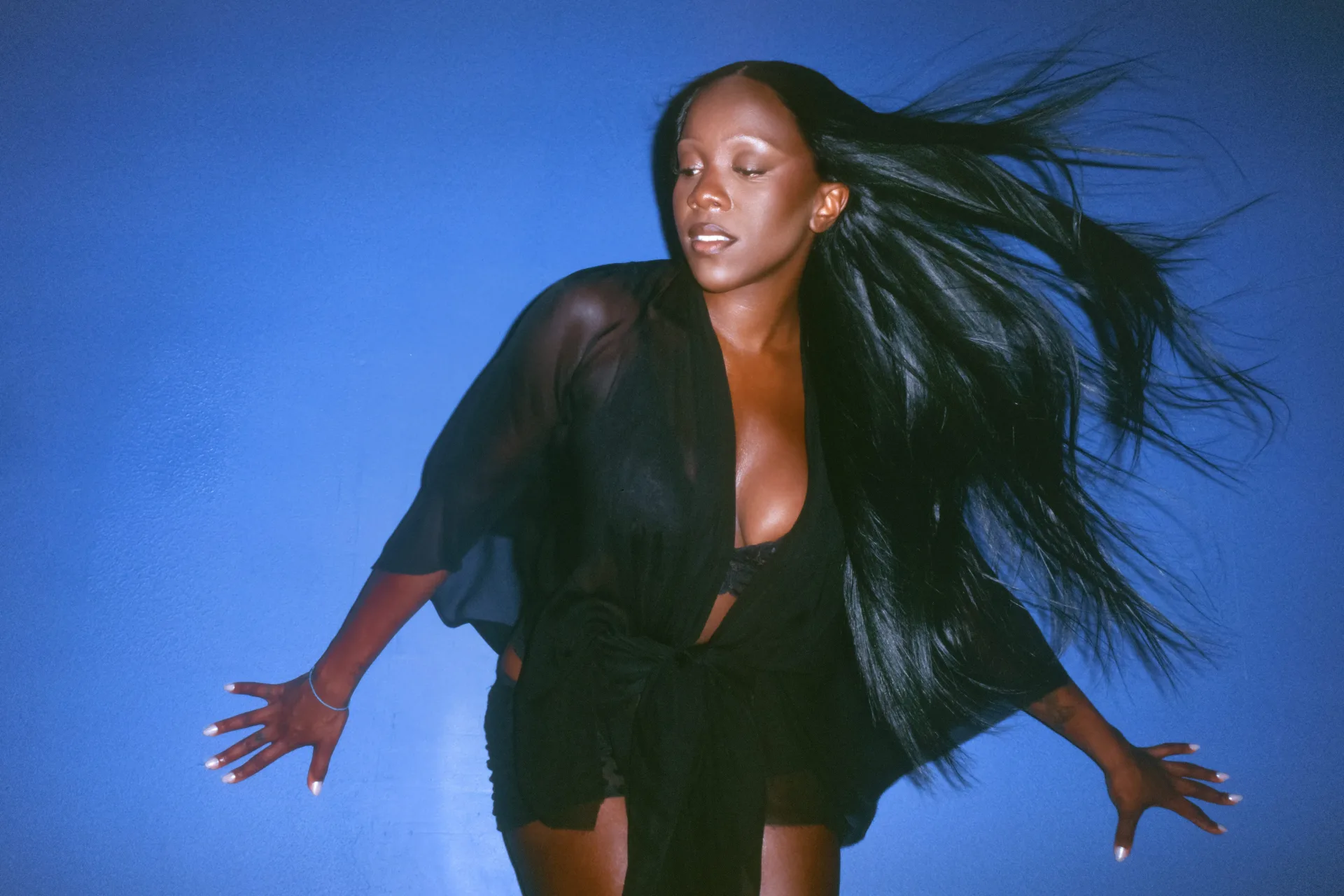
Attention focused on a photograph of IAMDDB taken by Jackson Bowley for a profile published on January 8, 2018. Activist Rafael Shimunov pointed to that image as a possible explanation for the similarity between the artist and the AI performer.
The apparent resemblance was not limited to a general facial similarity. Side-by-side comparisons noted a matching overall presentation: braids, a black cropped top and branded trousers. The generated character wore a closely comparable outfit, including altered logo-like text. BALR. appeared as “RALA.” while Calvin Klein became “Calvin Kale.”
Those visual parallels explain why viewers connected the generated performer to IAMDDB. They do not, on their own, establish how the video was made or what material was used in an AI system. Shimunov alleged that the photograph had been fed into an AI tool, but the comparison itself did not prove that claim.
Director Eyal Ben Moshe, also known as Eyal Be, denied setting out to copy IAMDDB. He said he did not know who she was and could not identify which photographs an AI system may have drawn upon. That leaves a key factual question unresolved: whether the resemblance came from a particular reference image, broader training material, prompt choices, stylistic coincidence, or some combination of factors not publicly identified.
What an AI likeness dispute means
An AI likeness dispute concerns the use or apparent reproduction of recognisable aspects of a person’s identity in generated media. That can include a face, hairstyle, clothing, voice, mannerisms or the cumulative effect of multiple details. The important issue here is not merely whether a generated character is identical to a real person. It is whether the finished work gives a reasonable viewer the impression that a particular artist is being depicted or involved.
That is a different question from proving the exact path of an image through a generative system. A visual comparison can make a resemblance clear to an audience while still leaving the technical origin uncertain. Conversely, a creator’s lack of intent to depict a person does not necessarily settle how audiences read an image once it is published. Both the production process and the public-facing result can matter in a dispute over identity and attribution.
The episode also shows why altered branding does not necessarily make a generated image feel detached from a reference. In this case, the parody-like substitutions in the outfit arguably make the similarity more conspicuous rather than less, because the clothing configuration remains recognisable even as the words change.
IAMDDB separates the video from her own history
IAMDDB first challenged the post on October 16, asking why her identity had been used for material she had not agreed to. In a fuller statement posted October 20, she also addressed an earlier performance in Israel.
She said that show had been arranged by former management when she was a younger artist keen to travel, before she understood the situation as she does now. She said she would have made a different decision with that later understanding. She further said the previous performance should not be interpreted as support for the Israeli government’s actions.
Her statement expressed support for Palestinian people and opposition to the killing and suffering of civilians. It also rejected the prospect of AI being used to place artists inside communications they never approved.
“I am taking advice and exploring the appropriate steps to protect my image, my work and my rights,” IAMDDB said.
That wording does not identify a specific legal action or guarantee that one will follow. It does, however, make clear that she is considering how to respond to the alleged use of her identity. Until more detail emerges, it is important not to turn her exploration of options into a claim that a case has been filed, decided or proven.
The practical stakes for performers and audiences
For artists, identity is part of the work. A public image can be built over years through music, photographs, live performances, fashion, videos and direct communication with fans. A generated clip that appears to place an artist in a song, campaign or political statement can affect how audiences understand that image, even if the artist never stepped into a studio or approved a frame.
For viewers, the case is a useful reminder to distinguish between a familiar-looking performer and a confirmed collaboration. The presence of a recognisable face, styling choice or apparent celebrity voice is not evidence by itself that the individual participated. Context matters: official account sharing can lend a post an air of authenticity, but it does not replace confirmation from the person depicted.
This is particularly relevant when generated media is used in advocacy or political messaging. The reputational stakes rise because the question is not simply whether a celebrity is being imitated. It is whether their apparent presence may cause viewers to associate them with a position they do not hold. IAMDDB’s response explicitly rejects that association.
There is also a creative-credit dimension. Even where a generated figure is presented as fictional, a design that strongly evokes a working artist can draw on the visual language that artist has cultivated. The dispute around the video illustrates that AI debates are not only about whether a system can make an image. They are also about consent, attribution, control and the gap between a creator’s stated intention and the message an audience receives.
What remains known—and what does not
- IAMDDB says she was not involved in the video and did not agree to its message.
- The video was shared through Israel’s official accounts and later removed.
- A prior photograph and the generated performer have been compared because of similarities in appearance and clothing.
- IAMDDB is taking advice and exploring measures to protect her image, work and rights.
- The available comparison does not establish that a specific IAMDDB photograph was used as AI input.
- The director said he did not knowingly copy IAMDDB and could not identify the images the system may have used.
- No reason for the video’s removal has been established.
Those boundaries are crucial. It is reasonable to report IAMDDB’s objection and the noticeable similarities that triggered it. It is not justified, on the available information, to present an unproven technical allegation as settled fact or to claim a final resolution where none has been announced.
As generative media becomes more visible in music-adjacent visuals, advertising and public messaging, the line between “inspired by,” “similar to” and “presented as” will remain under pressure. This incident is a sharp example of why artists may want clear channels to challenge apparent impersonation—and why audiences should be wary of treating a polished AI image as proof of a real person’s consent.