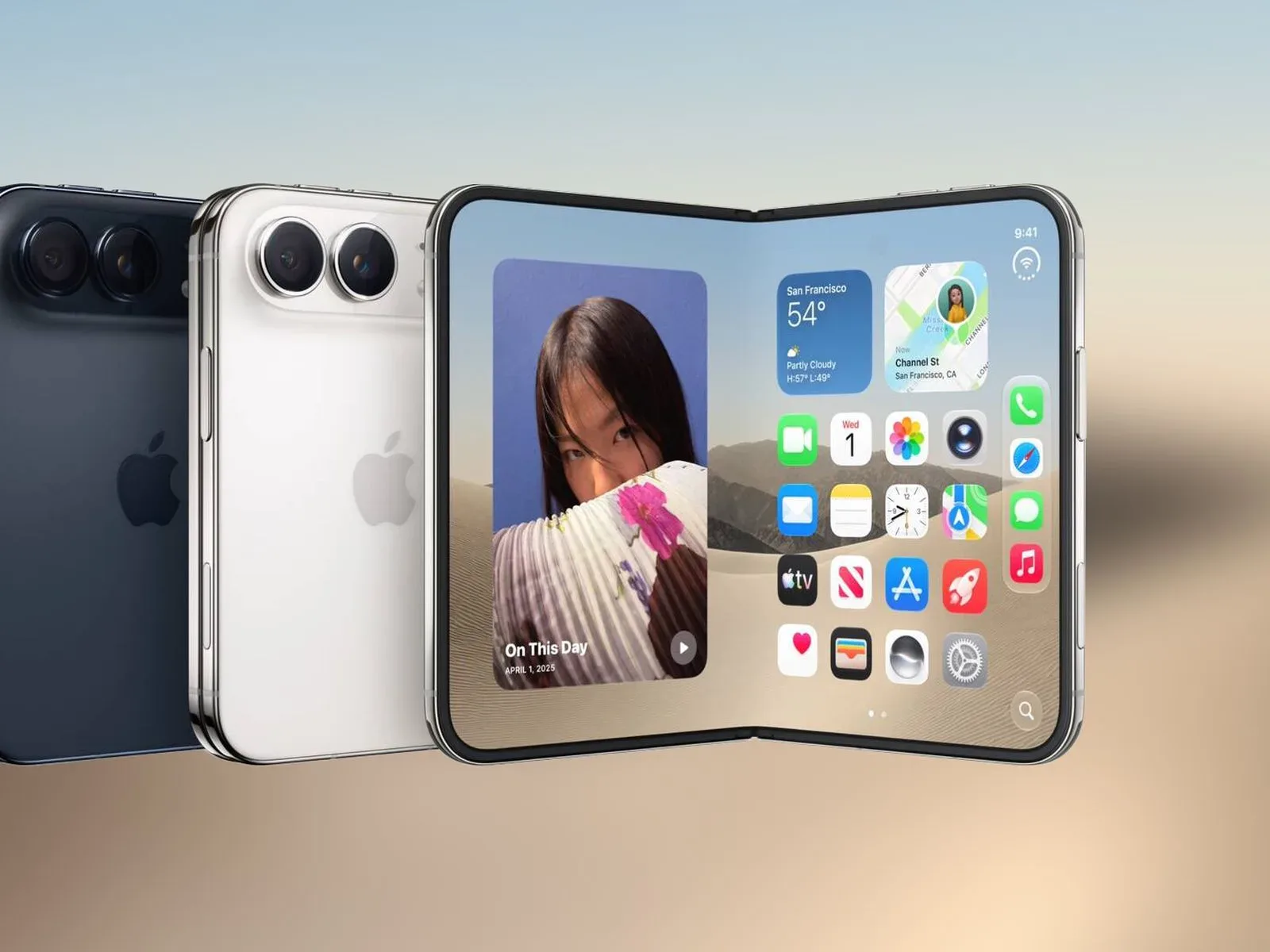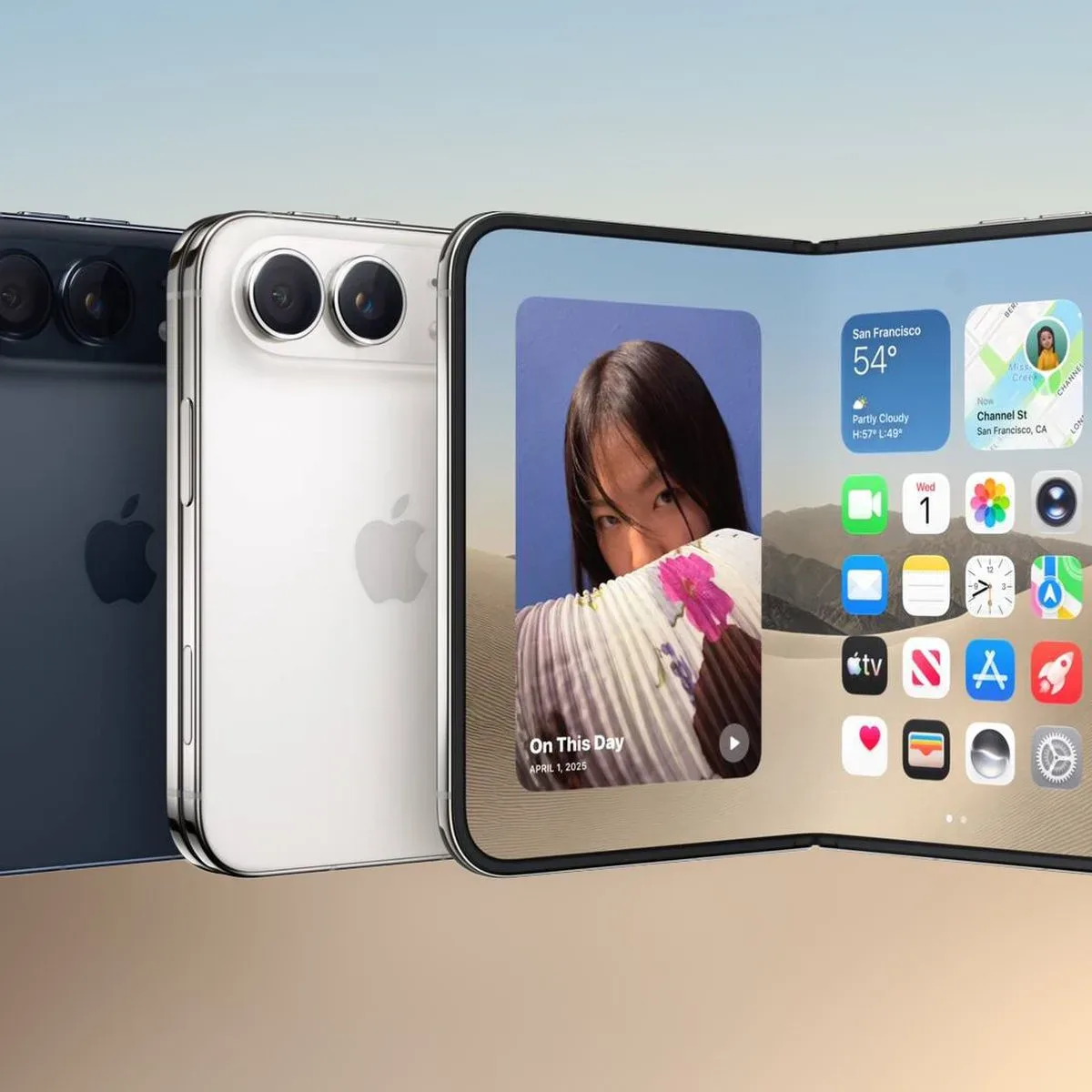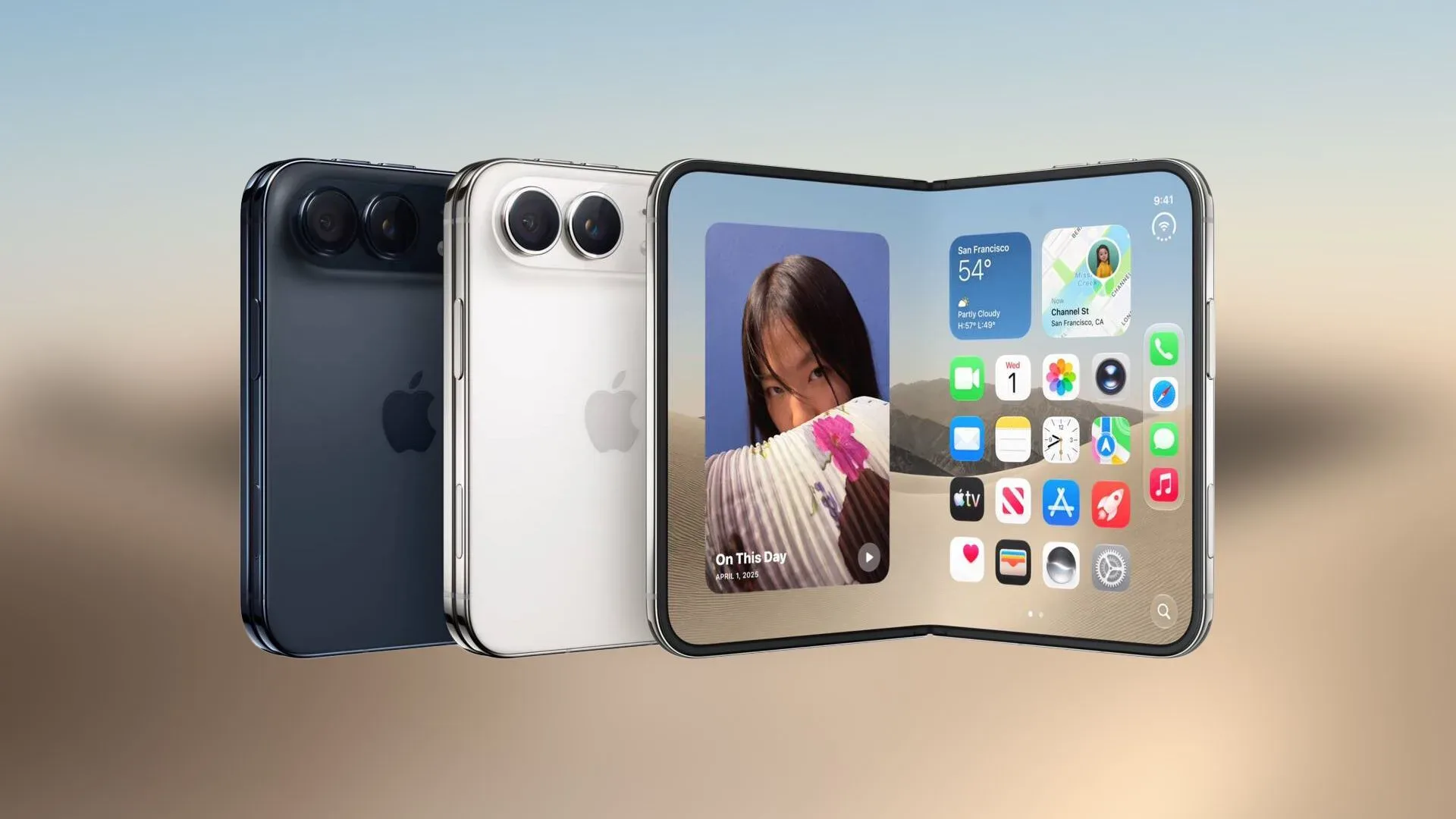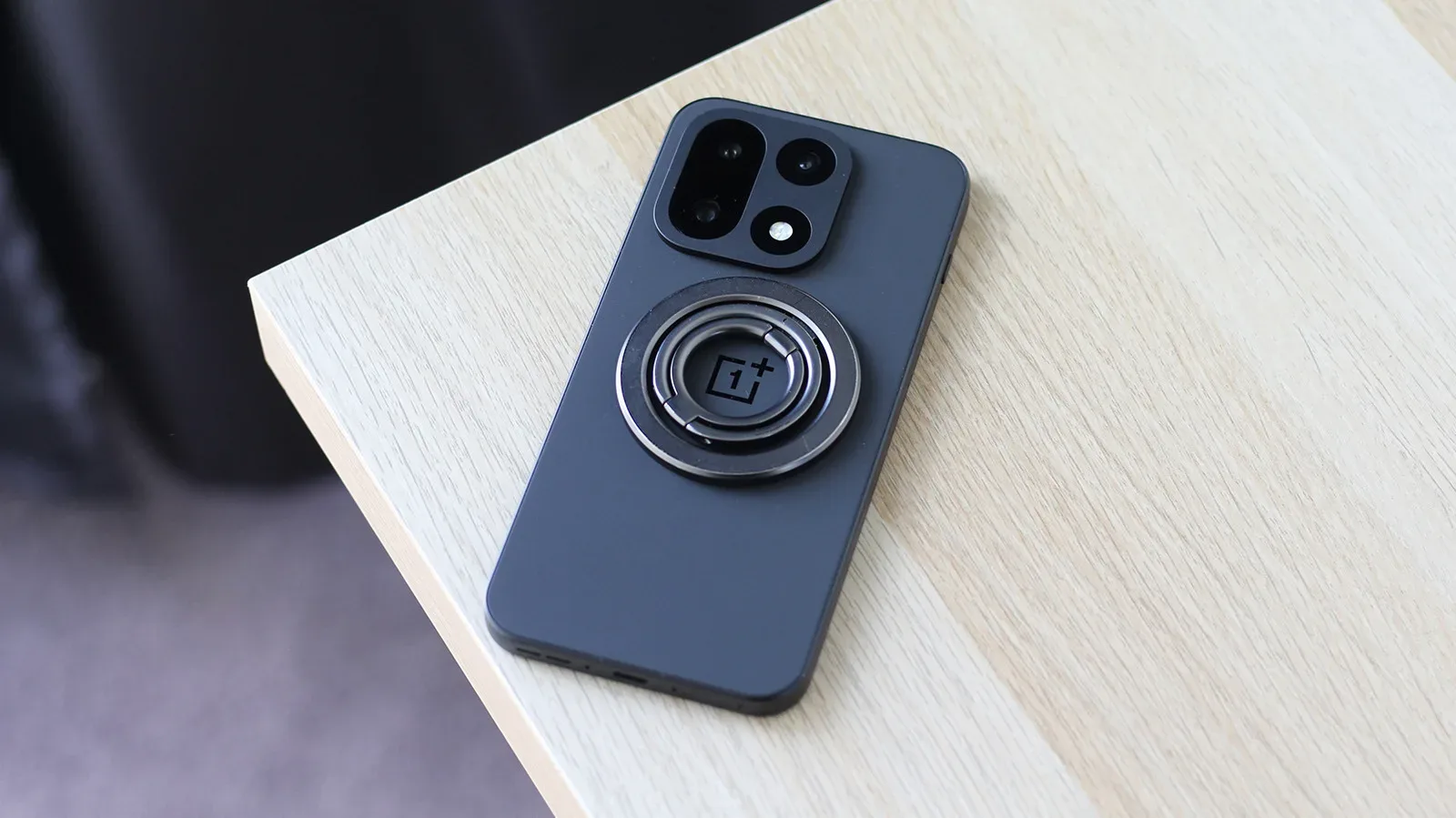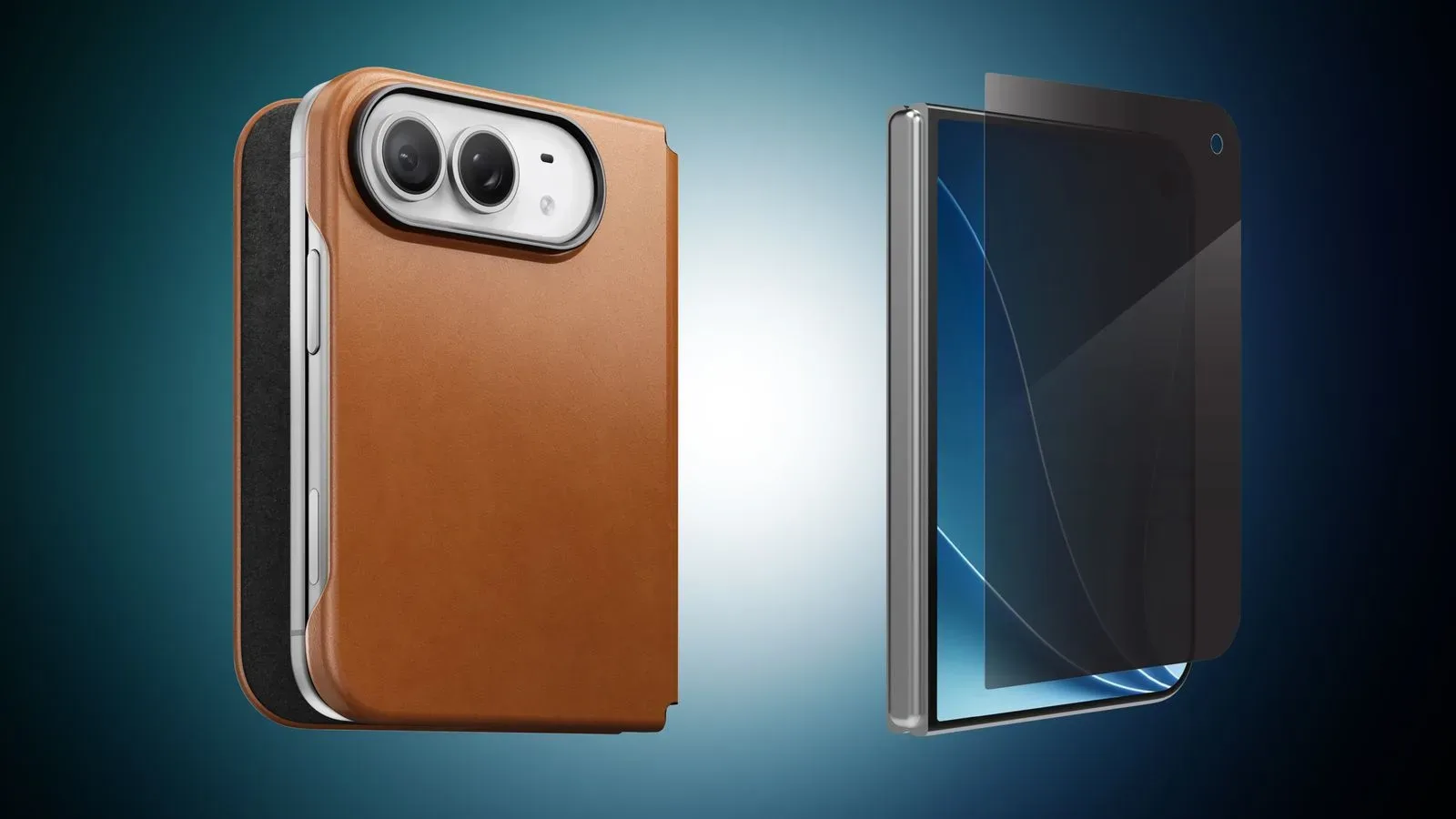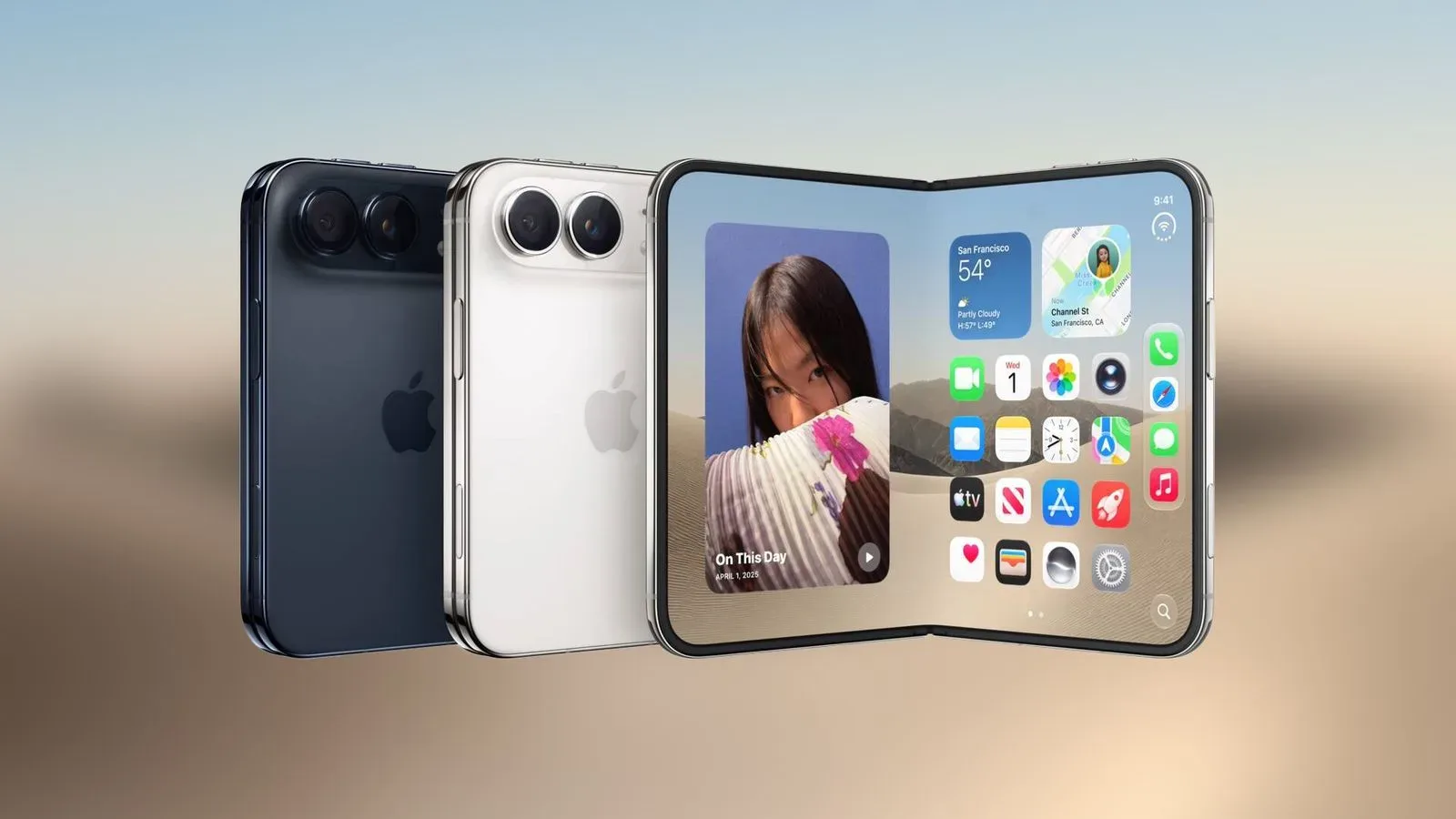
The iPhone Duo’s foldable shape brings an unexpected compatibility question to the desk: can an existing upright MagSafe stand actually keep it in place while it is open? In at least some cases, the answer appears to be no. The unfolded phone can tilt on certain vertical magnetic chargers because the device’s weight is not balanced around the magnetic connection point.
That does not mean MagSafe charging itself is unusable on the iPhone Duo. It does mean the familiar routine of snapping a phone onto a stand beside a monitor may require a little more care for anyone intending to keep the Duo unfolded. The concern is primarily about the physical support supplied by a vertical stand, rather than a general claim that the phone cannot charge when open.
A demonstration shared online shows the issue in action: with the iPhone Duo unfolded, the extra portion of the device extends to one side of the magnetic mount. On a stand without sufficient holding strength or a supportive shelf, that uneven load can pull the phone out of its intended position and make it rotate or lean.
Why an unfolded Duo can become unbalanced
The key detail is the location of the iPhone Duo’s MagSafe ring. It sits on only one half of the rear of the foldable. When the device is closed, that arrangement presents a more conventional compact shape to a magnetic stand. Once unfolded, though, the second half adds width and weight beyond the area directly supported by the charger.
That creates a simple leverage problem. Leverage is the tendency for weight positioned away from a support point to produce a turning force. On an upright magnetic charger, the MagSafe connection is that support point. If much of the unfolded phone’s mass sits off to one side, gravity can encourage the device to rotate around the mount rather than remain flat against it.
The result will depend on the individual stand. A charger’s magnets may be strong enough to keep the Duo in position, or the stand may have a shape that offers useful physical support. But not every upright MagSafe accessory appears built for the open phone’s altered balance. The practical takeaway is not that every stand will fail; it is that compatibility cannot be assumed merely because a stand works with a standard iPhone form factor.
The iPhone magnetic system also includes an anti-rotation magnet beneath the main charging ring. That additional magnet is intended to help resist movement, but some chargers are not designed to take advantage of it. In this situation, the distinction matters. A charging puck can still attach and deliver power while providing less resistance to the twisting force created by the Duo’s off-center unfolded weight.
Flat chargers avoid the stand problem
A flat magnetic charger should not face the same rotation issue. With the phone lying down, the surface beneath it supports the device’s overall weight instead of asking the magnetic connection to hold that weight upright. The asymmetrical distribution of the unfolded chassis may still exist, but it is no longer trying to tip the phone away from a vertical mount.
For people who want to charge the iPhone Duo while leaving it open on a desk, a flat pad is therefore the more straightforward option based on the information available. It removes the particular mechanical disadvantage seen with certain stands. It may be less useful, however, for somebody who relies on a raised phone position for notifications, calls, controls, streaming, or keeping reference material visible while working or playing.
The other cautious option is to close the Duo before placing it on an upright MagSafe stand. This keeps the device’s footprint closer to what many existing accessories are designed to accommodate and avoids putting the unfolded half’s weight to one side of the magnetic ring.
Portrait may help, but it is not a blanket guarantee
Using the open iPhone Duo in portrait orientation on an upright charger is likely to work better than an orientation that places the expanded section strongly to one side. In portrait, the relationship between the phone’s extra weight and the magnetic attachment changes, potentially reducing the sideways rotational pull.
That remains a likelihood rather than a confirmed universal fix. Stand geometry, magnetic strength, the way the stand uses the anti-rotation magnet, and the exact position of the phone all remain relevant. Owners should treat portrait charging as a configuration worth considering, not as proof that every vertical MagSafe product is ready for the unfolded Duo.
There is also a difference between a phone that appears stable for a moment and one that is securely supported during everyday desk use. A light tap on a desk, adjusting the display, attaching a cable elsewhere in a setup, or simply placing the phone slightly off-center could matter more when the device’s mass is extending beyond its support point. Until a stand is known to hold the open phone reliably, closing the device or charging it flat is the safer route.
What to look for in future Duo-friendly stands
The issue points toward a likely accessory response: wider stands, a lower ledge, or another physical brace that can bear some of the unfolded phone’s weight. A ledge is particularly important because it changes the job of the magnets. Instead of relying entirely on magnetism to prevent rotation and hold the full device vertically, the stand can use a physical lip to support downward weight while MagSafe keeps the phone aligned for charging.
That does not require declaring current accessories obsolete. Some existing stands may have adequate magnetic strength, a supportive form, or a suitable orientation for the iPhone Duo. But buyers should distinguish between a stand that is merely MagSafe-compatible and one that is designed around the dimensions and center of mass of an unfolded foldable phone.
For desk setups, that distinction could be especially relevant. A raised stand is often part of a larger routine: it keeps a device readable beside a keyboard, frees a little surface space, and makes it easy to glance at a screen without picking it up. An unfolded phone that must be closed to charge safely on a particular stand changes that routine, even if the charger technically still works.
A small accessory caveat for a new form factor
The iPhone Duo is scheduled to launch on Friday, October 23. The tipping behavior is an early reminder that foldable hardware can expose assumptions built into an accessory ecosystem. The charging standard may be familiar, but the phone’s center of mass and physical outline are not identical to those of a conventional slab-shaped handset.
That is useful context for anyone planning a Duo desk setup on day one. Test an upright stand carefully with the device closed before relying on it, and be especially cautious when opening the phone on the mount. If the charger permits the device to shift, a flat charger is the cleaner answer for open-device charging until stands with more deliberate physical support are available.
The Duo’s other design choices may matter just as much in daily use; its hidden inner camera, for instance, comes with its own trade-offs, as covered in our look at the iPhone Duo’s inner-camera approach. For MagSafe users, though, the immediate lesson is less glamorous: when a phone unfolds into a larger, uneven shape, magnet placement and stand design become more than accessory trivia.