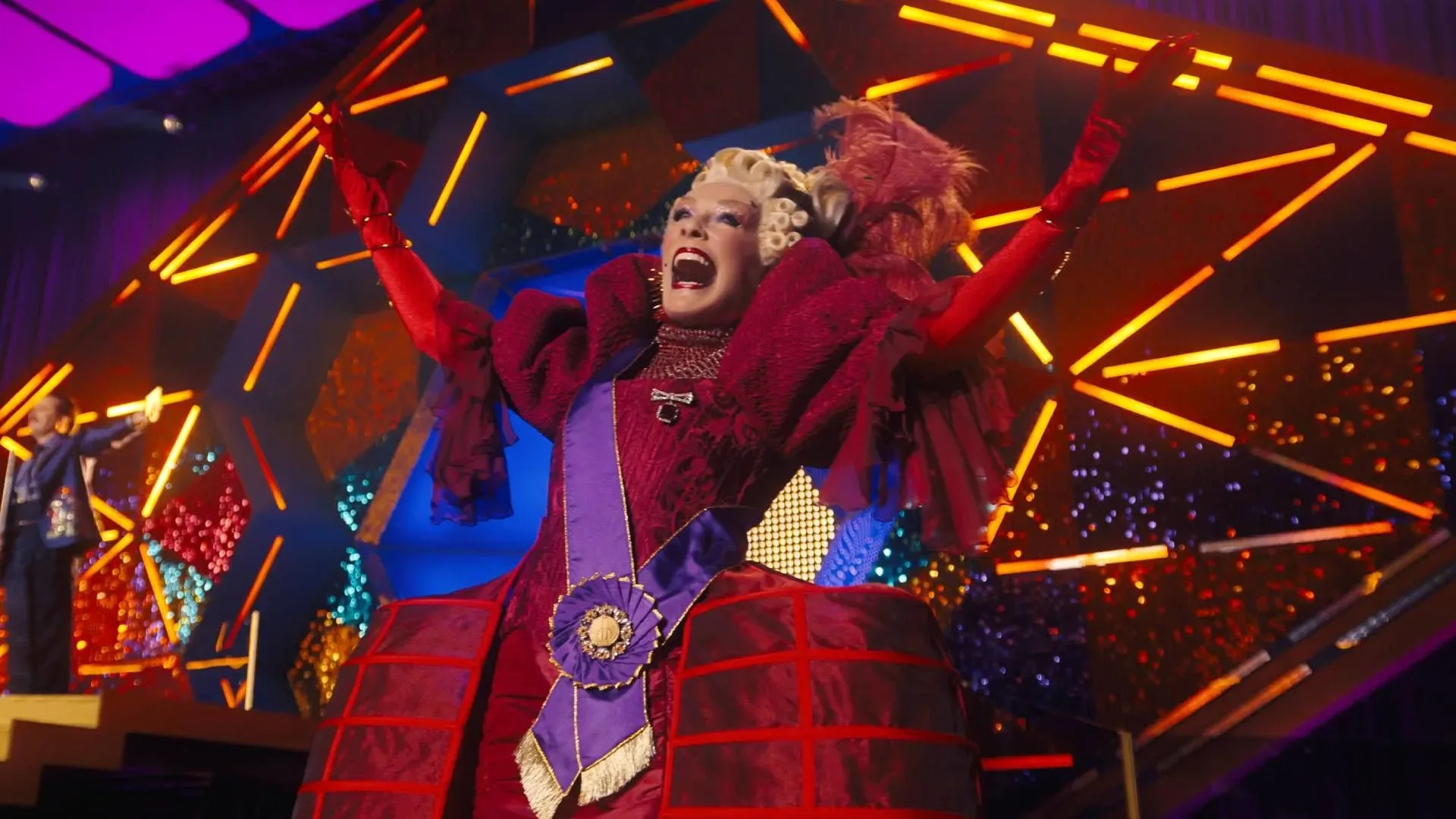

The Hunger Games: Sunrise on the Reaping may be a film adaptation, but director Francis Lawrence describes an unusually sustained role for novelist Suzanne Collins in bringing it to the screen. Her participation, he says, begins as soon as he receives a manuscript and continues through script development, editorial review and decisions about possible additional filming.
Lawrence said the process starts with him reading Collins’ manuscript, usually more than once. He and Collins then meet at the publishing company she works through to break down the book together—a practice he said has been in place since Catching Fire. That early step matters because a book-to-film adaptation is not simply a matter of transferring scenes in order. A screenplay has to turn a novel’s internal perspectives, descriptive passages and broader structure into dramatic scenes that can be understood through performance, sound and imagery.
Collins’ role extends beyond the manuscript
Lawrence said Collins is involved in extensive calls with himself, producer Nina Jacobson and the screenwriter while the script is being developed. He characterized that work as daily conversations lasting hours, potentially adding up to hundreds of hours. It is a level of collaboration that positions the author as an active creative partner rather than someone who only signs off at the beginning or watches the completed movie at the end.
“She’s very, very involved,” Lawrence said, describing a process that carries from the book breakdown through the finished film.
That does not mean Collins is present for every phase. Lawrence said she steps away during principal photography—the main period in which the movie is filmed. His explanation is practical: remaining off the set can help preserve an objective viewpoint when she returns to see an edit.
After production, Collins reportedly reviews a cut of the film. A cut is an assembled version of the movie, edited from the footage captured during filming. At that stage, filmmakers can judge pacing, clarity, character arcs and how the individual sequences work as a whole. Lawrence said Collins is also provided with test data, then participates in deciding whether the project needs pickups.
Pickups are additional material filmed after the main shoot. They can range from a brief insert to revised dialogue or a new scene intended to clarify a plot point. Lawrence did not say that Sunrise on the Reaping required any particular pickup work; he described the decision-making process used if changes are needed. Collins also sees the final version, he said.
A prequel with a difficult balancing act
Sunrise on the Reaping is a prequel centered on Haymitch Abernathy, the District 12 victor who later becomes mentor to Katniss Everdeen and Peeta Mellark. Prequels come with a built-in challenge: they must connect meaningfully to a familiar world without relying so completely on past knowledge that newcomers are left behind.
Joseph Zada, who plays Haymitch, said that was a concern entering the project. He noted the hope that the movie can stand on its own for people who have not seen the earlier films or otherwise followed the franchise. That is not a small task for a story anchored to an already-known character. Audiences may arrive with expectations about Haymitch’s history and personality, while first-time viewers need the film to establish its stakes and emotional logic without requiring homework.
Collins’ close script involvement could be especially meaningful in that setting. It does not guarantee that every reader will agree with each adaptation decision—no adaptation can do that—but the described process gives the author a direct role in discussing how the prequel’s narrative is reduced, reshaped and presented for a different medium.
Why remaining off set can be useful
Lawrence’s description also draws a useful distinction between being deeply involved and being physically present every day. Filming is intensely specific: performers, cameras, locations, schedules and individual setups demand immediate attention. By contrast, an author returning at the edit stage can assess the whole construction—how the story has been assembled, not just how a scene played on a given day.
That separation may help Collins evaluate whether the central ideas of the book are coming through once the screenplay becomes a movie. It can also allow the director and production team to run the shoot while preserving a later checkpoint for story-level feedback. Lawrence’s account suggests that the production treats post-shoot review as part of the creative process, rather than a ceremonial final viewing.
For audiences, the important takeaway is not that the film will be a page-for-page reproduction. Movies and novels ask different things of their creators. Instead, the reported workflow suggests repeated opportunities for Collins to weigh in: at the manuscript stage, during screenplay conversations, after an edit is assembled and in any discussion of further filming.
Early reception has focused on the cast
The film has not yet been released publicly, but the casting announcements have already drawn a strongly positive response from fans, according to the people involved. McKenna Grace, who plays District 12 tribute Maysilee Donner, said the supportive response has been especially welcome in an online environment where negative reactions can often appear louder.
Grace framed the response as a warm reception for the performers joining an established franchise. For actors taking on characters tied to a world with a passionate existing audience, casting reveals can become an early referendum long before anyone has seen the completed film. The reaction described here has been notably encouraging rather than hostile.
Zada also said people who had seen material from the project in a press context, including some who were not established fans of the earlier films, seemed excited. That reaction aligns with the stated aim of making a prequel that works both as a continuation of a larger saga and as a self-contained movie.
There is a broader franchise lesson in that goal. Familiarity can give a prequel immediate emotional shorthand, but it can also make creators overly dependent on recognition. A stand-alone approach requires the new story to introduce its own reasons to care. For Sunrise on the Reaping, that means Haymitch’s earlier life has to function as more than background information for his later role.
Franchise audiences are also following plenty of other return appearances and continuity-heavy stories; for another recent example, see Tom Hiddleston’s comments on Loki’s place in Avengers: Doomsday.
What is known about the release
The Hunger Games: Sunrise on the Reaping is scheduled to arrive in theaters on November 20. Beyond Lawrence’s account of Collins’ role, the positive fan response to casting and the cast’s hopes for accessibility, there is still little reason to assume how the finished prequel will be received. Positive reactions to announcements are not the same as a reaction to the completed movie.
What does appear clear is the shape of the collaboration behind it. Collins is described as being deeply engaged in adaptation decisions without becoming a daily on-set presence: participating in book breakdowns, prolonged script discussions and post-production review, then helping determine whether a film needs extra work before it is finalized. For a story returning to District 12 through one of the saga’s most consequential characters, that continuing authorial perspective may be one of the production’s defining features.