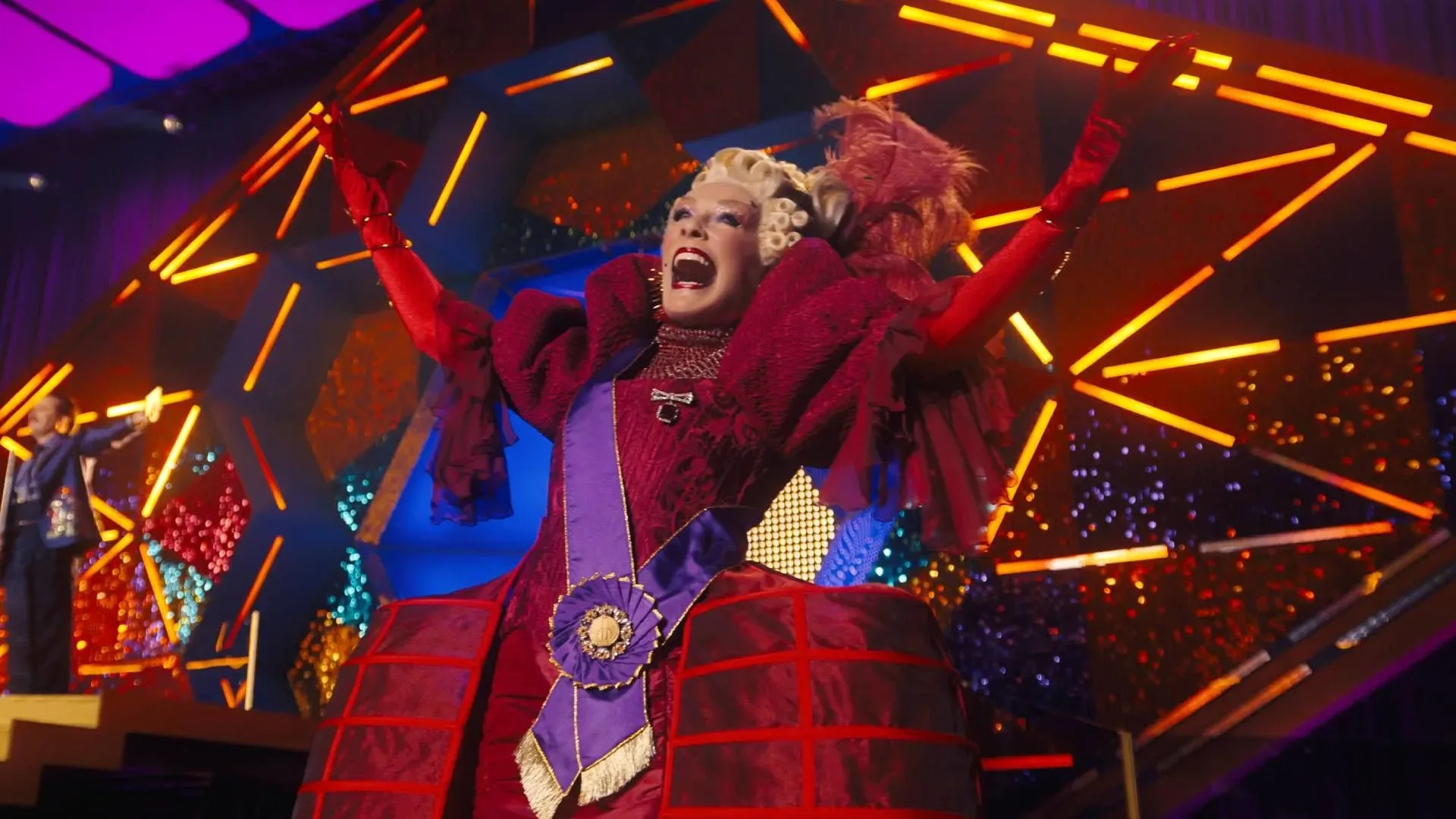
The Hunger Games: Sunrise on the Reaping has screened ahead of its theatrical release, and the early response is notably enthusiastic about how the sixth film develops familiar territory through a younger Haymitch Abernathy. The prequel is scheduled to arrive in theaters on Nov. 20 and adapts Suzanne Collins’ 2025 novel of the same name.
Initial reactions should always be read as an early temperature check rather than a settled verdict: they arrive before a broad audience has seen the picture, are often brief, and do not replace full reviews. Still, a clear pattern has emerged in the comments so far. Viewers responding from the premiere have singled out Joseph Zada’s lead performance, the casting of younger versions of established characters, and a story said to engage seriously with sacrifice, grief and the price of resistance.
The film is the second prequel in the series, following 2023’s The Ballad of Songbirds & Snakes. Where that earlier film explored a young Coriolanus Snow, Sunrise on the Reaping shifts the focus to Haymitch, the eventual mentor known in the original films through Woody Harrelson’s performance.
A 50th Hunger Games story with a familiar future
Sunrise on the Reaping takes place 24 years before the first Hunger Games film. Zada plays Haymitch as a young man forced to compete in the 50th Hunger Games. That setup makes the prequel inherently different from a story built around entirely new leads: audiences already know the older Haymitch’s sarcasm, pain and role in the later rebellion. The dramatic question is not simply whether he survives, but how the contest and the Capitol’s violence help shape the person he becomes.
Early viewers have repeatedly described Zada as the film’s anchor. Their praise emphasizes the difficulty of balancing the qualities associated with Haymitch—charm and warmth alongside anger, bitterness and heartbreak—without merely mimicking Harrelson. That distinction matters for any prequel performance. A younger actor needs to make the continuity recognizable while giving the character an identity suitable to the earlier point in his life.
Several reactions argue that Zada manages that balance, with one calling the part a breakout opportunity and another framing the role as physically and emotionally demanding. The response does not suggest the film treats Haymitch as a simple collection of recognizable traits. Instead, its apparent aim is to show the experiences beneath the hardened mentor audiences already know.
Early reactions broadly characterize Zada’s Haymitch as charismatic and compassionate, then increasingly marked by rage and loss.
That approach also helps explain why commentators have connected the movie to the wider franchise rather than treating it as a detached side story. A prequel can add context without changing the earlier films’ core events; its value lies in reframing what viewers thought they understood. The stated reaction here is that Haymitch’s story may enrich revisits to the original movies in much the same way that The Ballad of Songbirds & Snakes has been seen as adding perspective to Snow’s later actions.
Familiar names, newly cast faces
The supporting cast includes Jesse Plemons as Plutarch, Ralph Fiennes as President Snow, Kieran Culkin as Caesar Flickerman, Maya Hawke as Wiress and Kelvin Harrison Jr. as Beetee. Mckenna Grace, Glenn Close and Whitney Peak are among the performers playing characters new to the film franchise.
Early responses are particularly complimentary about the ensemble work. One reaction called the casting among the year’s strongest, while another highlighted Close as a scene-stealing presence. Plemons has also drawn notice for taking on Plutarch, a character associated in the original films with Philip Seymour Hoffman. As with Zada’s Haymitch, the underlying challenge is not exact imitation. These performers are being asked to preserve enough of a character’s essential qualities for continuity while establishing a version shaped by a substantially earlier era.
That is a high-wire act for a legacy prequel. Lean too hard on references and the film risks becoming a roll call of recognition moments. Move too far away from what the original films established and the connection can feel cosmetic. The positive reaction to the cast suggests the movie may have found a productive middle ground: recognizable figures are present, but their younger incarnations are reportedly allowed room to feel like distinct people.
There is also an important practical benefit to that strategy. Haymitch’s 50th Games are not being presented as a replay of Katniss Everdeen’s story. They occur decades earlier, with a different tribute at the narrative center and with a cast positioned to reveal different facets of Panem. The returning names create continuity, but the story’s emotional weight appears to rest on Haymitch’s own struggle rather than nostalgia alone.
The reactions point to themes over spectacle
Comments from the premiere characterize the film as an emotional thriller and emphasize the costs attached to revolution. That language is consistent with the series’ central concerns: state violence, propaganda, public performance and the toll paid by people pushed into resistance. In this case, the early conversation especially stresses devastating loss and the idea that meaningful change may demand sacrifice long before its eventual beneficiaries see the result.
“Cost of rebellion” is more than a dramatic slogan in this context. It describes the tension between individual survival and collective change. The Hunger Games franchise has long used the arena as a mechanism of social control, forcing personal tragedy into a spectacle meant to reinforce the Capitol’s power. A film about Haymitch’s Games can examine that system from a new historical moment while still connecting to the resistance that becomes central in the original series.
One early response says the third act dramatically changes expectations, while others praise the film for keeping familiar narrative beats from feeling stale. Those descriptions are deliberately broad and do not establish specific plot details. They do, however, indicate that audiences should not assume the film’s value rests entirely on knowing where Haymitch ends up. A prequel’s suspense often comes from the manner of events, the human losses along the way and the discoveries that alter an audience’s interpretation of later scenes.
Production and costume design have also been identified as major strengths in the early feedback. These elements are vital to a Hunger Games film because Panem’s visual contrasts communicate the political order without always requiring exposition. Production design refers to the designed physical world of a film—settings, architecture, props and visual environments. Costume design concerns what characters wear and how clothing helps define rank, personality, era and ideology. Praise for both suggests the prequel’s period within Panem has its own visual character rather than functioning as a generic return to locations audiences already know.
Francis Lawrence returns to Panem
Francis Lawrence directs Sunrise on the Reaping. He has directed every Hunger Games film except the first, which was directed by Gary Ross. Early responders credit Lawrence with continuing to find thematic and stylistic layers in the franchise’s established structure, while also pointing to the distinctive production design as a reason the material feels refreshed.
That continuity behind the camera is significant for a series built across multiple entries and timelines. A returning director understands the franchise’s visual language and its tonal demands: the story must accommodate arena suspense and large-scale spectacle, but it also needs the emotional consequences of that violence to land. The strongest early reactions suggest the new film is being received as more than a routine expansion of the brand, with multiple observers explicitly describing it as a meaningful addition to the overall saga.
Of course, premiere praise does not settle questions about how the movie will play for general audiences, readers of Collins’ novel or viewers who have not recently revisited the earlier films. Nor does it establish a critical consensus. The useful takeaway is narrower: the first wave sees an adaptation that takes its protagonist seriously, gives its ensemble room to reinterpret established roles, and keeps the franchise’s political and emotional concerns in view.
The epilogue connection—and what remains unconfirmed on screen
Interest in the film has also focused on the possible return of Jennifer Lawrence, Josh Hutcherson and Woody Harrelson as Katniss, Peeta and the older Haymitch. Collins’ novel concludes with a flash-forward epilogue featuring the trio, creating a clear basis for audience expectations about the adaptation.
Jennifer Lawrence has discussed the emotional experience of returning to Katniss alongside Hutcherson and Harrelson, recalling that familiar crew members were involved and describing the reunion as moving. That confirms her participation in revisiting the character. It is still best not to extrapolate beyond what has been established: the source material’s epilogue and the actors’ return explain the attention, but viewers should let the finished film reveal how it incorporates that connection.
For franchise followers, this possible bridge is meaningful because it would bring the story back to the characters who introduced many moviegoers to Panem. For newcomers, though, the main entry point remains straightforward: a young Haymitch faces the 50th Hunger Games in a story set well before Katniss volunteers as tribute.
That mix of accessibility and accumulated history is likely the film’s central test. The early reactions indicate confidence that it meets the challenge, especially through Zada’s performance and the ensemble around him. The broader answer will arrive when The Hunger Games: Sunrise on the Reaping reaches theaters on Nov. 20. For more on another major genre project navigating familiar worlds and audience expectations, see our coverage of Alien: Isolation 2’s evolving Xenomorph hunt.