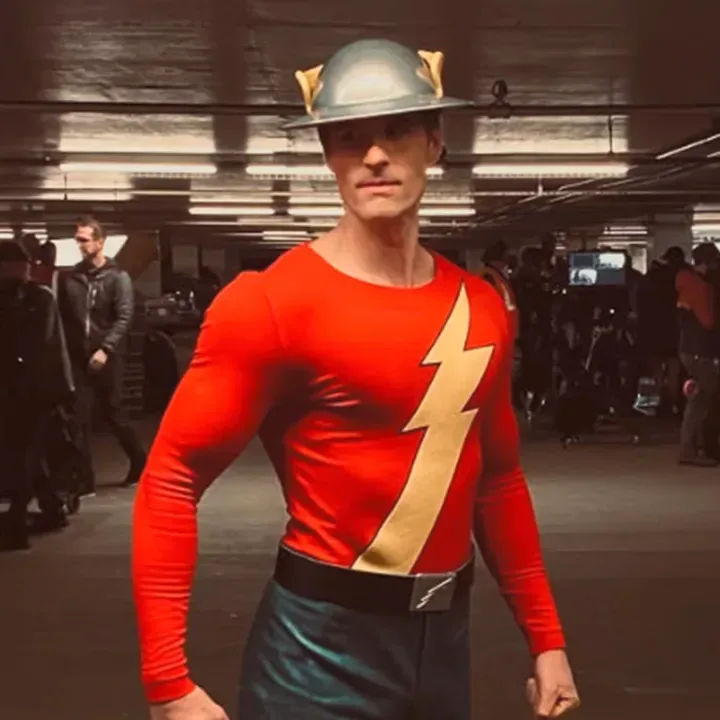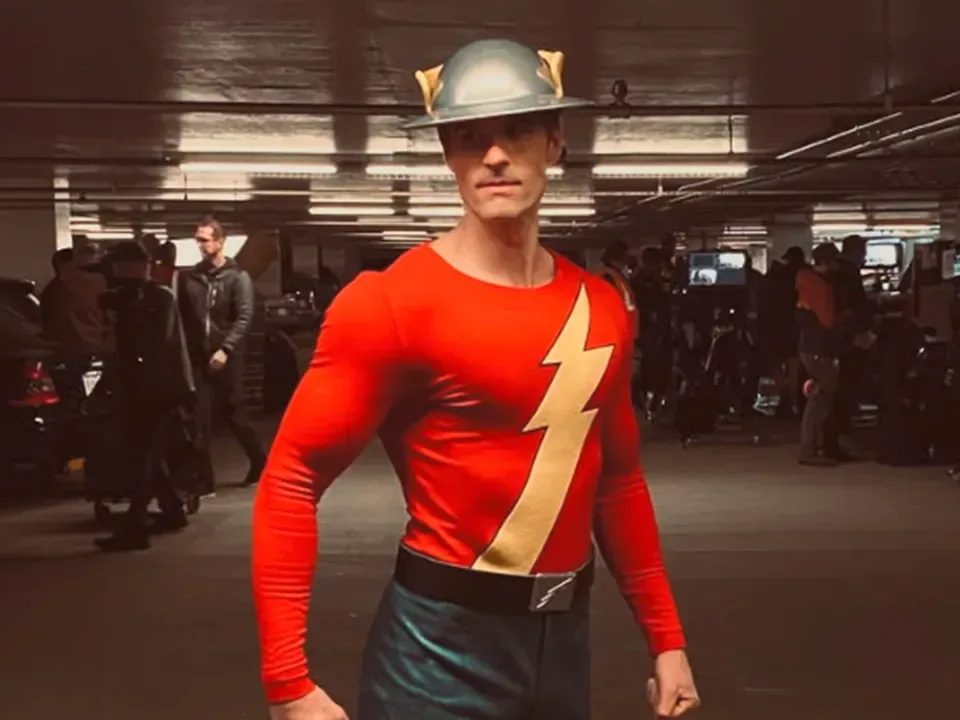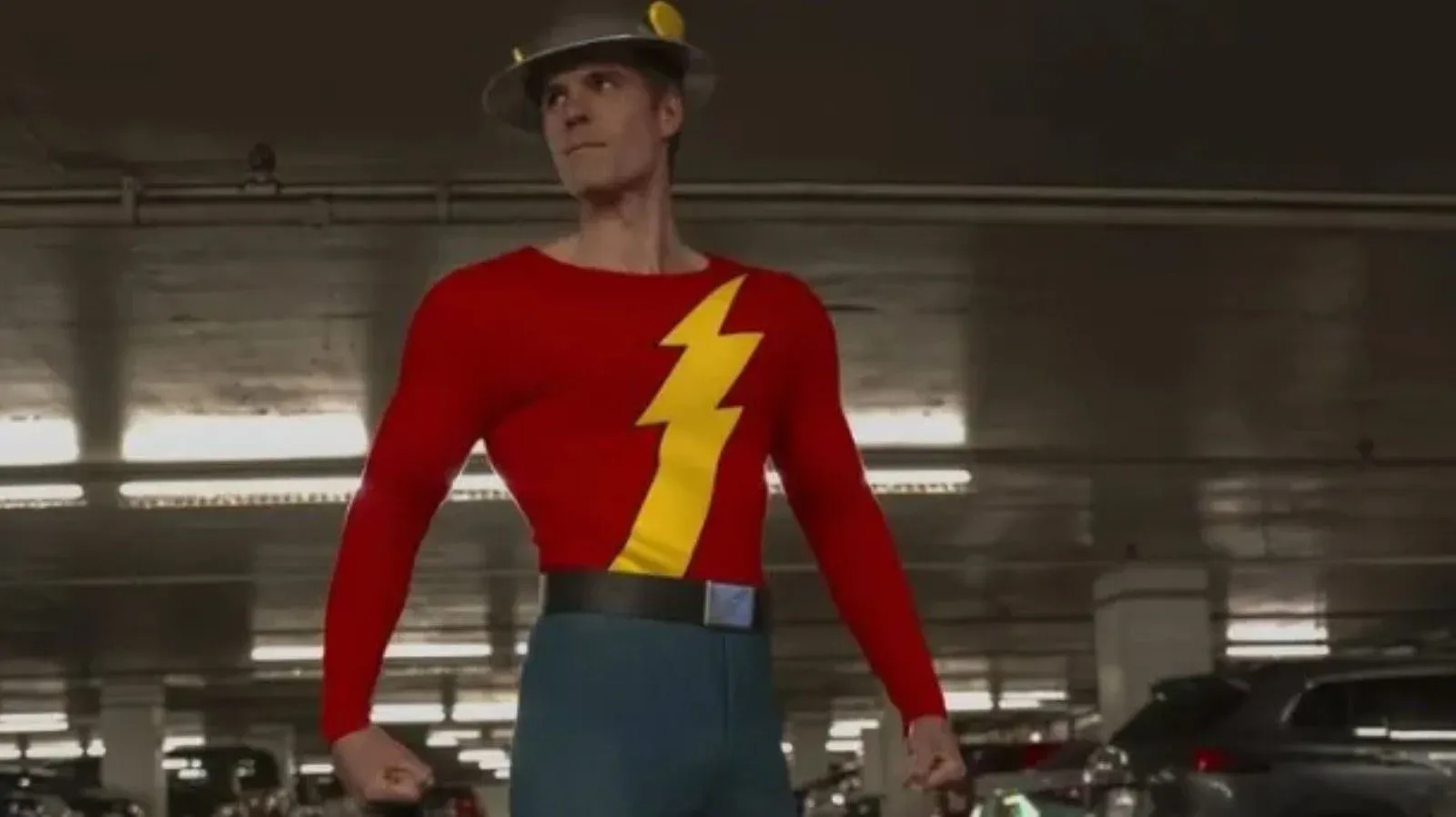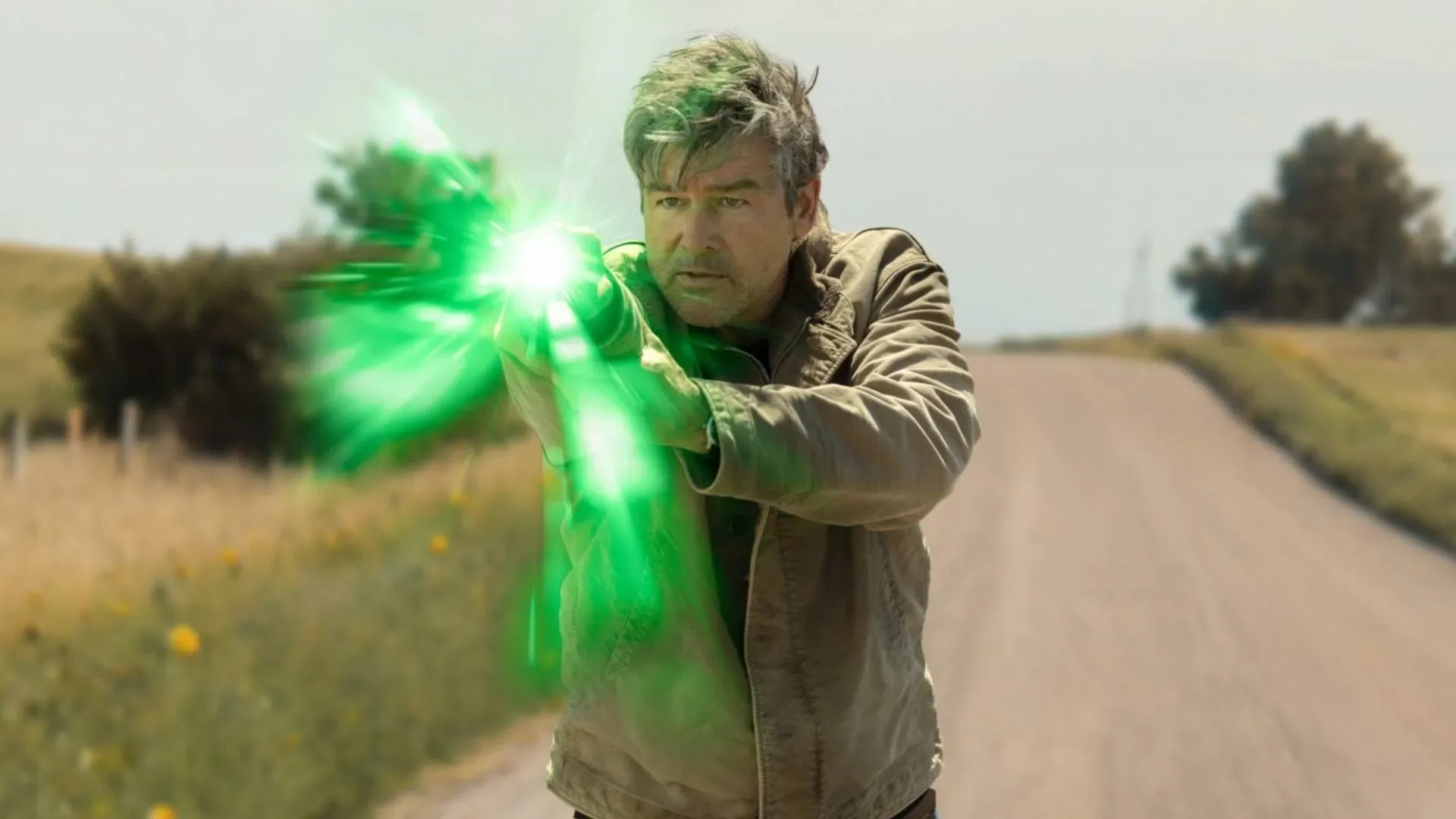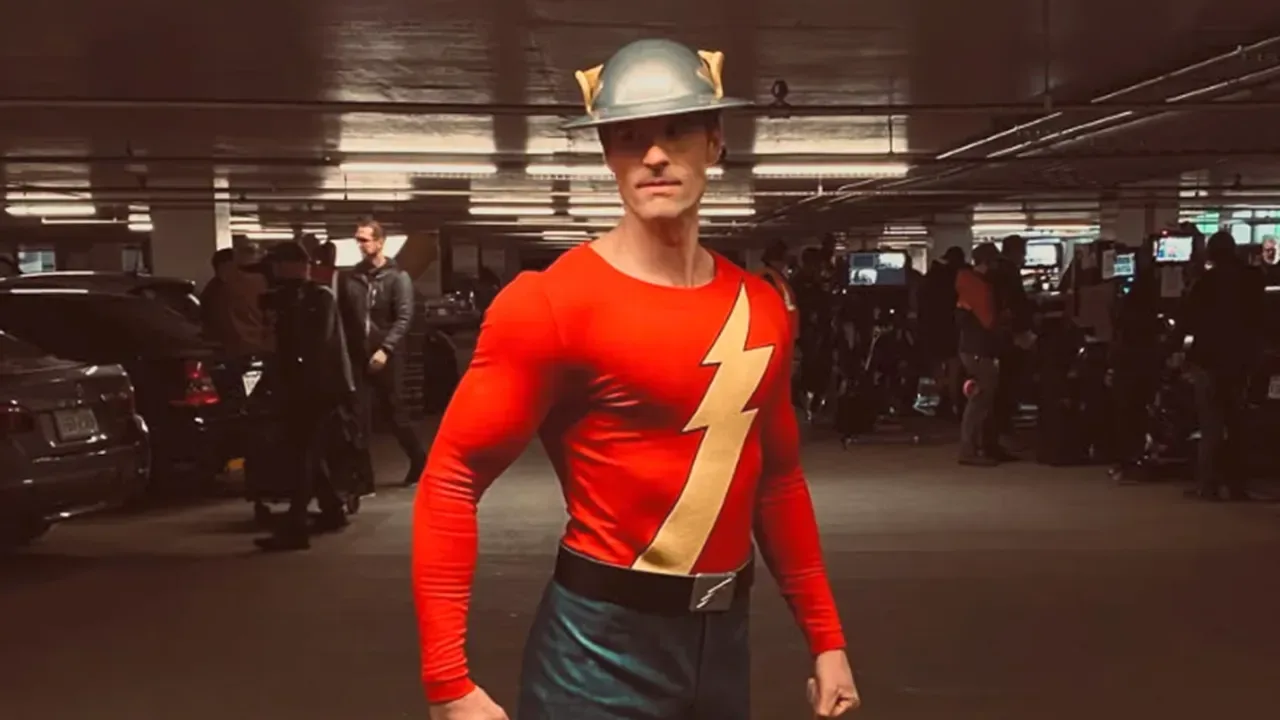
Stuart Fails to Save the Universe has taken an unusually direct trip into DC territory. Season 1, Episode 9 drops Stuart Bloom and his dimension-hopping companions into a realized version of Gotham City, where Eric Allan Kramer plays Mr. Freeze and Andy Ridings appears as Jay Garrick’s Flash.
The result is not a background reference or a quick visual gag. Mr. Freeze, the villain identity of Victor Fries, is depicted as an active threat: he fires lethal icicles, creates oversized ice barriers, and targets Stuart with a gigantic frozen bowling ball. Garrick then races in to intervene, bringing one-liners as well as super-speed to the encounter.
For a comedy series that already centers on universe travel, the scene makes its DC material part of the plot machinery rather than treating it as a detachable wink. Gotham gives the episode a recognizable genre playground; Freeze provides a physical obstacle; and Flash’s ability to move rapidly through space makes him an especially workable hero for a story involving dimensions.
The episode title was telling the truth
The installment is titled “Spoiler: We Couldn’t Get Green Lantern”, and co-creator Zak Penn has explained that the line reflects the production’s original ambition. The show had sought to use Green Lantern, but was unable to do so because the live-action series Lanterns is currently using the property.
“They told us we couldn’t have him because of [HBO’s live-action series] Lanterns, which I understood,” Penn said.
That restriction has a practical explanation beyond the joke. Hal Jordan and John Stewart are both central Green Lantern identities, and Lanterns is still airing while building its versions of those characters. A separate, broadly comic live-action use of Green Lantern—potentially even with overlapping actors—could create audience confusion about whether the appearances share continuity, tone, or story relevance.
In franchise terms, continuity means the internal chain of events and character relationships that a fictional universe treats as connected. Shared comic properties frequently allow characters to appear in different projects, but the closer those projects sit to one another in time and format, the more important it becomes to distinguish one interpretation from another. In this case, Stuart Fails to Save the Universe is pursuing a knowingly playful detour, while Lanterns has been associated with a more grounded approach to Hal and John.
The limitation also seems to have improved the episode’s fit. Penn said Flash was ultimately the better answer for a premise about movement between dimensions: “If we needed something that’s going from dimension to dimension, Flash worked even better than Green Lantern.”
Related coverage includes Stuart Fails to Save the Universe Brings Flash and Mr. Freeze Into a Wild DC Detour.
Why Jay Garrick is a particularly pointed choice
The Flash name can refer to several DC heroes, not just one character. This episode uses Jay Garrick, the Golden Age Flash. “Golden Age” is a comics term commonly used for an early era of superhero publishing; within DC’s larger fictional tradition, Garrick is a distinct Flash identity from Barry Allen.
That distinction matters because the episode does not merely put a red-suited speedster on screen and leave the reference at that. It specifically frames him as Golden Age Flash, then acknowledges the oddity of matching him with Mr. Freeze. The dialogue notes that Garrick might make more natural sense against Captain Cold, a villain more closely associated with Flash stories.
That is the kind of specificity that lets the sequence function on two levels. Viewers who simply want the surprise of a superhero crashing into a comedy get a fast, colorful rescue. Fans acquainted with DC character histories get an additional joke about villain matchups and editorial geography: Mr. Freeze is a classic Batman foe, so Gotham is his expected territory, while Captain Cold is the more conventional Flash adversary.
The casting and costume choices have also helped the cameo attract attention. Viewers responded positively to the contrast between Kramer’s bulky, mechanical-looking Freeze and Ridings’ bright spandex-clad Flash. The designs create a deliberately heightened visual collision: ice weaponry and imposing machinery on one side, a clean superhero silhouette and speed-based entrance on the other.
A full scene, not just an Easter egg
An Easter egg is a hidden or passing reference intended as a reward for attentive audiences. The Flash and Freeze material goes further than that label suggests. Freeze has effects-driven attacks, Flash gets a clear intervention, and the characters’ comic-book identities shape the joke and stakes of the sequence. The appearances are cameo-sized in the larger series, but they are staged as an actual superhero-versus-villain scene.
That distinction is meaningful for a show using a crossover-adjacent premise. A simple sign, costume, or verbal reference can establish that a fictional property exists in the background. A villain with recognizable powers and a hero who arrives to stop him creates a miniature version of the property’s action language. Here, that language includes ice projectiles, defensive walls, a huge frozen bowling ball, super-speed, and comic banter.
It is also a reminder that an alternate or comedic setting can use recognizable DC pieces without pretending to be the main DC storyline. The episode’s premise is already one of travel through universes, which gives the show room to visit an exaggerated Gotham without requiring viewers to treat it as a definitive future for Flash, Freeze, Batman, Green Lantern, or anyone else.
That tonal freedom may be why the substitution works. Green Lantern carries obvious sci-fi potential, but Flash instantly communicates motion and rescue in a scene built around a group of travelers suddenly facing danger. He also gives the episode a clean visual answer to Freeze’s ice-heavy offense: a hero whose presence is defined by speed, color, and momentum.
What the DC detour says about the show’s first season
Episode 9 arrives near the end of Stuart Fails to Save the Universe’s first season, which is set to conclude with Episode 10 next week. The timing makes the larger-than-expected DC sequence feel like a late-season escalation. A universe-travel story can theoretically visit any number of settings, but bringing in live-action versions of named comic characters signals a willingness to make those stops more elaborate than simple references.
There is a useful restraint in what is known, though. The episode’s Flash and Freeze scene should be read as a specific comedic encounter, not evidence that the series will become a regular DC showcase or that it has established a shared future with Lanterns. The available details support the opposite reading: the Green Lantern restriction illustrates that separate uses of DC characters are being managed carefully, while the Flash choice was made because it served this particular episode’s dimensional-travel setup.
For DC viewers, the appeal is partly novelty. The current DCU does not have a live-action Flash or Mr. Freeze in place, while the most recent live-action Flash noted here was Ezra Miller’s Barry Allen in the 2023 standalone film. Garrick’s arrival therefore lands as a different kind of return for the Flash concept: not a launch of a new ongoing DCU lead, but a surprise use of a legacy character in a science-fiction comedy.
There is also a broader comic-book pleasure in seeing an unexpected matchup played straight enough to have actual spectacle. Jay Garrick versus Mr. Freeze is not the obvious pairing, and the episode knows that. Rather than ignoring the mismatch, it turns that knowledge into part of the entertainment. Captain Cold gets the acknowledgement, Gotham gives Freeze a fitting stage, and Flash receives a rationale that belongs to the story at hand.
That mixture of accuracy, absurdity, and functional plotting is what makes the sequence more than a random superhero interruption. The show did not get Green Lantern, but it found a substitute whose powers and identity make concrete sense for travelers bouncing between worlds. And for viewers who enjoy superhero cross-pollination, the episode offers a compact live-action oddity: Golden Age Flash racing into a Gotham ice battle to save Stuart Bloom from a villain wielding an icy bowling ball.
Comic-book crossover stories often thrive on precisely that kind of improbable-but-explained collision. For another example of how established hero identities can be used to set up a focused conflict, see Infernal Hulk vs. Wolverine #1’s mutant rescue setup.