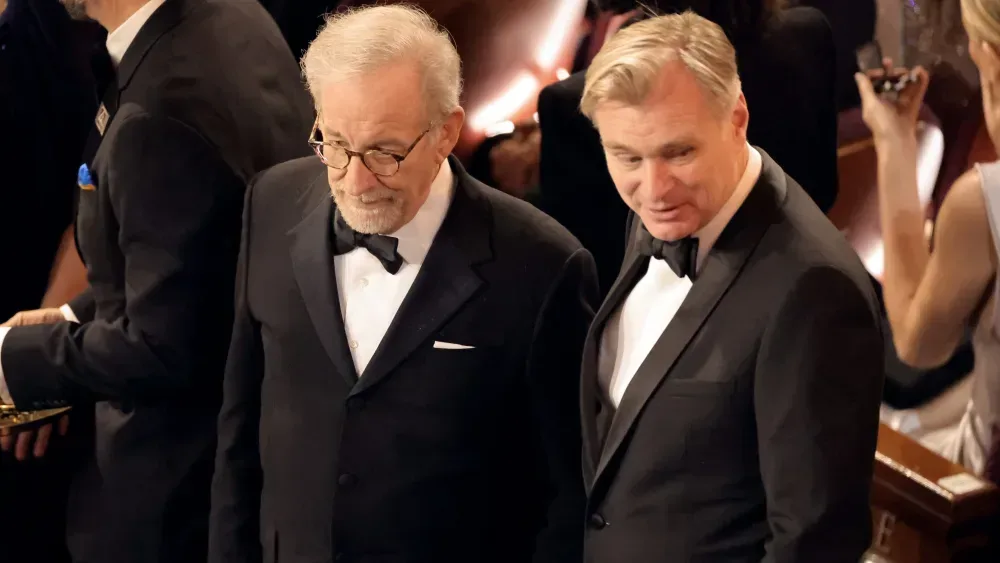
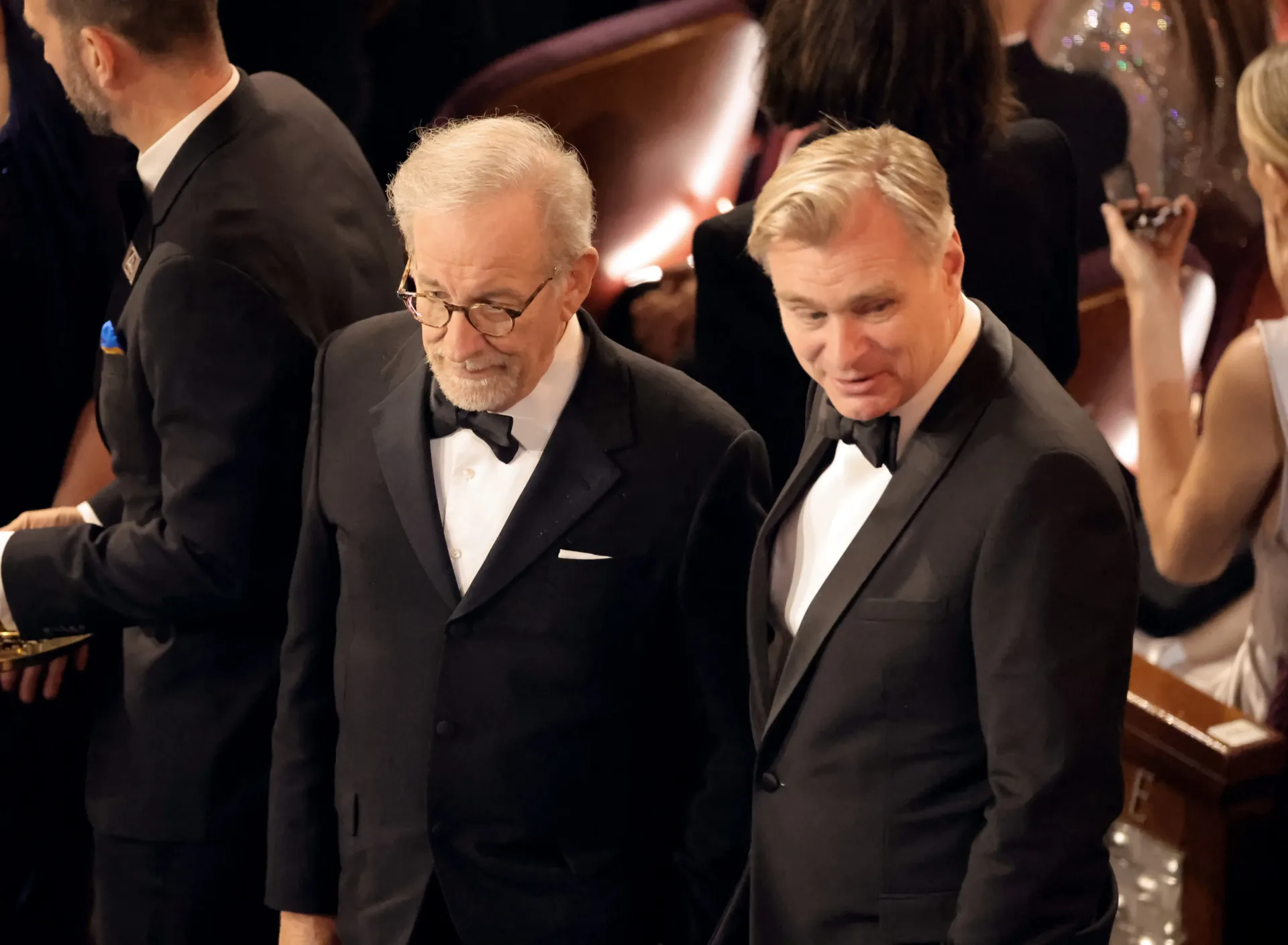
Christopher Nolan’s The Odyssey has received a remarkable endorsement from Steven Spielberg, who called the Greek-mythology epic a “showstopper” after seeing it in IMAX. Spielberg joined Nolan for a one-on-one discussion following a week of screenings, with an audience of roughly 600 guild members and voters giving the filmmakers a standing ovation.
The conversation was not simply a victory lap for a global box-office hit. It also put a spotlight on the creative decisions behind a movie that Nolan says was conceived at a scale he believes earlier film eras could not fully achieve: an adaptation of Homer built around IMAX photography, contemporary visual-effects tools and an emphasis on large-format theatrical presentation.
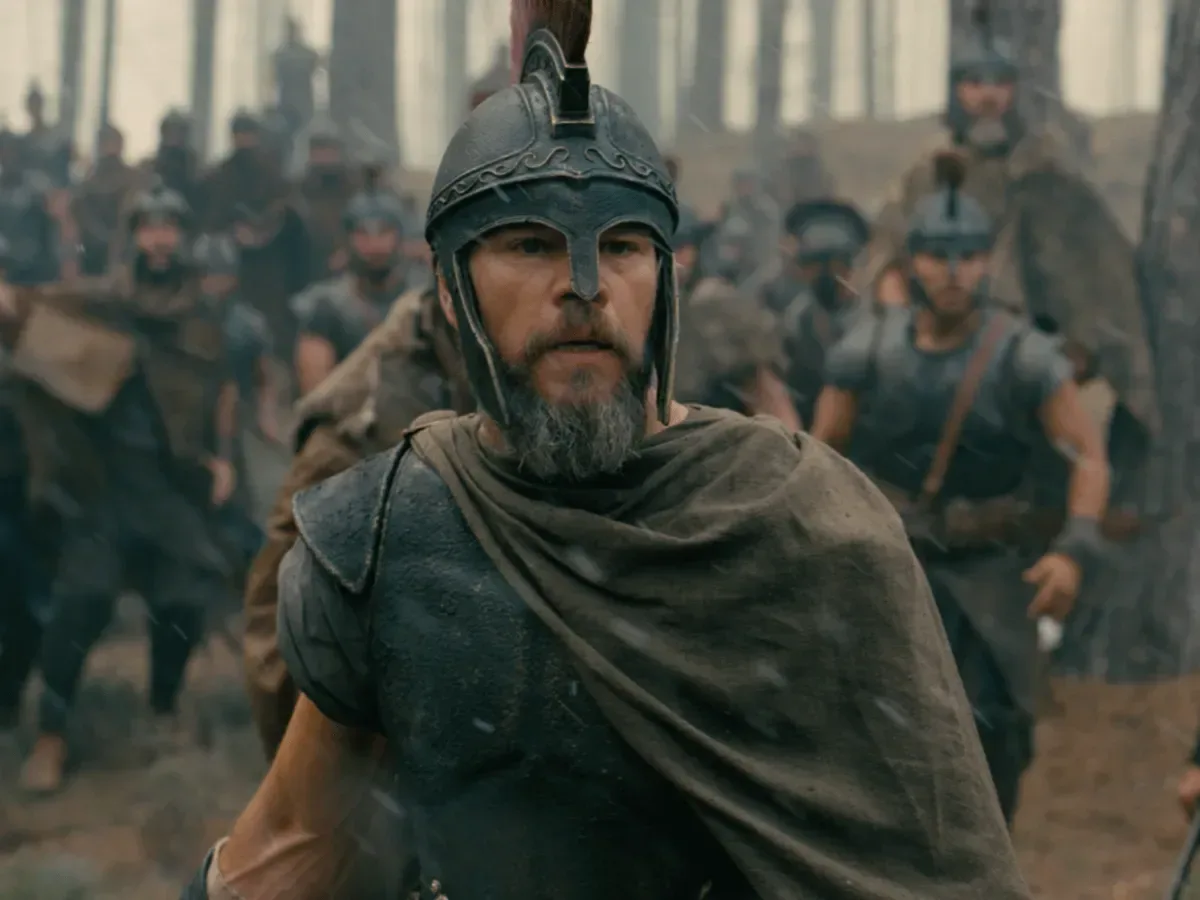
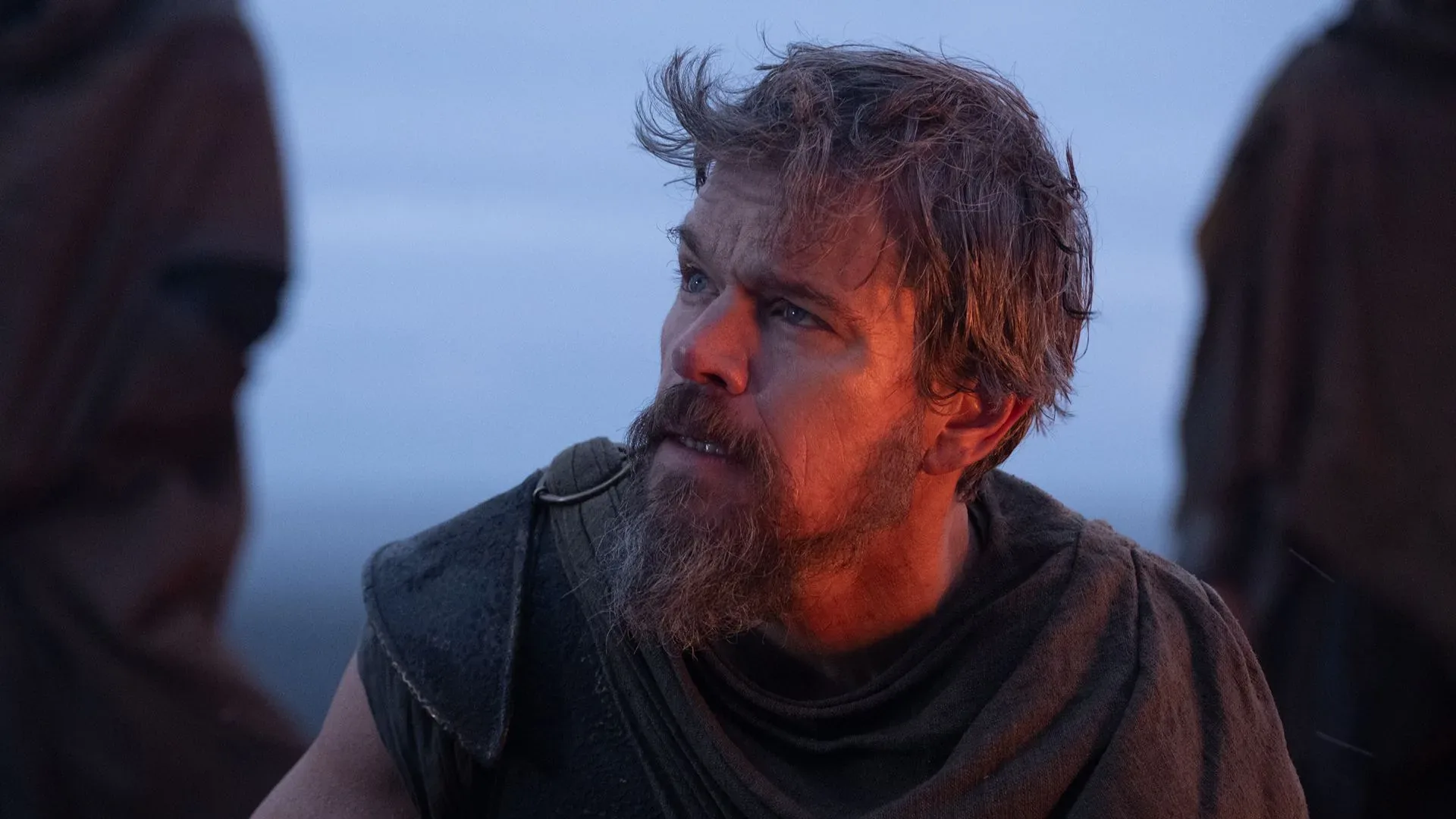
Spielberg also singled out Matt Damon’s work as Odysseus, describing it as among the actor’s greatest performances. Nolan, in turn, explained why Damon was his immediate choice for the central role: not just for his screen presence, but for his collaborative approach to the entire story.
A meeting of blockbuster filmmakers
Before Spielberg could begin his praise, Nolan acknowledged the personal significance of the exchange. He said that, despite knowing Spielberg for a long time, he had never previously taken part in a Q&A moderated by him. Nolan reflected on watching Spielberg’s movies when he was young and not imagining a moment in which Spielberg would be asking him about one of his own films.
That context adds weight to Spielberg’s response. Calling a film a “showstopper” is concise, but it is also an especially direct acknowledgment of the kind of big-screen spectacle Nolan has pursued throughout his career. In this case, the scale is central to both the production and the current exhibition strategy. The Odyssey was shot entirely with IMAX cameras, and the Los Angeles engagements highlighted IMAX 70mm, 70mm and 35mm screenings.
Those labels refer to film presentation formats rather than interchangeable marketing language. IMAX 70mm is a large-format film format associated with a notably expansive image. Standard 70mm is also a large-gauge film presentation, while 35mm is a traditional theatrical film format. The screenings underline a clear preference from Nolan’s team: the movie is intended to be encountered in a cinema, on an enormous screen, rather than assessed through a home-viewing portal.
That does not mean a smaller-screen viewing becomes invalid. It does mean the filmmakers are foregrounding the environments in which the imagery, scale and sound were designed to land most forcefully. For audiences weighing where to see the film, the practical takeaway is straightforward: format is part of the intended experience, not merely an add-on to the ticket listing.
Why Nolan turned to Homer’s Odyssey
Nolan said he approaches projects one at a time rather than developing several possible films in parallel. Once a movie is complete, he looks for the next challenge. For The Odyssey, that search led him to Homer’s poem and to a perceived opportunity in Greek mythology.
His argument was not that the material had never been adapted, but that it had not been realized in what he regarded as a definitive modern-era version at this level of resources and scale. Nolan pointed to the mythological components as a key technical issue. Earlier Hollywood eras produced major films rooted in antiquity and the classical world, but the tools now available for visual effects, combined with IMAX production, gave him a different route into the story’s supernatural and epic dimensions.
The distinction matters. A Greek-myth adaptation carries demands beyond costumes, ships and historical settings. The world of Odysseus includes gods, enchantment and transformations. A filmmaker must decide whether those events should look tactile, dreamlike, frightening, realistic or deliberately artificial. Nolan’s discussion of one pivotal sequence suggests he did not treat visual effects as a substitute for the physical reality of the set. Instead, the goal was to establish a workable process that performers could interact with directly.
The Odyssey opened in July with a $264.1 million global debut, the largest opening of Nolan’s career. Its total has since passed $1.8 billion worldwide, making it his highest-grossing film. Those figures establish that the film’s large-format identity has been paired with enormous commercial reach, rather than operating as a niche presentation aimed only at specialty audiences.
Matt Damon’s Odysseus and the value of a story-minded lead
Spielberg’s praise for Damon was among the discussion’s clearest acting-focused moments. He said Damon’s portrayal of Odysseus ranks among the best work the actor has done. Nolan’s explanation for the casting makes clear that he saw more than a recognizable leading man in Damon.
Nolan had previously worked with Damon in two films in smaller roles. That firsthand experience convinced him of Damon’s ability and of his usefulness within a collaborative production. Nolan characterized Damon as a creative force who considers the complete narrative, not only the boundaries of his own part.
That quality is particularly relevant to Odysseus. The character is the audience’s route through the journey, and Nolan said Damon has an ability to open up a story and guide viewers through it in empathetic terms. Empathy, here, means an audience’s capacity to understand and emotionally travel with a character. It is not necessarily the same thing as approving of every decision that character makes. For an epic built around a long voyage and mythological encounters, maintaining that connection is a fundamental dramatic task.
Nolan also pointed to Damon having grown up on camera, referencing his earlier appearance in Spielberg’s Saving Private Ryan. The remark connects the two filmmakers’ shared history with the actor while emphasizing the accumulated experience Damon brings to a role of this size.
For viewers, the comments offer a useful lens for considering the performance: Odysseus is not positioned solely as the figure at the center of grand spectacle. Nolan’s framing suggests Damon’s role is also structural. His performance must provide the emotional access point that helps an audience move through the film’s wider narrative and visual scale.
Circe, pig transformations and a hybrid-effects approach
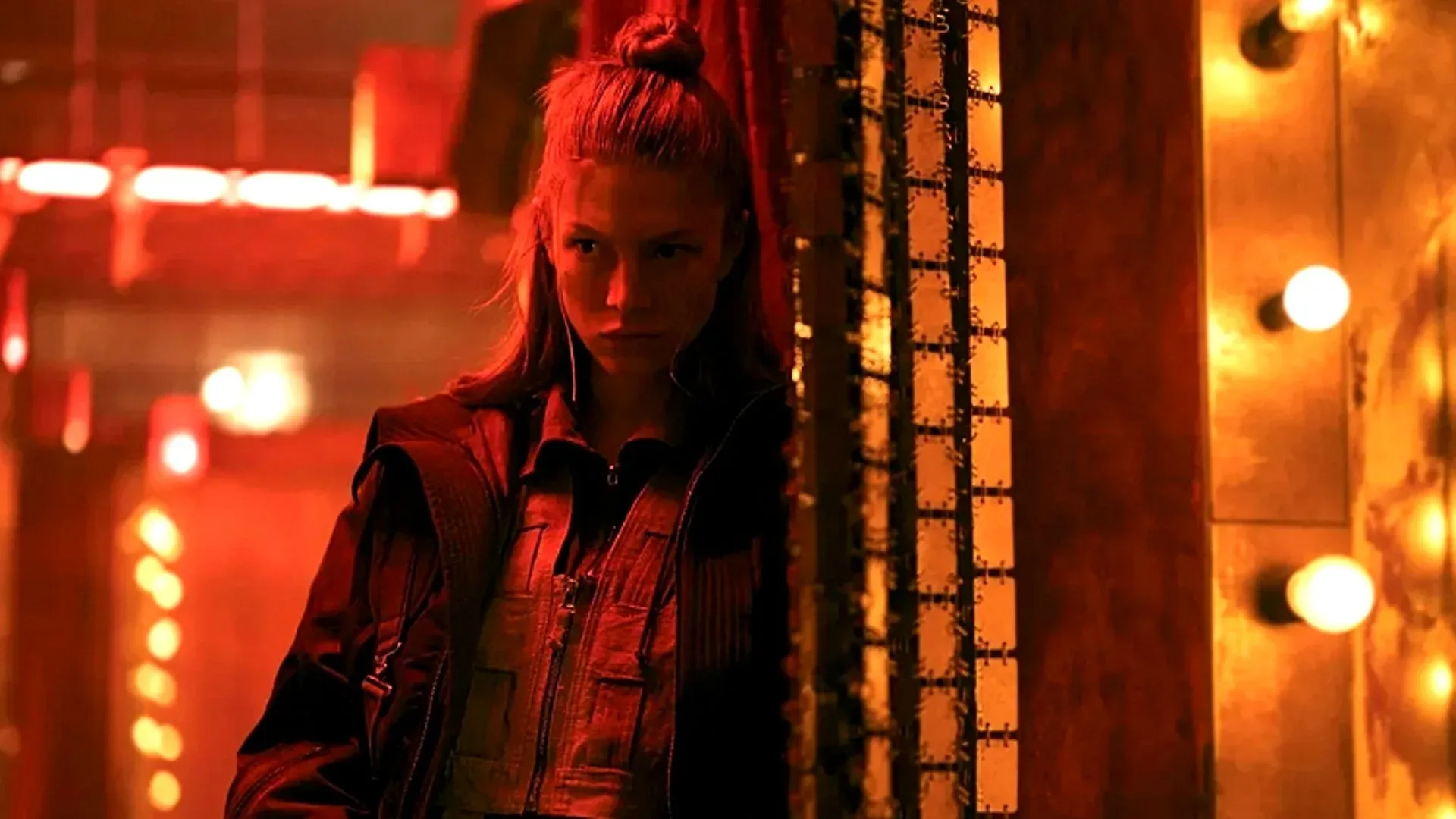
One of Spielberg’s favorite scenes involves Samantha Morton as Circe, the “witchy goddess” who turns men into pigs. He praised Morton and identified the transformation sequence as one of the movie’s standout moments, prompting Nolan to explain how it was achieved.
Nolan said he did not want to stage the sequence against green screen or rely on tracking markers. A green screen is a colored backdrop used so that performers or objects can later be separated from the background and placed into a digitally created image. Tracking markers are visual reference points that help effects artists match digital material to the movement and perspective of a shot.
Neither tool is inherently a shortcut or a flaw; both are standard components of many effects-heavy productions. Nolan’s preference in this instance was about controlling the on-set process and preserving a tangible element for the scene. He studied transformation films including An American Werewolf in London and Neil Jordan’s A Company of Wolves while preparing the sequence.
The finished method involved collaboration between visual-effects and special-effects teams. Visual effects, often shortened to VFX, generally refers to imagery created or altered in post-production. Special effects, in the sense Nolan is using it here, refers to physical effects and props used during filming. The two disciplines can work together: a physical component can anchor a performance or shot, while digital work can extend, refine or complete the impossible elements.
For the Circe scene, the team made heads for the affected men. Nolan described an internal fractured skull structure held with magnets and covered in a highly flexible silicone skin made to appear convincingly real. This design allowed Morton to manipulate the prosthetic heads at the table during each take in disturbing ways.
The practical implication is that the transformation had a material presence on set, giving the performer something immediate to work with instead of asking her to mime every interaction into empty space. It also gave the production a defined physical mechanism for a grotesque metamorphosis before visual effects completed the broader illusion.
This is the kind of technical detail that can be easy to miss when watching an elaborate fantasy sequence. An audience sees the final event: Circe’s victims changing into pigs. Behind it is a blend of departments, performance choices, mechanical design, makeup-style fabrication and image work. The point is not to claim that one method is more “real” than another. Rather, Nolan’s account shows that the effect was built around interaction and controlled transformation, not solely a digital replacement carried out after the shoot.
What the format push means for moviegoers
Universal and Nolan’s team continue to emphasize how The Odyssey was made and exhibited. With numerous Los Angeles sessions marked as IMAX 70mm, 70mm or 35mm, the campaign is effectively asking viewers to pay attention to the format before selecting a screening.
That focus fits Nolan’s stated reasons for making the film now. He has tied the project to modern visual-effects capability and IMAX production; the exhibition plan is an extension of that reasoning. The work was built to take advantage of outsized theatrical presentation, so the release strategy keeps returning to the same proposition: spectacle is not only in the narrative subject matter, but in the physical way the movie is projected.
It is also a reminder that a film’s technology can be part of its authorship. A screen format changes neither Homer’s source material nor the basic fact of Damon playing Odysseus, but it can change the visual information available to the viewer and the felt scale of the journey. That is why the conversation around The Odyssey has extended beyond its box office to its cameras, projection formats and craft choices.
For more on how entertainment projects can intersect with game-industry conversations, see the discussion around a potential AAA game connected to Blade Runner 2099.
Spielberg’s reaction ultimately captures the broadest reading of Nolan’s ambition: a vast adaptation intended to play as an event. The praise for Damon and Morton, meanwhile, points to the people inside that scale. The result is a blockbuster conversation that is as much about performance and practical craft as it is about enormous screens and enormous grosses.