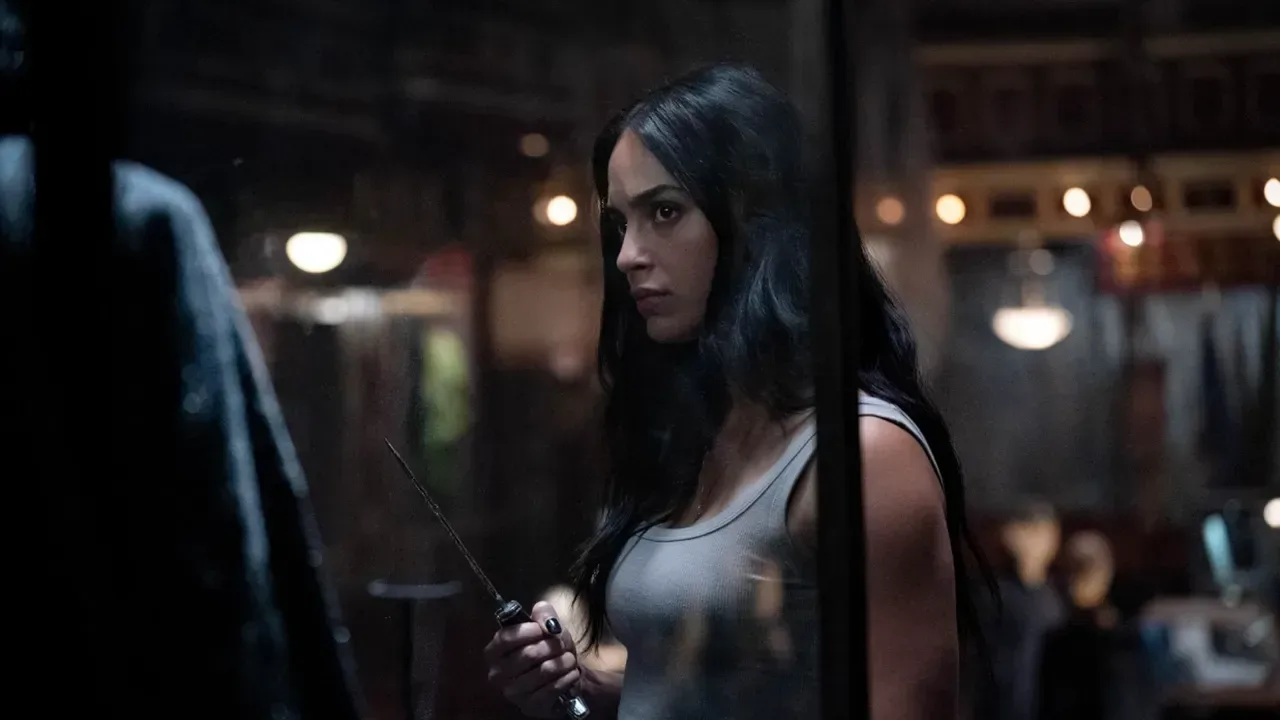
Skeet Ulrich says he does not expect to return to Scream without Melissa Barrera, tying any future appearance by Billy Loomis directly to Sam Carpenter, the character played by Barrera.
Ulrich originated Billy in 1996’s Scream and reappeared in 2022’s Scream and 2023’s Scream VI. In the newer films, Billy’s presence was linked to Sam: she is revealed to be his daughter, and Ulrich’s character appears as part of her internal struggle. Ulrich said that relationship is the reason a further return no longer appeals to him.
“Without Melissa Barrera and Sam Loomis, there’s no Billy Loomis,” Ulrich said.
That wording is important. Ulrich is not simply saying that he would prefer to work with a former castmate again. He is describing Billy’s modern function in the series as inseparable from Sam’s story. For viewers, it clarifies why a character who died in the original film could still matter in later installments without being restored to the franchise in an ordinary, literal sense.
Billy Loomis’ return was built around Sam Carpenter
Billy Loomis was part of the original 1996 Scream. His later appearances in the 2022 film and Scream VI gave the franchise a way to reconnect its newest central character with its earliest history. Sam’s discovery that Billy was her father placed a major piece of the original film’s legacy inside the new storyline.
The crucial distinction is that this was not a conventional comeback. Billy’s role was presented through Sam’s perspective: he was, as Ulrich put it, “in her head.” That means the character’s scenes were designed to say something about Sam—her fears, identity, and relationship to a violent family legacy—rather than to launch an independent Billy Loomis plot.
In film and television discussion, that kind of connection is often called a character arc. An arc is the movement of a character’s story over time: where they begin emotionally or morally, what pressures reshape them, and where their journey lands. Here, Ulrich says he had been told of a three-film arc. The available films completed two entries of that plan, but the third did not arrive with Barrera’s Sam at its center.
Ulrich’s comments therefore frame the loss as both personal and structural. If Sam is absent, the mechanism that made Billy’s later appearances narratively relevant is absent as well. A new appearance could theoretically be conceived in a different way, but Ulrich has made clear that he does not see that as the continuation of the arc he signed on to explore.
Related coverage includes Skeet Ulrich Says He Won’t Return to Scream Without Melissa Barrera.
What changed after Barrera’s removal
Barrera starred as Sam in Scream and Scream VI. In 2023, franchise producer Spyglass removed her from the films after social-media posts in which she criticized Israel amid the war in Gaza. At the time, Spyglass said it had zero tolerance for antisemitism or incitement of hate, including what it described as false references to genocide, ethnic cleansing, Holocaust distortion, or material that crosses into hate speech.
The fallout extended beyond a single casting decision. Jenna Ortega, who played Sam’s on-screen sister, subsequently said she would not return for 2026’s Scream 7. The pair had anchored the more recent strand of the franchise, so their departures altered the continuity available to the filmmakers.
Neither Barrera nor Ulrich appeared in the recent Scream 7. Its cast included Matthew Lillard, Neve Campbell, Courteney Cox, Isabel May, Jasmin Savoy Brown, Mason Gooding, and others.
That does not erase the Sam-and-Billy material in the prior two films. It does mean, however, that the specific ongoing storyline Ulrich describes was left without the character around whom it was built. “They had their chance at it and didn’t quite get to complete the three-film arc that they talked to me about,” he said.
Why the distinction matters for a legacy horror series
Scream has long combined returning figures with new casts. In a legacy franchise, recognizable characters can serve several purposes: they can provide continuity, evoke an earlier era, or create a bridge between separate groups of protagonists. Ulrich’s remarks point to a more limited role for Billy in the recent films. He was not merely a familiar face brought back for recognition. His appearances were tied to a specific narrative device centered on Sam.
That difference helps explain why recasting the broader ensemble or shifting focus to other returning characters does not automatically create a place for Billy. A legacy return works best when there is a clear reason for it within the current story. For Ulrich, that reason was Sam Carpenter’s relationship to him.
It also illustrates a wider production reality: a planned arc is not the same thing as a completed one. Studios and producers may map out several installments, but casting changes can interrupt those plans. The public generally only sees the finished films and a small portion of the discussion around them. Ulrich’s comments offer a rare, narrow look at an intended structure that did not reach its proposed endpoint.
There is a useful parallel in how projects can remain in development without becoming finished works; a separate film project involving Eddie Redmayne and Hirokazu Kore-eda, for example, remains at the script stage. In Ulrich’s case, the issue is different: two chapters reached audiences, while the anticipated final chapter of his character’s newer arc did not.
Matthew Lillard also addressed his Scream 7 decision
Ulrich’s stance arrives after Matthew Lillard, his co-star from the original Scream, spoke publicly about his own decision to appear in Scream 7. Lillard said at a 30th-anniversary screening of the first film that he felt ashamed after being criticized for participating following Barrera’s removal.
“I feel bad about that. I feel ashamed about that,” Lillard said. “Because in that moment I was so excited to go back, I didn’t really think about Melissa and that journey.”
Lillard said he did not refuse the opportunity and described that as a mistake, adding that he still likes being in the movie but questioned whether returning was the best choice. His comments and Ulrich’s are not identical: Lillard returned and later expressed regret, while Ulrich is saying he does not see a future return without Barrera. But both statements show that Barrera’s exit remains a defining issue for performers connected to the series.
What Ulrich has—and has not—said
Ulrich has not laid out a detailed account of the unrealized third film, its plot, or the exact shape of Billy’s role. There is no basis here to assume a completed script, a particular villain reveal, or a planned ending for Sam. The specific confirmed point is more restrained: he was told about a three-film arc, he considers it incomplete, and he does not believe Billy Loomis works without Barrera’s Sam Carpenter.
That is also why the statement should not be read as a claim that no future Scream film can use the Billy Loomis name, revisit the character’s history, or reference the events of the earlier movies. Ulrich is speaking for himself and his involvement. His position is that the character’s recent on-screen purpose depended on Sam, and that the opportunity to finish that version of Billy’s story has passed.
For fans of the 2022 and 2023 films, the practical takeaway is straightforward. The Sam Carpenter/Billy Loomis thread now stands as a two-film storyline rather than the proposed three-film progression Ulrich describes. Whether the franchise develops other links to its past is a separate question. Ulrich’s answer about his own return is not ambiguous: without Barrera and Sam, he does not see a Billy Loomis comeback.