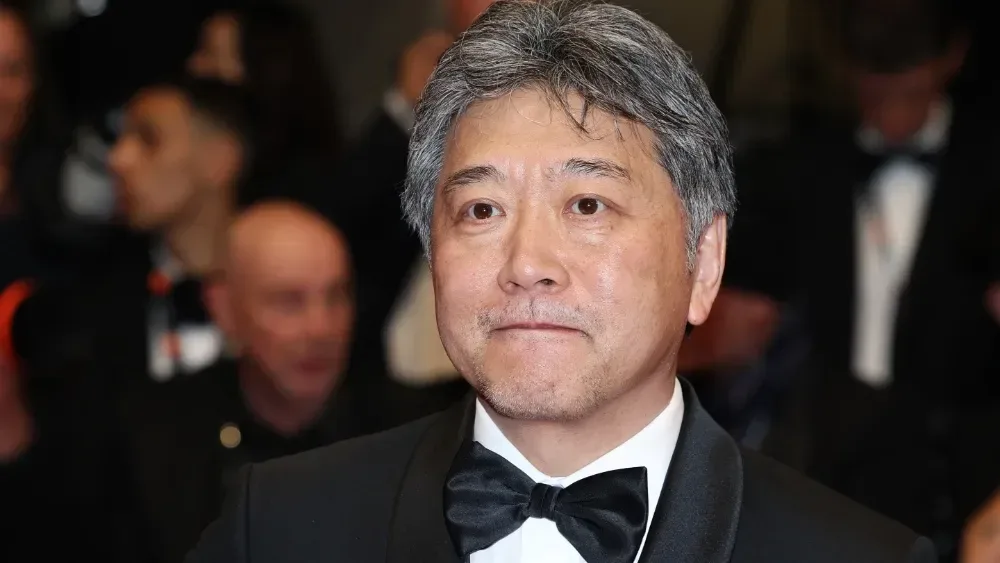
Hirokazu Kore-eda’s planned film with Eddie Redmayne remains in development, with the filmmaker saying he is currently writing its screenplay. The project, being developed with Searchlight Pictures, does not yet have a publicly disclosed title or story.
Speaking while attending the Busan International Film Festival for Look Back, Kore-eda said work on the script is progressing smoothly but that it is too early to share plot specifics. He expects a formal public introduction no earlier than next year and said he hopes to bring the completed film to Busan as well.
That makes the most meaningful update a deliberately modest one: the Redmayne collaboration is active, but it is not yet at the point where audiences should expect casting details beyond Redmayne, a synopsis, production dates or release information. None of those elements were disclosed.
What “script stage” means for the project
A screenplay is the working blueprint for a film: it generally lays out scenes, dialogue, characters and the broad structure that a production team will eventually use to prepare a shoot. Reaching the writing stage confirms creative work is under way, but it does not establish when cameras will roll.
In practical terms, a project still in scripting can change substantially. A title may be selected later; supporting performers may not be announced until much later; and production planning depends on the completed script. Kore-eda’s choice not to discuss story details is therefore less an evasive mystery-box routine than an accurate indication of where the film currently sits.
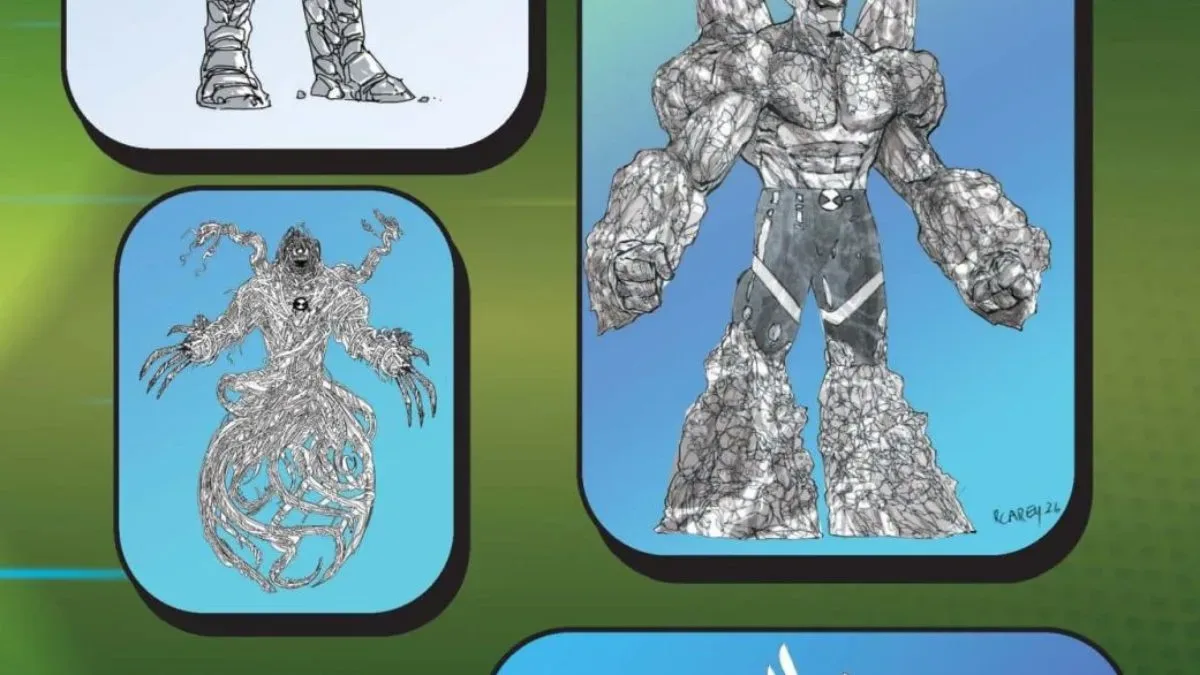
For viewers interested in how a project takes shape before it becomes a finished screen work, the path from writing to a completed visual narrative is also explored in this look at a comic’s journey from script to finished page. Film and comics are different forms, of course, but both depend on early written decisions that later creative work turns into an audience-facing experience.
There is one important distinction to keep in mind: a screenplay being written is not the same thing as a locked screenplay. Kore-eda did not say the script was complete, nor did he announce a start date. The available information supports cautious optimism about the partnership, rather than a timetable.
Kore-eda’s Busan connection shapes the hoped-for return
Kore-eda described Busan and its festival as especially meaningful to him. The festival has invited him since his debut, and its opening ceremony included music named after him. His stated hope to return there with the Redmayne film adds a personal ambition to the update, but it should not be read as a festival selection or a confirmed premiere plan.
Related coverage includes Kore-eda Says Eddie Redmayne Film Is Still in the Script Stage.
That distinction matters because festival appearances are dependent on a film being completed, and Kore-eda’s own comments place this new work before production details have been made public. The prospect of a future Busan presentation is best understood as an intention, not a scheduled event.
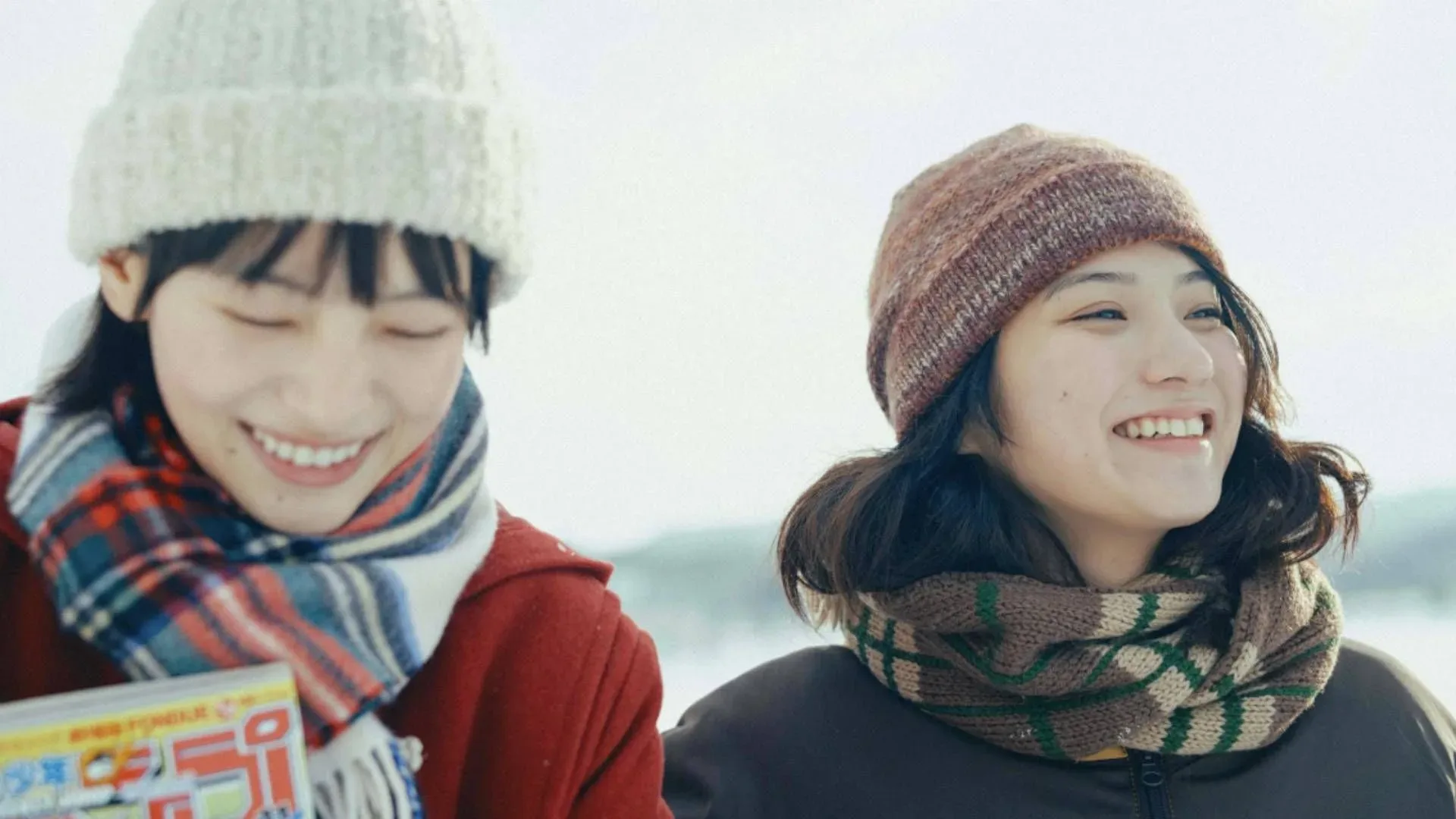
At the same appearance, the director was joined by Look Back cast members Deguchi Natsuki, Makita Aju, Mori Nana and Ishikawa Ruka. Much of the discussion focused on that film and on the creative decisions behind its adaptation of a manga.
Why Look Back matters to this update
The Redmayne project and Look Back are separate films, and no connection between their stories has been announced. Still, Kore-eda’s comments on Look Back offer a useful window into the questions that have recently occupied him as a filmmaker: creative drive, artistic responsibility, the value of rehearsal-like time spent among performers, and the expressive weight of images.
Kore-eda said he found the Look Back manga in a bookshop rather than following it during its original serialization. The work struck him because it addressed why people create stories and the burden artists may carry. For a filmmaker adapting material about artistic creation, that response clearly informed the production’s approach.
He explained that he did not rely on extensive, moment-by-moment instruction for the performers. Instead, he placed emphasis on the time the four actors spent together and on observing how the town changed through light and seasons. His intention was for the cast to register on camera as people genuinely inhabiting that place.
This should not be treated as a preview of the unnamed Redmayne film. Kore-eda has revealed no plot, setting, format or character information for that project. But it does explain why the director’s current work has drawn attention: his public comments show a filmmaker interested in process as much as outcome, whether that process is writing a new screenplay or translating a manga’s emotional ideas into live action.
Celluloid, seasons and the discipline of 35mm
For Look Back, Kore-eda said he pushed to shoot on 35mm film through all four seasons once the adaptation was confirmed. 35mm refers to a standard width of motion-picture film stock, also known as celluloid in this context. It is a physical medium, unlike digital capture, and it requires choices around exposure and takes to be made during production rather than being assumed to be endlessly adjustable afterward.
Kore-eda framed that limitation as creatively valuable. In his view, shooting on film creates a productive tension because the cast and crew cannot simply assume every issue will be corrected later. He described the collective focus generated by that pressure as a kind of magnetic force at the shooting location.
The comments are significant mainly as an account of how Look Back was made. They do not confirm that Kore-eda will use 35mm on the Redmayne film. No technical specifications for that future production have been announced.
Still, the remarks clarify a key aspect of the director’s stated philosophy: constraints are not automatically obstacles. When a production accepts the material limits of film, Kore-eda believes the shared awareness can sharpen attention from everyone involved. That is an artistic preference, not a promise of a particular format for every project.
How rotoscoping serves Look Back
Kore-eda also discussed a late animated passage in Look Back. It arises from a moment in which Fujino, after winning a competition, says she dreams of seeing her manga animated. The comment helps create a temporary divide between the story’s two central characters.
The director said the animation Fujino eventually creates represents a future that the pair never get to experience together. Rather than using conventional cel animation, the film employs rotoscoping. Rotoscoping is an animation technique built around recorded live-action movement, which animators use as reference for drawn motion. Kore-eda characterized it as sitting between live action and drawn animation.
That in-between quality was central to the sequence’s purpose. He felt that placing the moving characters within background artwork drawn by Kyoko was the most fitting expression for the idea. It is a technical choice tied directly to the film’s emotional premise, rather than animation deployed simply for stylistic novelty.
For audiences, that explanation helps identify why the sequence may feel distinct from a wholly traditional animated segment. The blend of bodily movement and drawn environments is meant to hold live-action and illustration in the same emotional space, echoing the relationship between the characters and the art they make.
Performance and absence in the final image
Deguchi, who appears in shots from behind at both the opening and close of Look Back, described the director’s guidance for the final image: she was told to convey Kyoko through her back. After spending an extended period filming in Akita with her co-star, Deguchi filmed that later moment alone.
She said the experience left her with the feeling that Kyoko was present and absent at once, and that she performed the shot with an empty feeling. It is a revealing example of a director giving a performer a concise emotional target rather than spelling out a detailed physical result.
Makita attended Busan for the first time, while Mori reflected on the different atmosphere from a Venice red-carpet appearance. Mori said the large Korean crowd made her nervous at first, but that seeing people wave made the experience enjoyable.
For now, Look Back provides the concrete material around which Kore-eda’s recent public discussion has revolved. The Eddie Redmayne collaboration remains a future-facing project: a screenplay is being written, preparations are described as moving smoothly, and a fuller introduction is not expected before next year at the earliest. Until then, a title, narrative and production schedule remain undisclosed.